- Company Articles
- Products and Technology
- Product knowledge
- Home Appliance Assembly Racks: Five Way Straight Lean Pipe Joint Applications

Home Appliance Assembly Racks: Five Way Straight Lean Pipe Joint Applications
Related Product
Five Way Straight Lean Pipe Joint
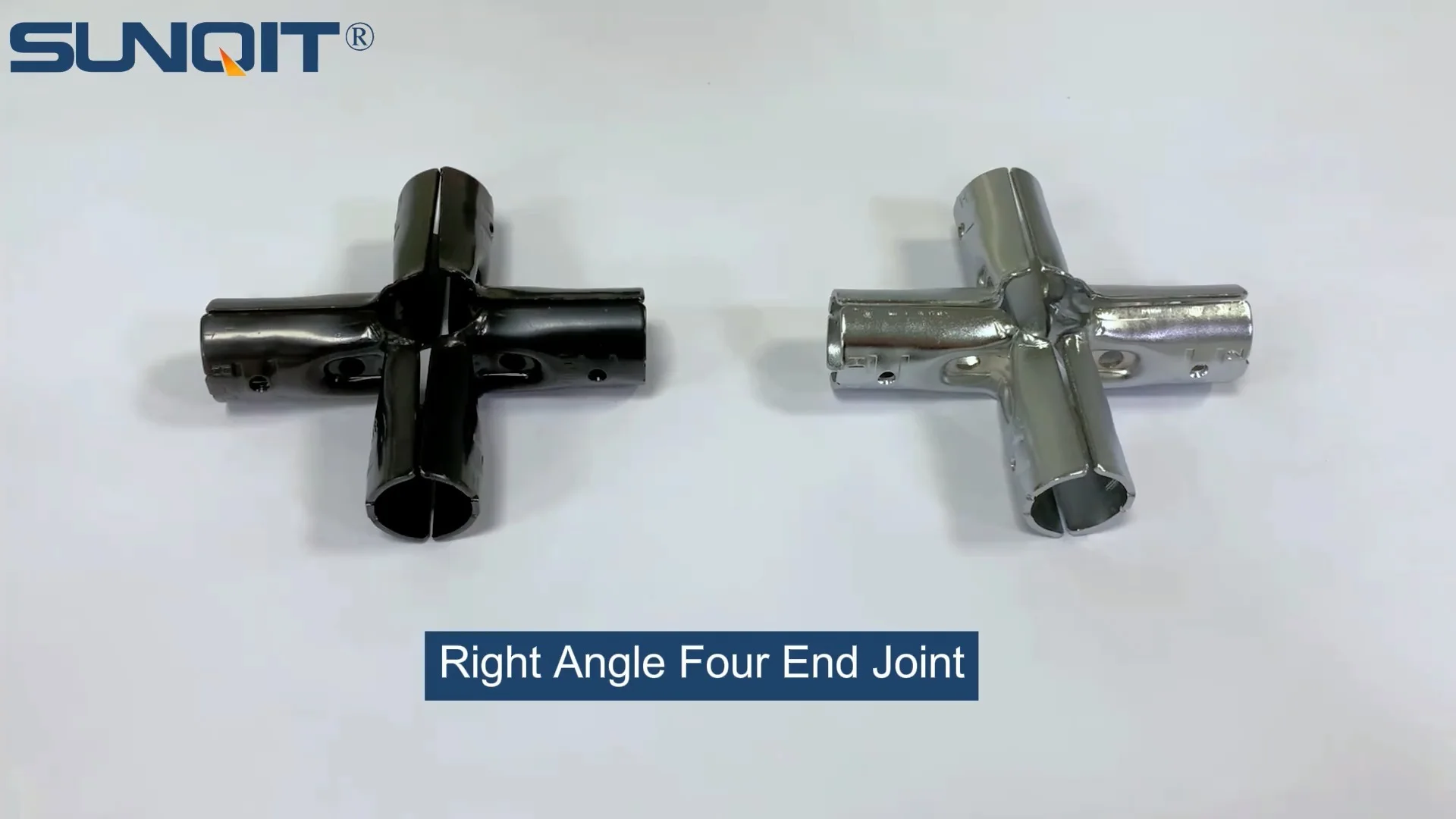
Five way straight lean pipe joint, for 5 pcs 28mm lean pipe connect in straight angle,which used widely in workbench, flow rack, hand trolley frame connection.
The Rhythm of Home Appliance Manufacturing: Where Every Part Counts
Imagine walking through a home appliance factory—maybe a plant that builds refrigerators, washing machines, or blenders. The air hums with purpose: the whir of conveyor belts, the clink of metal parts, and the focused chatter of workers piecing together the machines we rely on daily. At the heart of this chaos-turned-order are the assembly lines, and, the unsung heroes holding everything in place: the assembly racks. These racks aren't just metal and pipes; they're the backbone of efficiency, the silent organizers that keep parts within arm's reach, tools neatly stored, and workflows moving like a well-choreographed dance. But what happens when the backbone is rigid? When a rack can't adapt to a new appliance model, or a sudden surge in demand, or a worker's unique needs? That's when the rhythm stumbles—and in manufacturing, every stumble costs time, money, and sometimes even morale.
The Problem with "One-Size-Fits-All": Rigidity in Assembly Racks
For years, many factories leaned on fixed, welded racks or pre-built shelving units. They worked… until they didn't. A new dishwasher design with bulkier components? The old rack's shelves are suddenly too short. A seasonal spike in oven production? The static flow racks can't keep up with the increased part volume, leading to piles of boxes on the floor and workers scrambling to find what they need. Worse, these rigid systems often mean wasted space—gaps between shelves that could hold more parts, or awkward heights that force workers to stretch, bend, or twist, leading to fatigue and even injuries over time. It's like trying to fit a square peg into a round hole, day after day. And in an industry where speed and precision are everything, that's a problem that can't be ignored.

Lean Systems: The Antidote to Rigidity
Enter lean systems—a philosophy (and a toolkit) built on the idea that efficiency thrives on adaptability. Lean isn't just a buzzword; it's about seeing waste (time, space, effort) and rooting it out. And at the core of lean manufacturing tools are
lean pipes
,
flow racks
, and the connectors that bring them to life. Unlike those old fixed racks, lean systems are modular: think of them as the ultimate building blocks for factories. You start with pipes—often aluminum or steel, lightweight but strong—and connect them with joints to create exactly what you need, when you need it. Need a taller shelf for that new refrigerator door? Swap out a shorter pipe for a longer one. Suddenly need to reconfigure the assembly line for a limited-edition microwave? Disassemble the rack, move the joints, and rebuild in hours (or even minutes), not days. It's manufacturing with a Swiss Army knife instead of a single fixed tool.

Meet the MVP: The Five Way Straight Lean Pipe Joint
If lean systems are the building blocks, then the
five way straight lean pipe joint
is the cornerstone—the connector that turns "good" into "great." Let's break it down: a "five way" joint does exactly what it sounds like: it connects five pipes at once, all in a straight line or at precise angles. Picture a small, sturdy cube (or cylinder) with five openings, each designed to grip a lean pipe tightly. Made from durable materials like aluminum or stainless steel (depending on the factory's needs—think moisture resistance for dishwashers or heavy-duty strength for ovens), these joints are built to take a beating: constant assembly, disassembly, and the weight of parts day in and day out. But what really makes them special isn't just their strength—it's their versatility. Most joints connect two or three pipes, but five? That opens up a world of possibilities for building complex, multi-functional racks without overcomplicating things. It's like having a single connector that can be a shelf bracket, a crossbar support, and a tool holder all at once.
Fun fact: The design of the five way joint is deceptively simple, but that simplicity is intentional. Engineers focused on making it easy to use—no special tools required. A worker can tighten or loosen the joint with a standard wrench, meaning less time fumbling with equipment and more time getting the job done.

How the Five Way Joint Transforms Home Appliance Assembly Racks
Let's get specific: how does this joint make a difference on the factory floor? Let's walk through three common scenarios in home appliance manufacturing, where the five way straight lean pipe joint isn't just helpful—it's game-changing.
1. Assembly Workbenches: Where Precision Meets Comfort
An assembly workbench isn't just a table—it's a worker's office, workshop, and command center. They need parts within reach, tools organized, and enough space to maneuver the appliance components without feeling cramped. With a five way joint, building that perfect workbench becomes a breeze. Imagine a base frame made of lean pipes: the vertical legs are connected to horizontal crossbars (using two way joints), but where the magic happens is the upper shelf. A five way joint can connect: two pipes running along the back (for hanging tools), two pipes on the sides (for part bins), and one straight pipe in the middle (for a monitor or instruction sheet holder). No more jerry-rigging with extra brackets or settling for a shelf that's either too shallow or too deep. Workers can adjust the height of the upper shelf by swapping pipe lengths, add a side rack for bulky items (like a washing machine drum bracket) by connecting another pipe to the five way joint, or even attach a small flow rack extension for parts that need to slide easily (think screws, washers, or gaskets). It's customization without the hassle—and when a worker's workspace fits their needs, they're faster, happier, and less likely to make mistakes.
2. Flow Racks: Keeping Parts Moving (Literally)
Flow racks
are the workhorses of assembly lines. They're the sloped racks where parts "flow" from the back to the front as workers take what they need—like a gravity-powered buffet for appliance components. But not all parts are the same: a small blender blade needs a narrow lane, while a refrigerator door gasket needs a wider one. Enter the five way joint. Instead of building a flow rack with fixed lanes (and wasting space between them), factories can use five way joints to create adjustable dividers. Here's how: the main frame of the flow rack has horizontal pipes running front to back. Along those pipes, five way joints are spaced evenly. Each joint connects a vertical divider pipe (to separate lanes) and a diagonal pipe (to create the slope for the flow). Need to widen a lane for a new, larger part? Loosen the joint, slide it along the horizontal pipe, and tighten—done. Need to add an extra lane? Attach another five way joint and a divider pipe. It's like rearranging bookshelves without having to buy a whole new unit. And because the joints are strong, even heavy parts (like oven control panels) won't bend or warp the dividers over time.
3. Turnover Trolleys: Moving Parts Without the Heavy Lifting
Not all parts stay on the assembly line—some need to be moved from the warehouse to the line, or from one station to another. That's where turnover trolleys come in: mobile racks with shelves, perfect for hauling parts safely. But anyone who's pushed a wobbly trolley loaded with heavy parts knows the struggle: shelves that sag, frames that creak, and a constant fear of parts sliding off. The five way joint solves this by adding structural support where it matters most. A typical trolley has a base frame with casters (wheels), vertical pipes, and horizontal shelves. At each corner where the vertical and horizontal pipes meet, a five way joint can connect: the vertical pipe, two horizontal shelf pipes (front and back), and two diagonal brace pipes (to keep the frame from wobbling). It's like adding extra legs to a table—suddenly, that trolley can carry more weight without feeling unstable. Workers notice the difference immediately: pushing a sturdy trolley is easier, safer, and less tiring than wrestling with a wobbly one. And when the trolley isn't needed for parts? Disassemble it with the joints, store the pipes, and free up floor space—no more clunky, unused equipment taking up room.
Why the Five Way Joint Stands Out: It's About More Than Connections
So, what makes the five way straight lean pipe joint more than just another connector? Let's count the ways:
- Flexibility first: In home appliance manufacturing, change is constant. New models, new materials, new regulations—factories need tools that can keep up. The five way joint isn't just a connector; it's a permission slip to adapt. No more waiting for custom racks or paying for expensive modifications.
- Strength without the bulk: Aluminum and stainless steel versions of the joint are lightweight (so workers can carry them easily during setup) but surprisingly strong. A single joint can support hundreds of pounds, which means even heavy appliance parts won't compromise the rack's stability.
- Time is money (saved): Traditional welded racks take hours (or days) to build and modify. With five way joints, a small team can assemble a custom rack in an afternoon. Need to reconfigure for a rush order? Do it between shifts. That's less downtime, more production, and a happier scheduling team.
- Worker-centric design: At the end of the day, manufacturing is about people. When workers don't have to stretch to reach a part, or wrestle with a wobbly trolley, or wait for a rack to be modified, they're more engaged. They feel like their needs matter—and that translates to better quality work and lower turnover.
Putting It All Together: A Day in the Life (With and Without the Five Way Joint)
Let's paint two pictures to see the difference.
Scenario 1: No five way joints.
Maria, an assembly line worker at a dishwasher factory, arrives for her shift to find the line is switching to a new model. The old fixed racks are too short for the new, taller door hinges. Her supervisor says the maintenance team is welding new shelves, but they won't be done until noon. Maria and her team spend the morning sorting parts on the floor, bending down constantly to pick them up. By lunch, everyone's backs are sore, and they're already behind schedule.
Scenario 2: With five way joints.
The night before, the maintenance team uses five way joints to adjust the racks. They loosen the joints, swap out the short pipes for longer ones, and tighten everything back up—done in 45 minutes. Maria arrives, the racks are ready, and she starts assembling immediately. The hinges are at eye level, the flow rack lanes are adjusted for the new parts, and her trolley glides smoothly. By lunch, her team is ahead of schedule, and Maria smiles—today feels like a day they'll actually finish on time. That's the power of the five way joint: it turns frustration into flow, and chaos into calm.
Beyond the Joint: Building a Lean Ecosystem
The five way joint doesn't work alone—it's part of a larger ecosystem of
lean pipe and accessories
that make lean systems thrive. There are the pipes themselves (aluminum for lightweight setups, stainless steel for heavy duty or wet environments), the casters (wheels that lock in place for trolleys and workbenches), the roller tracks (for flow racks, to make parts glide smoothly), and even the end caps (to prevent sharp edges and protect workers). Together, these components create a system where nothing is wasted: space, time, or effort. For example, a factory might use five way joints to build a workbench, add roller tracks (connected with roller track placon mounts) to create a mini flow rack on top, and attach casters (with caster accessories like brakes) so the whole setup can roll to where it's needed. It's modularity at its best—like building with Legos, but for grown-ups (and with a very important job).
Maintenance 101: Keeping Your Five Way Joints (and Racks) in Top Shape
Even the best tools need a little care. Here's how to keep five way joints (and the racks they build) working like new:
- Check for tightness regularly: Over time, vibrations from the assembly line can loosen joints. A quick monthly check with a wrench (or even by hand) ensures pipes don't slip.
- Clean them up: Factories can get dusty or greasy. Wipe joints with a damp cloth occasionally to prevent buildup (which can make disassembly harder later).
- replace when needed: If a joint is bent, cracked, or the threads are stripped, swap it out. Most suppliers (like lean pipe suppliers or lean system suppliers ) keep spare joints in stock, so replacements are quick and easy.
- Train the team: Make sure everyone knows how to use the joints safely. A quick 10-minute demo on proper tightening (not too loose, not too tight—you want a snug fit) can prevent accidents and damage.
The Bottom Line: More Than Pipes and Joints—It's About Progress
At the end of the day, the five way straight lean pipe joint isn't just a piece of metal. It's a symbol of how manufacturing is evolving—away from rigid, top-down systems and toward flexible, worker-focused ones. It's about recognizing that the best way to build better appliances is to build better tools for the people building them. Whether it's a small blender factory or a sprawling refrigerator plant, the right lean system components (like the five way joint, lean pipes, and flow racks) don't just improve efficiency—they transform workplaces. They turn "we have to" into "we get to," and "this is hard" into "this works." And in a world where home appliances are getting smarter, faster, and more innovative, the factories that build them deserve tools that are just as smart, fast, and innovative. The five way straight lean pipe joint is a step in that direction—one connection at a time.
Applications at a Glance: How Five Way Joints Power Key Assembly Tools
| Assembly Tool | How Five Way Joints Enhance It | Key Accessories Involved |
|---|---|---|
| Assembly Workbench | Supports multi-level shelving, tool hooks, and monitor mounts; adjusts for worker height | Lean pipe, workbench top, casters (for mobility), aluminum guide rails |
| Flow Rack | Creates adjustable lanes for different part sizes; reinforces slope structure | Roller track, plastic roller track guide rails (yellow/grey), swivel roller balls |
| Turnover Trolley | Adds diagonal bracing for stability; connects vertical/horizontal pipes for shelf support | Caster wheels, caster accessories (brakes), lean pipe clamp |
| Material Rack (3 row, 3 floor) | Connects vertical supports, horizontal shelves, and crossbars; allows shelf height adjustments | Aluminum profile, stainless steel pipe series, internal rotatary aluminum joints |