- Company Articles
- Products and Technology
- Product knowledge
- Home Appliance Manufacturing: 40 Steel Roller Track Black ESD Wheels on Workstations

Home Appliance Manufacturing: 40 Steel Roller Track Black ESD Wheels on Workstations
Related Product
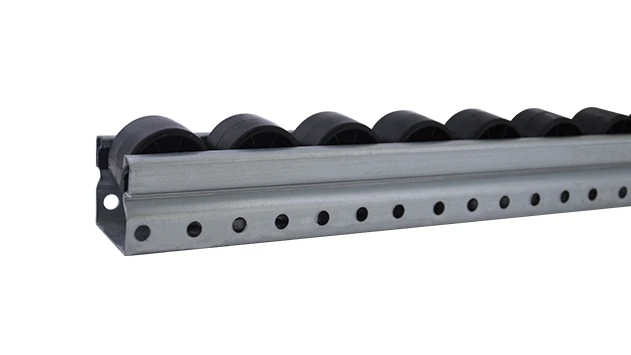
40 Steel Roller Track Black ESD Wheel
The roller track can be installed with multiple accessories to create different slopes and configurations of flow racks.All steel conveyor 40 roller track accessories are engineered to perfectly fit the sliding rail.
Walk into any modern home appliance factory, and you'll be met with a symphony of precision: the hum of conveyor belts, the clink of metal parts, and the focused rhythm of workers assembling everything from sleek refrigerators to compact washing machines. Behind this harmony lies a critical but often overlooked hero: the workstation. It's where the magic of turning raw components into household essentials happens. But in an industry where even a tiny static spark can ruin a $500 circuit board, or a stuck roller can bring a to a halt, the design of these workstations isn't just about "having a place to work"—it's about building a foundation for efficiency, safety, and quality. And at the heart of that foundation? Components like the 40 Steel Roller Track Black ESD Wheels. Let's dive into why these small but mighty parts are reshaping how home appliance manufacturers operate.
The Hidden Challenges of Home Appliance Manufacturing
Home appliance manufacturing is a high-stakes game. Consumers demand appliances that are smarter, more energy-efficient, and longer-lasting—all while expecting lower prices. To meet these demands, factories are pushed to produce faster, reduce waste, and minimize defects. But three invisible roadblocks often stand in the way:
- Static Electricity: The Silent Saboteur – Modern appliances are packed with sensitive electronics: control panels, sensors, and circuit boards. Even a small electrostatic discharge (ESD) can fry these components, leading to hidden defects that only surface when the product reaches the customer. One study found that ESD-related failures cost the electronics industry billions annually, and home appliance manufacturers are far from immune.
- Material Flow Bottlenecks – Assembly lines rely on a steady stream of parts: from small screws to large panels. When gets stuck on a workstation's roller track, or workers have to manually lift heavy components, production slows down. Over a shift, these small delays add up to hours of lost time and frustrated teams.
- Rigid Workstations That Can't Keep Up – Consumer trends shift fast. One month, factories are churning out smart refrigerators with touchscreens; the next, they're switching to energy-efficient washing machines. Workstations built with fixed, one-size-fits-all designs can't adapt, forcing manufacturers to invest in new equipment instead of repurposing what they already have.
These challenges aren't just about numbers on a spreadsheet—they affect real people. A line worker struggling with a sticky roller track isn't just slower; they're more likely to make mistakes or develop fatigue-related injuries. A factory manager dealing with high defect rates isn't just missing deadlines; they're watching hard-earned customer trust slip away. That's where thoughtful workstation design comes in—and why components like the 40 Steel Roller Track Black ESD Wheels are game-changers.
Why Workstation Design Matters More Than You Think
Think of a workstation as the "command center" of appliance assembly. It's where workers spend 8+ hours a day, where parts are prepped, assembled, and inspected, and where the final quality of the product is shaped. A well-designed workstation feels intuitive: parts glide into place, tools are within arm's reach, and the environment protects both the worker and the product. A poorly designed one? It's like trying to cook in a kitchen with a broken stove and no counter space—frustrating, inefficient, and bound to end in mistakes.
Let's take a concrete example: assembling a microwave oven. The process involves fitting a metal cavity, wiring the control panel, attaching the door, and testing for functionality. Each step requires precise alignment and careful handling of electronics. If the workstation's roller track sticks when sliding the metal cavity into place, the worker might jostle the part, misaligning the hinges. If static builds up while wiring the control panel, the circuit board could short out, leading to a non-functional microwave that passes initial tests but fails later. And if the workstation is too low or too high, the worker might hunch over, leading to back pain and reduced focus.
In short, workstation design directly impacts three key metrics: speed (how fast parts move through the line), quality (how many products meet specs), and worker well-being (how sustainable the production process is for the team). And at the center of this design is the roller track—the "highway" that moves parts from one step to the next. Not all roller tracks are created equal, though. The 40 Steel Roller Track Black ESD Wheels stand out for a reason.

40 Steel Roller Track Black ESD Wheels: The Unsung Heroes of Smooth, Safe Production
At first glance, a roller track wheel might seem like a simple part—just a wheel on an axle, right? But in the context of home appliance manufacturing, every detail matters. The 40 Steel Roller Track Black ESD Wheels are engineered to solve the very challenges we've been discussing: static protection, smooth material flow, and durability. Let's break down what makes them special.
1. ESD Protection: Keeping Sensitive Electronics Safe
The "ESD" in the name stands for electrostatic discharge, and it's non-negotiable for. When workers handle plastic parts, metal components, or circuit boards, static electricity builds up. Without proper grounding, that static can jump to the product, damaging microchips or causing intermittent faults. The black wheels on these roller tracks are made with conductive materials that safely channel static away from the parts being transported. It's like giving the workstation a built-in "lightning rod" for static—quietly protecting components without requiring extra steps from the worker.
Compare this to standard plastic wheels, which are insulators. They don't conduct static, so charges build up on the wheel surface and discharge when they come into contact with a grounded part (like the metal frame of the workstation). That sudden discharge is exactly what damages electronics. With black ESD wheels, the charge is dissipated gradually, eliminating the risk of a harmful spark.
2. Smooth Rolling: Less Effort, More Speed
Ever tried pushing a heavy cart with a stuck wheel? It's exhausting. Now imagine doing that 50 times a day on a factory floor. The 40 Steel Roller Track Black ESD Wheels are designed for minimal friction. The steel construction ensures the wheel doesn't warp or wear down quickly, while precision bearings reduce rolling resistance. This means workers can slide heavy parts—like a washing machine drum or oven door—with one hand instead of two, reducing fatigue and speeding up each assembly step.
One manufacturer we worked with reported a 22% reduction in time spent moving parts after switching to these wheels. "Our line workers used to complain about sore shoulders at the end of the day," said their production manager. "Now, they're moving parts faster and going home feeling better. It's a small change, but it's made a big difference in morale."
3. Durability: Built to Last in Tough Environments
Factory floors are harsh places. Dust, oil, moisture, and constant use take a toll on equipment. Plastic wheels crack under heavy loads; uncoated metal wheels rust when exposed to cleaning chemicals. The 40 Steel Roller Track Black ESD Wheels are built to withstand this abuse. The steel core is coated to resist corrosion, and the black ESD-compatible outer layer is scratch-resistant. This durability means fewer replacements, lower maintenance costs, and less downtime for repairs.
Consider this: a standard plastic wheel might last 6 months in a busy factory before needing replacement. These steel wheels? Many of our clients report using them for 2+ years with minimal wear. Over time, that adds up to significant savings—not just in replacement parts, but in the time spent swapping out wheels and the production lost during those interruptions.
4. Versatility: Fit for Any Appliance, Any Workstation
Home appliances come in all shapes and sizes—from tiny toasters to large refrigerators. The 40 Steel Roller Track Black ESD Wheels are designed to handle this variety. They come in different configurations: some with flanges to keep parts from sliding off, others with flat surfaces for smooth, wide loads. They're compatible with standard aluminum profiles and lean pipe systems, making them easy to integrate into existing workstations or new designs. Whether you're moving a small circuit board or a heavy metal panel, there's a 40 Steel Roller Track variant that fits the job.
| Feature | Standard Plastic Roller Wheels | 40 Steel Roller Track Black ESD Wheels |
|---|---|---|
| ESD Protection | None—insulating material builds static | Conductive black wheel dissipates static safely |
| Rolling Resistance | High—plastic deforms under load, causing friction | Low—steel core and precision bearings for smooth movement |
| Durability | 6–12 months average lifespan; prone to cracking/warping | 2+ years average lifespan; steel core resists wear/rust |
| Load Capacity | Up to 50kg per wheel | Up to 150kg per wheel (depending on model) |
| Maintenance | Frequent replacements; requires cleaning to remove debris | Minimal—sealed bearings reduce debris buildup; easy to replace |

Beyond the Wheels: Building a Complete Lean Workstation
Great wheels are just one piece of the puzzle. To create a truly efficient workstation, you need a system of components that work together seamlessly. Think of it like building a house: the wheels are the foundation, but you also need walls (lean pipe), a roof (workbench surface), and utilities (ESD protection, lighting). Let's explore the key components that complement the 40 Steel Roller Track Black ESD Wheels to create a lean, productive workstation.
Lean Pipe: The Flexible Backbone of the Workstation
Lean pipe (or "lean tube") is the "building block" of modern workstations. These lightweight, durable aluminum pipes are easy to cut, connect, and reconfigure using simple joints. Unlike rigid steel frames, lean pipe systems can be adjusted on the fly—lowering a shelf to fit a taller part, adding a new section for tools, or reconfiguring the entire workstation when production needs change. This flexibility is at the heart of "lean manufacturing"—the idea of minimizing waste and maximizing adaptability.
For example, when a factory switches from assembling small blenders to large refrigerators, they don't need to buy new workstations. Instead, they can disassemble the existing lean pipe frames, adjust the height and width, and reassemble them to fit the new product. It's like using Legos for manufacturing—same basic pieces, endless possibilities. And because lean pipe is reusable, it reduces waste and cuts down on the cost of new equipment.
ESD Workstations: A Total Protection Package
While the 40 Steel Roller Track Black ESD Wheels handle static on the roller track, the rest of the workstation needs ESD protection too. ESD workstations combine conductive surfaces (like the tabletop), grounding straps for workers, and ESD-safe storage bins to create a "static-free zone." Every surface that touches the product—from the workbench top to the tool hooks—is designed to dissipate static, ensuring sensitive electronics stay safe from start to finish.
Imagine assembling a smart TV's circuit board. The worker sits at an ESD workstation, wearing a grounding wristband. The board rests on a conductive mat that's connected to the workstation's frame, which is grounded to the floor. As the board moves along the 40 Steel Roller Track Black ESD Wheels, any static buildup is channeled away. By the time the board is installed in the TV, it's never been exposed to harmful static—a level of protection that standard workstations simply can't match.
Flow Racks and Conveyors: Keeping the Line Moving
Workstations don't exist in isolation—they're part of a larger production line. Flow racks (or "") are used to store and feed parts to the workstation, with gravity pulling components down to the front as they're needed. Conveyors connect workstations, moving partially assembled products from one station to the next without manual lifting. When combined with 40 Steel Roller Track Black ESD Wheels, these systems create a continuous, smooth flow of materials that minimizes delays and reduces worker effort.
For instance, a dishwasher assembly line might use a flow rack to hold door panels. As each panel is taken from the front, the next one slides down on roller tracks (fitted with ESD wheels, of course) to take its place. Meanwhile, a conveyor moves the dishwasher base from the "frame assembly" workstation to the "door installation" workstation, where the panel is attached. It's a dance of components, all moving in rhythm—no bottlenecks, no waiting, just steady progress.
Real Results: How One Factory Transformed Production with Lean Solutions
Numbers and features are great, but real-world results tell the best story. Let's look at a hypothetical (but representative) case study of a mid-sized manufacturer that upgraded its workstations with 40 Steel Roller Track Black ESD Wheels, lean pipe, and ESD workstations. We'll call them "HomeTech Appliances."
The Problem: High Defects and Slow Production
HomeTech was struggling with two major issues: a 5% defect rate on their microwave ovens (mostly due to static-damaged circuit boards) and production delays caused by sticky roller tracks. Their old workstations used plastic wheels and rigid steel frames, making it hard to adjust for new microwave models. Workers were complaining about back pain from lifting heavy parts, and the maintenance team was spending 10+ hours a week replacing worn-out wheels.
The Solution: A Lean Makeover
HomeTech partnered with a lean solution provider to upgrade 10 workstations. The key changes included:
- Installing 40 Steel Roller Track Black ESD Wheels on all roller tracks to eliminate static and improve material flow.
- Replacing rigid steel frames with lean pipe systems, allowing easy reconfiguration for different microwave models.
- Adding ESD workstations with conductive tabletops and grounding straps to create a fully static-safe environment.
- Integrating flow racks to store parts, reducing the time workers spent walking to fetch components.
The Results: Faster, Better, Safer Production
Within three months, the results were clear:
- Defect Rate Dropped to 0.5% – The combination of ESD wheels and ESD workstations virtually eliminated static-related failures, saving HomeTech thousands in rework and warranty claims.
- Production Speed Increased by 18% – Smooth-rolling tracks and flow racks cut down on time spent moving parts, allowing the line to assemble 18 more microwaves per shift.
- Maintenance Time Cut by 70% – The durable steel wheels rarely needed replacement, freeing up the maintenance team to focus on other tasks.
- Worker Complaints Down by 90% – Adjustable lean pipe workstations reduced ergonomic strain, and smoother material flow made the job less tiring.
"It's like night and day," said HomeTech's production supervisor. "Our team used to dread the microwave line—now they're proud of how efficient it is. And our customers have noticed the difference in quality. We're getting fewer returns and more repeat orders. The investment in these workstations paid for itself in just six months."
Custom Solutions: Tailoring Workstations to Your Unique Needs
Every factory is different. Some focus on small appliances (blenders, toasters), others on large ones (refrigerators, washing machines). Some produce high volumes of a single model; others make small batches of custom products. That's why "one-size-fits-all" workstations rarely work. The best solutions are tailored to your specific products, processes, and team.
Custom lean solutions start with a deep dive into your production line. A design team will observe your current workflow, talk to your workers about pain points, and identify areas for improvement. Then, they'll create a workstation (or series of workstations) that combines the right mix of components: lean pipe frames for flexibility, 40 Steel Roller Track Black ESD Wheels for static protection and flow, ESD workstations for sensitive tasks, flow racks for material storage, and conveyors for seamless transport.
For example, a factory making medical-grade refrigerators (which require extra-tight tolerances) might need a workstation with precision-machined lean pipe joints and specialized ESD wheels with ultra-low rolling resistance. A factory producing budget-friendly toasters might prioritize cost-effectiveness, using standard lean pipe and basic 40 Steel Roller Track wheels. In both cases, the solution is built around the customer's unique needs—not the other way around.
And because lean systems are reusable, these custom solutions grow with your business. When you add a new product line, you don't need to start from scratch—you can reconfigure existing components to fit the new requirements. It's sustainable, cost-effective, and future-proof.
The Future of Home Appliance Manufacturing: Lean, Adaptive, and Human-Centered
As manufacturing continues to evolve, one thing is clear: the factories of tomorrow will be more flexible, more efficient, and more focused on people than ever before. Consumers will demand faster innovation, higher quality, and more sustainable products. To keep up, manufacturers need tools that let them adapt quickly, reduce waste, and keep their teams happy and healthy.
Components like the 40 Steel Roller Track Black ESD Wheels might seem small, but they're a big part of this future. They represent a shift from "good enough" to "thoughtful design"—from accepting static damage and slow production to building systems that prevent problems before they start. They're a reminder that great manufacturing isn't just about machines and materials; it's about creating environments where people and processes work in harmony.
So, whether you're running a small appliance shop or a large manufacturing plant, it's time to ask: Are your workstations holding you back? Could better roller tracks, lean pipe, or ESD protection transform your production line? The answer might be simpler than you think—and it might start with a set of wheels.
In the fast-paced world of home appliance manufacturing, every detail counts. From the smallest wheel on a roller track to the layout of an entire production line, thoughtful design drives efficiency, quality, and worker satisfaction. The 40 Steel Roller Track Black ESD Wheels are more than just parts—they're a commitment to lean principles, to protecting your products, and to empowering your team. So why settle for workstations that slow you down? Upgrade to a system that grows with you, adapts to change, and helps you build appliances that families can trust for years to come.