- Company Articles
- Products and Technology
- Application Cases
- Home Appliance Manufacturing: All Direction Roller Track Applications

Home Appliance Manufacturing: All Direction Roller Track Applications
Related Product
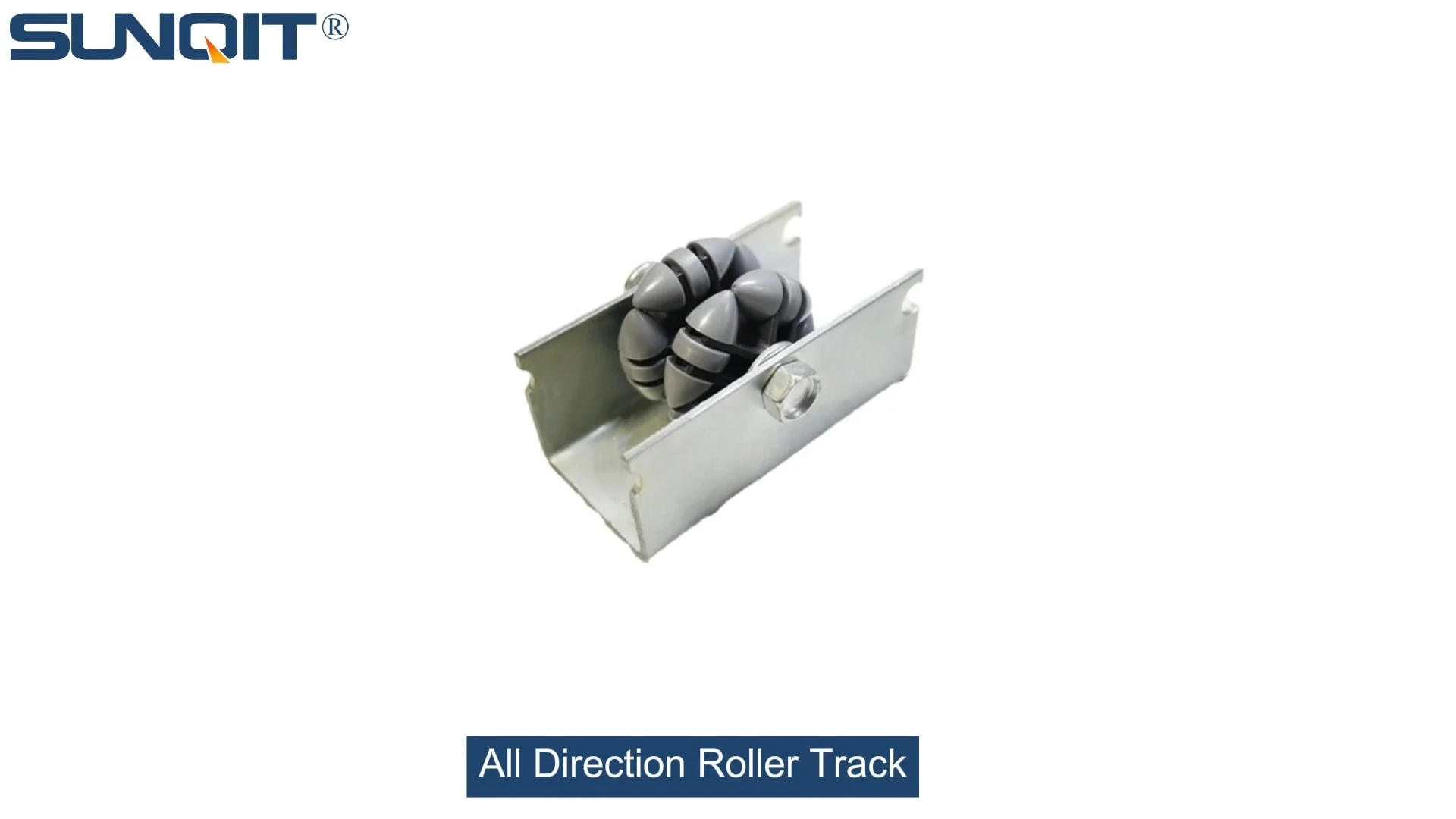
All Direction Roller Track
All direction roller track made of steel frame and multiple direction move wheel which will make boxes are always in contact with the rollers, reducing jams and enhancing flow reliability.
Walk into any modern home appliance factory these days, and you'll notice something interesting—amid the hum of machinery and the precision of assembly lines, there's a quiet revolution happening in how things move. Refrigerator doors glide smoothly from station to station, washing machine drums shift direction with barely a push, and microwave components flow through workstations like water finding its path. Behind much of this seamless movement? All direction roller tracks—those unassuming yet powerful systems that are redefining material flow in an industry where every second and every cent counts.
Home appliance manufacturing isn't what it used to be. Today's consumers want smarter, sleeker, and more energy-efficient products, and they want them fast. That pressure trickles down to the factory floor, where production lines must adapt to shorter product cycles, smaller batch sizes, and the constant need to switch between models. In this environment, how you move materials isn't just a logistical detail—it's the backbone of efficiency, quality, and profitability. And that's where all direction roller tracks step in, turning once-clunky material handling into a competitive advantage.
The Hidden Headaches of Material Flow in Appliance Factories
Let's start with the challenges. Anyone who's worked in appliance manufacturing knows the struggle of moving heavy, bulky components. A refrigerator door, for example, can weigh 30 pounds or more; a washing machine outer tub, even more. In the past, this often meant relying on fixed conveyors that only move in straight lines, or worse, teams of workers manually lifting and carrying—wasting time, risking injury, and increasing the chance of dents or scratches on expensive parts.
Then there's the issue of flexibility. A factory might produce five different dishwasher models in a single day, each with slightly different components and assembly steps. Fixed conveyors can't keep up with these quick changes—reconfiguring them takes hours, if not days, and that downtime costs money. And let's not forget about space. Appliance factories are often tight on square footage, with every inch needed for assembly, storage, and workers. Rigid material handling systems eat up valuable real estate, leaving little room to adapt when a new production line needs to be squeezed in.
Here's the bottom line: In an industry where profit margins are thin and competition is fierce, inefficient material flow doesn't just slow things down—it puts you behind. Consumers won't wait for delayed shipments, and competitors won't hesitate to capitalize on your inefficiencies. That's why forward-thinking manufacturers are turning to all direction roller tracks as a solution.
All Direction Roller Tracks: More Than Just "Rollers on a Rack"
So, what makes all direction roller tracks different? Let's break it down. Unlike traditional roller tracks that only allow movement in one direction (forward or backward), these systems use a grid of small, freely rotating balls or rollers that let materials move in any direction—forward, backward, left, right, or even diagonally. It's like upgrading from a one-lane road to a roundabout where traffic flows in every direction, no stop signs needed.
Take the 38 aluminum roller track, for example. Lightweight yet surprisingly strong, its aluminum frame resists corrosion (important in factories where cleaning agents are common), and the yellow or black ESD wheels are gentle enough to handle painted surfaces without scuffing—critical for those high-gloss refrigerator doors. Or the 40 steel roller track with yellow wheels, built to handle heavier loads like oven cavities, with a smooth roll that reduces the force needed to move components by up to 40%. These aren't just generic "rollers"; they're engineered for the specific demands of appliance parts—weight, size, and the need for precision movement.
| Traditional Material Handling | All Direction Roller Track Systems |
|---|---|
| Fixed paths (straight lines only) | 360° movement for flexible routing |
| Requires significant force to push heavy parts | Low friction; parts glide with minimal effort |
| Hard to reconfigure (hours/days of downtime) | Modular design; reconfigurable in minutes |
| Risk of part damage from rough handling | Gentle, controlled movement reduces scratches/dents |
| Fixed to floor, limiting space use | Can be mounted on workbenches or racks, saving floor space |
But the real magic isn't just in the rollers themselves—it's in how they integrate with the rest of your production ecosystem. Think of all direction roller tracks as the "nervous system" connecting your workstations, storage areas, and assembly lines. When paired with lean pipe systems, flow racks, and adjustable workbenches, they create a production environment that's not just efficient, but adaptable —the kind that can keep up with the chaos of modern appliance manufacturing.

Building a Lean Ecosystem: Roller Tracks + Lean Pipes + Workbenches
Let's talk about synergy. All direction roller tracks don't work in isolation—they shine when paired with other lean manufacturing tools, and that's where lean pipe systems and workbenches come into play. Imagine a washing machine assembly line designed with this ecosystem in mind:
The line starts with a flow rack loaded with outer tubs. These racks, built with aluminum lean pipes and plastic roller track guide rails (in that familiar yellow or grey), use gravity to feed tubs forward—first in, first out (FIFO)—so workers always grab the next part in line without searching. At the end of the flow rack, an all direction roller track section connects to the main assembly workstation. The workstation itself? A sturdy lean pipe workbench, its frame built from basic aluminum tubes and internal rotary aluminum joints that let you adjust the height or add shelves in minutes. The workbench top is smooth, with a non-slip surface, and the edges are lined with 38 aluminum roller track with side guides—so when the worker finishes attaching the motor to the tub, they simply push the tub onto the roller track, and it glides to the next station, where the drum is waiting.
"We used to have two workers just moving tubs between stations—now one worker can handle the same workload, and they're less tired at the end of the day," says a production manager at a mid-sized appliance plant in Guangdong. "The roller tracks and lean pipe workbenches turned a bottleneck into our most efficient section."
This isn't just about moving parts faster—it's about creating a workspace that adapts to people, not the other way around. Lean pipe workbenches, with their adjustable heights and modular design, reduce worker fatigue. All direction roller tracks eliminate the need for heavy lifting, cutting down on injuries and absenteeism. And because everything is built with aluminum lean pipes and reusable components, when the factory needs to switch from top-loading to front-loading washers, they don't have to tear down the entire line—just reconfigure the roller tracks and adjust the workbench heights. It's sustainability in action: less waste, less downtime, more flexibility.

Real-World Stories: How Factories Are Using This Today
Enough theory—let's look at real examples of how all direction roller tracks are transforming appliance manufacturing. These aren't hypothetical scenarios; they're stories from factories that have embraced this technology and seen tangible results.
Case 1: Refrigerator Door Assembly – No More "Door Dings"
A major refrigerator manufacturer in Shandong was struggling with a common problem: door damage. Their old system used fixed conveyors with metal rollers, and about 2% of doors would get small dents or scratches during transport—costing them thousands in rework and wasted materials. They switched to a combination of 38 aluminum roller track (with black ESD wheels, which are softer on painted surfaces) and all direction roller track sections at the transfer points between conveyors. The result? Damage dropped to 0.3%, and because the doors now glide instead of jostling, assembly time per door decreased by 12 minutes. Workers also reported less strain, as they no longer had to "guide" doors onto the conveyor—they just set them down, and the roller track did the rest.
Case 2: Microwave Oven Packaging – From Chaos to Order
A small appliance factory outside Shanghai makes over 20 microwave models, from compact 20-liter units to large family-sized ones. Their packaging line was a nightmare: workers had to carry microwaves from the assembly table to the packaging station, and with so many models, boxes would pile up, leading to mix-ups. They installed a U-shaped system of 40 steel roller track (yellow wheels for visibility) with all direction roller track "junctions" at key points. Now, microwaves roll from the assembly workbench (built with lean pipe, of course) onto the roller track, and workers at the junction can divert them left for small models, right for large ones, or straight ahead for premium lines—all with a gentle nudge. Packaging errors dropped by 40%, and the line can now handle 15% more units per shift without adding staff.
Case 3: Air Conditioner Condenser Lines – Adapting to Seasonal Spikes
Air conditioner production is seasonal—demand spikes in spring and summer, then drops off. A factory in Zhejiang used to struggle with scaling up: their fixed conveyor system couldn't handle the extra volume, so they'd bring in temporary workers to manually carry condensers, leading to inefficiencies. They replaced sections of their fixed conveyor with modular all direction roller track and flow racks. During peak season, they simply extend the roller track with additional sections (using aluminum profile connectors that snap into place) and add more flow rack lanes for parts. When demand drops, they disassemble the extra sections and store them—no wasted space, no wasted money. This past summer, they increased production by 25% with the same core staff, and temporary labor costs fell by 30%.
The takeaway? All direction roller tracks aren't just for "big factories with big budgets." Whether you're producing 100 units a day or 10,000, the flexibility and efficiency they bring scale to your operation.

Why "One-Size-Fits-All" Doesn't Work (and Why Custom Solutions Do)
Here's the thing about appliance manufacturing: no two factories are exactly alike. A plant making smart refrigerators with touchscreens has different needs than one churning out basic toasters. That's why off-the-shelf material handling systems often fall short—they're designed for the "average" factory, and let's be honest, there's no such thing.
Custom lean solutions bridge this gap. Let's say you make both small blenders and large stand mixers. A custom system might combine flow racks for blender parts (lightweight, so plastic roller track guide rails work) with heavy-duty 85 steel roller track for mixers (since their bases are heavier). The all direction roller track sections would be placed where the two lines merge, allowing workers to switch between products without stopping the flow. And because it's all built with aluminum lean pipes and modular components, if next year you add a food processor line, you can reconfigure the existing system instead of buying new.
One factory we worked with had a unique challenge: their ceiling was lower than standard, so they couldn't use overhead conveyors. We designed a low-profile system using 38 aluminum roller track mounted directly on their lean pipe workbenches, with all direction sections that let parts "slide" from one bench to the next at waist height. It was a simple solution, but it solved their space problem and kept the line moving. That's the power of custom—designing around your constraints, not in spite of them.
Looking Ahead: Roller Tracks in the Age of Smart Manufacturing
The future of home appliance manufacturing is smart—think IoT-connected machines, data-driven production, and even more flexible lines. Where do all direction roller tracks fit into this? More integrated than ever. Imagine roller tracks with built-in sensors that track how many parts pass through, alerting managers if a bottleneck is forming. Or systems that connect to your ERP software, so when an order for 500 premium refrigerators comes in, the roller track automatically adjusts its flow to prioritize those parts. Some factories are already testing roller tracks with RFID tags, so each component "knows" where it needs to go, reducing the need for manual sorting.
And as sustainability becomes more critical, the reusable, modular nature of these systems will only grow in value. Aluminum lean pipes, aluminum roller tracks, and plastic components can all be disassembled, reconfigured, and reused—unlike fixed steel conveyors that end up in landfills when production changes. It's manufacturing that's not just efficient, but responsible.
Final Thoughts: It's About More Than Moving Parts
At the end of the day, all direction roller tracks are about more than just moving parts from A to B. They're about empowering workers to do their jobs better, faster, and safer. They're about giving factories the agility to pivot when markets shift, to innovate without being held back by rigid equipment. They're about turning material handling—once a necessary evil—into a strategic advantage.
So, if you're in home appliance manufacturing, and you're still relying on fixed conveyors, manual lifting, or systems that can't keep up with your needs, maybe it's time to take a closer look at all direction roller tracks. Pair them with a lean pipe system, a few well-designed workbenches, and a custom solution tailored to your products, and you might just find that the quietest part of your factory is the most transformative.
After all, in a world where appliances are getting smarter every day, shouldn't the way you build them get smarter too?