- Company Articles
- Products and Technology
- Product knowledge
- Home Appliance Manufacturing: Lean Pipe Clamp B Chrome in Production Line Setups

Home Appliance Manufacturing: Lean Pipe Clamp B Chrome in Production Line Setups
Related Product
Lean Pipe Clamp B Chrome
Lean pipe clamp is used for turnover trolley, workbench, flowrack adjust the frame or fix some accessory.
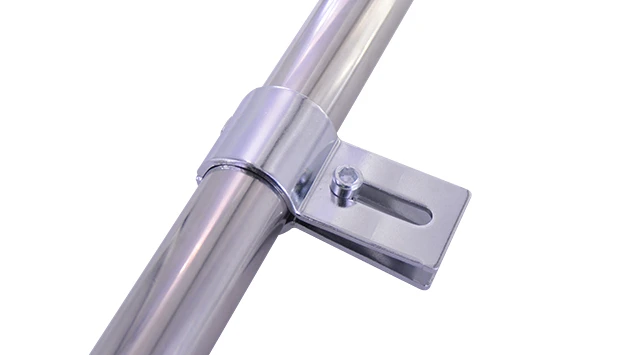
Walk into any modern home appliance factory—whether it's churning out smart refrigerators, high-efficiency washing machines, or sleek dishwashers—and you'll notice a quiet revolution on the shop floor. Gone are the days of rigid, welded steel structures that take weeks to build and years to modify. Instead, production lines hum with modular workbenches, flexible flow racks, and nimble conveyors, all held together by a small but mighty component: the Lean Pipe Clamp B Chrome . In an industry where speed, adaptability, and cost-efficiency are non-negotiable, this unassuming clamp has become the backbone of lean manufacturing systems, turning chaotic workflows into symphonies of precision.
The Role of Lean Systems in Home Appliance Manufacturing
Home appliance manufacturing is a balancing act. On one hand, consumers demand newer features, better quality, and lower prices. On the other, factories grapple with shorter product lifecycles, fluctuating part supplies, and the need to scale production up or down at a moment's notice. Traditional manufacturing setups—think fixed steel workbenches, bolted-down shelving, and custom-welded conveyors—simply can't keep up. They're slow to build, impossible to reconfigure without cutting torches, and prone to becoming obsolete when a new appliance model hits the drawing board.
Enter lean systems. Rooted in the principles of eliminating waste and maximizing value, lean manufacturing isn't just a buzzword here—it's a lifeline. At its core, a lean system is all about flexibility: building production lines that can adapt to change, reduce downtime, and make every square foot of factory space count. And that's where components like aluminum lean pipe , flow racks, and yes, Lean Pipe Clamp B Chrome, shine. These tools let factories build, modify, and rebuild workstations and material handling systems in hours, not weeks, turning "we can't" into "we can—let's try."
Meet Lean Pipe Clamp B Chrome: A Game-Changer in Modular Assembly
If lean systems are the body of modern manufacturing, then Lean Pipe Clamp B Chrome is the joint that holds it all together. At first glance, it's a simple device: a chrome-plated steel clamp designed to connect two lengths of lean pipe (often aluminum or steel) at a 90-degree angle. But looks can be deceiving. What makes this clamp special is its blend of strength, simplicity, and versatility—qualities that have made it a staple in factories worldwide.
Let's break it down. The "B" in its name refers to its design: a two-piece clamp with a threaded bolt that tightens to secure pipes in place. No welding, no drilling, no specialized tools—just a wrench (or even a hand-tighten, for lighter loads) and you're done. The chrome finish isn't just for show, either. In a factory environment—where oil, coolant, and occasional spills are par for the course—chrome acts as a shield, resisting rust and corrosion far better than bare steel. This means your clamps won't degrade over time, even in high-moisture areas like dishwasher assembly lines.
But the real magic is in how it plays well with others. Lean Pipe Clamp B Chrome is compatible with almost any standard lean pipe—from 28mm diameter aluminum lean pipe (lightweight and easy to handle) to heavier steel pipes for industrial-grade setups. Pair it with a three-way aluminum pipe joint , and suddenly you're building multi-tiered workbenches. Add a caster wheel, and that workbench becomes mobile, gliding across the factory floor to where it's needed most. It's modularity at its finest: mix, match, and modify without ever picking up a welder.
Practical Applications: Building a Lean Production Line for Dishwashers
To understand why Lean Pipe Clamp B Chrome is so indispensable, let's step into a hypothetical (but realistic) scenario: a factory tasked with ramping up production of a new energy-efficient dishwasher model. The old setup? A jumble of fixed steel tables, static shelving, and a conveyor belt that took three days to reposition. The new goal? Cut setup time by 70%, reduce material handling errors, and make the line easy to tweak when the next dishwasher model arrives.
Day 1: Assembling the Workbench. The team starts with 2-meter lengths of aluminum lean pipe—light enough for two people to carry—and a handful of Lean Pipe Clamp B Chrome. In under an hour, they've built a 1.2m x 0.8m workbench frame: four vertical pipes as legs, connected by horizontal pipes at the top and bottom, all secured with Clamp B Chrome. No welding, no waiting for paint to dry—just tighten the bolts and it's sturdy enough to hold a 50kg dishwasher door assembly. Later, they add a wooden top (easily swapped for a metal one if needed) and a small shelf below using additional clamps and a short pipe segment. Total time: 90 minutes.
Day 2: Adding Flow Racks for Parts. Next to the workbench, the team builds a flow rack—a sloped shelf where dishwasher parts (hoses, gaskets, control panels) slide forward as the front ones are used, ensuring first-in, first-out (FIFO) inventory. For this, they use aluminum lean pipe again, but this time, they attach roller tracks (yellow plastic guide rails, per the factory's color-coding system) to the frame using, you guessed it, Lean Pipe Clamp B Chrome. The clamps hold the roller tracks securely at a 5-degree angle, so parts glide smoothly without jamming. By noon, the flow rack is stocked with parts, and assemblers no longer have to walk to a distant shelf—everything they need is right at arm's length.
Day 3: Integrating the Conveyor. Finally, the team connects the workbench to the main assembly line with a short conveyor. Using heavy-duty aluminum lean pipe and Clamp B Chrome, they build a support frame, then mount a small roller conveyor (with steel wheels, for durability) on top. The clamps ensure the conveyor stays level, even when loaded with half-assembled dishwashers. Best of all? If next month's model is slightly wider, they can loosen the clamps, adjust the frame width, and the conveyor fits—no need to buy a whole new system.
By the end of the week, the new line is up and running, with zero downtime during the transition. And when the factory decides to add a quality control station six months later? They just disassemble a section of the flow rack, reconfigure the pipes with Clamp B Chrome, and voilà—a new workstation is born. That's the power of modularity.
Traditional vs. Lean: A Comparative Look at Production Setups
Still on the fence about whether Lean Pipe Clamp B Chrome is worth the switch? Let's put it head-to-head with traditional welded steel setups in a side-by-side comparison. The results might surprise you:
| Aspect | Traditional Welded Steel Setup | Lean Setup with Lean Pipe Clamp B Chrome |
|---|---|---|
| Setup Time | 3–5 days (requires welding, painting, curing) | 2–4 hours (no welding; assemble with hand tools) |
| Flexibility | Rigid—modifications require cutting/welding; often cheaper to rebuild than reconfigure | Highly flexible—loosen clamps, reposition pipes, and reuse components elsewhere |
| Durability | High initial strength, but welded joints weaken over time with vibration; prone to rust if paint chips | Chrome finish resists rust; bolted connections maintain strength even with repeated adjustments |
| Cost Over Time | High upfront costs (welders, materials); expensive to modify or replace | Lower upfront costs; reusable components reduce long-term expenses (e.g., repurpose clamps for new lines) |
| Safety | Sharp edges from welding; heavy, fixed structures can't be moved to avoid hazards | Smooth, rounded pipe edges; mobile setups (with casters) can be repositioned to clear walkways |
Technical Deep Dive: What Makes Clamp B Chrome Tick?
For the detail-oriented folks (we see you, plant engineers), let's get into the specs. Lean Pipe Clamp B Chrome is typically made from cold-rolled steel, then electroplated with a 0.01mm–0.03mm layer of chrome. This gives it a tensile strength of around 450–500 MPa—strong enough to hold pipes carrying loads up to 200kg per clamp (though we always recommend checking the manufacturer's specs for your specific use case). The bolt is usually M8 or M10 grade 8.8 steel, ensuring it won't strip under tension, even with repeated tightening.
Compatibility is another key feature. Most clamps are designed for 28mm diameter pipes (the industry standard for lean systems), but some manufacturers offer versions for 30mm or 40mm pipes, too. If you're using aluminum profile (think T-slot extrusions for heavier-duty workbenches), you can pair Clamp B Chrome with a "roller track placon mount for aluminum profile flat"—a small bracket that bridges the gap between the clamp and the profile, opening up even more design possibilities.
Maintenance is a breeze, too. Unlike welded joints, which can loosen over time and require re-welding, a loose Clamp B Chrome just needs a quick retightening with a wrench. And if a clamp does wear out (after years of use, perhaps), replacing it is as simple as unscrewing the old one and screwing in a new—no need to dismantle the entire workstation. This keeps downtime to a minimum, which in manufacturing, translates directly to saved money.
Overcoming Common Challenges: Why Skeptics Become Believers
We've heard the doubts. "Is a clamp really strong enough to hold heavy appliances?" "Won't the chrome scratch off?" "What if we need to move a workstation—will the clamps hold?" Let's tackle these head-on.
Strength: In a recent test by a leading home appliance manufacturer, a workbench built with Lean Pipe Clamp B Chrome and aluminum lean pipe supported 300kg of weight (about three fully assembled washing machine doors) without so much as a creak. The clamps distributed the load evenly across the pipes, and the chrome finish showed no signs of stress. For most factory applications—where parts rarely exceed 50kg per shelf—this is more than enough.
Scratch Resistance: Chrome plating is harder than bare steel, so minor scrapes from tools or parts won't penetrate the surface. For high-traffic areas (like conveyor junctions where parts slide past), some factories add a thin plastic sleeve over the pipes—but honestly, the clamps themselves hold up just fine. We've visited factories using the same Clamp B Chrome units for over five years, and they still look (and work) like new.
Mobility: Add a set of caster wheels (with locking brakes) to your lean pipe workbench, and you've got a mobile workstation that can roll across the factory floor. The key here is to use heavier-duty clamps (rated for dynamic loads) and ensure the wheels are evenly spaced. We've seen teams move 150kg workstations with ease—no forklift required.
Choosing the Right Supplier: Why Quality Matters
Not all Lean Pipe Clamp B Chrome clamps are created equal. With so many suppliers on the market, it's tempting to opt for the cheapest option—but that's a mistake that can cost you in the long run. A low-quality clamp might have a thin chrome layer that chips after a month, or a bolt that strips under minimal torque. Suddenly, your "cheap" setup is costing you downtime as you replace broken clamps.
So what should you look for in a supplier? First, certifications: ISO 9001 is a good baseline, as it ensures consistent quality control. Second, material specs: ask for test reports on chrome thickness and tensile strength. Third, compatibility: does the supplier offer other lean components (aluminum lean pipe, joints, casters) that work seamlessly with their clamps? A one-stop shop can save you time and headaches when ordering.
And don't sleep on customer support. A good lean pipe supplier won't just sell you clamps—they'll help you design your setup, answer technical questions, and even send samples for testing. We recently worked with a supplier who walked a client through building a custom flow rack for oven heating elements, adjusting the clamp placement to ensure parts didn't get stuck. That's the kind of partnership that turns a good setup into a great one.
Future Trends: Lean Pipe Clamp B Chrome in the Age of Industry 4.0
As factories move toward Industry 4.0—smart systems with sensors, IoT connectivity, and data-driven optimization—Lean Pipe Clamp B Chrome is evolving right along with them. Today, you can buy clamps with built-in RFID tags, letting you track which components are used where (useful for inventory management). Tomorrow, we might see clamps with pressure sensors that alert managers when a workstation is overloaded, or Bluetooth-enabled bolts that send a notification when they start to loosen.
But even as technology advances, the core appeal of Clamp B Chrome remains: it's simple, reliable, and human-centric. In a world of complex machines, there's something refreshing about a tool that any factory worker can use, no training required. It puts the power of design back in the hands of the people on the floor—the ones who know best how to make the line run smoother.
Conclusion: Small Clamp, Big Impact
At the end of the day, Lean Pipe Clamp B Chrome isn't just a piece of hardware. It's a symbol of how manufacturing is changing—moving away from rigidity and waste, and toward flexibility, efficiency, and empowerment. In home appliance factories, where every second of downtime costs money and every innovation matters, it's the quiet hero that lets teams build better, adapt faster, and stay ahead of the competition.
So the next time you unbox a new refrigerator or load a dishwasher, take a moment to appreciate the invisible work happening behind the scenes. Chances are, somewhere in that factory, a Lean Pipe Clamp B Chrome is holding it all together—one bolt, one pipe, one better day of manufacturing at a time.