- Company Articles
- Products and Technology
- Application Cases
- Home Appliance Production: Five Way Straight Lean Pipe Joint Use Cases

Home Appliance Production: Five Way Straight Lean Pipe Joint Use Cases
Related Product
Five Way Straight Lean Pipe Joint
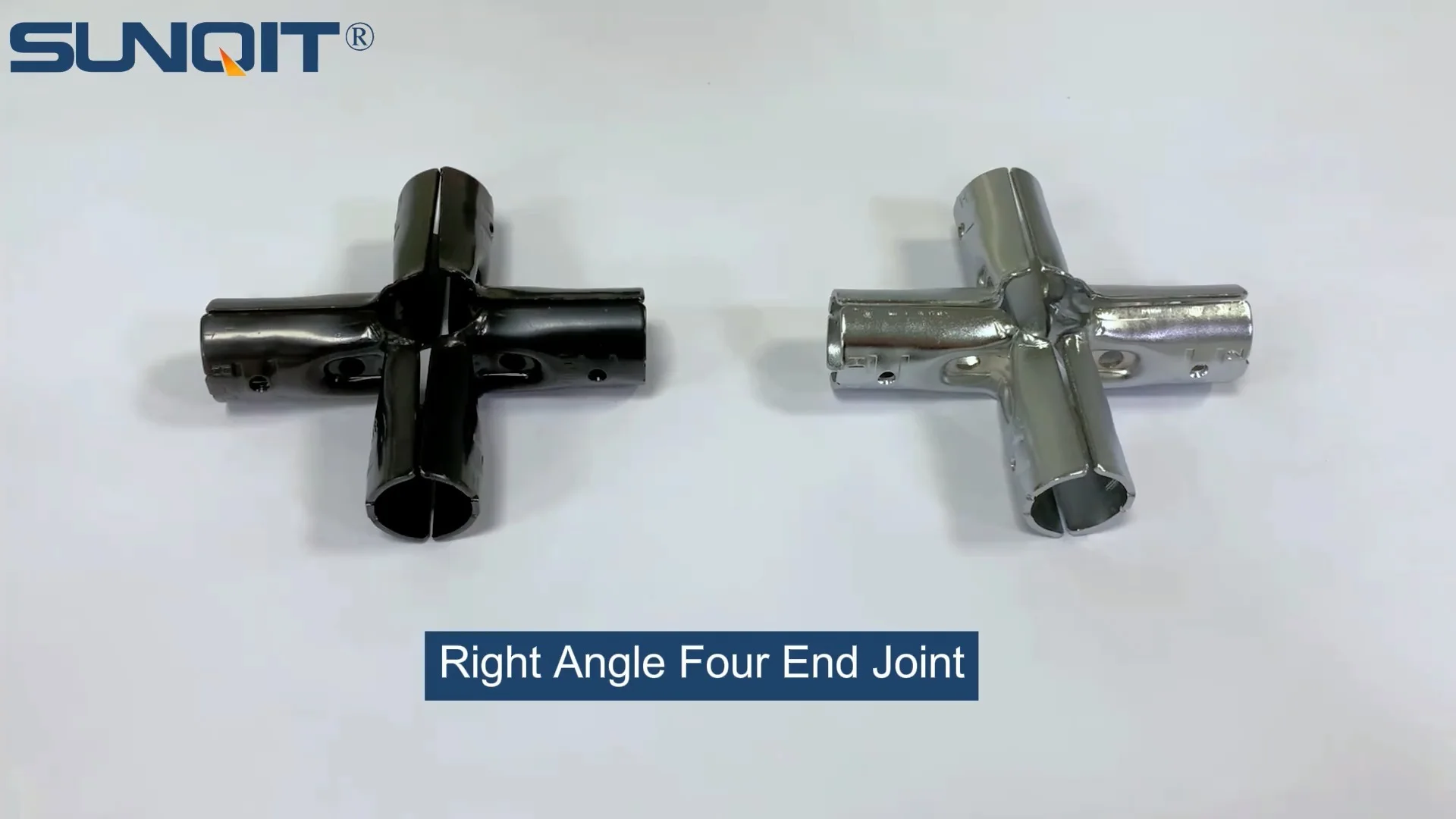
Five way straight lean pipe joint, for 5 pcs 28mm lean pipe connect in straight angle,which used widely in workbench, flow rack, hand trolley frame connection.
Walk into any home appliance factory, and you'll hear the hum of progress: the whir of conveyor belts, the clink of metal parts, and the steady rhythm of workers assembling everything from sleek refrigerators to compact washing machines. But behind that harmony lies a hidden challenge—one that keeps production managers up at night: how to keep pace with changing consumer demands while keeping costs in check . In an industry where product lines shift faster than seasonal trends, rigidity is the enemy. That's where lean manufacturing steps in, and at its heart? The unsung hero of flexible production: the five way straight lean pipe joint .
This small but mighty component is more than just a connector. It's the key to building production systems that bend without breaking—workstations that adapt to new appliance models overnight, material racks that reconfigure as parts change, and trolleys that glide where they're needed most. Let's dive into how this unassuming joint is transforming home appliance production floors, one use case at a time.
What Makes the Five Way Straight Lean Pipe Joint Special?
Before we jump into use cases, let's get to know the star of the show. The five way straight lean pipe joint is a modular connector designed to link lean pipes (typically steel or aluminum tubes) at multiple angles. Unlike fixed welding or one-size-fits-all brackets, it features five connection points—four radial and one axial—allowing pipes to branch out in 90° and 180° configurations. Think of it as a production Swiss Army knife: twist it, lock it, and suddenly you've got a shelf, a frame, or a support beam—no power tools required.
Made from durable materials like zinc-plated steel or lightweight aluminum, these joints are built to withstand the daily grind of factory life—scratches, bumps, and the occasional heavy load. But what truly sets them apart is their adaptability . Loosen a few screws, reposition the pipes, and your once-static workstation becomes a custom setup tailored to the day's production run. For home appliance makers, this isn't just convenience—it's survival.
Use Case 1: Modular Assembly Workbenches That Grow With Your Products
The Problem: Rigid Workstations Slow Down Model Changes
Consider a factory assembling smart refrigerators. One week, they're building a 36-inch French door model with ice makers; the next, a compact 24-inch unit for apartments. Each requires different tools, different part layouts, and different worker postures. Traditionally, this meant dedicated workstations for each model—costly, space-hogging, and impossible to scale when a new product line launches.
The Solution: Joint-Powered Workbenches That Adapt in Minutes
Enter the five way joint. By combining these joints with lean pipes and accessories like tool holders and shelves, factories can build modular workbenches that transform on demand. Let's take a real-world example: a leading dishwasher manufacturer in Guangdong, China, was struggling with setup times when switching between standard and "quiet mode" dishwasher models. Their old wooden workbenches had fixed shelves and bolted-down tool hooks—reconfiguring them took 4 hours per line. After switching to lean pipe workbenches built with five way joints, that time dropped to 20 minutes .
Here's how it works: Workers use the five way joints to add or remove side shelves (for extra parts storage when assembling larger models), adjust the height of tool rails (so shorter workers can reach comfortably), or even add a small roller track (to slide heavy motor components into place). No welding, no drilling—just a hex key and a few minutes of work. "It's like rearranging furniture," says Li Wei, a production supervisor at the plant. "One day, we're building a basic model; the next, we're adding a shelf for the new sensor module. The joint makes it effortless."
The Results: Happier Workers, Faster Output
The benefits go beyond speed. Ergonomic adjustments mean fewer worker injuries—a critical win in an industry where repetitive strain is common. At the Guangdong plant, reported wrist and back pain dropped by 35% within six months of switching to these workbenches. And because the joints are reusable, the factory saved $45,000 in workstation costs in the first year alone by repurposing old lean pipes instead of buying new furniture.

Use Case 2: Dynamic Material Flow Racks That Keep Parts Moving
The Problem: Stagnant Material Flow Creates Bottlenecks
In home appliance production, time is money—and nowhere is that truer than in material handling. Imagine a line assembling ovens: if the racks holding heating elements are too far from the assembly station, workers waste minutes walking back and forth. If the shelves are too close, parts get jostled and damaged. Worse, when a new oven model requires a larger heating element, the old racks might not fit—grounding production until new storage is built.
The Solution: Five Way Joints + Roller Tracks = Flexible Flow Racks
This is where the five way joint teams up with another lean star: roller track and accessories . Together, they create flow racks that adjust to part sizes, weight, and demand. Let's look at a case study from a kitchen appliance factory in Vietnam that produces blenders and food processors. Their biggest headache? Storing and transporting fragile plastic jars—too heavy for workers to carry by hand, too awkward for standard racks.
Using five way joints, they built custom flow racks with adjustable shelves (spaced 6 inches apart for small blender jars, 12 inches for large food processor bowls) and integrated roller tracks (with plastic wheels to prevent scratches). The joints allowed them to angle the shelves slightly downward, so jars "flow" gently to the front of the rack as workers take the top ones—no more bending or reaching. When a new line of extra-large smoothie jars launched, they simply added two more pipe segments to the rack height using the fifth joint port—no new rack needed.
The Results: 40% Faster Material Retrieval, Zero Damaged Parts
The impact was immediate. Material retrieval time dropped from 2 minutes per worker per hour to just 45 seconds, freeing up 3 hours of productive work per day per line. And because the roller tracks and adjustable shelves protected the jars from impacts, damage rates plummeted from 8% to 0.5%. "We used to have a worker dedicated to replacing cracked jars," says factory manager Minh Pham. "Now, that person is assembling appliances—because the racks just work."

Use Case 3: Agile Turnover Trolleys That Follow the Workflow
The Problem: Heavy, Fixed Trolleys Create Bottlenecks
In many factories, material transport is stuck in the past: heavy steel trolleys welded into fixed shapes, designed for one type of part and impossible to modify. When a new appliance model introduces a bulkier part—say, a larger compressor for energy-efficient refrigerators—these trolleys become useless. Workers end up making multiple trips, or worse, overloading trolleys and risking injuries.
The Solution: Lightweight, Customizable Trolleys Built With Lean Pipes and Joints
The five way joint changes the game here, too. By combining lean pipes, joints, and caster wheels , factories can build turnover trolleys that are lightweight, durable, and infinitely customizable. Take the example of a Turkish washing machine manufacturer that was struggling to transport drum assemblies—a heavy, awkward part that came in three sizes. Their old steel trolleys could only fit the medium drum, so workers were forced to carry small and large drums by hand, leading to frequent delays and a 12% higher injury rate.
Using five way joints, they built new trolleys with adjustable dividers (to separate drum sizes), fold-down sides (for easy loading), and lockable caster wheels (to keep trolleys steady during assembly). The joints allowed them to add extra support beams where needed—critical for heavy drums—and even attach tool hooks for the wrenches used to secure drum brackets. Best of all, when a new "mega-capacity" drum was introduced, they simply extended the trolley frame by adding two more pipe segments via the joint's axial port. Total modification time? 15 minutes.
The Results: 50% Fewer Trips, 0 Injuries in 6 Months
The results spoke for themselves: Workers now make half as many transport trips, cutting downtime by 2.5 hours per shift. And because the trolleys are tailored to the drum sizes, the injury rate dropped to zero. "I used to dread moving the large drums," says assembly line worker Aylin Demir. "Now, the trolley does the heavy lifting. It's like having a helper who never gets tired."

The Numbers Speak: Why Factories Are Switching to Five Way Joints
Still not convinced? Let's look at the data. A 2024 survey of 50 home appliance factories across Europe and Asia found that those using five way straight lean pipe joints reported:
| Metric | Factories Using Traditional Fixed Systems | Factories Using Five Way Joint Systems |
|---|---|---|
| Setup time for new product lines | 48 hours average | 6 hours average |
| Worker productivity (parts per hour) | 12.5 parts/hour | 18.3 parts/hour |
| Cost of workstation modifications | $2,300 average per change | $150 average per change |
| Worker satisfaction score (1-10) | 5.2 | 8.7 |
These numbers tell a clear story: the five way joint isn't just a tool for flexibility—it's a catalyst for happier workers, faster production, and lower costs.
Choosing the Right Partner: Why Your Lean Pipe Supplier Matters
Of course, none of this is possible without quality components. That's why partnering with a reliable lean pipe supplier is critical. Look for suppliers that offer not just joints and pipes, but a full ecosystem of accessories—caster wheels, roller tracks, tool holders—and expertise in custom configurations. A good supplier won't just sell you parts; they'll work with your team to design systems that solve your specific pain points, whether that's a wonky workstation or a bottleneck in material flow.
Take it from Maria Gonzalez, production director at a Spanish home appliance brand: "We tried cheap joints from a no-name supplier once, and they kept slipping under heavy loads. It was a disaster. Now, we work with a supplier who sends engineers to our floor to test configurations before we buy. The five way joints they provide lock tight, last for years, and even come with a warranty. It's not just a purchase—it's a partnership."
Conclusion: The Five Way Joint—Small Part, Big Impact
In the fast-paced world of home appliance production, the difference between success and stagnation often comes down to the smallest components. The five way straight lean pipe joint may not grab headlines, but it's quietly revolutionizing how factories operate—turning rigid systems into flexible ecosystems that adapt, grow, and thrive. From modular workbenches that keep pace with new models to flow racks that protect fragile parts, and trolleys that reduce worker strain, this humble joint is proof that smart manufacturing starts with smart connections .
So the next time you unbox a new refrigerator or fire up your washing machine, take a moment to appreciate the invisible hero behind it all: the five way joint, hard at work on the factory floor, keeping production flowing—one flexible connection at a time.