In the bustling world of home appliance production, where every second counts and precision is non-negotiable, the unsung heroes of the assembly line often lie in the details. Think about the last time you unboxed a sleek refrigerator or a compact washing machine—behind that polished finish is a symphony of moving parts, both in the appliance itself and in the workspace where it was built. Today, we're shining a spotlight on one such detail that keeps the production floor running smoothly: the
flat swivel castor wheel with brake
, and how it transforms workbenches and fixtures into dynamic, safe, and efficient tools for building the appliances we rely on.
The Heart of the Line: Workbenches & Fixtures in Home Appliance Assembly
Walk into any home appliance factory, and you'll quickly notice that workbenches and fixtures aren't just tables—they're the command centers of assembly. These are where technicians spend hours attaching wiring harnesses to oven doors, securing gaskets to refrigerator compartments, or testing control panels for washing machines. The best workbenches are like chameleons: they adapt to the task at hand, whether that means holding a 50-pound motor steady or sliding smoothly to a new position when the production line reconfigures.
But here's the catch: in an industry where product lines change (think seasonal fridge models or upgraded dishwasher features), and where lean manufacturing principles demand minimizing waste (including wasted time moving equipment), workbenches can't be stuck in one spot. Yet, when it's time to drill, solder, or torque a bolt, that same workbench needs to stay put—no wobbling, no sliding. This is where the right mobility solution becomes make-or-break.
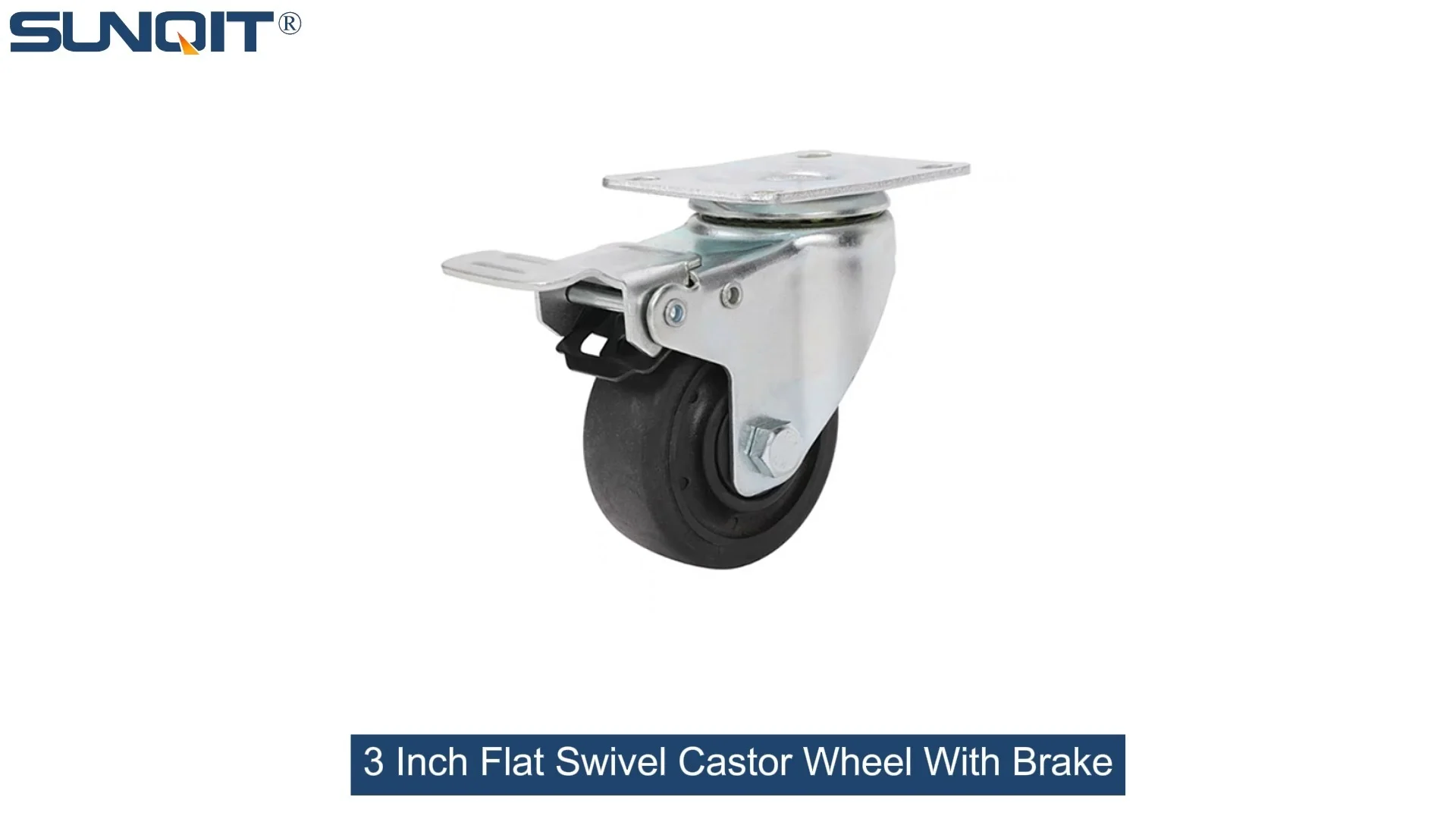
At first glance, a castor wheel might seem like a simple component. But in home appliance production, not all castors are created equal. The
flat swivel castor wheel with brake
stands out for a reason: it's designed to balance two critical needs—mobility and stability—without compromising on either.
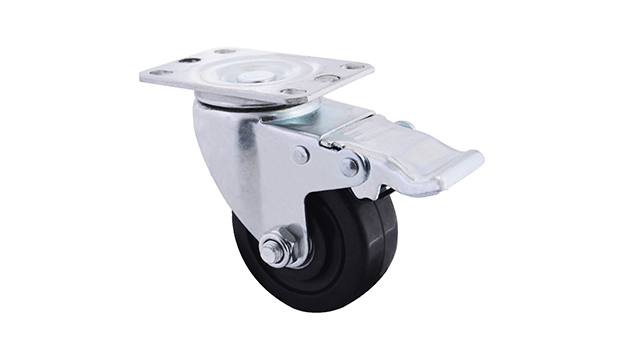
Let's break it down. "Flat swivel" means the castor mounts directly to the base of a workbench or fixture with a low-profile design, keeping the unit close to the ground for stability. The "swivel" part lets the wheel rotate 360 degrees, so even a heavy workbench loaded with tools and parts can be maneuvered around tight corners or past other equipment with minimal effort. And the "brake"? That's the safety net. A simple foot pedal (or sometimes a hand lever) locks the wheel in place, turning a mobile workbench into a rock-solid platform in seconds.
Imagine a scenario: Maria, a lead technician on the dishwasher assembly line, needs to reposition her workbench to align with a new conveyor belt bringing in control panels. With a quick push, the swivel castors glide the bench 10 feet down the line—no straining, no need for a forklift. Once in place, she taps the brake pedals with her foot, and the wheels lock. Now, when she leans into installing a delicate sensor, the bench doesn't budge. That's the power of this small but mighty component.
Why Home Appliance Manufacturers Can't Ignore This Castor
You might be wondering: Why not just use any castor? What makes this one so special for home appliance production? Let's dive into the benefits that matter most on the factory floor.
1. Mobility Without the Fuss
Home appliance factories are dynamic spaces. A workbench that's perfect for assembling microwave doors on Monday might need to shift to testing dryer vents by Friday. Fixed castors (the ones that only roll forward/backward) force you to pivot the entire bench to change direction—a hassle when you're tight on space. Swivel castors eliminate that. With 360-degree rotation, even a fully loaded workbench feels light to move, cutting down on the time technicians spend rearranging equipment. And because these are "flat" mount, there's no clunky bracket sticking out, reducing the risk of tripping or catching on cables.
2. Safety When It Counts
Soldering a wire connection or torquing a bolt requires steady hands—and a steady work surface. A workbench that creeps forward mid-task isn't just annoying; it's dangerous. The brake on these castors isn't an afterthought. Most models use a "total lock" design, which locks both the wheel (preventing rolling) and the swivel (preventing rotation), so the bench stays exactly where you left it. This is especially critical for tasks like aligning parts with
roller track
systems—those grooved tracks that feed components to the workbench. If the bench shifts, the roller track misaligns, and suddenly parts are jamming or falling, grinding production to a halt.
3. Built for the Grind of Factory Life
Home appliance production floors aren't gentle environments. There's oil, grease, occasional spills, and constant foot traffic. The best flat swivel castors with brakes are built to withstand this. Many use polyurethane wheels, which resist chemicals, won't mark floors (important for keeping the workspace clean), and roll quietly—no more loud clanging as benches move. The brake mechanisms are often sealed to keep out dust and debris, ensuring they don't jam when you need them most. When paired with a sturdy
workbench
frame (often made from aluminum profiles for strength and lightness), these castors become a long-term investment, not a frequent replacement part.

Fitting into the Lean System Puzzle
Modern home appliance factories live and breathe
lean system
principles: eliminate waste, optimize flow, and empower workers to improve processes. So how does a castor wheel fit into that? Let's connect the dots.
Lean manufacturing hates "motion waste"—the time workers spend walking to get tools or moving equipment. A workbench on swivel castors with brakes cuts that waste by letting technicians bring the workbench to the task, not the other way around. Need to grab a part from the material rack? Roll the bench over. Finished with that task? Lock it back into place at the main line. No more trekking back and forth.
Then there's "overprocessing" waste. A one-size-fits-all workbench might require extra steps (like disassembling it) to reconfigure. With castors, reconfiguration is as simple as unlocking, rolling, and relocking. This flexibility lets factories adapt to smaller batch sizes or custom orders without overhauling the entire line—a key part of lean's "just-in-time" mindset.

Comparing Castor Wheels: Which One Fits Your Workbench?
|
Castor Type
|
Best For
|
Mobility
|
Safety (Brake)
|
Load Capacity (Typical)
|
Home Appliance Use Case
|
|
Fixed Castor (No Swivel)
|
Straight-line movement only
|
Low (only forward/backward)
|
None (unless paired with brake)
|
Up to 500 lbs
|
Heavy, rarely moved fixtures (e.g., motor testing stations)
|
|
Swivel Castor (No Brake)
|
Frequent movement, no need for locking
|
High (360° rotation)
|
Low (can roll unexpectedly)
|
Up to 300 lbs
|
Light tool carts (not workbenches with precision tasks)
|
|
Flat Swivel Castor with Brake
|
Dynamic workbenches/fixtures
|
High (360° rotation + easy rolling)
|
High (total lock brake)
|
Up to 600 lbs
|
Assembly workbenches, test stations, roller track-integrated fixtures
|
Beyond the Wheel: Integrating with Aluminum Profiles & Roller Tracks
The magic of the flat swivel castor wheel with brake really shines when it's paired with other factory workhorses, like aluminum profiles and roller tracks. Let's break that down.
Aluminum profiles—those modular, T-slot frames—are the backbone of modern workbenches. They're lightweight, strong, and easy to customize with shelves, tool holders, or lighting. The flat mount design of these castors fits perfectly with aluminum profile frames, attaching directly to the bottom rails without adding extra bulk. This means the workbench stays low to the ground (stable) but still mobile—ideal for pairing with roller tracks, which rely on precise height alignment to feed parts smoothly.
Roller tracks, for example, are often mounted to the edge of workbenches to let parts glide from one station to the next. If the workbench is on wobbly or misaligned castors, the roller track tilts, and parts get stuck. With flat swivel castors that lock securely, the roller track stays level, and parts flow like water—no jams, no delays.
A Day in the Life: How Castors Make a Difference
Let's paint a picture of a typical morning on a dishwasher assembly line to see these castors in action.
7:00 AM: The night shift just finished a run of standard dishwashers, and today's line is switching to a premium model with extra features. The team needs to reconfigure three workbenches to handle the new control panel assembly. Juan, the line lead, grabs a walkie-talkie: "Can we get bench 4 moved to station C? We need to align it with the new roller track for the touchscreens."
7:05 AM: A technician unlocks the four flat swivel castors on bench 4 with a quick tap of his foot. The bench, loaded with tools and a half-assembled control panel, glides smoothly across the factory floor—no straining, no loud noises. He positions it next to the roller track, checks the alignment, then locks each brake. The bench doesn't budge, even when he leans on it to attach the roller track connector.
9:30 AM: Mid-morning, a quality check reveals a minor issue with the gasket alignment on the premium models. The team decides to add a quick inspection step. Instead of building a new fixture, they roll an extra workbench (on the same swivel castors) into place between stations 2 and 3, lock the brakes, and start inspecting—no downtime, no extra cost.
3:00 PM: The line is humming, and the first batch of premium dishwashers is ready for testing. The testing workbench, which sits on—you guessed it—flat swivel castors with brakes, is rolled over to the assembly line, locked down, and loaded with the first unit. An hour later, when testing is done, it's rolled back to its storage spot, freeing up space for the next task.
This isn't just efficiency—it's empowerment. The castors turn static workbenches into tools that adapt to the team, not the other way around.
Wrapping Up: The Little Wheel That Drives Big Results
In the grand scheme of home appliance production, a castor wheel might seem small. But as we've explored, the
flat swivel castor wheel with brake
is a linchpin in building efficient, safe, and adaptable workspaces. It bridges the gap between mobility and stability, fits seamlessly into lean systems, and works hand-in-hand with components like aluminum profiles and roller tracks to keep the line moving.
Next time you unbox that new appliance, take a moment to appreciate the thought that went into not just the appliance itself, but the workspace where it was built. Behind every smooth, reliable product is a team of technicians, a well-designed process, and yes—even a few hardworking castor wheels keeping the line rolling.
