- Company Articles
- Products and Technology
- Product knowledge
- Home Appliance Production: Gusset Alp 3030's Role in Modular Assembly

Home Appliance Production: Gusset Alp 3030's Role in Modular Assembly
Related Product
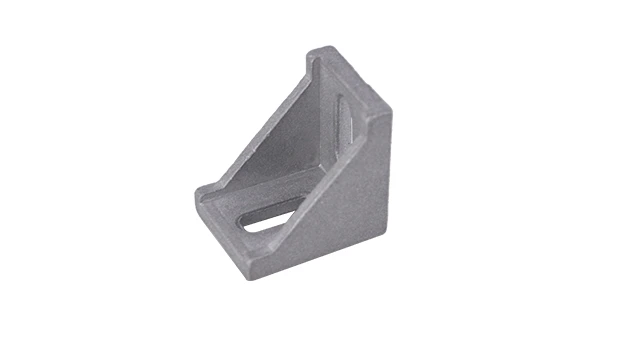
Gusset ALP 3030
The 3030 bracket/Gusset is an external fastening method that creates a 90 degree connection. 3030 means this size is used for 30 series aluminum profile with a quick connection by bolt and nut.
Walk into any modern home, and you'll likely find a lineup of hardworking appliances: a sleek refrigerator keeping groceries fresh, a quiet washing machine tackling piles of laundry, a microwave ready to reheat leftovers in seconds. These everyday essentials simplify our lives, but behind their polished exteriors lies a complex journey of design, engineering, and manufacturing. For home appliance producers, the challenge isn't just building reliable products—it's doing so efficiently, even as consumer demands shift toward customization, faster updates, and smarter features. In this fast-paced landscape, modular assembly has emerged as a game-changer, and at the heart of this flexible approach lies a small but mighty component: the Gusset Alp 3030. Paired with aluminum extrusion profiles and lean system principles, this unassuming bracket is quietly revolutionizing how appliances go from blueprints to living rooms.
The Changing Face of Home Appliance Manufacturing
Not long ago, home appliance production was dominated by mass manufacturing. Factories churned out identical models by the thousands, relying on rigid, fixed assembly lines that prioritized speed and volume over adaptability. But today, the script has flipped. Consumers no longer want one-size-fits-all appliances—they crave options: a refrigerator with a built-in water dispenser, a washing machine with eco-friendly cycles, or a smart oven that connects to their phone. This demand for variety has left traditional production lines struggling to keep up.
Consider a factory that produces both standard and high-end refrigerators. A traditional line, with its welded steel workbenches and fixed conveyor belts, would require a complete overhaul to switch between models. That means downtime, lost productivity, and higher costs—all of which eat into profit margins. worse, if a new feature (say, a larger ice maker) requires a slightly wider assembly station, the old setup can't adjust. It's a bottleneck that stifles innovation and slows time-to-market.
Enter modular assembly. Unlike rigid lines, modular systems are built from interchangeable parts that can be reconfigured in hours, not weeks. Need a taller workbench for a new oven model? Swap out the legs. Require a narrower conveyor to fit a compact dishwasher? Adjust the frame. This flexibility isn't just convenient—it's essential for staying competitive in an industry where consumer preferences change as quickly as tech trends.
Aluminum Extrusion Profiles: The Backbone of Modularity
At the core of any modular assembly system are aluminum extrusion profiles. If modularity is the "what," these profiles are the "how." But what exactly are they? Aluminum extrusion is a manufacturing process where heated aluminum billets are forced through a die, shaping them into long, uniform pieces with specific cross-sections—think tubes, channels, or beams. For home appliance production, the most common profiles are T-slot aluminum extrusion profiles, named for the grooves (or "T-slots") running along their length. These slots are like built-in attachment points, allowing brackets, shelves, and tools to be added or removed without welding or drilling.
Why aluminum? For starters, it's lightweight—about a third the weight of steel—making it easy to reposition workbenches or material racks without heavy machinery. Yet it's surprisingly strong, able to support the weight of tools, components, and even partially assembled appliances. Aluminum also resists corrosion, a must in factories where spills (of cleaning fluids or lubricants) are common. And perhaps most importantly, it's infinitely customizable. Extrusion dies can be tailored to create profiles of different sizes, from slim 20x20mm beams for small parts to sturdy 40x80mm frames for heavy-duty workstations. This versatility makes aluminum extrusion profiles the ideal building blocks for modular systems.

Gusset Alp 3030: The Unsung Hero of Structural Stability
If aluminum extrusion profiles are the bones of a modular system, then the Gusset Alp 3030 is the connective tissue that holds everything together. Let's break down that name: "Gusset" refers to a bracket used to strengthen joints, "Alp" likely nods to its aluminum construction, and "3030" indicates it's designed for 30x30mm aluminum profiles—the workhorses of mid-sized assembly setups. But don't let its small size fool you: this bracket plays a critical role in making modular systems both flexible and sturdy.
Imagine building a workbench from 30x30mm aluminum profiles. You'd connect vertical legs to horizontal beams using basic corner brackets, but over time, the weight of tools or constant vibrations from nearby machinery could loosen those joints. A wobbly workbench isn't just annoying—it's a safety hazard. This is where the Gusset Alp 3030 shines. Shaped like a small, angled plate with pre-drilled holes, it bolts into the T-slots of two connected profiles, adding diagonal reinforcement. Think of it as a bridge between the vertical and horizontal beams, distributing weight evenly and preventing flexing.
What makes the Gusset Alp 3030 so useful for modular assembly? Unlike welded joints, which are permanent and difficult to modify, it's (detachable). If you need to shorten the workbench or reangle a shelf, you simply unbolt the gusset, adjust the profiles, and reattach it. This means the same workbench that assembles microwaves today can be repurposed for blenders next month—no cutting, welding, or wasted materials. For factories juggling multiple product lines, this adaptability is a lifesaver.
But it's not just about flexibility. The Gusset Alp 3030 also enhances durability. Aluminum profiles are strong on their own, but joints are often weak points. By reinforcing these areas, the gusset extends the lifespan of modular setups, reducing the need for frequent replacements. In a industry where equipment costs can run into the hundreds of thousands, this longevity translates to significant savings over time.

From Workbenches to Flow Racks: Real-World Applications
To understand the Gusset Alp 3030's impact, let's look at how it's used in three key areas of home appliance production: workbenches, material racks, and lean system workstations.
1. Assembly Workbenches: Where Precision Meets Comfort
Assembly line workers spend hours at their workbenches, attaching wires, securing panels, or testing components. A poorly designed bench can lead to fatigue, errors, or even injuries. Modular workbenches, built with 30x30mm aluminum profiles and Gusset Alp 3030 brackets, solve this by putting customization in the hands of supervisors and workers alike.
For example, a worker assembling small appliance controls might need a lower bench to sit comfortably, while a colleague assembling refrigerator doors (which are taller and heavier) might need a standing setup. With modular benches, legs can be swapped out for longer or shorter profiles, and the Gusset Alp 3030 ensures the adjusted joints stay stable. Add-ons like tool hooks, LED task lights, or ESD (electrostatic discharge) mats can be clipped into the T-slots, creating a personalized workspace. When a new appliance model requires a wider surface area, the bench can be extended by adding a middle section—no need to buy a whole new unit.
2. Material Racks: Organizing Chaos, One Component at a Time
Behind every assembly line is a network of material racks, holding screws, gaskets, circuit boards, and other parts. In traditional setups, these racks are often fixed metal shelves, built to fit specific part sizes. If a new component (say, a larger motor for a premium dishwasher) comes in, the rack might be too shallow, forcing workers to stack boxes haphazardly or leave parts on the floor—both recipes for lost items or delays.
Modular material racks, however, adapt. Using 30x30mm aluminum profiles and Gusset Alp 3030 brackets, shelves can be adjusted up, down, or sideways to fit new parts. Need to add a third shelf to a two-shelf rack? Simply bolt in new vertical supports, secure them with gussets for stability, and slide in a new horizontal profile. The T-slots even allow for accessories like dividers or label holders, keeping parts organized. For fragile items like glass oven doors, racks can be fitted with soft rubber mats or protective rails—all attached via the same T-slot system. This level of organization reduces time wasted searching for parts, keeping the assembly line moving smoothly.
3. Lean System Workstations: Cutting Waste, Boosting Efficiency
Lean manufacturing—a philosophy focused on eliminating waste—has become a cornerstone of modern production, and modular systems align perfectly with its goals. A lean system workstation, for instance, is designed to minimize unnecessary movement: tools are within arm's reach, parts are delivered just-in-time, and processes are streamlined to avoid bottlenecks. Here, the Gusset Alp 3030 helps maintain efficiency by ensuring the workstation can evolve with process improvements.
Suppose a team implementing lean principles realizes that moving a conveyor belt 6 inches closer to the workbench would reduce worker fatigue. With a modular setup, the conveyor's aluminum frame can be disassembled, repositioned, and resecured with Gusset Alp 3030 brackets—all in under an hour. Traditional welded conveyors would require cutting and rewelding, taking days and disrupting production. Over time, these small adjustments add up: less waste, faster workflows, and a more engaged team (since workers can suggest and implement changes to their stations).
The Numbers Speak: Why Gusset Alp 3030 Makes Business Sense
Modular assembly sounds great in theory, but does it deliver tangible benefits? Let's crunch the numbers. A 2023 study by the Manufacturing Technology Insights found that factories using modular systems reported a 28% reduction in setup time for new product lines compared to those with traditional fixed lines. For a mid-sized appliance manufacturer producing 10,000 units monthly, that translates to saving roughly 120 production hours per new model launch—time that can be reinvested in innovation or scaling output.
Cost savings are equally compelling. While modular systems have a slightly higher upfront cost than welded steel setups (due to the precision of aluminum extrusion profiles and components like Gusset Alp 3030), they more than make up for it in longevity and reusability. A typical welded workbench might last 5–7 years before needing replacement; a modular bench, with its replaceable parts and reconfigurable design, can stay in service for 10–15 years. When a factory retools for a new product, 80% of modular components can be reused, compared to just 20% of traditional equipment. Over a decade, this reusability can cut long-term costs by 35% or more.
| Aspect | Traditional Fixed Assembly | Modular Assembly with Gusset Alp 3030 |
|---|---|---|
| Setup Time for New Product | 2–4 weeks (requires welding/rewiring) | 1–3 days (reconfigurable components) |
| Cost Over 10 Years | Higher (replacement of fixed equipment) | 35% lower (reusable components, minimal downtime) |
| Worker Productivity | Stagnant (rigid workspaces) | 15% higher (customizable, ergonomic setups) |
| Waste Production | High (scrapped equipment during retools) | Low (80% of components reused) |
Sustainability: A Hidden Benefit of Modular Systems
In an era where consumers and regulators alike demand greener practices, modular assembly with Gusset Alp 3030 and aluminum extrusion profiles offers an unexpected sustainability boost. Aluminum is one of the most recyclable materials on the planet—recycling it uses just 5% of the energy required to produce new aluminum, and it can be recycled infinitely without losing quality. When a modular component finally reaches the end of its life, the aluminum profile or Gusset Alp 3030 bracket can be melted down and turned into a new part, reducing reliance on raw materials.
Modular systems also cut down on waste during production. Traditional lines generate scrap metal when they're torn down or modified; modular setups, by contrast, minimize this by reusing parts. A 2022 report from the Aluminum Association found that factories using modular aluminum systems reduced manufacturing waste by 40% compared to those using fixed steel setups. For home appliance brands aiming to meet sustainability goals—like carbon neutrality by 2030—this is a significant step forward.
Looking Ahead: The Future of Modular Assembly
As home appliances grow smarter and more connected, the need for flexible manufacturing will only intensify. Imagine a factory that produces not just refrigerators and ovens, but also smart home hubs and IoT-enabled devices—each with unique assembly requirements. Modular systems, with their ability to pivot quickly, will be essential. Innovations like 3D-printed aluminum accessories (custom brackets, specialized tool holders) could further enhance flexibility, allowing factories to design one-of-a-kind components that snap into existing T-slot profiles.
The Gusset Alp 3030, too, may evolve. Future versions could feature integrated sensors to monitor joint stress, alerting maintenance teams before a bracket loosens. Or they might be made from recycled aluminum, boosting sustainability even further. Whatever the future holds, one thing is clear: in a world where change is the only constant, modular assembly—powered by components like Gusset Alp 3030—will keep home appliance production agile, efficient, and ready for whatever consumers demand next.
Final Thoughts: Small Parts, Big Impact
The next time you unload groceries into your refrigerator or start a load of laundry, take a moment to appreciate the invisible heroes of manufacturing: the Gusset Alp 3030 brackets, aluminum extrusion profiles, and modular systems that brought those appliances to life. These components may not have the star power of a sleek touchscreen or a quiet motor, but they're the backbone of a production process that's faster, more flexible, and more sustainable than ever before.
For home appliance manufacturers, embracing modular assembly isn't just a choice—it's a necessity. In a market where consumers want it all, the ability to adapt quickly can mean the difference between leading the pack and falling behind. And with tools like the Gusset Alp 3030 making modularity both accessible and affordable, there's never been a better time to build a production line that grows with your business.
So here's to the small parts that make big things possible. The Gusset Alp 3030 may be small in size, but its impact on home appliance production? That's anything but.