- Company Articles
- Products and Technology
- Product knowledge
- Home Appliance Production: How Four Way Straight Lean Pipe Joint Enhances Refrigerator Assembly

Home Appliance Production: How Four Way Straight Lean Pipe Joint Enhances Refrigerator Assembly
Related Product
Four Way Straight Lean Pipe Joint
Four way lean pipe joint for 4 pcs 28MM lean pipe connection in straight angle, which used widely in workbench, flow rack, hand trolley frame connection.
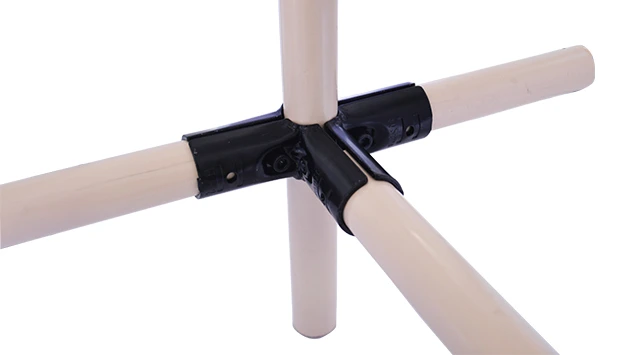
Walk into any home appliance factory, and you'll quickly realize that building a refrigerator isn't just about slapping metal panels and a compressor together. It's a symphony of precision—where components as small as a door hinge and as large as a condenser coil need to align perfectly. For manufacturers, the challenge isn't just making sure each fridge works; it's making sure the production line can keep up with shifting demands: new models with smart features, custom color options, or even seasonal designs. And in that chaos of bolts, wires, and plastic parts, there's one unassuming component that quietly keeps the whole show running: the four way straight lean pipe joint .
You might not have heard of it, but if you've ever wondered how factories reconfigure their assembly lines overnight to launch a new fridge model, or why some production floors feel more "alive" than others, this little joint is a big part of the answer. In this article, we're diving into the world of home appliance manufacturing—specifically, refrigerator assembly—to uncover how lean systems, anchored by components like the four way straight lean pipe joint, are transforming rigid production lines into adaptable, efficient hubs that can keep pace with the modern world.
The Problem with "Set It and Forget It" Production Lines
Let's rewind a decade or two. Back then, refrigerator production lines were a lot like old brick houses: sturdy, reliable, but impossible to rearrange without a sledgehammer. Most factories relied on welded steel frames for workbenches, fixed conveyor belts bolted to the floor, and rigid material racks that hadn't moved since the day they were installed. If a manufacturer wanted to launch a new fridge model—say, one with a larger freezer compartment or a built-in water dispenser—they'd have to shut down production for weeks. Workers would spend days cutting and rewelding steel, rerouting electrical lines, and even pouring new concrete to anchor the updated setup. The result? Downtime, lost revenue, and a lot of frustrated employees.
Today, that approach just doesn't cut it. Consumers want fridges that match their kitchen decor, connect to their smart homes, or use eco-friendly coolants. Retailers demand smaller batch sizes to avoid overstocking. And manufacturers? They need to switch between models quickly—sometimes even within the same shift. A rigid production line can't handle that. Imagine trying to fit a square peg into a round hole every time a new design comes along; eventually, the peg (or the hole) breaks. That's where lean systems step in.
Lean Systems: Building Production Lines That "Breathe"
At its core, a lean system is all about one thing: eliminating waste. Not just physical waste, like leftover materials, but also the "hidden" waste of time, effort, and inflexibility. In manufacturing, that means designing production lines that can adapt, evolve, and even shrink or grow as needed—without grinding operations to a halt. And the backbone of these systems? Modular components that snap together like giant Legos, instead of being welded or bolted into permanence.
Think of it this way: instead of building a production line as a single, solid block, you build it from smaller, interchangeable parts. Workbenches can be adjusted in height. Material racks can be extended or shortened. Conveyors can be rerouted to accommodate a new assembly step. And the glue holding all these parts together? Lean pipes and their connectors—especially the four way straight lean pipe joint.
Lean pipes (also called "lean tubes") are lightweight, durable tubes—often made of aluminum or steel with a plastic coating—that form the structure of workbenches, racks, and even conveyor frames. But tubes alone are just sticks; it's the joints that turn them into something useful. And while there are dozens of joint types—90-degree elbows, swivel connectors, T-junctions—the four way straight joint is the unsung hero of versatility. It does exactly what its name suggests: connects four lean pipes in a straight line, creating a stable, multi-directional framework that can support everything from a small parts bin to a heavy-duty lean pipe workbench .

Anatomy of a Hero: What Makes the Four Way Straight Lean Pipe Joint So Special?
Let's get up close with this joint. It's not much to look at—usually a small, cylindrical piece of metal (aluminum or stainless steel) with four threaded openings, one at each end. But don't let its simplicity fool you. The magic is in its design. Unlike a welded connection, which is fixed forever, the four way joint uses set screws or locking nuts to secure lean pipes. That means you can twist it, tighten it, and loosen it in minutes—no welding torches, no power tools, no need to call in a maintenance crew.
Take, for example, a typical refrigerator assembly station where workers install door gaskets. The workbench needs to be at a comfortable height for standing employees, with a shelf below for tools and a rack above for spare gaskets. Using lean pipes and four way joints, the factory can build this workbench in hours: connect vertical pipes for legs, horizontal pipes for the tabletop frame, and use four way joints to add the lower shelf and upper rack. If next month, the company hires taller workers or switches to thicker gaskets that require more storage space? No problem. Loosen the joints, adjust the pipes, retighten, and the workbench is good as new. Compare that to a traditional wooden or steel workbench, which would need to be completely replaced—or at least cut and re-welded—at a fraction of the speed and a much higher cost.
But the four way joint isn't just about adjustability. It's also about strength. Most models can support hundreds of pounds of weight, which is crucial when you're dealing with refrigerator parts. A single workbench might hold a 50-pound compressor while a worker bolts it into the fridge frame; the joint needs to keep that bench stable, even when the worker leans into the task. Thanks to its symmetrical design, the four way joint distributes weight evenly across all four connected pipes, reducing stress on any single point. That's why you'll often see it used in high-traffic areas, like where conveyors feed parts to assembly stations—because when a conveyor belt is moving 20 fridge doors an hour, you can't afford a wobbly connection.

From Workbench to Conveyor: How the Joint Connects the Production Puzzle
Let's walk through a typical refrigerator assembly line to see how the four way straight lean pipe joint fits into the bigger picture. It all starts at the "receiving" end, where raw materials like steel sheets, plastic liners, and copper tubing arrive. These materials need to be stored close to the line but not in the way—so factories use material racks built with lean pipes and four way joints. Unlike fixed wooden pallets, these racks can be adjusted to hold taller stacks of sheet metal or shorter piles of plastic parts, depending on the day's orders.
From there, parts move to the first assembly station: the frame. Workers here bolt together the metal skeleton of the fridge, adding supports for the compressor and shelves. Their workbench, built with lean pipes, uses four way joints to attach tool holders, magnifying lamps, and even small conveyors that bring screws and bolts directly to the workstation. The height of the bench is adjustable, so both tall and short workers can stand comfortably—a small detail that reduces fatigue and cuts down on mistakes.
Next, the frame moves to the insulation station, where foam is injected into the walls. Here, the line might use a roller conveyor (another lean system staple) to move the frames along. The conveyor's frame? You guessed it—lean pipes connected by four way joints. If the foam injection machine needs to be repositioned a few feet to the left to accommodate a larger fridge model, workers can simply loosen the joints, shift the conveyor, and retighten. No need to unbolt heavy metal sections or call in a contractor.
Further down the line, at the door assembly station, things get even more complex. Fridge doors have handles, hinges, gaskets, and sometimes ice dispensers—all of which need to be installed with precision. The workbench here might have a rotating platform (powered by a small motor) to spin the door as workers attach parts. The platform is mounted on a lean pipe frame, with four way joints securing the base to casters (those swiveling wheels you see on office chairs). That way, if the door station gets too crowded, the entire setup can be rolled a few feet away—no heavy lifting required.
| Feature | Traditional Rigid Production Line | Lean System with Four Way Straight Lean Pipe Joint |
|---|---|---|
| Setup Time for New Station | 1-2 weeks (welding, concrete anchoring, electrical work) | 1-2 hours (no tools beyond a hex key) |
| Cost to Reconfigure | $5,000-$10,000 (labor, materials, downtime) | $200-$500 (lean pipes, joints, and worker time) |
| Weight Capacity | High, but fixed (limited by welded joints) | High (up to 500 lbs per joint) and adjustable |
| Worker Adaptability | None (workbench height/angle fixed) | Full adjustability (height, angle, tool placement) |
| Scalability for Small Batches | Poor (requires full line shutdown for small runs) | Excellent (can build mini-lines in a day for custom models) |
When Seconds Matter: The Ripple Effect of a Faster Line
You might be thinking, "Okay, so the four way joint saves time on setup—so what?" But in manufacturing, time isn't just money; it's opportunity. Let's say a factory produces 1,000 refrigerators a day. If reconfiguring a single assembly station takes two weeks with a traditional setup, that's 14,000 fridges not produced. With a lean system using four way joints, that same reconfiguration takes two hours—meaning the line is back up and running by lunch, and those 14,000 fridges stay on schedule. Multiply that by a few line changes a year, and the numbers start to add up.
But it's not just about avoiding downtime. Lean systems with four way joints also make it easier to experiment. Maybe a supervisor notices that workers at the compressor installation station are reaching too far for tools, slowing them down. With a lean workbench, they can add a small shelf using a four way joint in 15 minutes, test it for a shift, and if it doesn't help, remove it just as quickly. Traditional setups? That same experiment would require a maintenance request, a week of planning, and a lot of paperwork—by which time the idea might have been forgotten.
There's also the human factor. Walk through a factory with lean systems, and you'll notice something different: workers seem more engaged. That's because lean systems put control in their hands. If a workbench is too low, they don't have to ask a manager for permission to fix it—they can adjust it themselves, using a simple hex key. That sense of ownership translates to better morale, fewer mistakes, and even lower turnover. And in an industry where finding and keeping skilled workers is a constant challenge, that's priceless.
A Real-World Example: How One Factory Cut Costs by 30%
Let's take a look at a hypothetical (but realistic) example. ABC Appliances, a mid-sized manufacturer in the Midwest, was struggling to keep up with demand for its new "EcoCool" refrigerator line. The EcoCool had a smaller footprint and a more efficient compressor, which meant the production line needed to handle smaller parts and tighter tolerances. The problem? Their existing line was built with fixed steel workbenches and conveyors, and reconfiguring it would take six weeks—time they didn't have, since retailers were already pushing for deliveries.
ABC's solution? They invested in a lean system, starting with the assembly stations. Using lean pipes, four way straight lean pipe joints, and casters, they built eight new workbenches in three days. Each bench was adjustable, with built-in tool racks and small conveyors to feed parts. They also replaced two fixed steel conveyors with lean pipe conveyors, which could be extended or shortened as needed. The total cost? Around $20,000—far less than the $100,000 they would have spent on traditional steel rework.
The results were staggering. Setup time for the EcoCool line dropped from six weeks to three days. Downtime between model changes went from 48 hours to 2 hours. And because workers could adjust their workbenches to their comfort, assembly errors (like misaligned door hinges) fell by 25%. Within six months, ABC had recouped their investment—and then some. They even started using the lean system to build custom "test lines" for prototype fridges, allowing engineers to tweak designs without disrupting main production.
Beyond Refrigerators: Why This Joint Matters for the Future of Manufacturing
While we've focused on refrigerators, the four way straight lean pipe joint is a workhorse across industries. It's used in automotive plants to build car door assembly lines, in electronics factories to hold circuit board workstations, and even in warehouses to create adjustable shelving. But in home appliances—where product cycles are getting shorter and customization is king—it's especially valuable.
Think about it: In 2025, a fridge isn't just a fridge. It's a "smart home hub" with a touchscreen, a "wine cooler combo" with a specialized compartment, or a "minimalist design" with hidden hinges. Each of these variations requires tweaks to the production line, and manufacturers can't afford to treat each tweak like a major renovation. Lean systems, with components like the four way joint, let them treat production lines like living, breathing entities—ones that can grow, shrink, and adapt as needed.
And let's not forget sustainability. Traditional production lines generate a lot of waste: old steel frames get scrapped, concrete anchors are broken up, and excess materials end up in landfills. Lean systems, by contrast, are built to be reused. A four way joint that holds a workbench today can hold a conveyor tomorrow, and a material rack next year. That's good for the planet—and good for the bottom line, as companies face stricter environmental regulations and consumer demands for eco-friendly practices.
The Bottom Line: Small Parts, Big Impact
At the end of the day, the four way straight lean pipe joint is a reminder that innovation in manufacturing doesn't always come from flashy robots or AI-powered machines. Sometimes, it comes from reimagining the basics: how we connect pipes, how we build workbenches, and how we empower workers to shape their own spaces. In the world of refrigerator assembly—where precision, speed, and adaptability are everything—this little joint isn't just a tool. It's a catalyst for change.
So the next time you open your fridge to grab a glass of water, take a moment to appreciate the complexity behind that simple action. And if you ever find yourself touring a factory, keep an eye out for those unassuming metal joints holding the line together. They might not get the headlines, but they're the reason your fridge made it from the assembly line to your kitchen—on time, and built to last.