- Company Articles
- Products and Technology
- Installation And Maintenance
- Home Appliance Production: Lean Pipe Clamp Chrome Setup and Efficiency

Home Appliance Production: Lean Pipe Clamp Chrome Setup and Efficiency
Related Product
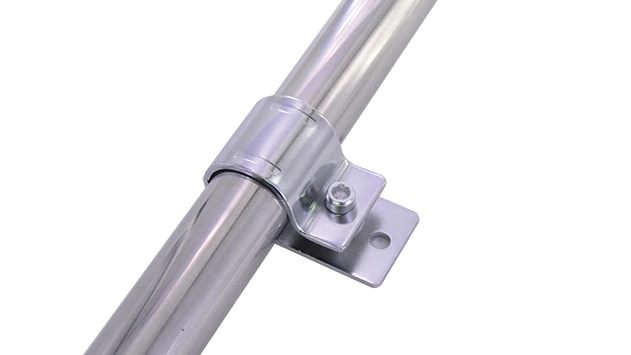
Lean Pipe Clamp Chrome
Lean pipe clamp is used for rack system hang monitor or other panel for workbenck, flowrack in production daily use.
Walk into any modern home, and you'll find them: the silent workhorses of daily life. Refrigerators keeping food fresh, washing machines tackling mountains of laundry, ovens turning ingredients into meals. Behind every sleek appliance, though, lies a story of chaos—assembly lines where time is money, precision is non-negotiable, and even a small bottleneck can derail an entire production run. For manufacturers, the pressure is relentless: meet tight deadlines, maintain uncompromising quality, and keep costs in check. In this high-stakes world, efficiency isn't just a buzzword—it's the difference between thriving and fading into obscurity. That's where lean manufacturing steps in, and at the heart of it all? The humble yet mighty lean pipe clamp chrome and its ecosystem of tools, from lean pipe workbenches to flow racks and aluminum profiles . Let's dive into how these components transform home appliance production floors from clunky, rigid spaces into adaptable, high-performance hubs.
The Hidden Challenges of Home Appliance Production
To understand why lean systems matter, let's first unpack the unique hurdles of building home appliances. Unlike mass-produced items like pencils or paperclips, appliances are complex beasts. A single refrigerator, for example, might have hundreds of parts—from compressors and coils to door seals and control panels. Each part needs to arrive at the assembly line exactly when it's needed, fit perfectly with the others, and meet strict safety standards. Add to that the reality of modern manufacturing: consumers crave variety. One month, it's French-door fridges with ice makers; the next, compact models for urban apartments. This constant shift in demand means production lines can't afford to be "set it and forget it." Rigid, fixed workstations and storage systems become liabilities, forcing workers to waste time adjusting to new models or hunting for misplaced parts.
Then there's the human element. Assembly line workers spend hours on their feet, repeating motions thousands of times a day. A poorly designed workbench that's too low or too high leads to fatigue, errors, and even injuries. Material handlers, tasked with moving heavy parts like steel frames or glass doors, often waste precious minutes walking back and forth between storage areas and assembly stations. In a factory churning out 1,000 appliances a day, those minutes add up—to missed deadlines, increased labor costs, and frustrated teams.
Lean Manufacturing: More Than a Trend, a Mindset
Enter lean manufacturing—a philosophy born from the Toyota Production System in the mid-20th century, built on two core principles: eliminate waste and continuous improvement. "Waste" here isn't just physical trash; it's anything that doesn't add value to the final product. That includes overproduction (making more than needed), waiting (for parts or machines), unnecessary movement (workers walking to fetch tools), and defects (parts that don't fit, requiring rework). Lean systems attack these wastes head-on by prioritizing flexibility, flow, and worker-centric design. And at the center of this transformation? Modular, build-as-you-need solutions that can adapt to changing demands. This is where lean pipe systems shine.
Lean pipe systems—often called "flexible pipe systems"—are exactly what they sound like: frameworks built from lightweight pipes, joints, and clamps that can be assembled, disassembled, and reconfigured in hours, not weeks. Unlike traditional steel structures welded into place, these systems are designed for change. Need to raise a workbench by 6 inches for taller workers? Swap out a few pipes. Shift from assembling washing machines to dryers? Rearrange the flow rack to hold different parts. And the unsung hero making this flexibility possible? The lean pipe clamp chrome . These small but sturdy connectors are the glue that holds the system together, balancing strength with adaptability.

Lean Pipe Clamp Chrome: The Backbone of Flexibility
Let's get up close with the star of the show: the lean pipe clamp chrome. At first glance, it might look like a simple metal bracket, but its design is deceptively clever. Made from high-grade steel with a chrome plating, it's built to withstand the rigors of a busy factory floor. Chrome isn't just for shine—it adds a layer of corrosion resistance, so even in humid environments (like dishwashing machine assembly areas), the clamp won't rust or degrade. It also makes cleaning a breeze; a quick wipe with a cloth removes grease or dust, keeping work areas hygienic—a must for appliances that come into contact with food or water.
But the real magic is in how it works. Unlike fixed welds or permanent bolts, the chrome clamp uses a combination of pressure and friction to secure lean pipes (typically 28mm or 30mm in diameter) to joints or other components. Most clamps have a screw mechanism: tighten the screw, and the clamp cinches down on the pipe, creating a rock-solid hold. Loosen it, and the pipe can be rotated, adjusted, or removed entirely. This means a single lean pipe workbench can go from holding a microwave's control panel assembly in the morning to supporting a dishwasher's tub in the afternoon—no cutting, welding, or specialized tools required. For home appliance factories juggling multiple models, this adaptability is a game-changer.
Installing a lean pipe clamp chrome is also surprisingly straightforward, even for workers without advanced technical skills. The process typically involves four steps: measure and cut the lean pipes to the desired length (using a simple pipe cutter), position the pipes in the desired configuration (e.g., a rectangular frame for a workbench), slide the chrome clamp over the joint where two pipes meet, and tighten the screw until the connection is firm. A quick shake or tug tests stability—if it holds, you're good to go. This simplicity reduces downtime; instead of waiting for a maintenance crew to build a new workstation, teams can adjust setups themselves, on the fly.
Building the Perfect Workspace: Lean Pipe Workbenches in Action
Now, let's zoom out and see how the chrome clamp fits into a larger system: the lean pipe workbench. Walk through any appliance factory using lean principles, and you'll spot these workstations everywhere—they're the command centers where assembly happens. But not all workbenches are created equal. A traditional wooden or steel workbench might be sturdy, but it's also heavy, hard to modify, and often too generic to support specific tasks. A lean pipe workbench, by contrast, is a custom-tailored tool.
Here's how it comes together: the frame is built from lightweight but strong aluminum profile —a material that's revolutionizing lean systems. Aluminum profiles are like industrial Legos: they come in standard lengths (1m, 2m, 3m) with pre-drilled holes, making it easy to connect them using brackets or, you guessed it, lean pipe clamp chrome. The top surface might be a durable plywood or metal sheet, but what really sets it apart is the add-ons. Need to hold tools within arm's reach? Attach a vertical pipe with hooks using chrome clamps. Want to slide parts from one end of the bench to the other? Install a roller track along the edge, secured with—you guessed it again—chrome clamps. Even the height is adjustable: by swapping out shorter pipes for longer ones (and re-tightening the clamps), workers can set the bench to elbow height, reducing strain on their backs and shoulders.
Take a dishwasher assembly line, for example. The first workstation might focus on attaching the base frame. Here, the lean pipe workbench would have a lower shelf (held by chrome clamps) for storing screws and brackets, and a roller track to slide the frame into place. A few steps down the line, another workbench—this one taller—could be set up for installing the door, with a tilted surface (adjusted via, yes, chrome clamps) to keep the door at a comfortable angle for workers. When the factory switches to a smaller dishwasher model, the team can reconfigure the workbench in under an hour: lower the height, remove the extra shelf, and adjust the roller track to fit the new door size. No more wasted space or time spent building new benches from scratch.
From Storage to Assembly: Flow Racks and the Art of "Just-in-Time"
Efficiency in home appliance production isn't just about the assembly line—it's about getting parts to the line in the first place. This is where flow racks enter the picture. A flow rack is essentially a gravity-fed storage system: parts are loaded onto the back (higher) end, and they slide forward to the front (lower) end as workers take the ones in front. It's like a giant, industrial-sized vending machine for appliance parts, and it's a cornerstone of "just-in-time" manufacturing—ensuring parts arrive exactly when they're needed, no sooner, no later.
Again, the lean pipe clamp chrome plays a critical role here. Flow racks are typically built with a frame of aluminum profiles (lightweight and strong) and horizontal roller tracks (the "conveyor belt" for parts). The roller track itself is a series of small wheels mounted on a metal rail; when you place a part (like a refrigerator door hinge) on the track, gravity does the rest, rolling it gently toward the assembly line. To keep the track stable and aligned, workers use chrome clamps to secure it to the aluminum profile frame. This isn't just about preventing wobbles—misaligned rollers could cause parts to jam or slide off, leading to delays or damaged components.
Let's see this in action at a washing machine factory. The flow rack for drum assemblies might have three levels, each with a roller track. The top level holds large drum shells, the middle level holds inner baskets, and the bottom level holds drive belts. As workers on the assembly line take a drum shell from the front of the top track, the next shell slides forward automatically. No more walking to a distant storage room to fetch parts; everything is right there, at arm's length. This cuts down on "walking waste" (a key lean enemy) by up to 40%, according to industry studies. It also reduces errors—since parts are organized by type and model, workers are less likely to grab the wrong hinge or belt.
Aluminum Profile: The Unsung Backbone of Lean Systems
While we're singing the praises of the lean pipe clamp chrome, let's not overlook its trusty sidekick: the aluminum profile. If chrome clamps are the "joints" of the lean system, aluminum profiles are the "bones." These extruded metal bars—often with a T-slot design (a groove running along their length)—are lightweight yet surprisingly strong. A 40x40mm aluminum profile can support up to 200kg, making it perfect for holding heavy appliance parts or supporting workbenches.
Why aluminum over steel? For starters, it's lighter, which makes assembling and reconfiguring systems easier. A worker can carry a 2m aluminum profile without straining, whereas a steel bar of the same size might require two people. Aluminum is also naturally resistant to corrosion, so it holds up well in damp environments (like kitchen appliance lines) without needing extra coatings. And unlike steel, which can rust if scratched, aluminum develops a thin oxide layer that actually protects it from further damage. Plus, its smooth, clean finish gives production lines a modern, professional look—no more rusty, beat-up frames.
The T-slot design is another stroke of genius. Those grooves allow for quick, tool-free attachment of accessories: shelves, brackets, roller tracks, even electronic components like LED task lights. Pair an aluminum profile with a lean pipe clamp chrome, and you've got a system that can adapt to almost any need. Need to add a shelf to a flow rack? Slide a bracket into the T-slot, secure it with a bolt, and clamp on a shelf using chrome clamps. Want to mount a power strip under a workbench? Use T-slot nuts to attach it—no drilling required. This flexibility makes aluminum profiles ideal for home appliance factories, where change is constant.
Real Results: A Case Study in Refrigerator Production
Numbers and theory are great, but nothing beats a real-world example. Let's look at a fictional (but realistic) case study of a mid-sized appliance manufacturer we'll call "FreshFrost Appliances," which produces refrigerators and freezers. Before adopting lean systems, FreshFrost's production line was a mess. Workers spent 25% of their time walking to fetch parts from a distant warehouse. Their fixed wooden workbenches were too low for taller employees, leading to back pain and high turnover. And when the company launched a new compact freezer line, they had to halt production for two days to rebuild the assembly stations—a disaster for meeting holiday season deadlines.
FreshFrost's solution? They invested in a lean system centered around lean pipe clamp chrome, lean pipe workbenches, flow racks with roller tracks, and aluminum profiles. Here's what changed:
- Workbench Makeover: Wooden workbenches were replaced with aluminum profile frames secured by chrome clamps. Workers adjusted the height to their comfort, reducing reported back pain by 60%. A roller track along the edge let parts slide directly to the assembly area, cutting "fetching time" by 75%.
- Flow Rack Revolution: A bank of flow racks was installed 10 feet from the assembly line, with roller tracks secured by chrome clamps. Each rack was labeled by freezer model, so workers grabbed parts without searching. This reduced part errors from 8% to 1%.
- Quick Changeovers: When the compact freezer line launched, the team reconfigured the lean pipe workbenches in 2 hours (instead of 2 days) by loosening the chrome clamps, adjusting the pipe lengths, and re-tightening. They met their holiday deadline with room to spare.
Six months later, FreshFrost's production output was up 28%, labor costs were down 15%, and employee satisfaction scores hit an all-time high. The secret? It wasn't just the tools—it was how the tools worked together. The chrome clamps made adjustments easy, the aluminum profiles provided sturdy frames, the flow racks kept parts moving, and the workbenches kept workers comfortable and efficient.
Traditional vs. Lean: A Side-by-Side Comparison
Still on the fence about whether lean pipe systems are worth the investment? Let's put traditional and lean setups head-to-head with a quick table:
| Aspect | Traditional Setup (Wood/Steel) | Lean Setup (Chrome Clamps + Aluminum Profiles) |
|---|---|---|
| Flexibility | Fixed; requires rebuilding for new models | Adjustable in hours with clamps and profiles |
| Assembly Time | Days (welding, cutting, painting) | Hours (no special tools needed) |
| Durability | Prone to rust, warping, or chipping | Chrome and aluminum resist corrosion; lasts 5–10+ years |
| Worker Ergonomics | One-size-fits-all; causes fatigue | Height-adjustable; reduces strain |
| Cost Over Time | High (frequent replacements, downtime) | Lower (reusable components, less downtime) |
The Bottom Line: Lean Pipe Clamp Chrome and Beyond
At the end of the day, home appliance production is about more than just building machines—it's about building systems that respect workers, adapt to change, and deliver quality products on time. Lean pipe clamp chrome might seem like a small piece of that puzzle, but its impact is outsized. By making lean pipe workbenches adjustable, flow racks efficient, and aluminum profiles versatile, it turns rigid factories into dynamic, responsive spaces. It's not just about tools—it's about empowering teams to work smarter, not harder.
So the next time you open your refrigerator or start a load of laundry, take a moment to appreciate the invisible heroes behind it: the chrome clamps that held the workbench together, the aluminum profiles that supported the assembly line, and the flow racks that made sure every part arrived exactly when it was needed. In the world of home appliance production, efficiency isn't just about speed—it's about creating a system that grows, adapts, and thrives. And with lean pipe clamp chrome leading the way, the future looks brighter (and more efficient) than ever.