- Company Articles
- Products and Technology
- Product knowledge
- Home Appliance Production: Precision Work with Aluminum Workbench C

Home Appliance Production: Precision Work with Aluminum Workbench C
Related Product
Aluminum Workbench C
aluminum-tube-workbench-is-more-flexible-and-durable,-compared-with-traditional-pe/abs-coated-steel-tube.-it-is-easy-to-assemble,-anti-corrosion,-rust-protection,-and-recycle-use-after-disassemble.
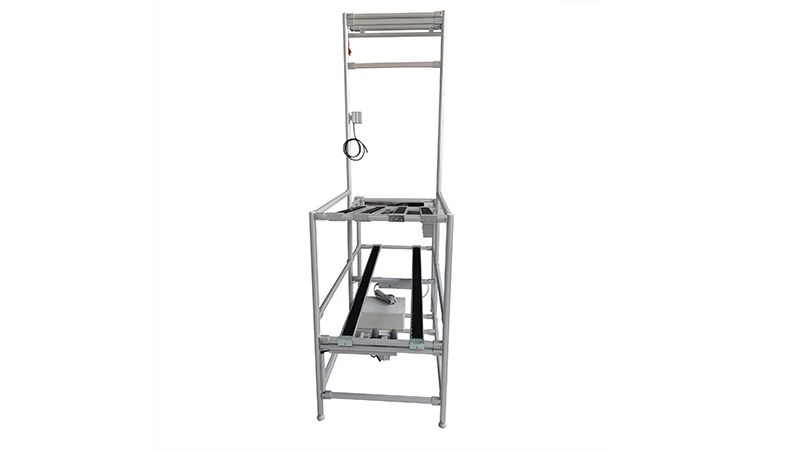
Walk into any modern home, and you'll find them: the quiet workhorses of daily life. The refrigerator humming in the kitchen, the washing machine churning through laundry, the microwave heating up leftovers, the air conditioner keeping the room cool on a sweltering day. These home appliances are more than just convenience—they're the backbone of modern comfort. But behind every sleek, reliable appliance lies a story of meticulous craftsmanship, where precision isn't just a goal; it's the difference between a product that lasts for years and one that fails after months. And at the heart of that precision? The workstations where every component, from tiny screws to complex circuit boards, comes together. Today, we're diving into one such workstation that's revolutionizing home appliance production: the Aluminum Workbench C. More than just a table, it's a testament to how the right tools can turn chaos into order, inefficiency into flow, and good products into great ones.
The Hidden Challenge of Home Appliance Production: Workflow Matters
To understand why Aluminum Workbench C matters, let's first pull back the curtain on home appliance manufacturing. It's a world of constant motion: assembly lines where workers stand for hours, handling delicate parts; material handlers shuttling components from storage to stations; quality checks that leave no room for error. Each appliance, whether a 300-pound refrigerator or a compact blender, is made up of hundreds—sometimes thousands—of parts. A single misaligned screw in a washing machine's drum can lead to noisy vibrations; a tiny static discharge during circuit board assembly can render a microwave's control panel useless. In this environment, every second counts, and every inch of workspace is precious.
But here's the problem: traditional workstations often fall short. Many factories still rely on heavy steel workbenches that are tough but immovable, making it hard to reconfigure lines when production needs change. Others use wooden benches that warp over time, creating uneven surfaces that throw off precision. Even newer plastic workstations, while lightweight, lack the durability to withstand the daily grind of tool impacts, chemical spills, and heavy component placement. Add to this the challenge of static electricity (a silent killer in electronics assembly) and the need to keep tools and materials within arm's reach, and it's clear: the "workbench" is no afterthought. It's the foundation upon which production efficiency, product quality, and worker satisfaction rest.
Consider a typical scenario: an assembly line for small kitchen appliances, like toasters. Workers need to attach heating elements, thread wires through casings, and secure control knobs—all in sequence. If the workbench is too low, workers hunch, leading to fatigue and slower assembly times. If it's too high, precision suffers as hands strain to reach components. If the surface isn't flat, a heating element might sit crookedly, leading to uneven toasting (and customer complaints). And if materials are stored feet away, workers waste time walking back and forth instead of focusing on assembly. These might seem like small issues, but multiplied across hundreds of workers and thousands of units per day, they add up to lost revenue, delayed shipments, and frustrated teams.
Enter Aluminum Workbench C: More Than a Workbench—A Lean System Partner
This is where Aluminum Workbench C steps in. Designed with the unique demands of home appliance production in mind, it's part of a broader lean system approach to manufacturing—one that prioritizes efficiency, flexibility, and waste reduction. But what makes it different? Let's start with the basics: materials. Aluminum Workbench C is built using high-grade aluminum profile, a material that strikes the perfect balance between strength and adaptability. Unlike steel, aluminum is lightweight, making the workbench easy to move (when needed) without sacrificing load capacity. Unlike wood, it resists warping, chipping, and moisture, ensuring the surface remains flat and stable for years. And unlike plastic, it stands up to heavy tools, hot soldering irons, and occasional spills of cleaning solvents—common hazards in appliance assembly.
But Aluminum Workbench C isn't just about the material. It's about design. Let's break down its key features, and how each addresses a specific pain point in home appliance production:
1. Precision Flatness: No More Wobbly Surfaces
Imagine trying to assemble a toaster's heating coil on a workbench that slopes slightly to the left. Even a 1-degree incline could cause the coil to sit unevenly, leading to hot spots in the finished product. Aluminum Workbench C solves this with its aluminum extrusion profile construction. Aluminum extrusion is a manufacturing process where aluminum is forced through a die, creating uniform, straight lengths with consistent thickness. When these profiles are welded or bolted together to form the workbench frame, the result is a surface that's flat to within fractions of a millimeter. For workers assembling circuit boards or aligning metal brackets, this flatness isn't just nice—it's non-negotiable. It means parts lie exactly where they should, measurements are accurate, and the risk of human error drops dramatically.
2. Modular Design: Adaptable to Any Appliance
Home appliance factories rarely produce just one product. One month, they might be ramping up production of blenders for the holiday season; the next, shifting to air fryers to meet summer demand. Traditional workbenches, bolted to the floor or built to fixed dimensions, can't keep up. Aluminum Workbench C, however, is modular by nature. Its frame uses aluminum profile accessories like T-slot nuts and brackets, which allow workers to add or remove components in minutes. Need a shelf for tool storage? Screw on an aluminum profile bracket. Want to attach a lamp for better visibility? Slide a clamp into the T-slot and tighten. Even the height can be adjusted by swapping out leg sections—critical for workers of different heights, reducing strain and boosting comfort. This modularity means the same workbench that assembles blenders today can be reconfigured tomorrow to assemble rice cookers, with zero downtime.
3. ESD Protection: Guarding Against the Invisible Threat
Static electricity is a silent enemy in electronics assembly. A single electrostatic discharge (ESD) of just 250 volts can damage a sensitive integrated circuit (IC), and humans can't even feel a discharge until it reaches 3,000 volts. For appliances with digital controls—think smart refrigerators with touchscreens or microwaves with programmable settings—ESD protection is non-negotiable. Aluminum Workbench C addresses this with optional ESD-safe surfaces. These surfaces are made from conductive materials that dissipate static charges, preventing them from building up and jumping to components. Some models even come with grounding wires that connect to the factory's earth system, ensuring any static is safely channeled away. For workers handling circuit boards or sensors, this isn't just a feature—it's peace of mind.
4. Built-In Compatibility with Flow Racks and Roller Tracks
No workstation exists in isolation. In lean manufacturing, the goal is to create a "flow" where materials move smoothly from storage to assembly to packaging, with minimal handling. Aluminum Workbench C excels here because it's designed to work seamlessly with other lean system tools, like flow racks and roller tracks. A flow rack, for example, is a storage system where materials are loaded from the back and gravity-fed to the front, ensuring first-in, first-out (FIFO) usage and easy access. By positioning a flow rack next to Aluminum Workbench C, workers can grab components without turning or walking—saving seconds per part, which adds up to hours per day. Even better, roller tracks (like the plastic roller track guide rail in yellow or grey) can be mounted directly to the workbench's edge, creating a mini-conveyor that moves partially assembled components from one worker to the next. No more lifting heavy subassemblies; just a gentle push, and the roller track does the rest.

Aluminum Workbench C vs. the Competition: A Clear Winner
To truly appreciate Aluminum Workbench C, let's put it head-to-head with the alternatives. Below is a comparison of key features that matter most in home appliance production:
| Feature | Aluminum Workbench C | Traditional Steel Workbench | Wooden Workbench | Plastic Workbench |
|---|---|---|---|---|
| Material | Aluminum extrusion profile | Carbon steel | Plywood or solid wood | High-density polyethylene (HDPE) |
| Weight (per 6ft bench) | 80-100 lbs (easy to move with casters) | 200-300 lbs (immovable without heavy equipment) | 150-200 lbs (heavy, prone to tipping) | 50-70 lbs (light but less stable) |
| Max Load Capacity | 1,000-1,500 lbs (evenly distributed) | 1,500-2,000 lbs (higher, but less practical) | 500-800 lbs (varies by wood quality) | 300-500 lbs (limited by plastic strength) |
| ESD Protection | Optional (via conductive surface and grounding) | Possible (with special coatings, costly) | Not available (wood is insulating) | Limited (some models, but less reliable) |
| Customization | High (T-slot accessories, adjustable height/shelves) | Low (fixed design, hard to modify) | Medium (can drill holes, but permanent) | Low (molded design, few add-ons) |
| Durability | Excellent (resists rust, dents, warping; 10+ year lifespan) | Good (prone to rust if uncoated; 7-10 years) | Poor (warps with moisture, scratches easily; 3-5 years) | Fair (resists chemicals but cracks under heavy impact; 4-6 years) |
| Maintenance | Minimal (wipe clean with soap and water; accessories replaceable) | High (needs repainting to prevent rust; heavy to move for cleaning) | High (sealing required to prevent warping; stains permanent) | Medium (resists stains, but cracks/breaks are irreparable) |
The table tells a clear story: Aluminum Workbench C strikes a balance that no other material can match. It's lighter than steel but nearly as strong. More durable than wood and plastic, but infinitely more customizable. And when it comes to ESD protection and adaptability—two critical factors in home appliance production—it's in a league of its own.

From the Factory Floor: Real-World Impact of Aluminum Workbench C
Numbers and features are one thing, but what does Aluminum Workbench C actually do for factories? Let's look at a fictional but realistic case study: a mid-sized appliance manufacturer in the Midwest that produces small kitchen appliances (think toasters, blenders, coffee makers). Before switching to Aluminum Workbench C, they were struggling with three main issues: high worker turnover due to fatigue, frequent rework (parts assembled incorrectly), and slow changeover times between product lines.
Their old setup used steel workbenches bolted to the floor. Workers complained about back pain from hunching (the benches were too low for taller employees) and wasted time walking to storage racks 10 feet away to grab screws and wires. The steel surfaces, while strong, weren't ESD-safe, leading to a 2% failure rate in circuit boards during testing—costing the company $50,000 per month in rework. Changeovers between products, like shifting from toasters to blenders, took 4 hours because tools and shelves had to be completely rearranged.
Then they switched to Aluminum Workbench C. Here's what happened next:
- Worker fatigue dropped by 40%: Adjustable height legs let each worker set their bench to a comfortable level, reducing hunching. Adding shelves and tool hooks directly to the workbench (using aluminum profile accessories) kept materials within arm's reach, cutting walking time by 75%.
- Circuit board failures plummeted to 0.3%: The ESD-safe surface eliminated static damage, saving $42,500 per month in rework costs alone.
- Changeover time fell to 1 hour: Modular shelves and tool holders could be swapped out in minutes using T-slot nuts, meaning the line was back up and running 3 hours faster than before.
Within six months, the company had recouped the cost of the new workbenches and then some. But the biggest win? Worker satisfaction. As one assembly line supervisor put it: "It's amazing how much difference a good workbench makes. When you're not fighting the tools, you can focus on making the product right the first time."

Beyond the Bench: Integrating with Lean Systems for Maximum Flow
Aluminum Workbench C doesn't work alone—it's part of a larger lean system, a philosophy that focuses on eliminating waste (muda) and creating value for the customer. In lean manufacturing, waste comes in many forms: overproduction, waiting, unnecessary movement, defects, and more. Aluminum Workbench C attacks several of these wastes head-on, but its true power shines when paired with other lean tools, like flow racks and roller tracks.
Let's start with flow racks. A flow rack is a storage system where materials are loaded from the back and slide forward via gravity, ensuring that the oldest parts (first in) are used first (first out). When positioned next to Aluminum Workbench C, a flow rack turns "walking to get parts" into "reaching for parts." For example, in a refrigerator assembly line, door handles might be stored in a flow rack directly behind the workbench. As a worker takes a handle from the front, the next one slides forward—no need to walk to a distant warehouse. This cuts down on "unnecessary movement" waste, one of the biggest time drains in factories.
Then there's the roller track. Roller tracks, like the plastic roller track guide rail (available in yellow or grey for visibility), are essentially mini-conveyors that allow parts to slide from one workstation to the next with minimal effort. Imagine an assembly line for microwave ovens: one worker attaches the outer casing to the frame on Aluminum Workbench C, then pushes the partially assembled unit onto a roller track, which carries it to the next station where another worker installs the magnetron. No lifting, no carrying—just a gentle push. This eliminates "transportation" waste and speeds up the entire line. Aluminum Workbench C's T-slot design makes it easy to mount roller tracks directly to the bench edge, creating a seamless handoff between workers.
Together, Aluminum Workbench C, flow racks, and roller tracks create a "cell" where everything needed for production—tools, materials, and the workbench itself—is positioned for maximum efficiency. It's a system where workers spend less time moving and more time assembling, where materials arrive exactly when needed, and where defects are caught early. In short, it's lean manufacturing in action.
Why Aluminum? The Material That Makes It All Possible
We've talked a lot about Aluminum Workbench C's features, but let's take a step back and ask: why aluminum? What makes this material so well-suited for home appliance production? The answer lies in aluminum's unique properties, which address nearly every challenge of the manufacturing environment.
First, aluminum is lightweight yet strong . At about one-third the weight of steel, it's easy to move (even with a fully loaded workbench) but still strong enough to support heavy components like refrigerator doors or washing machine motors. This lightness also reduces the strain on factory floors, which is critical in older facilities with weight restrictions.
Second, aluminum is naturally corrosion-resistant . Unlike steel, it doesn't rust when exposed to moisture or chemicals—common in factories where cleaning solutions are used daily. This means Aluminum Workbench C maintains its structural integrity for years, even in humid environments (like those producing dishwashers, where water vapor is constant).
Third, aluminum is infinitely recyclable . In an era where sustainability matters to consumers and regulators alike, using aluminum reduces a factory's carbon footprint. When a workbench eventually reaches the end of its life (after 15-20 years of use, in most cases), its aluminum components can be melted down and reused, with no loss in quality. This is a stark contrast to wood (which rots) or plastic (which often ends up in landfills).
Finally, aluminum extrusion profile—the specific type used in Aluminum Workbench C—is incredibly versatile . The extrusion process creates profiles with T-slots, which act like built-in rails for attaching accessories. Want to add a light? Slide a clamp into the T-slot. Need a shelf? Bolt a bracket to the slot. This versatility is why aluminum extrusion is the backbone of modular manufacturing systems worldwide—it adapts to change, which is essential in fast-paced industries like home appliances.
The Future of Home Appliance Production: Smarter Workstations, Better Products
As home appliances become smarter (think Wi-Fi-connected refrigerators that order groceries or washing machines that adjust cycles based on load size), their production demands will only grow. Components will get smaller, tolerances tighter, and the need for precision greater than ever. In this future, workstations like Aluminum Workbench C won't just be nice to have—they'll be essential. They'll evolve, too: maybe with built-in sensors to track tool usage, or IoT connectivity to alert managers when a component is running low. But at their core, they'll remain what they are today: a bridge between human skill and mechanical precision, a place where workers can do their best work, and where great appliances are born.
So the next time you open your refrigerator or start your washing machine, take a moment to appreciate the invisible hero behind it: the workstation where every part came together. And if that workstation is an Aluminum Workbench C? You can rest easy knowing that precision, efficiency, and care went into every step of its creation. Because in home appliance production, the best products aren't just made—they're built on the right foundation.
In the end, Aluminum Workbench C is more than a tool. It's a statement: that manufacturing isn't just about machines and materials—it's about people, and giving them the tools they need to succeed. And when people succeed, products succeed. It's that simple, and that powerful.