- Company Articles
- Products and Technology
- Product knowledge
- How 3060 Aluminum Angle Yards Enhance Warehousing Racks & Shelves

How 3060 Aluminum Angle Yards Enhance Warehousing Racks & Shelves
Related Product
3060 Aluminum Angle Yards
It used for 90° flat connection for 20 series aluminum profile.
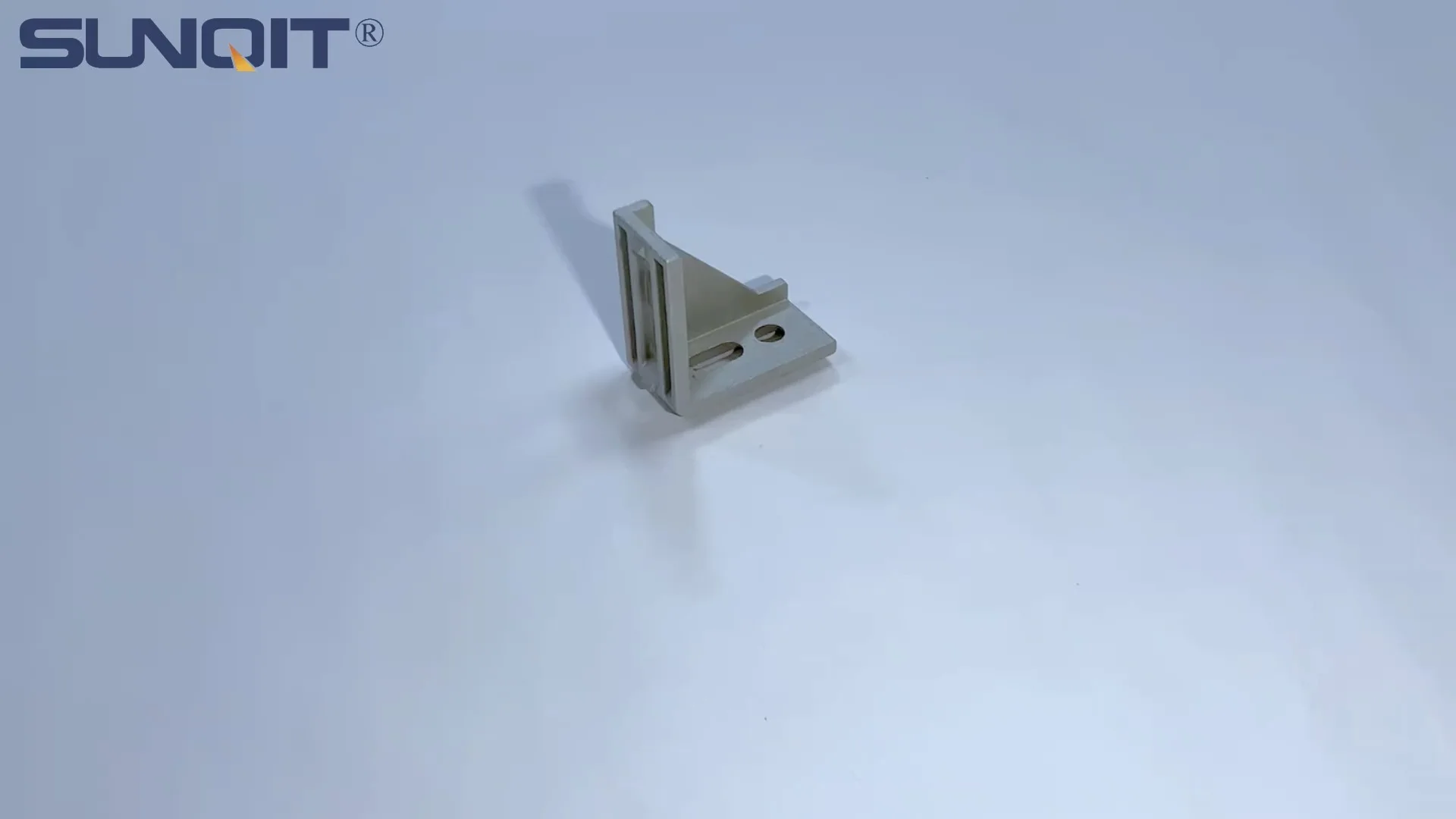
The unsung hero of modular, durable, and efficient warehouse setups
Introduction: The Hidden Cost of Warehouse Inefficiency
Walk into any busy warehouse, and you'll see the pulse of global commerce at work: pallets stacked to the ceiling, workers zipping between aisles with forklifts, and shelves groaning under the weight of products destined for homes and businesses. But behind this organized chaos lies a silent challenge: the tools that hold it all together—racks, shelves, and workbenches—often fall short. Wobbly structures that sag under heavy loads, rigid setups that can't adapt to sudden inventory changes, or rust-prone materials that degrade after a few seasons of use. These aren't just minor annoyances; they're bottlenecks. They slow down operations, increase the risk of accidents, and force managers to pour money into constant repairs or replacements.
But what if there was a better way? A solution that combines strength, flexibility, and longevity to turn warehouses from places of friction into hubs of efficiency? Enter 3060 Aluminum Angle Yards —a humble yet powerful component in the world of aluminum profile systems that's quietly revolutionizing how warehouses build and maintain their infrastructure. In this article, we'll dive into why these unassuming metal pieces matter, how they solve real-world warehouse headaches, and why they've become a go-to choice for teams aiming to build leaner, more adaptable operations.
What Are 3060 Aluminum Angle Yards, Anyway?
Let's start with the basics. If you're new to the world of industrial aluminum, terms like "angle yards" or "extrusion profiles" might sound technical, but they're actually pretty straightforward. 3060 Aluminum Angle Yards are part of a family of aluminum extrusion profiles —long, straight pieces of aluminum shaped under high pressure into specific cross-sections. The "3060" refers to their dimensions: 30 millimeters in one side, 60 millimeters in the other, forming an L-shape (hence "angle"). But what really sets them apart is their design: along their length, they feature T-shaped slots (called T-slots) that run parallel to the edges. These slots aren't just for show—they're the secret to their versatility.
Think of them as the building blocks of a modular system. Unlike traditional steel angles, which require welding or drilling to connect, 3060 Aluminum Angle Yards use aluminum profile accessories like brackets, bolts, and corner codes to lock together. Slide a T-bolt into the slot, tighten a nut, and suddenly you've got a secure joint—no special tools, no permanent modifications. This modularity is a game-changer for warehouses, where needs change faster than a delivery truck's schedule.
Material-wise, these angle yards are made from high-grade aluminum alloy (typically 6063-T5, a common choice for industrial profiles). This gives them a rare combo: they're lightweight (about 1/3 the weight of steel) but surprisingly strong, with a tensile strength that can handle hundreds of kilograms per meter. They're also naturally corrosion-resistant—no need for painting or coating—and their smooth, anodized finish resists scratches and wear, even in dusty or humid warehouse environments.

Why Warehouses Can't Afford to Ignore Them
Warehouses aren't just storage spaces—they're dynamic ecosystems where every square inch, every minute, and every kilogram counts. To thrive, they need infrastructure that can keep up with three core demands: heavy loads , frequent reconfigurations , and long-term reliability . Let's break down how 3060 Aluminum Angle Yards deliver on all three.
1. Strength That Doesn't Compromise on Weight
Warehouse racks often hold pallets loaded with everything from electronics to canned goods, and even a small shelf failure can lead to damaged inventory or, worse, injuries. 3060 Aluminum Angle Yards shine here: their 30x60mm cross-section provides a stable base, while the aluminum alloy's inherent strength means they can support heavy vertical and horizontal loads. For example, a simple shelf made with 3060 angles and a plywood top can easily hold 200-300 kg per linear meter—more than enough for most palletized goods. And because they're lightweight, installing or repositioning them doesn't require a team of workers or heavy machinery; two people can carry and assemble a rack section in minutes.
2. Flexibility to Adapt (Without the Headache)
Ever tried to adjust a steel rack? It usually involves unbolting, drilling new holes, or even cutting metal—time-consuming, imprecise, and often permanent. With 3060 Aluminum Angle Yards, reconfiguration is as easy as loosening a few nuts. Need to raise a shelf by 10cm to fit taller boxes? Slide the brackets along the T-slots and tighten. Want to add a crossbar to separate smaller items? Grab a connector, slot it in, and you're done. This flexibility is critical for warehouses dealing with seasonal spikes (think back-to-school or holiday rushes) or shifting product lines. Instead of buying new racks, you can repurpose what you already have—saving time and money.
3. Longevity That Outlasts the Competition
Steel rusts. Wood warps. Plastic cracks. But aluminum? It's built to last. 3060 Aluminum Angle Yards resist corrosion, so they won't degrade in humid warehouses or cold storage facilities. Their anodized finish also stands up to daily wear—scratches from forklifts, bumps from pallet jacks, or even the occasional dropped tool. We've spoken to warehouse managers who've had 3060-based racks in use for over a decade with minimal signs of aging. Compare that to steel racks, which often need repainting every 2-3 years, or wooden shelves that start to sag after a year of heavy use. The long-term savings on maintenance alone make them a smart investment.

How They Fit Into a Lean System
In today's fast-paced supply chain, "lean" isn't just a buzzword—it's a survival strategy. Lean system principles focus on eliminating waste, optimizing flow, and continuous improvement. So where do 3060 Aluminum Angle Yards fit in? Everywhere.
First, they reduce waste. Traditional rack systems often come in fixed sizes; if you need a shelf that's 1.2 meters wide but the only option is 1.5 meters, you're wasting space (and money). With 3060 angles, you build exactly what you need—no more, no less. This cuts down on unused warehouse square footage, which is valuable real estate. They also reduce material waste: since they're modular, you can reuse components when you reconfigure, instead of throwing away old parts.
Second, they optimize flow. In a lean warehouse, products should move smoothly from receiving to shipping, with minimal handling. 3060 Aluminum Angle Yards make it easy to build custom flow racks or gravity-fed shelves, where products slide forward as items are picked—no more reaching to the back of a shelf. Pair them with roller tracks (another type of aluminum accessory) and you've got a system that keeps inventory moving without manual lifting.
Third, they support continuous improvement. Lean isn't a one-time project; it's about constantly tweaking processes. With 3060 angles, testing a new layout takes hours, not weeks. Want to try a U-shaped picking path instead of straight aisles? Disassemble the old racks, reassemble with the same parts, and see how it works. If it's better, keep it; if not, change it back. This agility lets warehouses evolve with their needs, rather than being stuck with a setup that worked "good enough" five years ago.

Comparing 3060 to Other Aluminum Profiles: Why Size Matters
3060 Aluminum Angle Yards aren't the only game in town. There are smaller profiles (like 2020 or 3030) and larger ones (like 4040 or 8080). So why choose 3060 for warehousing racks specifically? Let's break it down with a quick comparison:
| Profile Type | Dimensions (mm) | Best For | Limitations for Warehousing |
|---|---|---|---|
| 2020 Aluminum Profile | 20x20 | Light-duty shelves, small workbenches | Too narrow; can't support heavy pallets or large loads. |
| 3030 Aluminum Profile | 30x30 | Medium-duty storage, cart frames | Symmetrical design limits vertical load capacity compared to 3060. |
| 3060 Aluminum Angle Yard | 30x60 (L-shape) | Heavy-duty racks, flow shelves, workbenches with overhang | Wider than 3030, so requires more space; not ideal for tiny, tight areas. |
| 4040 Aluminum Profile | 40x40 | Industrial machinery frames, very heavy loads | Heavier and more expensive; overkill for most standard warehouse racks. |
As the table shows, 3060 hits a sweet spot. It's wider than 3030, which means it can handle more vertical weight (critical for tall racks). Its L-shape provides extra stability when used as a corner support, preventing racks from wobbling under load. And compared to 4040, it's lighter and more cost-effective—perfect for warehouses that need strength without overspending on oversized materials.
For example, a typical pallet rack in a warehouse might use 3060 angles as uprights (the vertical supports) and 3030 profiles as crossbeams (the horizontal shelves). This mix balances strength and cost, creating a system that's sturdy enough for 500kg pallets but easy to assemble and adjust.
Real-World Impact: A Warehouse Manager's Story
To understand why 3060 Aluminum Angle Yards are gaining traction, let's look at a real example. Meet Maria, the warehouse manager at a mid-sized e-commerce fulfillment center in Chicago. A year ago, her team was struggling with a common problem: their steel racks were starting to rust after a humid summer, and the fixed shelves couldn't keep up with the company's growing variety of products—from small electronics to bulky home goods.
"We were spending $2,000 a month on repainting rusted steel and replacing warped wooden shelves," Maria recalls. "And every time we launched a new product line, we'd have to buy new racks because the old ones couldn't be adjusted. It was frustrating—we were throwing money away on temporary fixes."
Then Maria discovered 3060 Aluminum Angle Yards. She started small, replacing a section of rusted steel racks with a modular setup using 3060 angles, aluminum shelves, and aluminum profile accessories like corner brackets and end caps. The results were immediate:
- No more rust: After six months in the same humid environment, the aluminum racks still looked brand-new. No repainting needed.
- Faster reconfigurations: When the company added large furniture items, Maria's team adjusted the shelf heights in an afternoon—no tools beyond an Allen wrench.
- Safer workspaces: The smooth edges of the aluminum profiles reduced cuts from sharp steel corners, and the stable joints meant fewer wobbly shelves (and fewer near-misses with falling boxes).
"Now we're replacing all our old racks with 3060-based systems," Maria says. "We've cut our monthly maintenance costs by 70%, and our pickers are 15% faster because they're not wasting time struggling with hard-to-reach items. It's not just a material change—it's changed how we think about our warehouse."
Tips for Getting Started with 3060 Aluminum Angle Yards
Ready to give 3060 Aluminum Angle Yards a try? Here are a few tips to make the transition smooth:
1. Start with a Pilot Project
Don't overhaul your entire warehouse at once. Pick a high-traffic area (like receiving or picking) and build a small rack system with 3060 angles. Test it for a month, see how it holds up, and get feedback from your team. This reduces risk and helps you learn the ropes before scaling.
2. Invest in Quality Accessories
The best aluminum profiles are only as good as their accessories. Cheap brackets or bolts can loosen over time, compromising stability. Look for aluminum profile accessories made from the same alloy as the angles, with secure locking mechanisms (like spring-loaded T-nuts or self-locking bolts).
3. Plan for Weight and Space
Even though 3060 is strong, it's not indestructible. Calculate the maximum load your racks will need to support (include dynamic loads, like when a pallet is being placed or removed) and choose the right thickness (most 3060 profiles come in 1.5mm or 2.0mm wall thickness—thicker is stronger). Also, measure your warehouse space carefully; 3060's 60mm side takes up more room than smaller profiles, so plan aisles and layouts accordingly.
4. Train Your Team
Modular systems are easy to use, but they're different from traditional racks. Spend an hour showing your team how to use T-bolts, adjust brackets, and safely disassemble sections. The more comfortable they are, the more likely they'll embrace the new setup.
Conclusion: Building a Warehouse That Grows With You
Warehouses are the backbone of the global supply chain, but their success depends on the tools they use to store, organize, and move products. 3060 Aluminum Angle Yards might not be the flashiest technology, but they're a workhorse that delivers where it counts: strength, flexibility, and longevity. By combining them with aluminum profile systems and the right aluminum profile accessories , warehouses can build infrastructure that adapts to change, reduces waste, and supports lean system principles.
Whether you're dealing with rusted steel racks, fixed shelves that can't keep up, or just want to squeeze more efficiency out of your space, 3060 Aluminum Angle Yards offer a simple, cost-effective solution. They're not just about building better racks—they're about building a warehouse that can grow with your business, stay competitive, and keep up with the ever-changing demands of modern commerce.
So the next time you walk through your warehouse, take a look at those racks. Are they holding you back, or helping you move forward? With 3060 Aluminum Angle Yards, the answer can be the latter—strong, flexible, and ready for whatever comes next.