- Company Articles
- Products and Technology
- Application Cases
- How 3060 Aluminum Angle Yards Support Reusable Production Fixtures

How 3060 Aluminum Angle Yards Support Reusable Production Fixtures
Related Product
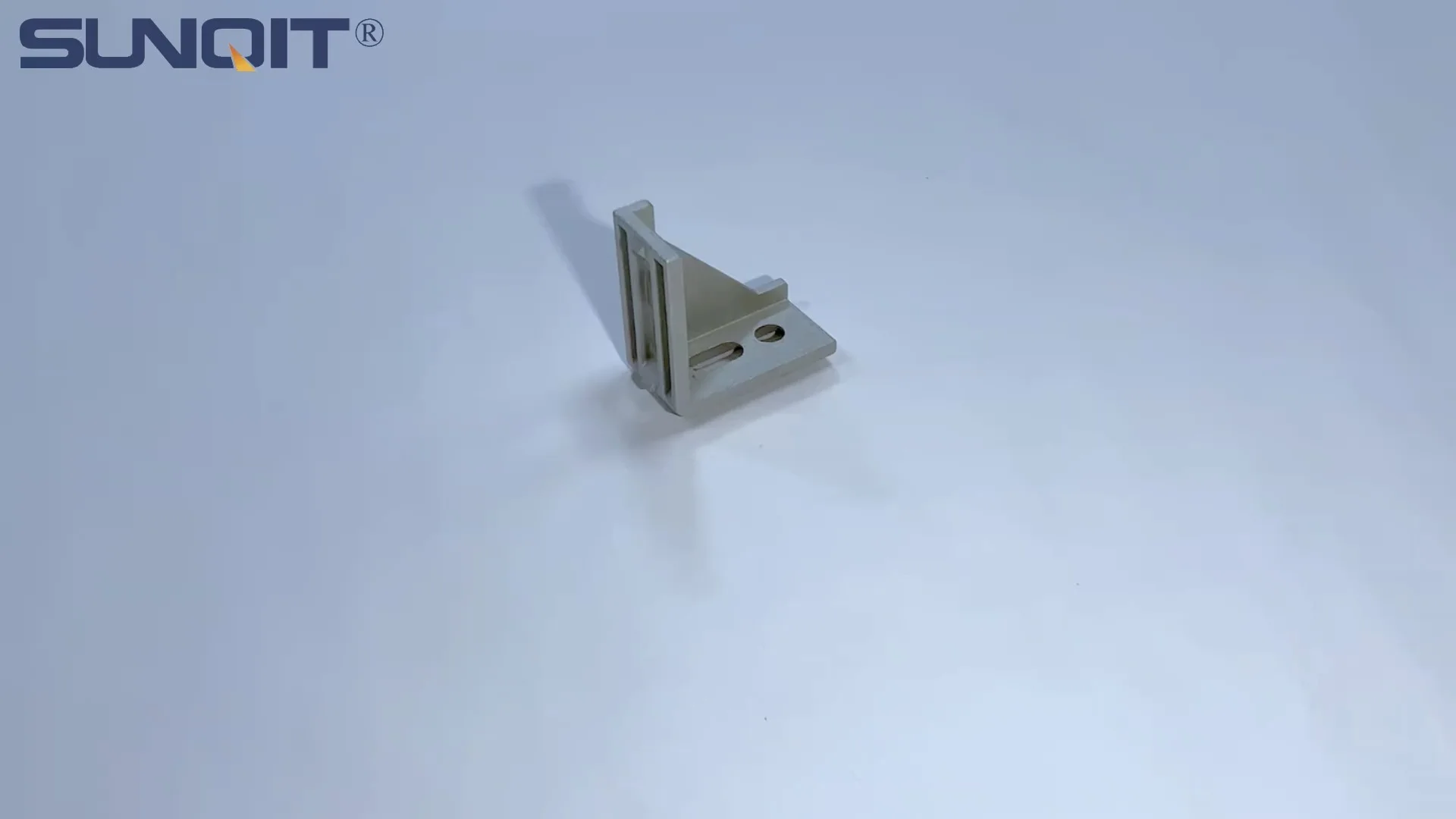
3060 Aluminum Angle Yards
It used for 90° flat connection for 20 series aluminum profile.
Walk into any manufacturing facility, and you'll likely find rows of production lines humming with activity. Behind that efficiency, though, lies a hidden challenge: the fixtures that hold, position, and transport parts. For decades, these fixtures have been the unsung workhorses of production—but they've also been a source of frustration. Traditional fixtures are often custom-built for a single task, made from rigid materials like steel or wood, and designed with little flexibility. When a product design changes, a production line reconfigures, or demand shifts, those fixtures become obsolete. They're hauled away, scrapped, or left to gather dust in a corner—wasting time, money, and resources.
But what if there was a better way? What if fixtures could adapt as quickly as your production needs do? That's where reusable production fixtures come in—and at the heart of this revolution are components like 3060 aluminum angle yards. These unassuming pieces of aluminum extrusion are quietly transforming how manufacturers build, modify, and reuse their fixtures, aligning with lean system principles and turning "one-and-done" tools into long-term assets.
The Problem with "Disposable" Fixtures: A Costly Cycle of Waste
Let's start with the basics: why do traditional fixtures fail to keep up? Imagine a small electronics manufacturer that builds custom circuit boards for medical devices. When they launch a new board design, their engineering team spends weeks designing a custom fixture to hold components during soldering. The fixture is built from steel, welded into shape, and works perfectly—for that one board. Six months later, a client requests a smaller, more compact version of the board. The old fixture, with its fixed dimensions and welded joints, can't be adjusted. So the team starts over: new designs, new materials, new fabrication. The old fixture? It's now a 50-pound paperweight taking up space in the warehouse.
This scenario plays out daily across industries, and the costs add up. According to a 2023 survey by the Manufacturing Technology Insights, manufacturers spend an average of 12% of their production budget on fixture design and fabrication—with 40% of that budget going toward fixtures that are used for less than a year before being replaced. Worse, 70% of those discarded fixtures end up in landfills, contributing to industrial waste and contradicting sustainability goals many companies now prioritize.
The root of the problem is rigidity. Traditional fixtures are built to solve one problem, not anticipate the next. They lack the modularity to adapt to new part sizes, production line layouts, or workflow changes. And in an era where agility is key—where companies need to pivot quickly to meet customer demands or stay ahead of competitors—this rigidity is a liability.
Lean Manufacturing and the Push for Reusability
Enter lean system principles. Lean manufacturing, born from the Toyota Production System, is all about eliminating waste—whether that's waste of time, materials, or resources. One of its core tenets is "continuous improvement," which requires tools and processes that can evolve alongside your operations. Reusable fixtures align perfectly with this philosophy. Instead of treating fixtures as temporary tools, lean thinking encourages manufacturers to view them as long-term investments that can be repurposed, modified, and reused across multiple projects.
But lean principles alone aren't enough—you need the right materials to bring them to life. Steel is strong but heavy and hard to modify without specialized tools. Wood is cheap but prone to warping and wear. Plastic is lightweight but lacks the structural integrity for heavy-duty tasks. What manufacturers needed was a material that offered strength, flexibility, and ease of assembly—a material that could grow with their needs. That's where aluminum extrusion profiles, and specifically 3060 aluminum angle yards, step in.

What Are 3060 Aluminum Angle Yards?
If you're not familiar with aluminum extrusion profiles, think of them as the building blocks of modern manufacturing. These are lengths of aluminum shaped by forcing molten metal through a die, creating consistent, precise cross-sections. They come in a variety of shapes—square, rectangular, T-shaped, and, in the case of angle yards, L-shaped. 3060 aluminum angle yards, in particular, have a cross-section of 30mm by 60mm, with one leg slightly longer than the other, forming a 90-degree angle.
But what makes these angle yards so special? It's a combination of their design and material properties. Aluminum is naturally lightweight (about one-third the weight of steel) but surprisingly strong—strong enough to support heavy parts in automotive or aerospace production. It's also corrosion-resistant, so it holds up in factory environments where moisture, oils, or chemicals might be present. And unlike steel, it doesn't require painting or finishing to prevent rust, reducing maintenance costs.
The real magic, though, is in the T-slots. Most aluminum extrusion profiles, including 3060 angle yards, feature longitudinal slots along their length. These slots allow you to attach accessories—like brackets, clamps, or panels—using simple fasteners (think bolts, nuts, or specialized T-slot nuts). No welding, no drilling, no cutting (unless you need to shorten a length). This means you can assemble a fixture in hours, not days, and disassemble it just as quickly when you need to reconfigure.
To put it simply: 3060 aluminum angle yards are like the LEGO bricks of manufacturing fixtures. They're strong enough to build with, versatile enough to adapt, and modular enough to take apart and rebuild when your needs change.

How 3060 Aluminum Angle Yards Enable Reusability
Reusability isn't just about being able to use something twice—it's about being able to use it in new ways. 3060 aluminum angle yards excel here, thanks to three key features: modularity, compatibility with accessories, and durability.
Modularity: Build, Break Down, Repeat
Traditional fixtures are often welded or bolted together in permanent ways. Want to shorten a steel fixture? You'll need a cutting torch and a grinder. Want to add a new mounting point? Drill a hole (and hope you don't weaken the structure). With 3060 aluminum angle yards, though, assembly is tool-free (or close to it). The T-slots let you attach components anywhere along the length of the angle yard, so you can add a bracket 2 inches from the end or 2 feet from the end—no pre-drilled holes required.
Take a simple workbench, for example. Using 3060 angle yards, you could build a frame with four vertical legs, horizontal supports, and a plywood top secured via T-slot bolts. Six months later, if you need a taller workbench for a new assembly task, you don't need to build a new one. Just loosen the bolts, swap out the vertical legs for longer ones, and re-tighten. The angle yards themselves? They're as good as new, ready to be reconfigured again when needed.
Compatibility with Aluminum Profile Accessories
A 3060 aluminum angle yard is only as useful as the accessories that go with it—and the ecosystem of aluminum profile accessories is vast. From brackets and hinges to 3060 aluminum profile end caps (which snap onto the ends of angle yards to cover sharp edges and give a clean, professional look) to casters for mobility, these accessories turn basic angle yards into fully functional fixtures.
Consider a material rack, like the material rack b (3 row and 3 floor) often used in warehouses to store parts. Traditional versions are made from welded steel, with fixed shelves that can't be adjusted. Using 3060 angle yards and aluminum profile accessories, though, you can build a rack where each shelf height is adjustable. Need to store taller boxes? Loosen the shelf brackets, slide them up, and re-tighten. Need to add a fourth shelf? Grab an extra length of angle yard and a few more brackets—no welding required. Even better, if you later need a smaller rack, you can disassemble the 3-row, 3-floor design and rebuild it as a 2-row, 2-floor rack using the same parts.
Durability: Built to Last (and Last)
Reusability only matters if the components can withstand repeated assembly and disassembly. Aluminum angle yards are up to the task. Aluminum is inherently resistant to wear and tear, and the T-slot design ensures that even after dozens of bolt tightenings and loosenings, the slots don't strip or deform. Unlike wood, which can crack or warp over time, or plastic, which can become brittle, aluminum holds its shape and strength for years—even in high-use environments.
In fact, many manufacturers report using the same 3060 angle yards for a decade or more, repurposing them for everything from assembly jigs to material racks to testing fixtures. One automotive supplier we spoke with described using a set of angle yards to build a fixture for a 2015 model year part, then reusing those same angle yards in 2020 to build a fixture for an electric vehicle component. The only new parts needed were a few additional brackets and a 3060 aluminum profile end cap to replace one that had been lost—costing less than $10 total.

From Concept to Reality: Practical Applications of 3060 Aluminum Angle Yards
To understand the impact of 3060 aluminum angle yards, let's look at how they're used in real-world manufacturing settings. These examples show how reusability translates to cost savings, time savings, and improved agility.
Case Study 1: Automotive Parts Manufacturer Cuts Fixture Costs by 65%
A mid-sized automotive parts supplier in Michigan used to build custom steel fixtures for each new part they produced—about 8-10 new fixtures per year. Each fixture cost $3,000-$5,000 to design and fabricate and took 2-3 weeks to complete. When a part design changed (which happened 2-3 times per year per part), the old fixture was discarded.
In 2021, they switched to 3060 aluminum angle yards. Their first project: a fixture to hold engine brackets during welding. Using angle yards, aluminum profile accessories, and a few custom 3D-printed brackets, they built the fixture in two days at a cost of $1,200. Six months later, when the bracket design was updated, they disassembled the fixture, modified the angle yard layout, and added new brackets—total cost: $150 and one day of work.
Today, the company estimates it has saved $85,000 over three years by reusing angle yards across 12 different fixtures. "We haven't scrapped a fixture since we started using aluminum," says the plant manager. "Even the oldest angle yards we have—about four years old—still look brand new. We just swap out accessories and reconfigure. It's like having a toolbox that never runs out of tools."
Case Study 2: Electronics Assembler Adapts to Seasonal Demand
A consumer electronics manufacturer in California faces extreme seasonal demand: their production volume triples during the holiday season, then drops back to normal levels in January. Before using 3060 aluminum angle yards, they struggled to scale their assembly lines. They either built extra steel fixtures (which sat idle for 9 months of the year) or paid overtime to reconfigure lines using existing tools—costing them $20,000+ in overtime and lost productivity each holiday season.
Now, they use 3060 angle yards to build modular workstations. During peak season, they assemble 10 additional workstations in a week by reusing angle yards stored from the previous year. Each workstation is built with angle yard frames, adjustable shelves (secured via T-slots), and casters for mobility. When the season ends, they disassemble the workstations, stack the angle yards in a storage rack, and reuse them the next year. The only recurring cost? Replacing a few worn casters or lost 3060 aluminum profile end caps—about $300 per year.
"We used to dread the holiday rush because of the setup time," says the operations director. "Now, we look forward to it. The angle yards make scaling up so easy. Last year, we even lent a few sets of angle yards to our sister plant in Texas when they had a sudden order surge. They built their own workstations and sent the angle yards back a month later. You can't do that with steel fixtures."
3060 Aluminum Angle Yards vs. Traditional Fixture Materials: A Comparison
Still not convinced that 3060 aluminum angle yards are the right choice for your reusable fixtures? Let's break down how they stack up against traditional materials like steel, wood, and plastic.
| Feature | 3060 Aluminum Angle Yards | Steel | Wood | Plastic |
|---|---|---|---|---|
| Initial Cost | Moderate ($20-$40 per linear foot) | High ($30-$60 per linear foot, plus welding/fabrication) | Low ($5-$15 per linear foot) | Low to Moderate ($10-$30 per linear foot) |
| Reusability | Excellent (unlimited reconfigurations with minimal wear) | Poor (difficult to modify; welding weakens structure over time) | Poor (prone to cracking, warping, or splitting after disassembly) | Fair (limited strength; T-slots may strip with repeated use) |
| Weight | Light (1.5 lbs per linear foot) | Heavy (4.5 lbs per linear foot) | Medium (2 lbs per linear foot for hardwood) | Light (0.8 lbs per linear foot) |
| Assembly Time | Fast (hours, no specialized tools) | Slow (days, requires welding/drilling) | Medium (hours, but limited adjustability) | Fast (hours, but limited load capacity) |
| Durability | Excellent (resistant to corrosion, wear, and warping) | Good (strong, but prone to rust without coating) | Poor (susceptible to moisture, pests, and warping) | Fair (prone to UV damage and brittleness over time) |
| Sustainability | High (100% recyclable, minimal waste from reusability) | Medium (recyclable, but high energy use in fabrication) | Medium (renewable, but often treated with chemicals; high waste from disposal) | Low (non-biodegradable, limited recyclability for many plastics) |
The table tells the story: while 3060 aluminum angle yards have a higher initial cost than wood or plastic, their reusability, durability, and time savings make them the most cost-effective choice over the long term—especially for manufacturers focused on lean system principles and sustainability.
Overcoming Common Misconceptions About Aluminum Fixtures
Despite their benefits, some manufacturers are hesitant to switch to aluminum angle yards. Let's address the most common misconceptions:
"Aluminum isn't strong enough for heavy-duty tasks."
It's true that aluminum is less dense than steel, but modern aluminum alloys (like the 6061-T6 alloy used in most extrusion profiles) offer impressive strength-to-weight ratios. A 3060 aluminum angle yard can support up to 200 lbs per linear foot when properly braced—more than enough for most manufacturing applications, including automotive part assembly or heavy machinery component testing. For extreme loads, manufacturers can reinforce angle yards with additional supports or use thicker-walled aluminum profiles.
"The initial cost is too high."
Yes, aluminum angle yards cost more upfront than wood or some plastics. But as the earlier case studies show, the ROI comes quickly. A $1,000 investment in angle yards might replace $5,000 worth of steel fixtures over three years. Plus, many suppliers offer bulk discounts for larger orders, and there's a thriving secondary market for used aluminum extrusion profiles (though we don't recommend it—your angle yards will likely outlive your need for them).
"We don't have the expertise to design aluminum fixtures."
This is a common concern, but it's easily addressed. Most aluminum extrusion suppliers offer free design tools (like online configurators or CAD libraries) to help you plan your fixtures. There are also countless tutorials, forums, and even consultants specializing in aluminum fixture design. And remember: the modularity of angle yards means you can start small. Build a simple workbench first, then move on to more complex fixtures as your team gains confidence.
The Future of Reusable Fixtures: Where 3060 Aluminum Angle Yards Fit In
As manufacturing continues to evolve—with trends like mass customization, shorter product lifecycles, and a focus on sustainability—the demand for reusable fixtures will only grow. 3060 aluminum angle yards are poised to play a central role in this future, thanks to ongoing innovations in aluminum extrusion technology and accessory design.
One emerging trend is the integration of smart technology. Imagine a fixture built with 3060 angle yards that includes embedded sensors to monitor part positioning or track fixture usage. When the fixture is reconfigured, the sensors automatically update the production management system—eliminating manual data entry. Some suppliers are already testing T-slot compatible sensor mounts, making this vision a reality.
Another trend is the rise of "digital twin" fixtures. Using 3D modeling software, manufacturers can design a fixture virtually, test its performance, and then build it using 3060 angle yards and aluminum profile accessories. If the virtual design needs tweaking, the physical fixture can be adjusted just as easily—bridging the gap between digital and physical manufacturing.
Perhaps most importantly, as more manufacturers adopt lean system principles and sustainability goals, 3060 aluminum angle yards will become a standard, not a luxury. They're no longer just a tool for large corporations with big budgets—small and medium-sized manufacturers are discovering that aluminum fixtures are within reach, thanks to lower costs and easier access to accessories like 3060 aluminum profile end caps and brackets.
Conclusion: Building a Fixture Ecosystem That Grows With You
At the end of the day, 3060 aluminum angle yards are more than just pieces of metal. They're the foundation of a new way of thinking about manufacturing fixtures—one where adaptability, reusability, and sustainability are prioritized over rigidity and disposability. They turn the "one-and-done" cycle of traditional fixtures into a "build, reuse, repeat" cycle that saves time, money, and resources.
Whether you're a small shop building custom parts or a large manufacturer scaling to meet global demand, 3060 aluminum angle yards offer a path to greater agility. They let you respond quickly to design changes, seasonal demand, or new opportunities—without sacrificing quality or safety. And when paired with aluminum profile accessories like brackets, casters, and 3060 aluminum profile end caps, they become a complete ecosystem for building fixtures that grow with your business.
So the next time you're faced with a fixture challenge, ask yourself: Do I need a tool that solves one problem, or a tool that can solve a hundred problems? If it's the latter, 3060 aluminum angle yards might just be the solution you've been looking for. After all, in manufacturing, the best fixtures aren't the ones that last forever—they're the ones that can be reimagined forever.