- Company Articles
- Products and Technology
- Product knowledge
- How 40 Aluminum Roller Track Grey Enhances Material Flow in Warehousing

How 40 Aluminum Roller Track Grey Enhances Material Flow in Warehousing
Related Product
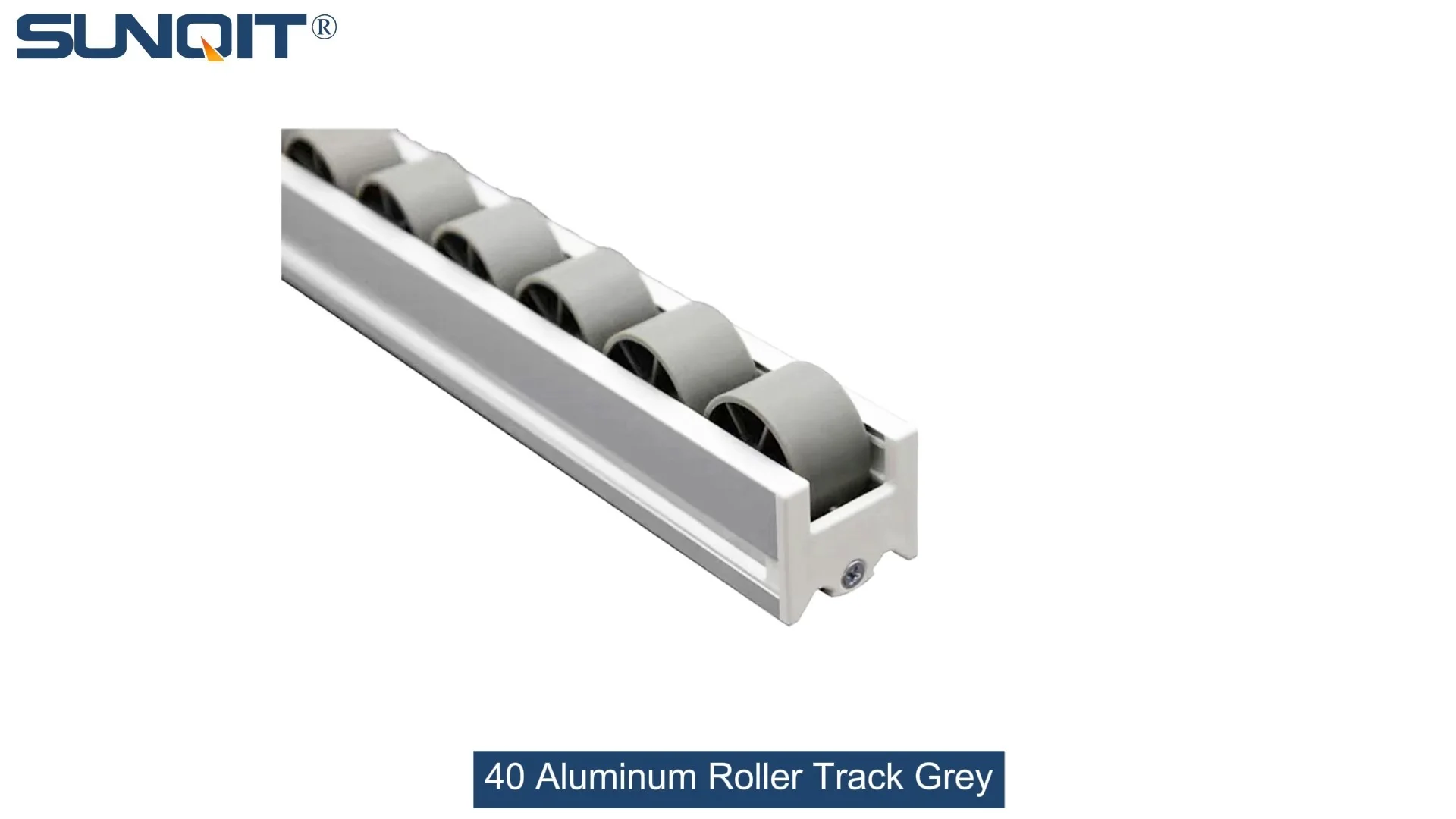
40 Aluminum Roller Track Grey
Durable and smooth-running modular roller rails. The system is fully assembled. The roller rail profile contains plastic rollers mounted on steel axles. Aluminum frame with plastic wheel make it anti corrosion,and material convey more smooth.
Introduction: The Pulse of Modern Warehousing
In the bustling world of logistics and supply chain management, warehouses are more than just storage spaces—they are the beating hearts of material flow. Every day, millions of products move through these hubs, from raw materials arriving at manufacturing facilities to finished goods heading out to retailers or directly to customers. The efficiency of this movement—how quickly, smoothly, and accurately items traverse the warehouse floor—can make or break a business's ability to meet deadlines, control costs, and keep customers satisfied.
Yet, for all their importance, many warehouses still grapple with the same age-old challenges: bottlenecks at picking stations, slow transit between storage and shipping, wasted labor hours on manual handling, and the constant pressure to do more with less space. These inefficiencies aren't just frustrating—they eat into profits, delay orders, and create unnecessary stress for teams on the ground. So, what if there was a simple, adaptable tool that could streamline these workflows, reduce friction, and turn chaotic material flow into a well-choreographed dance? Enter the 40 Aluminum Roller Track Grey—a unsung hero in the quest for warehouse efficiency.
Understanding Material Flow: Why It Matters More Than You Think
Before diving into the specifics of the 40 Aluminum Roller Track Grey, let's take a step back to understand why material flow is the backbone of warehouse operations. Material flow refers to the movement of goods from the moment they enter the warehouse (receiving) to when they exit (shipping), including storage, picking, packing, and all the steps in between. It's a complex web of processes that, when optimized, ensures products spend minimal time sitting idle and maximum time moving toward their final destination.
Why does this matter? For starters, efficient material flow directly impacts productivity. When items glide smoothly from point A to point B, workers spend less time pushing carts, searching for products, or waiting for goods to arrive at their stations. This translates to more orders processed per hour, lower labor costs, and a team that feels empowered rather than overwhelmed. Accuracy is another key factor—reducing manual handling minimizes the risk of damage or misplacement, which means fewer returns, happier customers, and a stronger bottom line.
But despite its importance, material flow often gets overlooked in favor of flashier technologies like automated robots or AI-driven inventory systems. While those tools have their place, they're often expensive and require significant overhauls. For many warehouses—especially small to mid-sized operations or those with dynamic, changing needs—a more practical solution lies in optimizing the "basics" of material movement. And that's where tools like the 40 Aluminum Roller Track Grey come into play.

Meet the 40 Aluminum Roller Track Grey: A Closer Look
At first glance, a roller track might seem like a simple piece of equipment—just a series of rollers mounted on a frame, right? But the 40 Aluminum Roller Track Grey is far more than that. Let's break down what makes it unique. First, the name itself gives away key details: "40" refers to its width (40mm), "Aluminum" denotes its material, "Roller Track" describes its function, and "Grey" is its color. But beyond these basics lies a design engineered for the realities of modern warehousing.
Aluminum was a deliberate choice here. Unlike steel, which is heavy and prone to rust, aluminum is lightweight yet surprisingly strong—making the track easy to install, reconfigure, and transport, while still supporting the weight of boxes, totes, and even small parts. The grey color isn't just aesthetic; it's practical too. Neutral tones like grey hide minor scuffs and dirt, keeping the track looking clean and professional even in high-traffic areas. But the real star of the show is the roller system itself. Each roller is precision-engineered to spin freely, ensuring that even lightweight items glide forward with minimal effort, while heavier loads move steadily without jamming or sticking.
Another key feature is its modularity. The 40 Aluminum Roller Track Grey isn't a one-size-fits-all solution. It's designed to work with a range of accessories, from roller track connectors that link multiple sections together to brackets that attach it to flow racks or conveyor systems. This flexibility means it can adapt to almost any warehouse layout—whether you need a short track to feed items to a workbench or a long, winding path to connect receiving to shipping.

Key Features That Drive Warehouse Efficiency
To truly understand how the 40 Aluminum Roller Track Grey enhances material flow, let's dive into its standout features and how they solve common warehouse pain points.
1. Lightweight Yet Durable: The Best of Both Worlds
Aluminum's lightweight nature is a game-changer for warehouses. Traditional steel roller tracks can weigh 2-3 times as much, making them difficult to install without heavy machinery or multiple workers. The 40 Aluminum Roller Track Grey, by contrast, can often be handled by a single person, reducing installation time and labor costs. But don't let its lightness fool you—aluminum is inherently strong, and when paired with a reinforced frame, this track can support loads up to 50kg per linear meter (depending on the roller spacing). This means it's tough enough for daily use with boxes, plastic totes, and even small parts bins, without bending or warping over time.
2. Smooth, Low-Friction Rollers: No More Stalls or Sticking
Anyone who's worked in a warehouse knows the frustration of a roller track that "catches"—items get stuck, workers have to stop and push, and suddenly a smooth workflow grinds to a halt. The 40 Aluminum Roller Track Grey avoids this with its precision-machined rollers. Each roller is mounted on a stainless-steel axle, which is lubricated during manufacturing to ensure smooth rotation. The result? Items glide forward with minimal effort, even when the track is placed on a slight incline (a common setup in flow racks, where gravity helps move goods toward picking stations). This not only speeds up material flow but also reduces the physical strain on workers, who no longer have to wrestle with stuck totes or boxes.
3. Corrosion Resistance: Built for the Long Haul
Warehouses are harsh environments. From humidity in receiving areas to spills in packing zones, equipment is constantly exposed to elements that can cause rust or degradation. Aluminum's natural resistance to corrosion makes the 40 Aluminum Roller Track Grey ideal for these conditions. Unlike steel, which requires regular painting or coating to prevent rust, aluminum forms a protective oxide layer when exposed to air, keeping it looking and functioning like new for years. This is especially valuable in industries like food and beverage, pharmaceuticals, or automotive, where cleanliness and durability are non-negotiable.
4. Compatibility with Accessories: A System, Not Just a Track
What truly sets the 40 Aluminum Roller Track Grey apart is its ability to work with a wide range of accessories, turning it into a versatile system rather than a standalone tool. Take roller track connectors, for example—these simple brackets allow you to link multiple track sections together, creating custom lengths or even curved paths to navigate around obstacles. Need to attach the track to a flow rack? There are specialized mounts designed to fit standard flow rack frames. Want to integrate it with a conveyor system? Adapters make it easy to connect the roller track to belt or chain conveyors, ensuring a seamless handoff of goods. This compatibility means the track can grow and change with your warehouse, adapting to new layouts, seasonal demands, or shifting product lines.

Integration with Lean Systems: Eliminating Waste, Boosting Results
Modern warehousing is increasingly guided by lean principles—the idea of eliminating waste (whether time, labor, or space) to create more value for customers. The 40 Aluminum Roller Track Grey aligns perfectly with this philosophy, acting as a tool to streamline workflows and cut out inefficiencies. Let's explore how it integrates with lean systems in practice.
One of the core tenets of lean is "just-in-time" (JIT) delivery, where materials arrive exactly when they're needed, reducing the need for excess storage. The 40 Aluminum Roller Track Grey supports JIT by ensuring that items move quickly from storage to production or picking stations. For example, in a manufacturing warehouse, raw materials can be stored on a flow rack equipped with the roller track. As workers use materials from the front of the rack, gravity pulls the next tote forward on the track, ensuring a constant, uninterrupted supply—no more waiting for a forklift to bring more materials or searching through piles of inventory.
Another lean principle is "continuous improvement," and the track's modular design makes this easy. If a warehouse team notices that a certain picking station is a bottleneck, they can quickly reconfigure the roller track—adding a new section, adjusting the angle, or connecting it to a different flow rack—to redirect material flow and eliminate the jam. This flexibility means the warehouse can adapt in real time, rather than waiting for a costly renovation or new equipment.
Waste reduction also extends to labor. Manual handling—pushing heavy carts, lifting totes onto shelves—is not only time-consuming but also a leading cause of workplace injuries. By automating the movement of goods (via gravity or minimal manual effort), the roller track reduces the need for workers to perform repetitive, strenuous tasks. This frees them up to focus on higher-value activities, like quality control or customer service, while also lowering the risk of downtime due to injuries.
Working in Tandem with Flow Racks and Conveyors
The 40 Aluminum Roller Track Grey rarely works alone—it's part of a larger ecosystem of warehouse equipment, and its true power shines when paired with tools like flow racks and conveyors. Let's take a closer look at these partnerships.
Flow racks are a staple in picking operations, designed to store multiple layers of goods with the oldest items at the front (first-in, first-out, or FIFO). When equipped with the 40 Aluminum Roller Track Grey, these racks become even more efficient. The track is mounted on a slight incline, so as a worker picks an item from the front tote, the next tote slides forward automatically. This eliminates the need to reach deep into the rack or manually shift totes, cutting picking time by up to 30% in some cases. For high-volume items—like e-commerce bestsellers or fast-moving consumer goods—this can translate to hundreds of extra orders processed per day.
Conveyors, meanwhile, handle the "long-haul" movement of goods across the warehouse. The roller track excels at the "last mile"—connecting conveyors to workbenches, packing stations, or shipping docks. For example, after items are picked and placed on a conveyor, they can be diverted onto a section of 40 Aluminum Roller Track Grey that leads directly to a packing workbench. The smooth rollers ensure the items glide gently onto the workbench, where a packer can quickly box them up. This seamless transition between conveyor and track reduces the risk of items falling or getting damaged, while also keeping the workflow moving at a steady pace.
Perhaps the most impressive part is how easily these integrations happen. Thanks to standardized roller track connectors and mounts, warehouse teams don't need specialized training or tools to set up these systems. A few brackets, some screws, and a level are often all that's required to attach the track to a flow rack or conveyor. This plug-and-play design means minimal downtime during installation and maximum flexibility to adjust as needs change.
Comparing Roller Tracks: Why Aluminum Grey Stands Out
To truly appreciate the 40 Aluminum Roller Track Grey, it helps to compare it to other common roller track materials: plastic and steel. Each has its pros and cons, but for most warehouse applications, aluminum grey strikes the perfect balance. Let's break it down in the table below:
| Feature | 40 Aluminum Roller Track Grey | Plastic Roller Track | Steel Roller Track |
|---|---|---|---|
| Weight | Lightweight (easy to install/reconfigure) | Lightest (but less durable) | Heavy (difficult to move, requires machinery) |
| Durability | High (resists dents, corrosion, and wear) | Low (prone to cracking under heavy loads) | High (but rusts without coating) |
| Roller Smoothness | Excellent (precision-machined, low friction) | Good (but rollers may warp over time) | Good (but requires regular lubrication to prevent rust-related sticking) |
| Cost | Moderate (higher upfront than plastic, lower long-term than steel) | Low (but needs frequent replacement) | High (initial cost + maintenance for rust protection) |
| Compatibility | High (works with flow racks, conveyors, roller track connectors) | Limited (often proprietary, hard to connect to other systems) | High (but heavy weight limits reconfiguration) |
As the table shows, aluminum grey offers a middle ground that's hard to beat. It's lighter than steel, more durable than plastic, and designed to work with the tools warehouses already use. For warehouses looking to balance performance, cost, and flexibility, it's a clear winner.
Real-World Applications: Success Stories from the Floor
Talk is cheap—so let's look at how the 40 Aluminum Roller Track Grey has made a difference in real warehouses. Take the example of a mid-sized e-commerce fulfillment center in the Midwest. Before implementing the track, their picking process was chaotic: workers pushed carts from rack to rack, manually pulling totes and placing them on the cart, then pushing the cart to packing stations. This led to long wait times, frequent errors (items left behind or misplaced), and exhausted workers by the end of the shift.
After installing flow racks equipped with 40 Aluminum Roller Track Grey, everything changed. The track allowed totes to slide forward automatically, so workers no longer had to reach into the racks. They could pick items quickly, place them on a small roller track-connected conveyor, and send them directly to packing. Within the first month, picking time per order dropped by 25%, and error rates fell by 40%. The team also reported less fatigue, as they spent less time pushing heavy carts and more time focused on accurate picking.
Another example comes from an automotive parts warehouse. Here, space was at a premium, and the team needed a way to store small, high-value parts (like sensors and wiring harnesses) while keeping them easily accessible. They installed wall-mounted flow racks with the 40 Aluminum Roller Track Grey, using vertical space instead of floor space. The track's compact design (40mm width) meant they could fit more racks in the same area, while the smooth rollers ensured parts could be retrieved with a single hand. As a result, the warehouse increased storage capacity by 30% without expanding its footprint, and order fulfillment times for small parts improved by 15%.
These stories aren't anomalies. From food distribution centers to electronics manufacturing plants, the 40 Aluminum Roller Track Grey has proven its ability to adapt to different industries and challenges—all while delivering tangible improvements in efficiency and cost savings.
Installation and Maintenance: Keeping the Track Rolling
One of the biggest advantages of the 40 Aluminum Roller Track Grey is how easy it is to install and maintain. Even for teams with limited technical experience, setting up the track is a straightforward process. Here's a quick overview of what's involved:
Installation Steps: First, measure the area where the track will be installed and mark the mounting points (whether on a flow rack, workbench, or conveyor). Next, attach the track to the mounting surface using the appropriate brackets (often included with the track or available as accessories like roller track placon mounts). Finally, adjust the angle (if using gravity flow) with a level to ensure items glide smoothly without sliding too fast. Most installations take less than an hour for a standard 2-meter section, and no special tools are needed—just a drill, screwdriver, and level.
Maintenance Tips: To keep the track running smoothly, regular maintenance is key, but it's minimal. Once a month, wipe down the rollers and frame with a damp cloth to remove dust or debris that could cause sticking. Every three months, check the roller axles for signs of wear or looseness—tighten any screws if needed. For warehouses in humid environments, a light coating of silicone spray on the rollers (avoiding the track frame) can help prevent corrosion. With proper care, the 40 Aluminum Roller Track Grey can last 5-7 years or more, making it a long-term investment in your warehouse's efficiency.
Conclusion: The Track to Better Material Flow
In the fast-paced world of warehousing, where every second counts, the 40 Aluminum Roller Track Grey is more than just a tool—it's a catalyst for change. By combining lightweight durability, smooth operation, and seamless integration with flow racks, conveyors, and lean systems, it addresses the core challenges of material flow: bottlenecks, inefficiencies, and wasted labor. It's a reminder that sometimes the most impactful solutions aren't the most high-tech—they're the ones that optimize the "everyday" movements that keep warehouses running.
Whether you're running a small distribution center or a large manufacturing facility, the 40 Aluminum Roller Track Grey offers a flexible, cost-effective way to boost productivity, reduce waste, and create a safer, more efficient workplace. It's not just about moving goods faster—it's about moving them smarter. And in today's competitive market, that's the difference between falling behind and staying ahead.
So, if you're looking to enhance your warehouse's material flow, don't overlook the power of a well-designed roller track. The 40 Aluminum Roller Track Grey might just be the unsung hero your team has been waiting for.