- Company Articles
- Products and Technology
- Application Cases
- How 40 Aluminum Roller Track Grey Supports Just-In-Time (JIT) Production

How 40 Aluminum Roller Track Grey Supports Just-In-Time (JIT) Production
Related Product
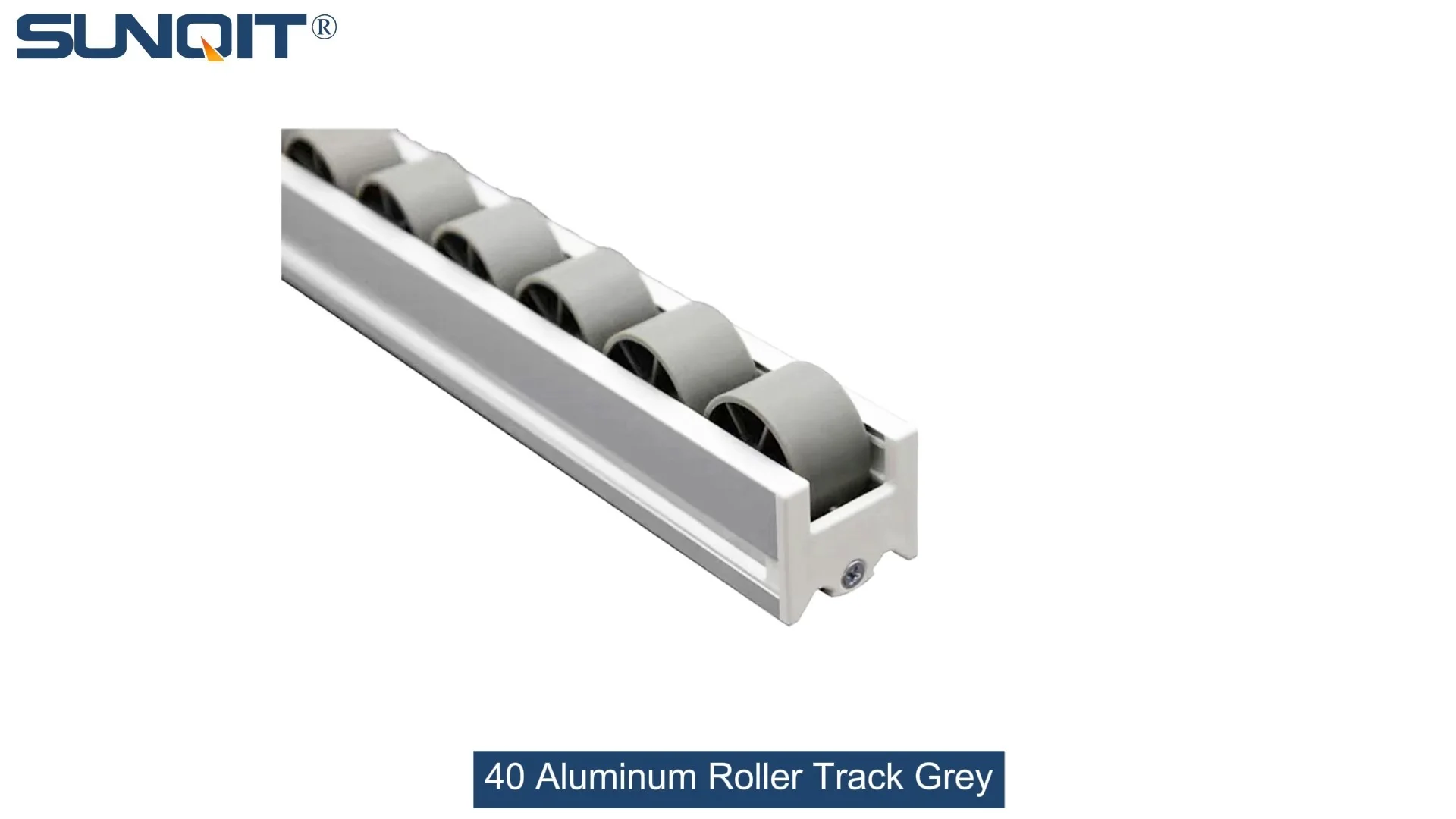
40 Aluminum Roller Track Grey
Durable and smooth-running modular roller rails. The system is fully assembled. The roller rail profile contains plastic rollers mounted on steel axles. Aluminum frame with plastic wheel make it anti corrosion,and material convey more smooth.
In the fast-paced world of manufacturing, where efficiency and precision reign supreme, Just-In-Time (JIT) production has emerged as a game-changer. At its core, JIT is about delivering the right materials, in the right quantity, at exactly the right moment—eliminating waste, reducing costs, and keeping production flowing like a well-tuned machine. But behind this seamless flow lies a critical, often overlooked component: material handling. Enter the 40 Aluminum Roller Track Grey—a humble yet powerful tool that has become the backbone of JIT material flow in modern factories. Let's dive into how this unassuming track is transforming JIT production floors worldwide.
Understanding 40 Aluminum Roller Track Grey: More Than Just a "Track"
Before we explore its role in JIT, let's get to know the star of the show: 40 Aluminum Roller Track Grey. At first glance, it might seem like a simple strip of metal with rollers, but its design is a masterclass in lean engineering. Let's break down its key features:
The "40" in the name refers to its width—40 millimeters. This size strikes a perfect balance: wide enough to support bins, boxes, and small parts containers, yet narrow enough to fit into tight spaces between workstations or on flow racks. It's versatile, handling everything from lightweight electronic components to heavier mechanical parts without compromising on stability.
Aluminum construction is where the magic begins. Aluminum is lightweight (typically 1.2kg per meter) but surprisingly strong, making the track easy to install, reposition, and reconfigure—no heavy machinery or specialized tools required. Unlike steel, it's naturally corrosion-resistant, so it holds up in dusty, humid, or even slightly damp environments without rusting. This durability means it lasts for years, even in high-traffic production areas.
The "Grey" color might seem like a minor detail, but in a busy factory, visibility matters. The neutral grey hue contrasts with both light and dark surfaces, making it easier for workers to spot misaligned materials or potential blockages. It also hides scuffs and minor wear, keeping the workspace looking clean and professional—an underrated boost for team morale.
Precision-engineered rollers are the track's beating heart. Made from high-quality plastic or rubber, these rollers glide with minimal friction, ensuring materials move smoothly and consistently. The spacing between rollers is optimized: not so tight that they add unnecessary weight, but not so far apart that small items get stuck. This attention to detail turns the track into a silent conveyor, moving materials at just the right speed to keep up with JIT's demands.
To put its benefits into perspective, let's compare it to other common roller track materials:
| Feature | 40 Aluminum Roller Track Grey | Steel Roller Track | Plastic Roller Track |
|---|---|---|---|
| Weight (per meter) | 1.2kg | 3.5kg | 0.8kg |
| Durability | High (corrosion-resistant) | High (prone to rust) | Low (prone to cracking) |
| Flexibility | Excellent (modular, reconfigurable) | Poor (heavy, fixed layout) | Good (light, but less strong) |
| Long-term Cost | Low (minimal maintenance) | High (rust, frequent upkeep) | High (needs replacement often) |
| Best For | JIT, lean systems, dynamic layouts | Heavy loads, static setups | Light loads, temporary use |
Clearly, 40 Aluminum Roller Track Grey stands out for JIT environments, where flexibility, durability, and low maintenance are non-negotiable.
The JIT Challenge: Why Material Flow Makes or Breaks Success
JIT production isn't just a buzzword—it's a philosophy built on three core principles: eliminating waste, maintaining continuous flow, and responding to customer "pull." Let's unpack why material flow is the linchpin of these principles:
Eliminating waste : In JIT, waste (or "muda") includes anything that doesn't add value to the product. This includes time wasted waiting for materials, overstocked inventory, and manual labor spent moving parts around. Poor material flow is a breeding ground for waste: if a worker spends 15 minutes every hour fetching bins from a distant storage area, that's 15 minutes of non-value-added work. Multiply that across a shift, and suddenly, JIT's promise of efficiency starts to crumble.
Continuous flow : JIT thrives when production moves like a river—steadily, without stops or delays. Any hiccup in material delivery (a stuck cart, a misplaced bin, or a slow manual transfer) creates "dams" in this flow. Workers wait, machines idle, and deadlines slip. For JIT to work, materials must arrive at each workstation exactly when they're needed—not a minute early (which leads to excess inventory) or a minute late (which causes delays).
Pull system : Unlike traditional "push" systems, where production is based on forecasts, JIT uses a "pull" system: production is triggered by customer demand. This means inventory levels are kept ultra-low, and materials must be replenished quickly as orders come in. A rigid, slow material handling system can't keep up with this pace—it becomes the bottleneck that turns a "pull" system into a crawl.
These challenges are why JIT environments can't afford to use outdated material handling tools. Steel tracks are too heavy to reconfigure; plastic tracks are too flimsy for daily use; and manual carts rely on human effort, which is inconsistent and tiring. What's needed is a system that's lightweight, durable, and flexible enough to adapt to JIT's ever-changing demands. That's where 40 Aluminum Roller Track Grey steps in.

How Does 40 Aluminum Roller Track Grey Solve JIT's Toughest Problems?
Let's break down exactly how this track transforms JIT production, one challenge at a time:
1. It Enables "Continuous Flow"—JIT's Lifeblood
Continuous flow is JIT's most critical principle, and 40 Aluminum Roller Track Grey is designed to make it a reality. By mounting the track between workstations, on flow racks, or alongside assembly lines, materials can glide directly to where they're needed—no detours, no delays. For example, imagine a smartphone assembly line: bins of circuit boards, screens, and batteries need to reach each operator in sequence. With the track installed, a bin of screens slides from the storage area to the soldering station, then another bin of batteries follows immediately after. Workers never wait, and the line keeps moving—exactly what JIT demands.
2. It Slashes Waste (and Not Just the Obvious Kind)
Waste in JIT comes in many forms, and the track attacks them all:
-
Time waste
: No more walking to fetch materials. The track brings parts to the worker, cutting non-value-added labor by up to 75% in some cases.
-
Inventory waste
: By moving materials "just-in-time," there's no need to stockpile bins at workstations. This frees up floor space and reduces the risk of damaged or obsolete parts.
-
Effort waste
: Pushing heavy carts or lifting bins strains workers and leads to fatigue. The track's smooth rollers do the heavy lifting, reducing physical stress and lowering injury rates.
3. It's Flexible—Because JIT Environments Never Stay the Same
JIT production lines aren't static. A factory might produce 500 units of Product A one week, then switch to Product B the next—with different part sizes, workflow steps, and material needs. Steel tracks or permanent conveyors would require days of rework to adapt, but 40 Aluminum Roller Track Grey is modular by design. Its lightweight aluminum sections can be unbolted, repositioned, and reconnected in hours. Need to add a new workstation? Just bolt on a few extra track segments. Want to rearrange the line for a new product? Disassemble, move, and reassemble—no welding or heavy tools required. This flexibility ensures the material handling system evolves with the production line, not against it.
4. It Integrates Seamlessly with Other Lean Tools
JIT success depends on a ecosystem of lean tools, and the track plays well with all of them:
-
Flow racks
: The track is the "engine" of flow rack systems, enabling FIFO (First-In, First-Out) inventory management. Bins slide forward as the front one is emptied, ensuring older stock is used first—critical for reducing waste.
-
Workbenches
: Mount the track along the edge of a workbench, and suddenly, in-process parts can slide from one station to the next without manual lifting. It turns a static workbench into a dynamic part of the JIT flow.
-
Conveyors
: Short track sections bridge gaps between conveyor belts, ensuring materials transition smoothly from one stage to the next. It's the glue that holds the material flow system together.
-
Lean systems
: Whether you're implementing Kaizen, 5S, or Total Productive Maintenance (TPM), the track fits right in. Its modular design supports 5S's "Sort" and "Sustain" principles by keeping materials organized and in place. Its durability aligns with TPM's focus on reducing downtime.
5. It's Built for the "Pull" System
In a pull system, materials are replenished only when a downstream workstation signals it needs them (e.g., via a kanban card). The track makes this signal-response cycle lightning-fast. When a worker at Station B uses the last bin of screws, the empty bin slides back along the track to the storage area, triggering a refill. The full bin then slides forward to Station B—all without a single phone call, email, or walk to the warehouse. It's JIT's "pull" system in action, powered by simple, effective engineering.

Real-World Impact: How Factories Are Winning with 40 Aluminum Roller Track Grey
Talk is cheap—let's look at how this track is transforming real JIT operations:
Case Study: Automotive Parts Manufacturer Cuts Lead Times by 30%
A mid-sized automotive parts factory in Michigan was struggling with JIT implementation. Their brake caliper assembly line had workers walking 20 feet to a storage shelf 50 times per shift to fetch parts. Lead times were inconsistent, and workers were frustrated by the constant interruptions. After installing 40 Aluminum Roller Track Grey on custom flow racks positioned behind each workstation, the results were dramatic:
- Worker movement dropped by 75%.
- Lead times stabilized, with 95% of orders now meeting JIT deadlines.
- Production throughput increased by 18%—all because materials were flowing to the workers, not the other way around.
Case Study: Electronics Plant Reduces Inventory Waste by $40,000 Annually
A California-based electronics manufacturer producing circuit boards was drowning in excess inventory. They were stockpiling parts "just in case," leading to obsolete components and wasted space. By integrating 40 Aluminum Roller Track Grey into their flow racks and workbenches, they switched to a true pull system: parts were only replenished when the track's bins were empty. The result? Inventory levels dropped by 40%, freeing up $40,000 in working capital annually. Plus, the factory floor now has 20% more space for new equipment.
These stories aren't anomalies. In JIT environments, small improvements in material flow lead to massive gains in efficiency. 40 Aluminum Roller Track Grey isn't just a tool—it's a catalyst for these improvements.

Beyond the Line: Other Benefits That Make It a JIT Staple
The track's impact goes beyond flow and waste reduction. Here are a few more reasons it's become a must-have for JIT:
Durability That Keeps Up with JIT's Pace
JIT lines run fast, and downtime is catastrophic. The track's aluminum construction and corrosion resistance mean it rarely breaks down. Even with daily use, it lasts 5–7 years, outperforming steel (which rusts) and plastic (which cracks). Maintenance is minimal: a quick weekly inspection to check for loose rollers, and monthly lubrication of axles—no expensive service calls required.
Safety That Protects Workers (and Production)
A safe workplace is a productive workplace, and the track prioritizes safety:
- The grey color improves visibility, reducing tripping hazards.
- Rollers are recessed to prevent fingers or clothing from getting caught.
- Smooth movement reduces spills and bin tipping, common risks with manual carts.
For JIT, this means fewer accidents, lower workers' compensation costs, and a team that feels valued.
Cost-Effective (Even in the Long Run)
While aluminum track costs more upfront than plastic, its durability makes it cheaper over time. A plastic track might need replacement every 1–2 years; aluminum lasts 5–7 years with minimal upkeep. When you factor in reduced labor costs, lower waste, and higher throughput, the track pays for itself in months, not years.
Choosing the Right Supplier: What to Look For
Not all 40 Aluminum Roller Track Grey products are created equal. To maximize its impact on your JIT system, choose a supplier who:
- Specializes in lean system components : They should understand JIT principles and how the track fits into broader lean tools like flow racks and workbenches.
- Offers customization : Every factory is different. Look for suppliers who can cut tracks to your exact length, add custom roller spacing, or adapt to unique layouts.
- Provides technical support : Installation and layout design can be tricky. A good supplier will help you design the optimal flow, not just sell you parts.
- Standards for quality : Ask about material grades (6063 aluminum is ideal), roller durability testing, and warranty terms. Cheap imitations will fail when you need them most.
Remember: the track is a foundational part of your JIT system. Investing in quality now will save you headaches (and money) later.
Conclusion: 40 Aluminum Roller Track Grey—JIT's Silent Partner
Just-In-Time production is about more than fancy buzzwords; it's about building a system where every second, every part, and every movement adds value. 40 Aluminum Roller Track Grey might not be the most glamorous piece of equipment on the factory floor, but it's one of the most critical. By enabling continuous flow, slashing waste, and adapting to JIT's ever-changing demands, it turns the chaos of manufacturing into a symphony of efficiency.
Whether you're building a new JIT line from scratch or looking to optimize an existing one, don't overlook the power of the right material handling tools. 40 Aluminum Roller Track Grey isn't just a track—it's the bridge between JIT's ideals and real-world results. And in today's competitive manufacturing landscape, that bridge might be the difference between falling behind and leading the pack.