- Company Articles
- Products and Technology
- Solution
- How 40 Aluminum Roller Track Yellow Enhances Workplace Ergonomics for Material Handlers

How 40 Aluminum Roller Track Yellow Enhances Workplace Ergonomics for Material Handlers
Related Product
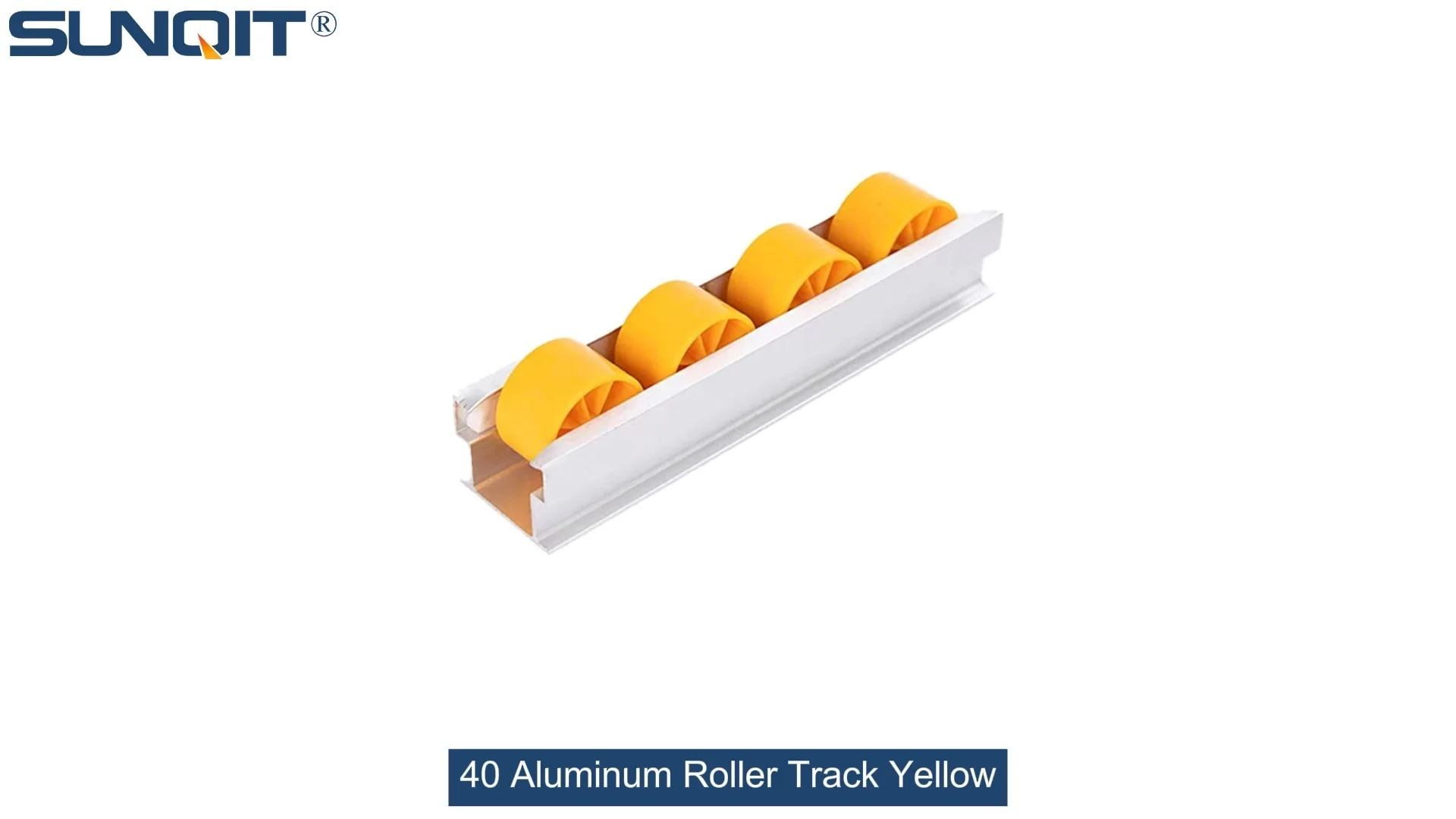
40 Aluminum Roller Track Yellow
Durable and smooth-running modular roller rails. The system is fully assembled. The roller rail profile contains plastic rollers mounted on steel axles. Aluminum frame with plastic wheel make it anti corrosion,and material convey more smooth.
The Hidden Cost of Strained Hands and Aching Backs
Let's start with a scene that's all too familiar in warehouses and factories across the country: It's 2 p.m. on a Tuesday, and Raj, a material handler with five years of experience, is halfway through his shift. He's just finished wrestling a 50-pound bin of circuit boards onto a metal cart, his lower back twinging with that sharp, familiar pain. Earlier, he bent over to retrieve a box from a low shelf, and now his shoulders feel tight—like he's carrying an invisible weight. By the end of the day, he'll have lifted, pushed, or pulled over 2,000 pounds of materials. By Friday? He'll be counting the hours until his weekend "recovery."
Raj isn't alone. According to the Bureau of Labor Statistics, material handling is one of the top causes of workplace injuries, with over 30% of ergonomic-related claims stemming from repetitive lifting, bending, and awkward postures. These injuries don't just hurt employees—they cost companies millions in lost productivity, workers' compensation, and turnover. But what if there was a tool that could turn Raj's "aching Tuesday" into a smoother, safer day? Enter the 40 Aluminum Roller Track Yellow —a deceptively simple solution that's quietly revolutionizing how material handlers move goods, one glide at a time.
First Things First: What *Is* 40 Aluminum Roller Track Yellow?
At first glance, it might look like just another metal track with wheels. But the 40 Aluminum Roller Track Yellow is engineered with a specific goal in mind: to make material movement feel almost effortless. Let's break it down. The "40" refers to its width (40mm), a standard size that fits most flow rack systems—the shelving units designed to let materials slide from the back to the front, gravity doing the heavy lifting. The "aluminum" isn't just about weight; it's lightweight yet surprisingly durable, resistant to rust, and smooth enough to minimize friction. And that bright yellow color? It's not just for aesthetics. Yellow is highly visible, making it easier for handlers to align bins and boxes, reducing fumbling and errors.
But the real magic is in the rollers. These small, cylindrical wheels are spaced evenly along the track, each designed to spin with minimal resistance. When you place a bin or box on the track, those rollers turn, turning a heavy push into a gentle nudge. Think of it like sliding a book across a table versus dragging it through sand—same object, but exponentially less effort. And because it's part of a lean system , it's all about cutting waste: wasted energy, wasted time, and wasted strain on workers' bodies.

Ergonomics 101: How This Track Takes the "Work" Out of Material Handling
Ergonomics isn't just about comfort—it's about designing tools that work *with* the human body, not against it. Let's dive into how the 40 Aluminum Roller Track Yellow checks every box for ergonomic excellence:
1. Say Goodbye to Heavy Lifting (and Hello to Gravity)
The biggest ergonomic win? No more heaving bins onto shelves or carts. When integrated into a flow rack, the track is sloped slightly (usually 3-5 degrees), so materials glide forward as the front bin is removed. For Raj, that means instead of bending to lift a 50-pound box from the floor to a shelf, he simply guides it onto the track, and gravity does the rest. Studies show that reducing manual lifting by just 20% can cut ergonomic injuries by over 40%—and this track often eliminates lifting entirely for many tasks.
2. Neutral Postures = Happier Spines
Ever tried pushing a heavy cart while hunched over? It's a recipe for back pain. The 40 Aluminum Roller Track Yellow encourages "neutral postures"—shoulders relaxed, spine straight, elbows at your sides. Because materials glide so smoothly, you don't need to lean into a push or strain to keep a box steady. Instead of Raj bending at the waist to pull a bin forward, he stands upright, uses a light touch, and lets the rollers do the work. Over time, this adds up to less stress on the lower back, neck, and shoulders.
3. Less Repetitive Strain, More Rhythm
Material handlers like Raj repeat the same motions hundreds of times a day: grasp, lift, push, release. Repetitive strain injuries (RSIs) from these motions—like carpal tunnel or tendonitis—are common. The track reduces the force needed for each motion, turning a jarring "shove" into a smooth "glide." Imagine flicking a marble across a table versus pushing a brick; the track turns every "brick" into a "marble." This not only cuts RSI risk but also makes the work feel less tedious—no more dreading the 100th push of the day.
Visibility = Fewer Mistakes (and Less Frustration)
That bright yellow color isn't just for show. In busy warehouses, it's easy to misalign bins or miss a track entirely, leading to jams or spills. The yellow hue stands out against grey shelves or dark floors, so handlers can quickly line up boxes, reducing the need to lean in, squint, or adjust repeatedly. Less squinting = less neck strain, and fewer jams mean fewer frustrating "reset" moments that break focus and raise stress levels.

Beyond the Track: How It Plays Nice with Flow Racks and Lean Systems
The 40 Aluminum Roller Track Yellow doesn't work in isolation—it's part of a bigger ecosystem designed for efficiency: flow racks and lean systems . Let's unpack that.
Flow racks are the backbone of many warehouses. They're tilted shelves where materials are loaded from the back and slide to the front, so handlers always take from the "pick face" (the front of the rack) without reaching or bending. But without the right roller track, flow racks can be clunky. Plastic tracks might warp under heavy loads; steel tracks can rust or stick. The 40 Aluminum Yellow track, though, is built to pair with flow racks seamlessly. Its aluminum frame is lightweight enough to mount on most rack designs, and the rollers are spaced to support even bulky items—think automotive parts or large electronics bins—without sagging.
Then there's lean systems. Lean is all about eliminating waste, and "motion waste" (unnecessary movement by workers) is a big target. With the roller track, material handlers like Raj spend less time walking back and forth to retrieve items, less time struggling with heavy loads, and more time on higher-value tasks. For example, a lean-focused warehouse might use the track to create a "supermarket" of parts—where each component slides to the assembly line just as it's needed. No overstocking, no delays, and no Raj hauling parts across the floor. It's efficiency that feels almost intuitive.

How Does It Stack Up? Roller Track Showdown
Not all roller tracks are created equal. Let's compare the 40 Aluminum Roller Track Yellow to two common alternatives: plastic roller tracks (grey or yellow) and stainless steel tracks. Which one comes out on top for ergonomics?
| Feature | 40 Aluminum Roller Track Yellow | Plastic Roller Track (Grey/Yellow) | Stainless Steel Roller Track |
|---|---|---|---|
| Material | Anodized aluminum (lightweight, rust-resistant) | Polypropylene (light but prone to warping) | Stainless steel (durable but heavy) |
| Weight Capacity | Up to 150 lbs per linear foot (supports bulky items) | Up to 80 lbs per linear foot (risk of bending under heavy loads) | Up to 200 lbs per linear foot (but heavier track itself adds strain) |
| Ergonomic Edge | Low friction, smooth glide; yellow color aids alignment | Moderate glide, but rollers can stick in cold/hot temps | Durable but heavy track = harder to install/adjust; no color visibility |
| Noise Level | Quiet (aluminum rollers = less clanging) | Quiet but prone to squeaking with age | Loud (steel-on-steel contact) |
| Best For | High-volume warehouses, lean systems, heavy/bulky items | Light loads, low-budget setups, temporary use | Wet environments (e.g., food processing), but overkill for most |
The verdict? For ergonomics, the 40 Aluminum Yellow track hits the sweet spot: it's strong enough for heavy loads, light enough to keep installation and adjustment easy, and designed to reduce strain at every step.
From "Aching" to "Effortless": A Day in the Life (Revisited)
Let's circle back to Raj. Six months after his warehouse installed 40 Aluminum Roller Track Yellow on their flow racks, his Tuesdays look very different. Here's how:
- 9:00 a.m. : Raj arrives and starts his shift by restocking the flow rack. Instead of lifting 50-pound bins from the floor to the back of the rack, he rolls them onto a workbench (positioned at waist height, thanks to adjustable caster wheels ), then gives a gentle push. The bin glides up the sloped track and settles into place. No huffing, no straining—just a quick nudge.
- 11:30 a.m. : The assembly line needs more circuit boards. Raj walks to the flow rack, grabs the front bin (now at eye level, no bending), and slides it onto a cart. The bin glides off the track and onto the cart's own rollers—another easy motion. He used to need two hands for this; now he uses one.
- 2:00 p.m. : No more "aching back" twinge. Raj notices he's been standing upright all day, not hunched. He even has energy left to help a new coworker learn the system.
- 5:00 p.m. : He leaves work feeling tired but not "wrecked." No need to ice his shoulders tonight—he's already planning a bike ride after dinner.
This isn't just Raj's story. Warehouses that have switched to the 40 Aluminum Roller Track Yellow report a 40% reduction in ergonomic complaints and a 25% boost in material handling speed. It's not magic—it's just good design.
The Cherry on Top: Accessories That Make It Even Better
The 40 Aluminum Roller Track Yellow is great on its own, but pairing it with the right accessories turns "good" into "great." Here are a few must-haves:
- Caster Wheels : Adjustable caster wheels let you mount flow racks on mobile bases, so you can move the entire system to where it's needed—no more walking long distances to retrieve materials. Bonus: Lockable casters keep the rack steady when in use.
- Aluminum Guide Rails : These attach to the sides of the roller track, keeping bins from sliding off during movement. No more chasing runaway boxes or bending to pick up spills.
- Placon Mounts : These handy brackets let you connect roller tracks to aluminum profiles (like those used in workbenches), creating seamless "material highways" from rack to assembly line. Imagine a bin sliding directly from the flow rack onto your workbench—no lifting required.
- Swivel Roller Balls : For tight corners or "switching tracks," these small, omnidirectional balls let bins turn smoothly without stopping. Perfect for complex warehouse layouts.
More Than a Tool—An Investment in People
At the end of the day, the 40 Aluminum Roller Track Yellow isn't just about moving materials—it's about moving toward a workplace where employees feel valued, safe, and energized. When Raj no longer dreads Tuesday afternoons, when injury rates drop, and when productivity rises, everyone wins. It's a reminder that sometimes the most powerful solutions aren't the flashiest—they're the ones that make the hard parts of the job feel just a little bit easier.
So, if you're tired of watching your material handlers struggle, of paying for preventable injuries, or of settling for "good enough" systems, maybe it's time to roll out something better. The 40 Aluminum Roller Track Yellow isn't just a track—it's a step toward a workplace where "recovery weekends" become "active weekends," and "aching backs" become a thing of the past. And isn't that worth investing in?