- Company Articles
- Products and Technology
- Solution
- How 40 Aluminum Roller Track Yellow Improves Order Picking Speed in Warehouses

How 40 Aluminum Roller Track Yellow Improves Order Picking Speed in Warehouses
Related Product
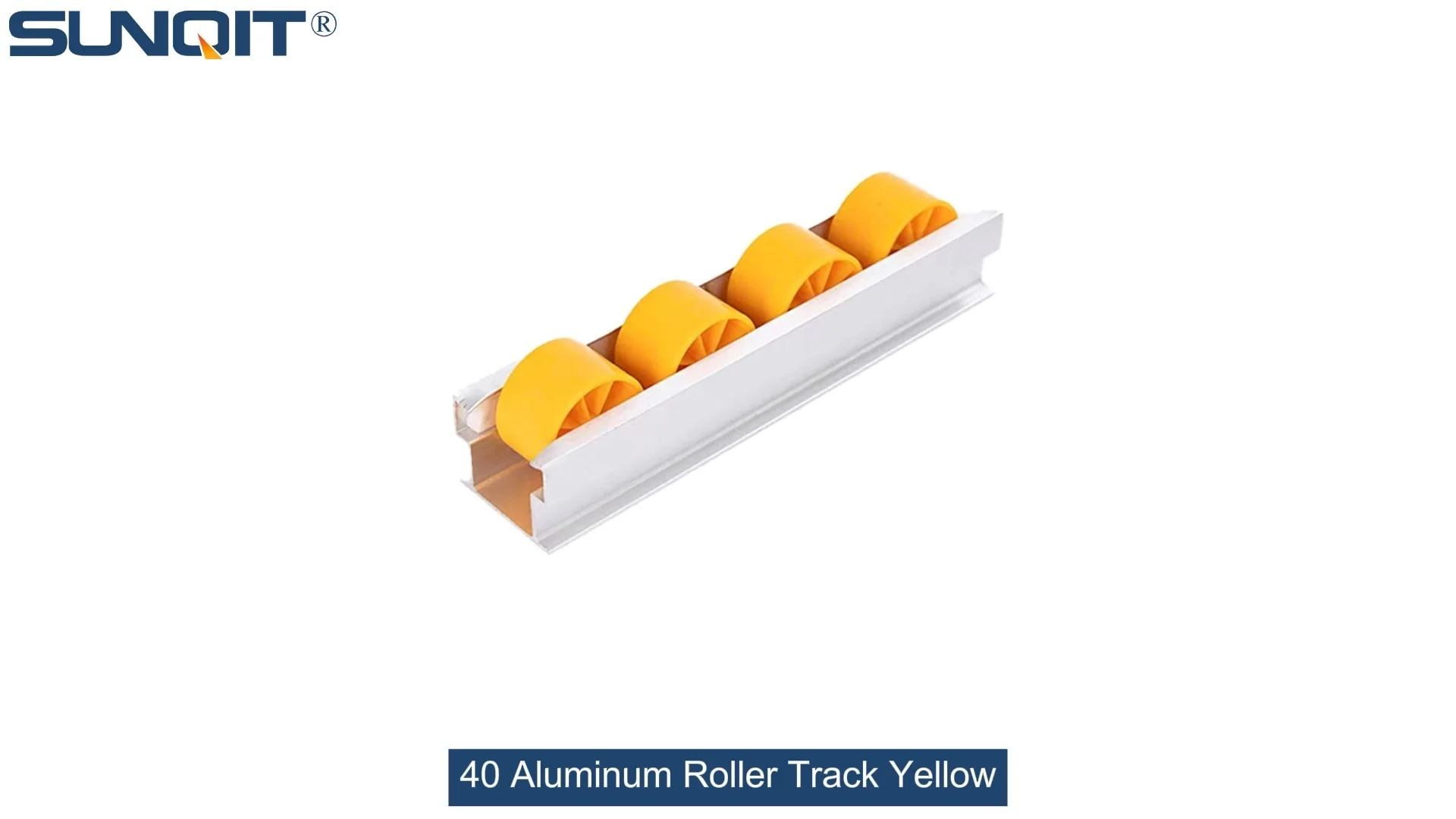
40 Aluminum Roller Track Yellow
Durable and smooth-running modular roller rails. The system is fully assembled. The roller rail profile contains plastic rollers mounted on steel axles. Aluminum frame with plastic wheel make it anti corrosion,and material convey more smooth.
In the fast-paced world of warehousing, order picking isn't just a task—it's the pulse that keeps operations alive. Every second spent hunting for a product, every misstep in locating a SKU, or every delay in moving items from shelf to cart can ripple outward, delaying shipments, frustrating customers, and inflating labor costs. For warehouse managers, the quest to speed up order picking while maintaining accuracy is never-ending. Enter the unsung hero of modern material handling: the 40 Aluminum Roller Track Yellow . This unassuming yet powerful tool, often integrated into flow racks and paired with smart roller track accessories , is quietly revolutionizing how warehouses operate. Let's dive into how this simple-sounding component is becoming a cornerstone of efficient lean systems , turning sluggish picking processes into streamlined, almost rhythmic workflows.
The Hidden Cost of Traditional Order Picking
To appreciate the impact of the 40 Aluminum Roller Track Yellow, we first need to understand the challenges of traditional order picking setups. Walk into many warehouses today, and you'll likely find static shelving units lined with boxes stacked from floor to ceiling. Workers, armed with pick lists or scanners, weave through aisles, stopping at each shelf to manually retrieve items. It's a system that hasn't changed much in decades—and it's riddled with inefficiencies.
Consider this: A typical picker might walk 7–10 miles per shift, much of it spent backtracking or standing idle while searching for the right product. Static shelves force workers to bend, reach, or climb ladders to access items, increasing the risk of fatigue and injury. Worse, without a clear flow of inventory, "dead stock" can accumulate in the back of shelves, leading to expired goods or missed sales opportunities. Even with digital tools like WMS (Warehouse Management Systems), the physical act of retrieving items remains a bottleneck. According to the Material Handling Institute, order picking accounts for 55% of a warehouse's labor costs and 40% of its operational time. In short, static storage isn't just slow—it's expensive.
Meet the 40 Aluminum Roller Track Yellow: More Than Just a "Track"
The 40 Aluminum Roller Track Yellow isn't just another piece of hardware. It's a thoughtfully engineered solution designed to address the root causes of slow order picking. Let's start with the basics: What is it? At its core, it's a length of extruded aluminum profile—lightweight yet surprisingly sturdy—fitted with evenly spaced rollers. The "40" refers to its width (40mm), making it compatible with standard warehouse racking systems, while the bright yellow color isn't just for aesthetics: it's a high-visibility hue that helps workers quickly identify active picking lanes, reducing errors.
But its real magic lies in its design. Unlike static shelves, which keep items fixed in place, the roller track uses gravity to create a "flow" of inventory. When integrated into a flow rack , items are loaded from the back (the "replenishment side") and glide forward to the picking face as front items are removed. This first-in, first-out (FIFO) movement ensures older stock is picked first, reducing waste—a key principle of lean systems . And because the rollers minimize friction, even heavy boxes or totes slide smoothly, requiring little to no manual pushing from workers.

Why Aluminum? Why Yellow? The Science Behind the Design
You might wonder: Why aluminum? Why not steel, plastic, or another material? Aluminum was a deliberate choice. It's lightweight, which makes installation and reconfiguration a breeze—no need for heavy machinery or teams of workers to move sections. Yet, despite its lightness, aluminum is remarkably durable. It resists corrosion, even in humid warehouse environments, and stands up to daily wear and tear from sliding totes or metal containers. Unlike steel, it won't rust, and unlike plastic, it won't crack or warp under heavy loads. Over time, this durability translates to lower maintenance costs and a longer lifespan—often 10+ years with minimal upkeep.
Then there's the color: yellow. In ergonomics, color psychology plays a subtle but critical role. Yellow is highly visible, even in dimly lit warehouses, making it easier for pickers to scan shelves and locate the correct lane at a glance. This reduces "search time," a hidden drain on productivity. Imagine a worker rushing to fulfill a time-sensitive order: instead of squinting to read tiny labels or memorize aisle numbers, they can spot the bright yellow track from yards away, zeroing in on the right section instantly. Studies show that high-visibility color coding can reduce picking errors by up to 18%—a small change with a big impact on customer satisfaction.
But the 40 Aluminum Roller Track Yellow isn't a one-size-fits-all solution. Its design is modular, meaning it can be paired with a range of roller track accessories to adapt to different needs. Need to adjust the angle of the track for steeper flow? Add roller track placon mounts for aluminum profile flat to tweak the incline. Handling fragile items that need a gentler glide? Swap out standard rollers for softer, rubber-coated versions. Moving heavy pallets instead of small totes? Reinforce the track with roller track placon mount center support brackets to boost load capacity. This flexibility makes it suitable for everything from e-commerce fulfillment centers (handling small packages) to automotive parts warehouses (managing heavy components).

Traditional vs. 40 Aluminum Roller Track Yellow: A Side-by-Side Comparison
| Metric | Traditional Static Shelving | Flow Racks with 40 Aluminum Roller Track Yellow |
|---|---|---|
| Picking Time per Order | 12–15 minutes (avg. for 10+ items) | 6–8 minutes (avg. for 10+ items) |
| Picker Walking Distance per Shift | 7–10 miles | 4–6 miles |
| Error Rate | 3–5% (missed picks, wrong items) | 1–2% (high visibility + FIFO flow) |
| Inventory Waste (Expired/Obsolete Stock) | 5–8% annually | 1–3% annually (FIFO compliance) |
| Installation Time | 8–12 hours (for 20ft section) | 2–4 hours (for 20ft section, lightweight aluminum) |
*Data based on industry studies and case examples from mid-sized warehouses (50,000–100,000 sq. ft.)

From Theory to Practice: A Warehouse's Journey with 40 Aluminum Roller Track Yellow
Let's bring this to life with a real example. Consider a regional e-commerce fulfillment center in the Midwest that handles 5,000+ orders daily. Before implementing 40 Aluminum Roller Track Yellow, their pickers relied on static shelving and pushcarts. During peak seasons (think Black Friday or holiday rushes), the warehouse struggled to keep up: orders were delayed by 24–48 hours, and pickers reported fatigue from constant walking and lifting. Turnover was high, with new hires taking weeks to learn the layout.
In 2023, the warehouse invested in 40 Aluminum Roller Track Yellow, retrofitting 80% of their picking zones into flow racks. The results were striking. Within three months, average picking time per order dropped from 14 minutes to 7 minutes—a 50% improvement. Picker walking distance fell from 9 miles per shift to 5 miles, reducing fatigue and cutting down on sick days. Error rates plummeted from 4% to 1.2%, leading to fewer returns and happier customers. Even better, the FIFO flow eliminated nearly $40,000 in expired inventory waste annually. "It's like night and day," said the warehouse manager. "Our pickers used to dread peak season. Now, they're hitting targets with energy left to spare."
What made the difference? The roller track didn't just speed up movement—it transformed the workflow. Instead of walking to each shelf, pickers now stand at a single picking station, with items flowing to them via the yellow tracks. This "goods-to-person" model (a hallmark of lean systems) turns picking into a more efficient, less physically demanding task. And because the yellow tracks are so visible, new hires could navigate the layout in days, not weeks.
Beyond the Track: How Roller Track Accessories Boost Versatility
The 40 Aluminum Roller Track Yellow is powerful on its own, but its true potential shines when paired with the right roller track accessories . These add-ons turn a basic track into a customized solution tailored to a warehouse's unique needs. Let's explore a few key ones:
- Roller Track Placon Mounts for Aluminum Profile Flat: These brackets attach the roller track to standard aluminum profiles (like 4040 or 3030 aluminum extrusion profiles), allowing for easy height adjustments. Need to raise the track by 6 inches to align with a conveyor? Just loosen the mounts and reposition—no drilling or welding required.
- End Stops and Guides: Yellow or grey plastic roller track guide rails (like the plastic roller track guide rail yellow from the keyword list) prevent items from sliding off the track edges. They're color-coded to match the track, enhancing visibility and reducing jams.
- Center Support Brackets: For longer track sections or heavier loads, roller track placon mount center support brackets add stability, preventing sagging over time. This is crucial for warehouses handling large, bulky items like automotive parts or appliances.
- Swivel Roller Balls: While not part of the track itself, accessories like swivel roller balls 1 inch can be added at the end of the track to create a "transfer point," allowing items to rotate 360 degrees. This is ideal for redirecting totes onto carts or conveyors without manual lifting.
Together, these accessories make the 40 Aluminum Roller Track Yellow adaptable to almost any scenario. Whether you're storing small electronics, heavy tools, or perishable goods, there's a configuration that fits. And because aluminum profiles are standard across the industry, these accessories are widely available and affordable.
Keeping the Flow Going: Simple Maintenance Tips
Like any tool, the 40 Aluminum Roller Track Yellow performs best with regular care. Fortunately, maintenance is minimal—another perk of aluminum and high-quality rollers. Here's what warehouse teams need to do:
- Weekly Cleaning: Use a dry cloth or compressed air to remove dust, debris, or small particles from the rollers. Built-up dirt can increase friction, slowing down item flow.
- Monthly Inspections: Check for loose brackets (like placon mounts) or damaged rollers. Tighten any wobbly screws and replace rollers that are cracked or misaligned—most suppliers offer replacement rollers at low cost.
- Quarterly Lubrication (If Needed): While aluminum rollers are self-lubricating in most cases, extremely heavy loads or high-frequency use may require a drop of silicone lubricant on roller axles. Avoid oil-based lubricants, which can attract dust.
With these simple steps, the track will continue to perform reliably for years, making it a low-effort, high-reward investment.
The Future of Order Picking: Lean, Fast, and Yellow
In a world where customers expect same-day or next-day shipping, warehouses can't afford to rely on outdated picking methods. The 40 Aluminum Roller Track Yellow isn't just a tool—it's a statement: that efficiency, accuracy, and worker well-being don't have to compete. By integrating this track into flow racks , pairing it with smart roller track accessories , and aligning with lean systems , warehouses are transforming order picking from a bottleneck into a competitive advantage.
So, the next time you walk through a warehouse and spot bright yellow tracks guiding items to pickers with ease, remember: it's not just aluminum and rollers. It's a system designed to respect workers' time, reduce waste, and keep the pulse of the supply chain strong. And in the end, that's what great warehousing is all about—making the complex feel simple, one smooth roll at a time.