- Company Articles
- Products and Technology
- Product knowledge
- How 40 Roller Track Placon Mount Flat Improves Worker Safety in Assembly Lines

How 40 Roller Track Placon Mount Flat Improves Worker Safety in Assembly Lines
Related Product
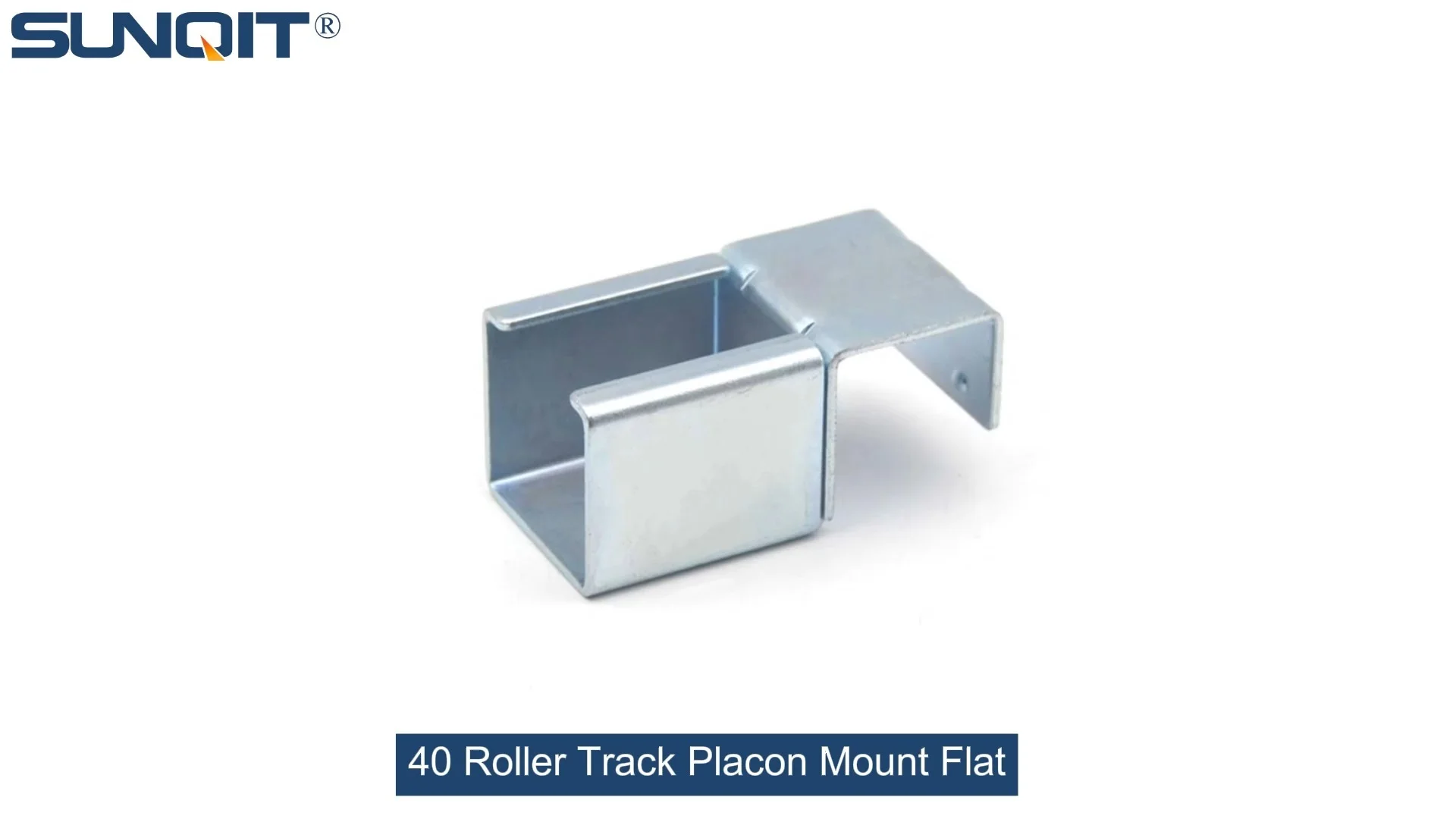
40 Roller Track Placon Mount Flat
Roller track placon mount work as a connector for roller track and pipe or aluminum profile in rack syetem, it is a necessary parts in rack system which widely used in industrial plant and logistic,warehouse storage.
Walk into any bustling assembly line, and you'll likely spot the same hidden dangers: heavy parts slipping off uneven tracks, workers bending awkwardly to reach conveyor belts, loose connectors jutting out like silent tripwires. For frontline manufacturers, these aren't just "minor inconveniences"—they're daily threats to health, productivity, and peace of mind. In industries where every second counts, safety often takes a backseat to speed. But what if the tools designed to boost efficiency could also become the first line of defense for worker well-being? Enter the 40 Roller Track Placon Mount Flat—a-sounding component that's quietly revolutionizing assembly line safety across factories worldwide.
The Hidden Cost of "Good Enough" Roller Tracks
Before diving into how this specific roller track changes the game, let's talk about the status quo. Traditional roller tracks, especially those made with cheap materials or haphazard designs, are accident waiting to happen. Picture this: A worker in an automotive parts plant is guiding a 20-pound gearbox along a metal track. The track's surface is pitted from years of use, and the connectors between sections are loose, creating a tiny but critical gap. As the gearbox hits that gap, it jolts, slipping sideways and grazing the worker's forearm—a deep scratch that requires medical attention, halting production for 30 minutes. Or consider a 3C assembly line where small circuit boards slide down a plastic track; without proper grip, a board skids off, landing on the floor and cracking. Now the worker has to bend down, pick it up, and rework it—repeating this motion 50 times a day, straining their lower back over months until a chronic injury develops.
These scenarios aren't outliers. OSHA reports that material handling errors account for 20% of manufacturing injuries, with overexertion and slips/falls topping the list. Many of these incidents trace back to outdated track systems: sharp edges that cut hands, unstable mounts that shift under load, and poor alignment that forces workers into unnatural postures. For factory managers, the cost adds up fast—medical bills, workers' compensation claims, lost productivity, and demoralized teams. But what if the solution wasn't just "fixing" these issues, but designing them out entirely?
What Makes the 40 Roller Track Placon Mount Flat Different?
At first glance, the 40 Roller Track Placon Mount Flat looks like any other aluminum track component. It's sleek, lightweight, and designed to connect seamlessly with conveyor systems and workbenches. But dig deeper, and you'll see it's engineered with a single, unwavering focus: worker safety. Let's break down its key features—and how they translate to real-world protection.
Key Design Focus: Unlike generic tracks built solely for "moving parts from A to B," this roller track prioritizes controlled motion , ergonomic alignment , and durability under stress . Every curve, every connector, and every material choice is intentional—turning a simple tool into a silent safety partner.

5 Ways It Protects Workers (That Go Beyond "Smooth Sliding")
1. Eliminating "Slip-and-Grab" Hazards with Precision Engineering
One of the biggest risks on assembly lines is unpredictable motion. A part that slides too fast can collide with others; one that sticks requires a worker to yank it free, risking strained muscles or flying debris. The 40 Roller Track Placon Mount Flat solves this with a dual design: a flat, high-grip aluminum surface paired with 40mm steel wheels that maintain consistent speed. Unlike plastic tracks that warp in heat or metal tracks that rust and become slippery, the aluminum extrusion here is treated with a matte finish that adds friction without slowing motion. Workers no longer have to "chase" parts down the line—components glide at a steady pace, reducing the urge to reach, grab, or stabilize with bare hands.
Take a medical device assembly line, for example, where delicate syringes are transported on tracks. With traditional systems, syringes often twist or tip, requiring workers to steady them mid-slide. The 40 Roller Track's uniform wheel spacing and anti-slip surface keep syringes upright and aligned, so workers can focus on inspection rather than catching falling parts. Fewer interventions mean fewer chances for accidental pricks or dropped tools.
2. No More "Bend, Stretch, Repeat": Ergonomics Built In
Chronic injuries like carpal tunnel syndrome and lower back pain are often called "silent killers" in manufacturing. They develop slowly, over months of repetitive motion or poor posture, and can force workers into early retirement. The 40 Roller Track Placon Mount Flat fights this by integrating with lean system principles—specifically, the idea that tools should adapt to workers, not the other way around.
Thanks to its modular design, this track can be mounted at exactly the right height and angle for the task. In a consumer electronics plant assembling laptops, for instance, the track can be tilted 5 degrees downward to align with the worker's waist, so they don't have to stoop to pick up motherboards. In a warehouse setting, it can be paired with adjustable workbenches, raising or lowering to match the height of each worker (whether they're 5'2" or 6' tall). This isn't just about comfort—it's about preventing the micro-injuries that add up over time. When a worker's body stays in a neutral, relaxed position, their risk of strain drops dramatically.
3. Reinforced Mounts: Stability That Stands Up to Chaos
Loose tracks are a disaster waiting to happen. A single wobbly mount can cause the entire system to shift, creating gaps, tilting, or even collapsing under heavy loads. The 40 Roller Track Placon Mount Flat addresses this with its "placon mount" system—a series of reinforced brackets that lock the track securely to aluminum profiles or workbench frames. Unlike basic screw-on mounts that loosen with vibration, these brackets use a T-slot design that distributes weight evenly, ensuring the track stays aligned even during peak production hours.
Imagine a busy automotive parts line where 50-pound engine components roll down the track every minute. With traditional mounts, after a week of constant vibration, screws would start to back out, creating a 2-inch gap between track sections. A component hitting that gap could bounce, crashing into the worker or the machinery. But with placon mounts, the track stays rock-solid—no gaps, no shifts, no surprises. Workers don't have to "check" the track before use; they can trust it to hold steady, day in and day out.
4. Compatibility with ESD Workstations: Protecting Both Workers and Products
In industries like 3C assembly or medical device manufacturing, static electricity is more than a nuisance—it's a safety and quality risk. A static discharge can damage sensitive electronics, but it can also give workers a painful shock, causing them to jerk and lose focus (or worse, drop a tool). The 40 Roller Track Placon Flat isn't just about physical safety; it plays well with ESD workstations, integrating with anti-static mats and grounded components to dissipate static buildup.
For workers assembling circuit boards, this means no more unexpected zaps when handling parts. The track's aluminum construction conducts static away from the work area, keeping both the worker and the product safe. It's a small detail, but anyone who's ever been shocked by a static charge knows how jarring it can be—distracting, painful, and a split-second distraction that could lead to a mistake. By eliminating that distraction, the track lets workers stay focused, calm, and in control.
5. Durability That Reduces Maintenance Risks
Here's an often-overlooked safety hazard: maintenance. When a track system breaks down, workers have to step in to fix it—climbing ladders, using power tools, or reaching into tight spaces. Every minute spent on maintenance is a minute exposed to new risks: a loose bolt falling into a shoe, a wrench slipping and hitting a hand. The 40 Roller Track Placon Mount Flat minimizes this by being incredibly durable. Made from high-grade aluminum extrusion profiles, it resists rust, corrosion, and wear—even in humid factory environments or when exposed to cleaning chemicals.
In a food packaging plant, for example, where tracks are regularly hosed down to meet sanitation standards, traditional steel tracks would rust within months, requiring frequent replacements. The 40 Roller Track's aluminum build stays intact, reducing the need for emergency repairs. Fewer breakdowns mean fewer maintenance sessions, which means fewer opportunities for accidents. It's a ripple effect: durability leads to less downtime, which leads to safer, more consistent workflows.

Real Results: Safety Translates to Happier, More Productive Teams
Numbers tell the story best. A case study from a major 3C manufacturer in China switched to the 40 Roller Track Placon Mount Flat across 10 assembly lines. Within six months, they reported: a 40% drop in minor injuries (cuts, scrapes, strains), a 25% reduction in worker absences due to chronic pain, and a 15% increase in production speed (because workers no longer wasted time fixing track issues or recovering from mishaps). The plant manager summed it up: "We didn't just buy a better track—we bought peace of mind for our team. When workers feel safe, they move faster, care more, and stay longer."
Another example comes from a medical device plant in Europe, where compliance with strict safety standards is non-negotiable. After installing the track system, they passed their annual OSHA audit with zero safety violations related to material handling—a first in five years. "The auditors kept asking, 'What changed?'" the safety officer recalled. "It was the tracks. No more loose parts, no more uneven surfaces, no more workers bending like pretzels. It's like night and day."
| Safety Metric | Before 40 Roller Track | After Installation |
|---|---|---|
| Minor injuries per month | 12 incidents | 5 incidents |
| Worker absences (chronic pain) | 8 days/month | 3 days/month |
| Maintenance-related accidents | 3 incidents/quarter | 0 incidents/quarter |

Why Safety Should Never Be an Afterthought
In the fast-paced world of manufacturing, it's easy to prioritize "what works" over "what's safe." But the 40 Roller Track Placon Mount Flat proves these don't have to be opposites. It's a reminder that the best tools aren't just about efficiency—they're about respect for the people who use them every day. A worker shouldn't have to choose between meeting a quota and protecting their body. A manager shouldn't have to tally injury reports and wonder if they could have prevented it.
At its core, this roller track is part of a larger lean system philosophy: "sustainable improvement." Lean isn't just about cutting waste—it's about building systems that work with people, not against them. When you invest in tools that protect workers, you're not just reducing costs—you're building a culture of care. And in that culture, productivity, innovation, and loyalty thrive.
Final Thoughts: Small Components, Big Impact
The 40 Roller Track Placon Mount Flat might not grab headlines like a high-tech robot or a flashy new conveyor belt. But for the workers who interact with it every day, it's a game-changer. It's the difference between dreading the morning shift and walking into work feeling confident that their tools have their back. It's the quiet reassurance that someone thought about their safety when designing the line.
In the end, manufacturing isn't just about making products—it's about making lives better. Better for the customers who buy reliable goods, and better for the workers who build them. The 40 Roller Track Placon Mount Flat is a small step toward that vision. And in a world where every detail matters, small steps can lead to giant leaps in safety, happiness, and success.