- Company Articles
- Products and Technology
- Solution
- How 40 Roller Track Placon Mount drop High Supports Material Flow in Flexible Production

How 40 Roller Track Placon Mount drop High Supports Material Flow in Flexible Production
Related Product
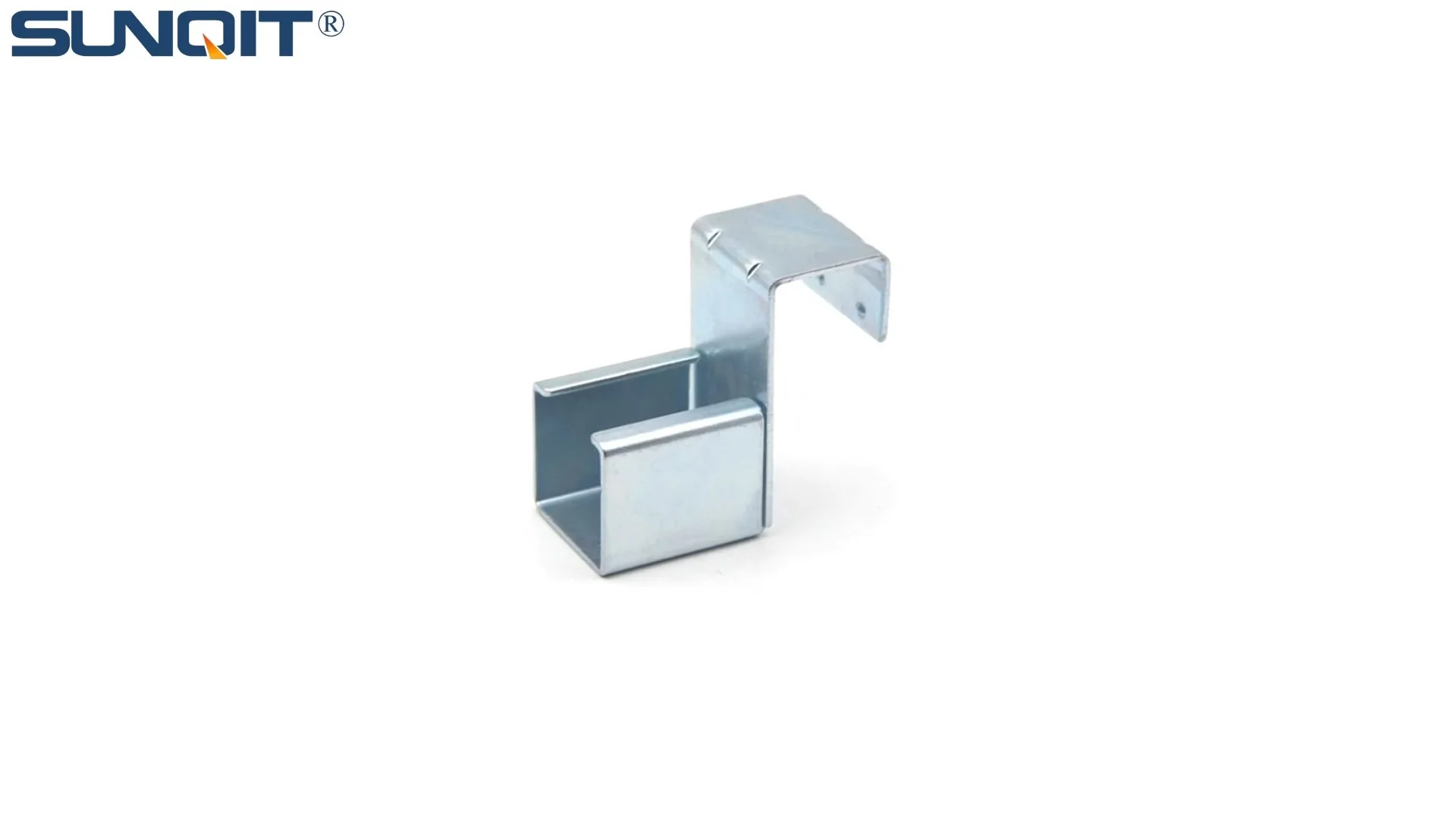
40 Roller Track Placon Mount drop High
Roller track placon mount work as a connector for roller track and pipe or aluminum profile in rack syetem, it is a necessary parts in rack system which widely used in industrial plant and logistic,warehouse storage.
Walk into any modern factory today, and you'll probably notice something different from the rigid, one-size-fits-all production lines of the past. Instead of fixed conveyor belts and immovable workstations, there's a sense of adaptability—lines that can shift from making smartphone components in the morning to medical devices in the afternoon, with workers and machines collaborating seamlessly. This is the reality of flexible production, a manufacturing approach built to keep up with today's fast-changing market demands: shorter product lifecycles, customized orders, and the need to scale up or down at a moment's notice.
But here's the thing about flexible production: it only works if everything in the factory can keep up—especially material flow. Imagine you've got a super flexible assembly line that can switch products in 30 minutes, but the parts needed for the new product are still stuck in a storage room 50 meters away, waiting for a worker to wheel them over. Suddenly, that flexibility doesn't mean much. Material flow—the way parts, components, and subassemblies move from storage to workstations, and from one workstation to the next—is the backbone of any efficient flexible production system. Get it right, and you cut waste, speed up production, and keep workers focused on value-adding tasks. Get it wrong, and you're looking at bottlenecks, delays, and frustrated teams.
That's where tools like the 40 Roller Track Placon Mount drop High come in. It might sound like a mouthful, but this unassuming piece of equipment is a workhorse when it comes to smoothing out material flow in flexible factories. In this article, we'll break down why material flow matters so much in flexible production, how this specific roller track design solves common flow problems, and why it's become a go-to choice for manufacturers in industries from 3C assembly to medical device production. Let's dive in.
Why Material Flow Makes or Breaks Flexible Production
Before we get into the specifics of roller tracks, let's take a step back and talk about why material flow is the unsung hero of flexible production. Think of a factory as a human body: if the production lines are the muscles (doing the work) and the workers are the brain (making decisions), then material flow is the circulatory system. Just like blood needs to reach every organ efficiently to keep the body alive, materials need to reach every workstation at the right time, in the right quantity, and in the right condition to keep production alive.
In traditional mass production, material flow was simpler (in theory, at least). You made the same product day in and day out, so you could set up fixed conveyor belts and schedules: "Part A moves from Station 1 to Station 2 at 9 AM, Part B follows at 9:05, and so on." But flexible production throws that predictability out the window. One week you might be assembling 500 small electronic components, the next week 200 larger medical devices, and the week after that, a mix of both. Suddenly, your material flow system can't rely on "set it and forget it" anymore—it needs to adapt, quickly.
The consequences of poor material flow in this environment are huge. Let's say a workstation is waiting for a batch of parts because the previous station's material handler got held up. Those workers aren't just sitting idle—they're costing the company money every minute. Or maybe parts are being moved manually because the flow system can't adjust to a new product size, leading to increased risk of damage or errors. Even small delays add up: a 5-minute wait per workstation per hour, multiplied by 20 workstations, equals over 1.5 hours of lost production time in a single shift.
Fun fact: According to lean manufacturing studies, up to 30% of total production time in poorly designed factories is wasted on material handling—moving parts from one place to another, searching for misplaced components, or waiting for deliveries. That's a third of your team's day spent not actually building products! The goal of good material flow is to slash that number, turning wasted time into productive work.
So, what does "good" material flow look like in flexible production? It needs to be three things: responsive (adjusts to changes in product type, volume, or workstation layout), reliable (parts arrive on time, every time, without damage), and effortless (minimizes manual labor, letting workers focus on assembly, not). And that's exactly where the 40 Roller Track Placon Mount drop High shines.
Meet the 40 Roller Track Placon Mount drop High: Designed for the Way Factories Actually Work
Let's start with the basics: what is a 40 Roller Track Placon Mount drop High, anyway? At its core, it's a type of roller track—think of a series of small wheels mounted on a frame—that's designed to let materials glide smoothly from one point to another. But the "40" in the name refers to its width (40mm), which makes it versatile for medium-sized parts common in electronics, automotive, and medical industries. "Placon Mount" means it uses a specific mounting system that attaches easily to aluminum profiles (those modular metal frames you see in modern workstations). And "drop High"? That's the clever part—it's designed to sit slightly lower than the workbench or flow rack it's connected to, creating a gentle slope that lets gravity do the heavy lifting. No motors, no complicated controls—just a simple, effective way to move parts without manual effort.
But what really sets this roller track apart is how it's built for flexibility. Let's break down its key design features and why they matter:
- Modular by design: Unlike fixed conveyor belts that require heavy machinery to install or reconfigure, this roller track is built in sections that snap together like LEGO bricks. Need to extend it by 2 meters to reach a new workstation? Just add another section. Want to curve it around a corner? Swap out a straight section for a curved one. It's so easy to adjust that a single worker can reconfigure a 10-meter track in under an hour—no engineers or special tools required.
- Lightweight but tough: Made from high-grade aluminum, it's light enough to move around (critical for flexible layouts) but strong enough to handle daily use. We're talking about supporting loads up to 50kg per meter—plenty for most electronic components, small mechanical parts, or even medical device kits. And the rollers themselves? They're made from wear-resistant plastic or steel, so they won't scratch delicate parts like phone screens or medical instruments.
- The "drop high" advantage: That slight height difference (the "drop") between the track and the connected workstation is genius. It means parts don't just sit on the track—they flow . A worker at the upstream station places a bin or tray of parts on the track, gives it a gentle push, and gravity carries it down to the next workstation. No more walking back and forth with a cart, no more waiting for a forklift. It's like having a mini "material highway" right on the factory floor.
- Compatible with lean systems: This roller track wasn't designed to work alone. It plays well with other lean tools like aluminum lean pipes, flow racks, and ESD workbenches (more on that later). Whether you're building a temporary production cell for a rush order or a permanent line for high-volume assembly, it integrates seamlessly into existing setups.
To put this in perspective, let's compare it to a common alternative: manual material handling with carts. Imagine a worker in a 3C assembly plant pushing a cart loaded with phone motherboards from the storage area to the soldering station. That cart might weigh 30kg, and the round trip takes 10 minutes. Over an 8-hour shift, that's 48 minutes spent just moving parts—time they could be spending soldering. Now, replace that cart with a 40 Roller Track Placon Mount drop High running from storage to the soldering bench. The worker loads the motherboards onto the track, they glide over automatically, and the worker stays at their station, soldering the whole time. That's a 48-minute gain per shift, per worker. Multiply that by 10 workers, and you're looking at 8 extra hours of productive work every day.

How It Solves 3 Common Material Flow Headaches
Every factory has its own unique material flow challenges, but there are three problems we hear about again and again from manufacturers. Let's look at how the 40 Roller Track Placon Mount drop High addresses each one:
Headache #1: "Our material flow can't keep up with frequent line changes."
In flexible production, line changes are a fact of life. One month you're making smartwatches, the next you're switching to Bluetooth speakers. Each product has different parts, different sizes, and different workstation layouts. If your material flow system is bolted to the floor or requires a team of technicians to reconfigure, you're going to spend more time changing the line than running production .
The 40 Roller Track Placon Mount drop High solves this with its modular, tool-free design. Let's say you're switching from assembling small circuit boards (which need a narrow track) to larger speaker enclosures (which need a wider track). With traditional systems, you might need to uninstall the old track, drill new holes, and install a new one—taking hours. With this roller track? You simply disconnect the narrow sections, swap them for wider ones, and reattach them to the aluminum profiles using the placon mounts. The whole process takes 30 minutes, tops. And because the placon mounts clamp onto standard aluminum profiles (like the 4040 or 3030 profiles used in most lean workstations), you don't need to modify your existing infrastructure. It's like rearranging furniture in your living room—you're not rebuilding the walls, just moving the pieces to fit the new "layout."
Headache #2: "We're wasting too much time on manual material handling."
Manual handling is the silent productivity killer. Even in factories with conveyor belts, there are often "dead zones"—gaps between conveyors and workstations where workers have to physically carry parts. A study by the Manufacturing Institute found that factory workers spend an average of 20% of their shift on non-value-adding tasks, with material handling topping the list.
The 40 Roller Track Placon Mount drop High eliminates these dead zones by creating a direct "path" from point A to point B. Let's take a medical device assembly line as an example. The cleanroom has strict rules about movement to prevent contamination, so workers can't just wander around fetching parts. With a roller track installed between the sterilized parts storage and the assembly bench, parts are delivered right to the worker's fingertips. The upstream team loads a sealed tray onto the track, it slides down to the assembly station, and the worker opens it and starts building. No walking, no contamination risk, no wasted time. And because the track is low-profile (thanks to that "drop high" design), it doesn't block visibility or get in the way of other equipment—unlike bulky conveyors.
Headache #3: "Delicate parts keep getting damaged during transport."
For industries like 3C assembly (think smartphones, laptops) or medical devices, parts are often small, fragile, or sensitive to static (ESD-sensitive). Dropping a bin of microchips or scratching a medical sensor can ruin a whole batch, leading to costly rework or scrap.
The 40 Roller Track Placon Mount drop High's roller design is gentle enough for even delicate parts. The rollers are spaced evenly to support the load, preventing sagging or tipping, and they rotate smoothly to avoid jolting the parts. For ESD-sensitive components, you can even opt for conductive rollers that dissipate static electricity, protecting chips from electrostatic damage. Compare that to manual handling, where a slip of the hand or a bump against a cart can send parts crashing to the floor. One electronics manufacturer we worked with reported a 70% reduction in part damage after switching to these roller tracks for their circuit board assemblies—saving them thousands in scrap costs alone.

From Good to Great: How It Works with Other Lean Tools
The 40 Roller Track Placon Mount drop High is powerful on its own, but it truly shines when paired with other lean system components. Think of it as a team player—working with flow racks, ESD workbenches, and conveyors to create a seamless material flow ecosystem. Let's look at a few common partnerships:
| Lean Tool | How They Work Together | Result for Material Flow |
|---|---|---|
| Flow Racks | Flow racks store parts in tilted bins, so the oldest parts are used first (FIFO). The roller track connects to the bottom of the flow rack, letting bins slide directly onto the track. | No more manually pulling bins from the rack—they flow straight to the workstation, reducing picking time by 40%. |
| ESD Workbenches | ESD workbenches protect sensitive electronics from static. The roller track's "drop high" design aligns with the bench height, so parts glide right onto the workspace. | Workers stay seated and focused, with parts within arm's reach—cutting idle time by 25%. |
| Conveyors | For longer distances (e.g., from the warehouse to the production line), conveyors move bulk materials. The roller track connects to the conveyor's end, distributing parts to individual workstations. | Bulk materials are split into workstation-sized batches automatically, eliminating bottlenecks at the conveyor exit. |
| Aluminum Lean Pipes | Aluminum lean pipes build custom frames and structures. The roller track mounts to these pipes, creating adjustable support legs or overhead racks. | Track height and angle can be (fine-tuned) to match different product sizes, ensuring smooth flow for everything from small screws to large assemblies. |
One 3C manufacturer we worked with took this integration to the next level. They combined flow racks, 40 Roller Track Placon Mount drop High sections, and ESD workbenches into a "U-shaped" production cell. Parts flowed from the flow rack, down the roller track, onto the workbench, and finished products moved to a conveyor via another track. The result? A 50% reduction in material handling time and a 35% increase in daily output—all because the tools worked together as a system, not separate pieces.

Real-World Impact: How Industries Are Using It Today
Let's take a look at how different industries are leveraging the 40 Roller Track Placon Mount drop High to solve their unique material flow challenges:
3C Assembly: Speed and Precision for Tiny Parts
In 3C (computers, communications, consumer electronics) manufacturing, products are small, complex, and produced in high volumes. A single smartphone has over 1,000 parts, and assembly lines can run 24/7 to meet demand. Material flow here needs to be fast, precise, and gentle enough to avoid damaging delicate components like camera lenses or microchips.
A major 3C manufacturer in Shenzhen installed 40 Roller Track Placon Mount drop High sections between their SMT (surface mount technology) machines and manual assembly stations. After SMT places chips on circuit boards, the boards are loaded onto trays and sent down the roller track to workers who add connectors and test the boards. The track's smooth rollers prevent jostling (which could misalign the chips), and the modular design lets them quickly adjust the track length when switching between phone models. They reported a 20% increase in boards processed per hour and a 90% reduction in rework due to damaged parts.
Medical Device Production: Clean, Controlled Flow for Regulatory Compliance
Medical device manufacturing has strict rules: parts must be handled in sterile environments, and every step must be traceable. Material flow systems here can't have crevices where dirt builds up, and they need to be easy to clean. The 40 Roller Track Placon Mount drop High's aluminum construction is non-porous and resistant to disinfectants, making it ideal for cleanrooms.
A medical device company in Jiangsu uses these tracks to move sterilized surgical tool kits between packaging stations. The tracks are mounted on adjustable aluminum frames, so they can be raised or lowered to match different packaging table heights. And because there are no motors or moving parts besides the rollers, there's no risk of lubricant leaks or dust buildup—critical for maintaining ISO 13485 compliance. "We used to have workers carrying kits in sealed boxes, which took time and risked contamination," said their production manager. "Now the kits flow smoothly from station to station, and we've cut our packaging time by 30% while passing every audit with flying colors."
Automotive Parts: Durability for Heavy-Duty Flow
Automotive parts are bulkier and heavier than electronics or medical devices, so material flow systems need to be tough. A car door hinge, for example, might weigh 2-3kg, and a bin of 10 hinges could weigh 25kg. The 40 Roller Track Placon Mount drop High's steel-reinforced rollers and aluminum frame handle this weight with ease.
An automotive supplier in Guangzhou uses these tracks to move metal brackets from their stamping press to the welding station. The track's "drop high" slope is steep enough to move the heavy bins but gentle enough to prevent them from sliding too fast. They also added end stops (a simple accessory that clamps onto the track) to catch bins at the welding station, so workers don't have to chase rolling bins across the floor. "We were using forklifts to move these brackets before, which caused delays when the forklift was busy elsewhere," said their plant supervisor. "Now the track delivers brackets right to the welders, and we've eliminated 90% of the wait time for materials."
Sustainability: More Than Just Efficiency—It's About the Planet, Too
In today's manufacturing world, efficiency isn't the only goal—sustainability matters, too. Factories are under pressure to reduce waste, energy use, and carbon footprints. The 40 Roller Track Placon Mount drop High supports these goals in a few key ways:
- Reusable and recyclable: Unlike plastic conveyor belts that wear out and end up in landfills, the aluminum track and steel rollers are durable and 100% recyclable. Even if a section gets damaged, you can replace just that section instead of the whole track—reducing waste.
- Energy-free operation: Since it uses gravity instead of motors, it doesn't consume electricity. A traditional motorized conveyor might use 1-2 kWh per hour; multiply that by 24 hours a day, and you're looking at significant energy savings with the roller track.
- Supports lean waste reduction: By cutting down on material damage and manual handling, it reduces scrap (less waste) and rework (less energy spent fixing mistakes). It's a win-win for your bottom line and the planet.
One electronics manufacturer calculated that switching to gravity-fed roller tracks (including the 40 Roller Track Placon Mount drop High) saved them 12,000 kWh of electricity per year—enough to power 10 average homes. And because the aluminum is recyclable, they're on track to reduce their landfill waste by 5 tons annually. It just goes to show: good material flow isn't just good for production—it's good for the planet, too.
Why Choose This Roller Track for Your Factory?
At this point, you might be thinking, "There are other roller tracks out there—what makes this one special?" The answer lies in the details: it's designed for flexible production , not just general material handling. Here's why manufacturers keep coming back to it:
- Built for adaptability: Most roller tracks are designed for fixed layouts. This one is built to change—quickly and easily. Whether you're adding a new workstation, shrinking a line, or switching products, it adapts to your needs, not the other way around.
- Tested in real factories: It's not just a lab prototype. This track has been used in over 500 factories across China, from small workshops to Fortune 500 companies. It's been tested with everything from 50g circuit boards to 50kg automotive parts, and it's proven to hold up under daily use.
- Backed by lean expertise: When you buy this roller track, you're not just getting a piece of equipment—you're getting access to a team that understands lean manufacturing. Need help designing your material flow system? They'll work with you to map out your current flow, identify bottlenecks, and integrate the track with your existing lean tools (flow racks, workbenches, etc.) for maximum impact.
- Affordable without cutting corners: Flexible production shouldn't mean breaking the bank. This track is priced to fit small and medium factories, but it doesn't skimp on quality. The aluminum is aircraft-grade, the rollers are precision-machined, and every component comes with a 2-year warranty.
Final Thoughts: Material Flow as the Foundation of Flexible Production
Flexible production is no longer a "nice-to-have"—it's a necessity for manufacturers who want to stay competitive in today's fast-paced market. And at the heart of flexible production is material flow: the ability to move parts quickly, reliably, and efficiently, no matter how often your products or layouts change.
The 40 Roller Track Placon Mount drop High might not be the most glamorous piece of factory equipment, but it's a critical one. It solves the real-world problems manufacturers face every day: adapting to line changes, reducing manual labor, protecting delicate parts, and integrating with other lean tools. It's a simple idea—use gravity and modular design to make material flow effortless—but simple ideas are often the most powerful.
So, if you're struggling with bottlenecks, wasted time, or frustrated workers because your material flow can't keep up with your flexible production goals, maybe it's time to take a closer look at tools like this. After all, in manufacturing, the difference between good and great often comes down to the little things—the unassuming tools that keep the "circulatory system" of your factory running smoothly. And when that system runs smoothly, everything else follows: faster production, happier workers, and a business that's ready to take on whatever the market throws its way.