- Company Articles
- Products and Technology
- Solution
- How 40 Steel Roller Track White Supports Just-In-Time (JIT) Manufacturing

How 40 Steel Roller Track White Supports Just-In-Time (JIT) Manufacturing
Related Product
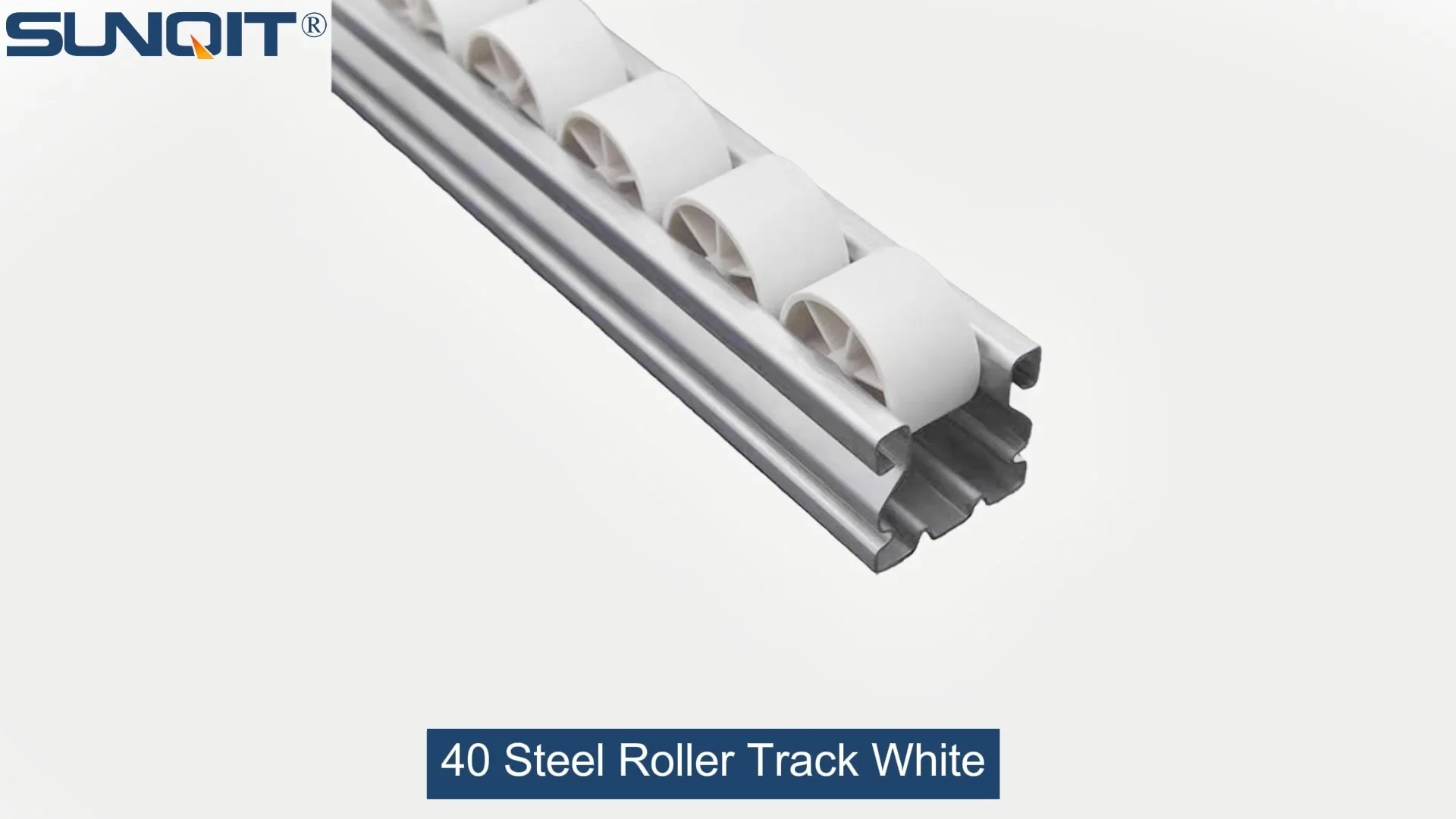
40 Steel Roller Track White
The roller track can be installed with multiple accessories to create different slopes and configurations of flow racks.All steel conveyor 40 roller track accessories are engineered to perfectly fit the sliding rail.It is enable the movement of SLC boxes.
Just-In-Time (JIT) manufacturing is a philosophy that revolutionizes how businesses operate by focusing on delivering the right materials, in the right quantity, at the exact moment they're needed. This approach eliminates waste, reduces costs, and boosts efficiency—but it relies heavily on seamless material handling systems to work effectively. One component that stands out in enabling JIT success is the 40 Steel Roller Track White. In this article, we'll explore how this simple yet powerful tool transforms production lines across industries, integrating with flow racks, conveyors, and lean pipe workbenches to create a lean, responsive manufacturing environment.
What Is 40 Steel Roller Track White?
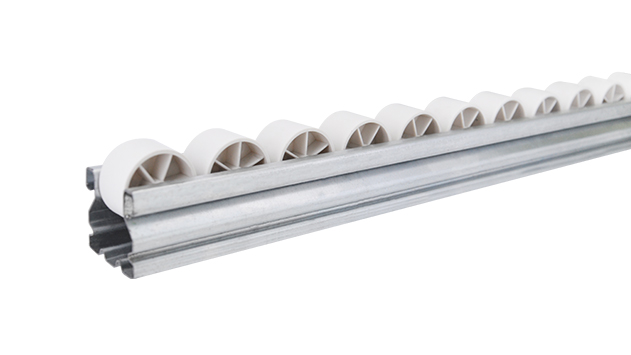
The 40 Steel Roller Track White is a versatile material handling component designed for industrial use. Measuring 40mm in width, it features a series of smooth-rolling steel rollers coated in a durable white finish. This track is built to handle heavy loads, making it ideal for industrial applications where reliability and strength are non-negotiable. Let's break down its key features:
Smooth Rolling Surface:
The white steel rollers are precision-engineered to minimize friction, allowing materials to glide effortlessly along the track. This reduces the risk of jams and ensures consistent movement, even with heavy items like automotive parts or medical equipment components.
Durability:
Constructed from high-quality steel, the track can withstand daily wear and tear in busy manufacturing environments. The white coating adds an extra layer of protection against scratches and corrosion, extending its lifespan and maintaining a clean appearance.
Compatibility:
A key advantage of the 40 Steel Roller Track White is its ability to integrate with other lean components. It works seamlessly with flow racks, conveyors, and lean pipe workbenches, allowing businesses to create custom setups tailored to their specific needs. This flexibility is crucial for JIT systems, which require adaptable solutions to respond to changing production demands.
Easy Installation:
The track is designed for quick assembly, with simple connectors that allow it to be attached to frames or racks without specialized tools. This means businesses can set up or reconfigure their material handling systems in minimal time, supporting the "continuous improvement" ethos of lean manufacturing.
How 40 Steel Roller Track White Enables JIT Manufacturing
JIT manufacturing focuses on eliminating seven types of waste: overproduction, waiting, transportation, inventory, motion, overprocessing, and defects. The 40 Steel Roller Track White directly addresses several of these wastes, making it a cornerstone of any JIT system. Let's explore how it supports each critical aspect of JIT:
1. Eliminating Waiting Waste with Flow Racks
Waiting waste occurs when workers or machines are idle due to missing materials. Flow racks are a staple in JIT systems, and the 40 Steel Roller Track White is the backbone of these racks. When materials are placed on the track, gravity pulls them forward, ensuring the next part is always ready for use. This eliminates the need for workers to search for parts or wait for deliveries, keeping production lines moving.
For example, in a 3C assembly line producing smartphones, components like circuit boards and batteries are stored on flow racks equipped with the 40 Steel Roller Track White. As each component is used, the next one slides down to the front of the rack. This means assembly workers never have to leave their stations to retrieve parts, reducing idle time and increasing output. The result is a continuous flow of materials that aligns perfectly with JIT principles.
2. Reducing Transportation Waste with Conveyors
Transportation waste refers to unnecessary movement of materials between stations. Conveyors are essential for moving materials efficiently in JIT manufacturing, and the 40 Steel Roller Track White integrates seamlessly with these systems. By connecting the track to conveyors, businesses create a smooth transition between different parts of the production process, ensuring materials flow continuously from one workstation to the next.
In an automotive plant, for instance, car body parts are moved from the storage area to the assembly line via conveyors using the 40 Steel Roller Track White. The track's smooth surface ensures parts move quickly and safely, minimizing the time spent transporting materials. This reduces bottlenecks and cuts down on lead times, allowing the plant to produce cars faster while maintaining high quality.
3. Optimizing Workstations with Lean Pipe Workbenches
Motion waste occurs when workers make unnecessary movements to access tools or materials. Lean pipe workbenches are customizable workstations that help reduce this waste, and adding the 40 Steel Roller Track White to them creates a dynamic workspace where materials are always within reach.
Consider a medical device manufacturing facility where precision is paramount. The 40 Steel Roller Track White can be integrated into the lean pipe workbench, allowing tools and components to slide easily to the worker's position. This eliminates the need for workers to stretch or reach for items, reducing fatigue and increasing focus. The result is fewer defects and higher productivity, both key goals of JIT manufacturing.
4. Supporting FIFO Inventory Management
Inventory waste is a major issue in traditional manufacturing, where excess stock ties up capital and takes up space. JIT systems use FIFO (First-In-First-Out) inventory management to minimize this waste, and the 40 Steel Roller Track White is perfect for this purpose. When materials are placed on the track in flow racks, the oldest items are used first, preventing obsolete stock from piling up.
In a warehouse logistics setup, for example, the roller track ensures that products are rotated correctly. Fresh stock is added to the back of the flow rack, and as items are taken from the front, new ones slide down. This means businesses always use the freshest materials, reducing waste and ensuring product quality.
Real-World Applications Across Industries
The 40 Steel Roller Track White is versatile enough to support JIT manufacturing in a wide range of industries. Let's look at some specific examples:
3C Assembly:
In factories producing smartphones, tablets, and laptops, time is critical. The roller track helps move small, delicate components like screens and batteries to assembly stations precisely when needed. This reduces idle time and allows manufacturers to meet tight deadlines, a key requirement in the fast-paced consumer electronics industry.
Automotive Manufacturing:
Car parts are often heavy and bulky, so durability is essential. The 40 Steel Roller Track White can handle these loads, making it ideal for moving engine components, body panels, and other parts along the assembly line. By ensuring parts arrive just in time for installation, the track reduces downtime and increases productivity.
Medical Device Production:
Medical devices require precision and care. The smooth rolling action of the track prevents damage to delicate instruments, while its compatibility with lean pipe workbenches creates a workspace where workers can focus on quality. The conveyor system integrated with the track moves finished products to the next station immediately, ensuring quick delivery to customers.
Warehouse Logistics:
For warehouses handling large volumes of goods, the 40 Steel Roller Track White is used in flow racks to manage inventory efficiently. This allows for quick picking and packing, reducing order fulfillment times and improving customer satisfaction.

Custom Lean Solutions with 40 Steel Roller Track White
Every business has unique needs, and the 40 Steel Roller Track White is part of a larger lean system that can be customized to fit any production environment. The company offers tailored solutions that combine the track with flow racks, conveyors, and lean pipe workbenches to create a complete JIT setup.
For example, a medical device manufacturer might request a custom workstation where the 40 Steel Roller Track White is integrated into the lean pipe workbench, with a conveyor system attached to move finished products to the packaging area. This setup ensures that materials are handled gently, reducing defects, and that the production process flows smoothly from start to finish.
Another example is a 3C assembly plant that needs a flexible flow rack system. The company can design a rack using the 40 Steel Roller Track White, allowing components to slide down to the assembly line as needed. This setup is easy to reconfigure if production needs change, supporting the continuous improvement aspect of JIT.

Comparing Roller Track Options
While the 40 Steel Roller Track White is ideal for many JIT applications, it's important to choose the right track for your specific needs. Here's a comparison of different roller track options:
| Roller Track Type | Key Benefits | Ideal Use Case |
|---|---|---|
| 40 Steel Roller Track White | Smooth rolling, durable, compatible with flow racks/conveyors | JIT manufacturing, heavy load applications |
| 40 Steel Roller Track Yellow | High visibility, good for safety-critical areas | Assembly lines where visibility of materials is important |
| 38 Aluminum Roller Track Black ESD | ESD protection, lightweight | Electronics manufacturing to prevent static damage |
| Plastic Roller Track Guide Rail Yellow | Cost-effective, corrosion-resistant | Light load applications in food or pharmaceutical industries |
The Benefits of Using 40 Steel Roller Track White in JIT
The 40 Steel Roller Track White offers numerous benefits that align with JIT principles:
Reduced Lead Times:
Materials move faster along the track, so products are completed sooner. This allows businesses to respond quickly to customer orders and market changes.
Lower Inventory Costs:
By ensuring materials arrive just in time, businesses hold less stock, reducing storage costs and freeing up capital for other investments.
Improved Productivity:
Workers spend less time searching for parts and more time producing. This increases output without adding extra labor costs.
Enhanced Quality:
The smooth rolling surface reduces damage to materials, leading to fewer defects and higher-quality products.
Flexibility:
The track's compatibility with other lean components allows businesses to adapt their systems quickly, supporting continuous improvement and innovation.
Conclusion
The 40 Steel Roller Track White is more than just a material handling component—it's a catalyst for JIT success. Its smooth operation, durability, and compatibility with flow racks, conveyors, and lean pipe workbenches make it an essential tool for businesses looking to eliminate waste and boost efficiency. Whether you're in 3C assembly, automotive manufacturing, or medical device production, this track can transform your production line into a lean, responsive system that delivers results. By integrating it into your custom lean solution, you can achieve the just-in-time goals that drive success in today's competitive manufacturing landscape.