- Company Articles
- Products and Technology
- Application Cases
- How 40 Steel Roller Track Yellow Enhances 3C Assembly Line Productivity

How 40 Steel Roller Track Yellow Enhances 3C Assembly Line Productivity
Related Product
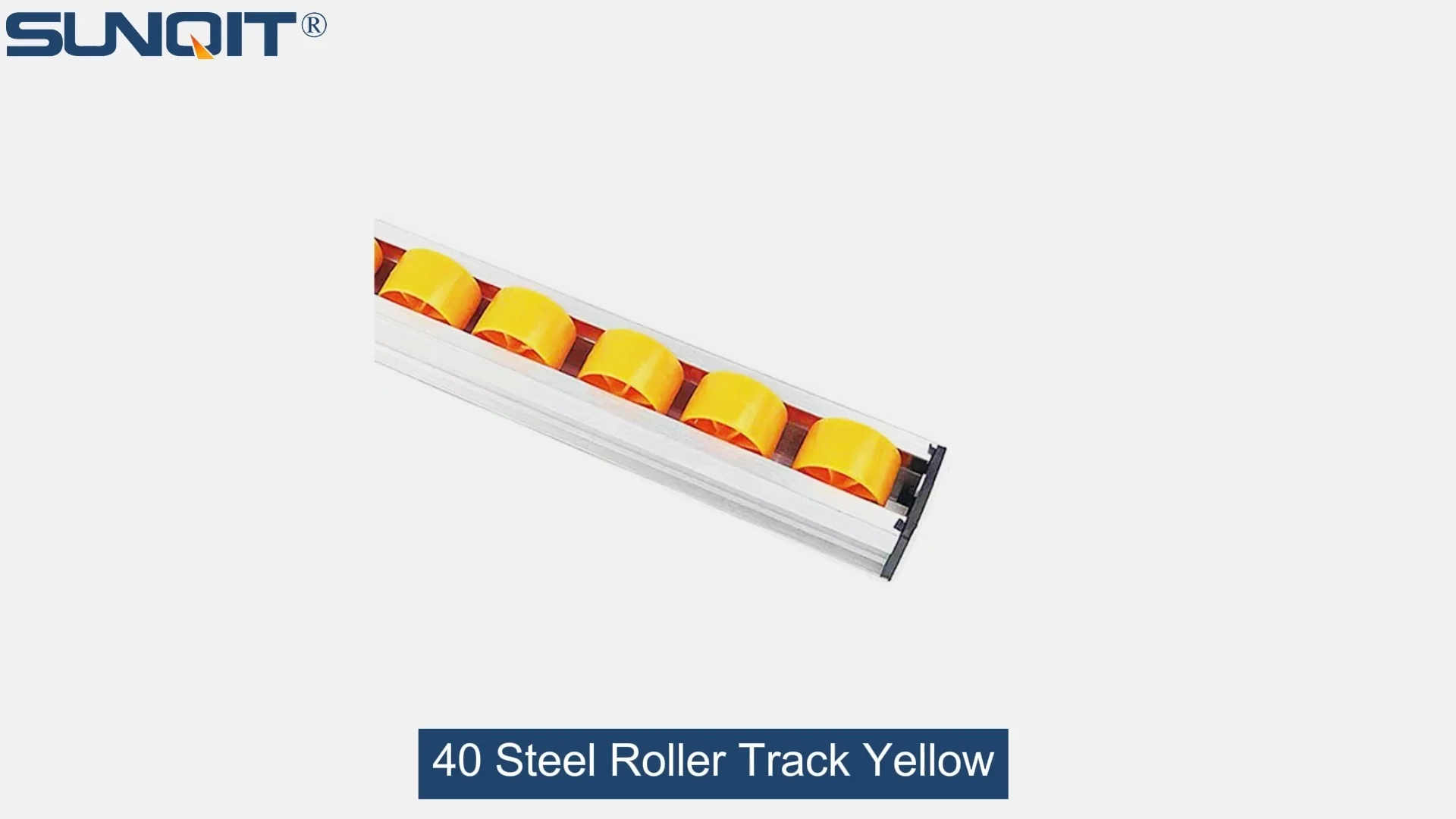
40 Steel Roller Track Yellow
The roller track can be installed with multiple accessories to create different slopes and configurations of flow racks.All steel conveyor 40 roller track accessories are engineered to perfectly fit the sliding rail.
The 3C assembly industry moves at a breakneck pace—every second saved, every inefficiency eliminated, and every mistake avoided directly impacts the bottom line. Whether you're assembling smartphones, wireless earbuds, or laptop components, the flow of materials between stations can make or break your production targets. That's where the 40 Steel Roller Track Yellow comes in: a simple yet powerful tool designed to streamline material handling, reduce manual effort, and boost overall productivity in 3C assembly lines.
What Is 40 Steel Roller Track Yellow?
Let's start with the basics. The 40 Steel Roller Track Yellow is a robust material handling solution crafted from high-grade steel. Its defining feature? Bright yellow rollers that cut through the visual clutter of busy assembly floors. Unlike generic roller tracks, this variant is engineered for the specific demands of 3C manufacturing—where small, delicate parts need to move smoothly, quickly, and safely from one stage to the next.
The track's design leverages gravity to facilitate movement, meaning no extra power is needed for parts to slide along its length. This not only reduces energy costs but also minimizes the risk of mechanical failures. The yellow color isn't just for aesthetics; it plays a critical role in visibility and safety, which we'll dive into later.
Key Benefits of 40 Steel Roller Track Yellow in 3C Assembly
1. Seamless Integration with Lean Pipe Workbenches
One of the biggest advantages of the 40 Steel Roller Track Yellow is its compatibility with lean pipe workbenches—staples in 3C assembly lines. By attaching the track to the edges of these workbenches, you create a continuous flow path for parts. For example, when a worker finishes attaching a camera module to a smartphone chassis on a lean pipe workbench, they can simply slide the chassis along the yellow track to the next station (like screen installation) without lifting or carrying it. This cuts down on manual labor and reduces the risk of dropping or damaging delicate components.
2. Boosts Flow Rack Efficiency
Flow racks are essential for storing small 3C components like battery cells, circuit boards, or connector cables. When fitted with the 40 Steel Roller Track Yellow, these racks become even more efficient. The yellow rollers allow components to slide down to the front of the rack as the frontmost part is taken, ensuring first-in-first-out (FIFO) inventory management. This is critical for 3C parts that have short shelf lives or frequent design updates—you don't want old components sitting at the back of the rack while new ones are needed at the front.
3. Works Hand-in-Hand with Conveyors
The 40 Steel Roller Track Yellow isn't a standalone solution; it complements conveyors perfectly. In 3C assembly lines, conveyors often link major stages (like component prep to final testing), but the last few feet between the conveyor and the workstation can be a bottleneck. By adding the yellow roller track to the end of a conveyor, you create a smooth transition for parts to reach the worker's hands. This eliminates the need for workers to reach across conveyors or wait for parts to be positioned correctly—they just grab the part as it slides onto the track.
4. Aligns with Lean Solutions Principles
Lean manufacturing is all about minimizing waste and maximizing value. The 40 Steel Roller Track Yellow aligns with this philosophy in multiple ways:
- Reduces motion waste: Workers don't have to walk to retrieve parts or carry them long distances.
- Minimizes waiting waste: Parts arrive at stations exactly when needed, so workers don't idle.
- Optimizes inventory: FIFO flow in racks reduces overstocking and obsolescence.
5. Durability for High-Volume Use
3C assembly lines run 24/7 in many cases, so durability is non-negotiable. The 40 Steel Roller Track Yellow is built to withstand constant use and heavy loads (up to 50 kg per meter, depending on the configuration). Unlike plastic roller tracks that crack or warp over time, steel tracks hold up to the rigors of daily operation. The yellow color also makes it easy to spot signs of wear—like bent rollers or loose brackets—so maintenance can be done proactively before small issues turn into big problems.

Real-World Applications in 3C Assembly Lines
Scenario 1: Component Storage & Retrieval
Let's take a wireless earbud assembly line as an example. The line uses flow racks to store small components like battery modules, speaker drivers, and charging ports. By fitting these racks with the 40 Steel Roller Track Yellow, workers can retrieve parts in seconds. When a worker takes a battery module from the front of the rack, the next one slides down automatically. This eliminates the need to reach into the back of the rack or search for parts, saving an average of 12 seconds per part. Multiply that by 1000 parts per hour, and you're looking at 200 minutes saved every day—time that can be redirected to actual assembly work.
Scenario 2: Workstation-to-Workstation Transfer
For smartphone assembly, the process involves multiple stages: chassis preparation, screen attachment, camera installation, and final testing. The 40 Steel Roller Track Yellow links these stages seamlessly. After a worker finishes attaching the screen to a chassis on a lean pipe workbench, they push the chassis along the yellow track to the next station (camera installation). The track's smooth rollers ensure the chassis moves without jostling, which prevents loose connections or screen damage. This not only speeds up transfer but also reduces the number of defective units that need rework.
Scenario 3: Final Testing & Packaging
Once a 3C product is fully assembled, it moves to the testing stage. The 40 Steel Roller Track Yellow is ideal here because it allows products to glide into testing stations gently. For example, a laptop battery module sliding along the yellow track won't experience sudden shocks, which could trigger false test failures (like a low voltage reading). This reduces the number of false rejects, saving time on retesting and rework. After testing, the modules slide along the track to the packaging station, where workers can quickly box them up without extra handling.

Why Yellow? The Color Advantage
You might wonder why the track is yellow. The answer lies in visibility and safety—two critical factors in 3C assembly lines. Let's break it down:
- Visual Clarity: The bright yellow color stands out against the neutral tones of assembly floors (gray, black, white). Workers can instantly see the flow path of parts, so they don't accidentally block the track or place items in the wrong spot.
- Quick Problem Detection: If a part gets stuck on the track, the yellow background makes it immediately noticeable. Workers can fix the issue in seconds, preventing bottlenecks from forming.
- Safety Reminder: Yellow is universally associated with caution. The color reminds workers to be mindful of moving parts and to keep their hands clear of the track, reducing the risk of injuries.

Comparing 40 Steel Roller Track Yellow to Other Options
| Feature | 40 Steel Roller Track Yellow | 40 Plastic Roller Track | 38 Aluminum Roller Track Yellow |
|---|---|---|---|
| Material | High-grade steel | ABS plastic | Aluminum alloy |
| Durability | Excellent (resists wear and tear) | Medium (prone to cracking/warping) | Good (corrosion-resistant but may dent) |
| Max Load Capacity | Up to 50 kg/meter | Up to 20 kg/meter | Up to 40 kg/meter |
| Visibility | Outstanding (bright yellow rollers) | Good (if colored; may fade over time) | Good (yellow rollers) |
| Cost-Effectiveness | High (long lifespan, low maintenance) | Low (cheap upfront but frequent replacements) | Medium (balance of cost and durability) |
| Maintenance Needs | Minimal (occasional lubrication) | High (replace cracked rollers) | Medium (clean to prevent corrosion) |
How to Implement 40 Steel Roller Track Yellow in Your Line
Implementing the 40 Steel Roller Track Yellow doesn't require a complete line redesign. Follow these steps to integrate it effectively:
Step 1: Analyze Your Current Flow
Start by mapping your assembly line flow. Identify bottlenecks where parts are taking too long to move (e.g., from storage to workstations, or between testing and packaging). Note the weight and size of the parts you're handling—this will help you choose the right track configuration.
Step 2: Design the Layout
Decide where to place the track. Common spots include:
- Inside flow racks for component storage.
- Along the edges of lean pipe workbenches.
- Between conveyors and workstations.
- From testing stations to packaging areas.
Step 3: Integrate with Existing Equipment
The 40 Steel Roller Track Yellow is designed to work with standard lean pipe workbenches and conveyors. Use compatible connectors to attach the track to your existing setup. For example, you can use T-slot brackets to fix the track to lean pipe workbenches, or adapter plates to link it to conveyors.
Step 4: Test and Optimize
Run a small batch of products through the new track setup. Measure key metrics like:
- Time taken to retrieve parts from storage.
- Number of defective units due to handling.
- Overall throughput of the line.
Case Study: XYZ Electronics Boosts Productivity by 18%
Let's look at a real-world example (disguised for confidentiality) of how the 40 Steel Roller Track Yellow transformed a 3C assembly line.
Company Background:
XYZ Electronics is a mid-sized manufacturer of wireless earbuds. Their assembly line was struggling with two main issues: slow part retrieval from flow racks and frequent damage to earbud components during transfer.
Implementation:
The company installed the 40 Steel Roller Track Yellow in 12 flow racks and along 8 lean pipe workbenches. They also added the track between the final assembly station and the testing area.
Results After 30 Days:
- Part retrieval time reduced by 22% (from 14 seconds to 11 seconds per part).
- Component damage decreased by 35% (from 8 defective units per 100 to 5).
- Overall line throughput increased by 18% (from 450 earbuds per hour to 531).
- Worker satisfaction improved—fewer complaints about manual labor and fatigue.
The ROI for the track installation was achieved in just 2 months, making it a smart investment for XYZ Electronics.
Conclusion
The 40 Steel Roller Track Yellow is more than just a piece of material handling equipment—it's a productivity booster for 3C assembly lines. Its compatibility with lean pipe workbenches, flow racks, and conveyors makes it a versatile solution for streamlining material flow. The bright yellow color enhances visibility and safety, while its steel construction ensures durability for high-volume use.
If you're looking to reduce waste, increase throughput, and improve worker efficiency in your 3C assembly line, the 40 Steel Roller Track Yellow is a cost-effective choice. It's a small change that delivers big results—proven by countless manufacturers who've integrated it into their operations.