How 4040D EU Standard Aluminum Profiles Are Manufactured: Extrusion Process
Related Product
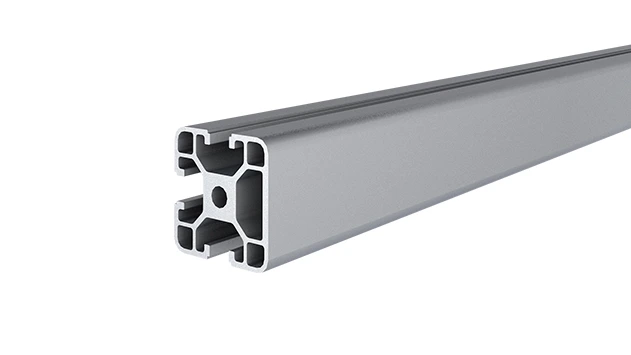
4040D EU Standard Aluminum Profile
4040D is a 4.00x4.00 CM fractional 40 series square extrusion T-slot profile with two side open T-slots, two side with closed face, each side with 4.00cm face. The profile has align-a-grooves to assist in aligning connecting profiles.
4040D EU Standard Aluminum Profile

A deep dive into the craftsmanship behind one of manufacturing's most versatile building blocks

Introduction: The Backbone of Modern Manufacturing

Walk into any factory, warehouse, or workshop today, and you'll likely spot them: sleek, silver structures holding up workbenches, guiding conveyor belts, or organizing tools with military precision. These are aluminum profiles—unassuming yet indispensable components that form the skeleton of modern manufacturing. Among them, the 4040D EU Standard Aluminum Profile stands out as a workhorse, prized for its strength, flexibility, and adherence to strict European quality norms. But have you ever wondered how this unassuming piece of metal goes from raw ore to a critical part of your local production line?

In this article, we're pulling back the curtain on the extrusion process—the magical transformation that turns aluminum billets into the precise, modular profiles that power everything from lean workstations to automated assembly lines. We'll explore every step, from the initial design sketches to the final quality checks, and even touch on how these profiles team up with aluminum profile accessories to create customized solutions for lean system setups. Whether you're a manufacturer looking to optimize your workflow or simply curious about the science behind everyday industrial tools, this is your guide to understanding the art and engineering of aluminum extrusion.

Step 1: Design & Engineering – Where Precision Begins

Before a single drop of molten aluminum touches a die, the journey of a 4040D profile starts at a desk—specifically, in the hands of design engineers armed with CAD software and a deep understanding of EU standards. The "4040D" label isn't arbitrary: it refers to the profile's cross-section (40mm x 40mm) and a specific set of dimensional tolerances, material properties, and surface finishes mandated by European norms. This ensures compatibility with other EU-standard components, a crucial feature for manufacturers who rely on modularity to adapt quickly to changing production needs.

Engineers begin by translating customer requirements into 3D models. For example, a client might need a profile that's lightweight but strong enough to support a 50kg workbench top, or one with T-slots spaced at precise intervals to fit aluminum profile accessories like brackets and connectors. The design must also account for the extrusion process itself: sharp corners, for instance, can cause stress points during manufacturing, so engineers often round edges to ensure smooth flow through the die.

Once the digital model is finalized, it's time to design the extrusion die—a steel mold that shapes the aluminum. Dies for 4040D profiles are intricate affairs, often machined from high-grade H13 tool steel to withstand the extreme heat and pressure of extrusion. The die's internal channels must be precisely calculated to ensure the aluminum flows evenly, preventing defects like warping or uneven wall thickness. A single die can cost tens of thousands of dollars, and even minor errors in its design can render an entire production run useless. That's why many manufacturers invest in 3D die simulation software, which tests how aluminum will flow through the die before it's even machined. It's like a dress rehearsal for the extrusion process, minus the mess.

Step 2: Billet Preparation – Turning Aluminum Into "Play-Doh"

Aluminum, in its raw form, is a soft, silvery metal found in ores like bauxite. But to make extrusion-grade billets (the cylindrical logs that go into the extrusion press), it needs a little help. The process starts with aluminum alloy selection—for 4040D profiles, the most common choice is 6063 aluminum, a magnesium-silicon alloy known for its excellent extrudability and corrosion resistance. Think of it as the "goldilocks" alloy: not too hard to extrude, not too soft to lose strength.

Once the alloy is chosen, the aluminum is melted in a furnace at around 700°C (1,292°F), where impurities are skimmed off the surface. The molten metal is then cast into cylindrical billets, typically 12 to 25 inches in diameter and 3 to 6 feet long. But these billets aren't ready for extrusion yet—they need homogenization. Imagine baking a cake with unevenly mixed batter: the result would be lumpy and inconsistent. Homogenization is like remixing that batter, but for metal. The billets are heated to 570°C (1,058°F) and held there for several hours, allowing the alloying elements (like magnesium and silicon) to distribute evenly throughout the metal. This step ensures the billet extrudes uniformly, preventing weak spots or surface blemishes in the final profile.

After homogenization, the billets are cooled and cut to length—usually 1 to 2 meters, depending on the extrusion press size. The ends are then machined flat to ensure they feed smoothly into the press. Finally, the billet is preheated in an induction furnace to around 480–520°C (896–968°F). At this temperature, the aluminum becomes pliable, almost like warm taffy, ready to be shaped by the die. It's a delicate balance: too cold, and the metal will crack under pressure; too hot, and it will lose its structural integrity. Think of it as heating chocolate: get the temperature right, and it pours smoothly; get it wrong, and you end up with a burnt mess.

Step 3: The Extrusion Press – Where Magic Meets Machinery

Now comes the heart of the process: extrusion. Picture a giant syringe, but instead of plastic plungers and needles, you have a 500-ton hydraulic press and a steel die. The preheated billet is loaded into the press's container, a cylindrical chamber lined with heat-resistant material. A hydraulic ram then pushes the billet forward with immense force—up to 10,000 tons for large presses—compressing it against the die. The aluminum, under extreme pressure, flows through the die's intricate channels, emerging on the other side as a long, continuous profile with the exact cross-section of the die's opening. It's a bit like squeezing toothpaste out of a tube, but on an industrial scale and with pinpoint precision.

The speed of extrusion is critical. For 4040D profiles, the press typically moves at 3–8 meters per minute. Go too fast, and the aluminum won't have time to cool, leading to surface defects; too slow, and production costs skyrocket. Operators monitor the process closely, adjusting speed and pressure based on real-time feedback from temperature sensors and visual inspections. Some modern presses even use AI to optimize these parameters, ensuring consistent quality across batches.

As the profile exits the die, it's supported by a runout table—a series of rollers that guide it straight. This is where the first signs of success (or failure) appear: operators check for twists, bends, or surface imperfections like scratches or blisters. A well-extruded 4040D profile should have sharp, clean edges, uniform wall thickness, and a smooth surface, ready for the next steps.

Step 4: Cooling & Solidification – Locking in Strength

Fresh out of the die, the aluminum profile is still hot—around 500°C (932°F)—and malleable. To lock in its shape and strength, it needs to cool quickly, a process called quenching. The runout table feeds the profile into a cooling tunnel, where it's sprayed with water or air. For 6063 aluminum, the cooling rate is crucial: too slow, and the alloy's strengthening phases won't form properly; too fast, and the profile might warp. The goal is to cool the profile to around 200°C (392°F) in just a few minutes, transforming the soft, hot metal into a rigid, semi-finished product.

After quenching, the profile is pulled by a traction machine, which straightens it and ensures uniform length. Imagine stretching a piece of taffy to remove kinks—that's essentially what the traction machine does, but with mechanical precision. The profile is then cut into manageable lengths (usually 6–12 meters) using a flying saw, a device that moves alongside the profile as it cuts, ensuring a clean, square edge.

Step 5: Aging (Heat Treatment) – The Secret to Strength

At this stage, the profile is strong, but not strong enough. Quenching locks in the alloy's structure, but to reach its full potential, it needs aging—a low-temperature heat treatment that strengthens the metal by encouraging the formation of tiny, uniformly distributed precipitates. These precipitates act like microscopic pins, preventing the metal's atoms from sliding past each other, which is what causes deformation under stress.

The profiles are loaded into an aging oven, where they're heated to 175°C (347°F) and held there for 6–8 hours. It's a slow process, but patience pays off: after aging, 6063 aluminum's tensile strength increases by up to 30%, making it tough enough to support heavy loads without bending. Think of it as letting bread rise: the longer you let it sit, the better the texture. For 4040D profiles, this step is non-negotiable—without proper aging, they'd buckle under the weight of a fully loaded workbench or a pallet of parts.

After aging, the profiles are allowed to cool naturally. They're now strong, rigid, and dimensionally stable, ready for the finishing touches.

Step 6: Surface Treatment – Beauty Meets Functionality

While aluminum is naturally corrosion-resistant (thanks to a thin oxide layer that forms on its surface), most 4040D profiles undergo additional surface treatments to enhance durability, appearance, or specific properties like conductivity or static dissipation. The most common treatments are anodizing and powder coating.

Anodizing is an electrolytic process that thickens the oxide layer, making the profile more resistant to scratches and corrosion. The profiles are submerged in an acid bath and subjected to an electric current, which causes the surface to oxidize. The result is a hard, porous layer that can be dyed in a range of colors (silver, black, blue, etc.) or left natural for a matte, industrial look. Anodized 4040D profiles are popular in environments where aesthetics matter, like retail displays or office furniture, but they're also tough enough for factory use.

Powder coating, on the other hand, involves electrostatically applying a dry powder (usually polyester) to the profile, then baking it at 180–200°C (356–392°F) to melt and cure the powder into a smooth, durable finish. Powder coating offers a wider range of colors and textures than anodizing, including gloss, matte, or even textured finishes that hide fingerprints. It's also more resistant to chipping than paint, making it ideal for high-traffic areas like warehouse racks or assembly lines.

Some profiles, especially those used in lean system setups, may also undergo special treatments like ESD (electrostatic discharge) coating to prevent static buildup—a critical feature in electronics manufacturing, where static can damage sensitive components. Whatever the treatment, the goal is the same: to turn a functional metal profile into a product that's both tough and tailored to its environment.

Step 7: Precision Cutting & Machining – From "Log" to "Part"

After surface treatment, the long profile "logs" are cut into the final lengths specified by the customer. This is done using precision saws—either circular saws for small batches or bandsaws for larger runs. The saws are equipped with diamond-tipped blades to ensure clean, burr-free cuts, and many are automated, with sensors that measure the profile's length and adjust the saw accordingly. For 4040D profiles, tolerances are tight: lengths are typically held to ±0.5mm, and squareness (how perpendicular the cut is to the profile's axis) is within 0.1mm/m. This precision is essential because even a tiny misalignment can throw off the assembly of modular systems, where profiles are joined using aluminum profile accessories like brackets and corner codes.

Some profiles may also require additional machining, such as drilling holes for bolts, tapping threads, or milling slots for accessories. This is often done using CNC machines, which program the cuts with computer precision. For example, a profile destined to be part of a workbench might have holes drilled at specific intervals to attach a tabletop, while one used in a conveyor system might have slots milled to accommodate roller tracks. The key here is flexibility: 4040D's T-slot design allows for easy post-machining, making it adaptable to almost any custom requirement.

Step 8: Quality Control – The Final Gatekeeper

Before a 4040D profile leaves the factory, it undergoes a battery of tests to ensure it meets EU standards and customer specifications. The first check is dimensional: using calipers, micrometers, and coordinate measuring machines (CMMs), inspectors verify that the profile's width, height, wall thickness, and T-slot dimensions are within tolerance. For example, the 40mm x 40mm cross-section must measure exactly 40.0 ±0.3mm, and the T-slot opening (the groove that holds accessories) must be precise to ensure compatibility with standard connectors.

Next is mechanical testing: samples from each batch are tested for tensile strength, yield strength, and elongation. For 6063-T5 aluminum (the temper after aging), the tensile strength should be at least 160 MPa, and yield strength at least 110 MPa. These tests ensure the profile can handle the loads it will encounter in real-world use—like supporting a 200kg assembly fixture or withstanding the vibration of a conveyor belt.

Surface quality is also inspected: visual checks for scratches, dents, or discoloration, and adhesion tests for coatings (e.g., pulling a tape across the surface to ensure the powder coat or anodize doesn't peel). For ESD-treated profiles, conductivity tests verify that static charges dissipate properly, preventing damage to sensitive electronics.

Finally, packaging is checked to ensure the profiles arrive at the customer's facility undamaged. Most are wrapped in plastic film and bundled on pallets, with corner protectors to prevent dents during shipping. Some manufacturers even include a certificate of compliance with each shipment, detailing the batch number, test results, and material specifications—a testament to their commitment to quality.

Quality Check Standard (EU Norm) Testing Method
Cross-Section Dimensions 40.0 ±0.3mm (width/height) CMM & Digital Calipers
Tensile Strength ≥160 MPa Tensile Testing Machine
Surface Finish No scratches/dents; uniform color Visual Inspection & Adhesion Test
Straightness ≤0.5mm/m Straightedge & Dial Gauge
ESD Conductivity (if applicable) 10⁶–10⁹ Ω Resistance Meter

Beyond the Factory: 4040D in Action – Lean Systems & Modular Solutions

So, what makes the 4040D EU Standard Aluminum Profile so popular? Its real power lies in its versatility, especially when paired with aluminum profile accessories like brackets, connectors, and panels. Together, they form the building blocks of lean system setups—manufacturing environments designed to minimize waste, maximize efficiency, and adapt quickly to change.

Take the humble workbench: using 4040D profiles as the frame, and accessories like tabletop panels, tool hooks, and shelf brackets, manufacturers can build custom workstations tailored to specific tasks. Need a bench for electronics assembly? Add an ESD mat and a lighting bar. Need one for heavy machining? Reinforce the frame with cross-braces and add a steel top. The T-slot design lets you attach accessories anywhere along the profile, so the bench can evolve as production needs change—no welding or drilling required.

Conveyor systems are another common application: 4040D profiles form the side rails, while roller tracks (another type of aluminum extrusion profile) are mounted in the T-slots to guide parts through the assembly line. The modular design makes it easy to adjust the conveyor's length, height, or angle, and adding accessories like sensors or stops is a breeze. Even material racks benefit from 4040D's strength and flexibility: adjustable shelves, dividers, and bins can be reconfigured in minutes to accommodate different part sizes, reducing the need for multiple fixed racks.

In essence, 4040D profiles are the "Lego bricks" of manufacturing—simple on their own, but capable of building almost anything when combined with the right accessories. And because they're EU-standard, manufacturers across Europe can source compatible components from multiple suppliers, ensuring a steady supply chain and reducing lead times. It's no wonder that when companies talk about "lean manufacturing," the 4040D profile is often at the center of the conversation.

Conclusion: Craftsmanship in Every Millimeter

From the design engineer's CAD screen to the factory floor, the journey of a 4040D EU Standard Aluminum Profile is a testament to human ingenuity and industrial precision. Every step—design, billet preparation, extrusion, aging, finishing—requires skill, patience, and a commitment to quality. And the result? A component that, but plays a vital role in keeping modern manufacturing running smoothly.

Whether you're building a lean workstation, a conveyor system, or a custom storage rack, the 4040D profile offers the strength, flexibility, and compatibility needed to bring your vision to life. And when paired with the right aluminum profile accessories , it becomes more than just a piece of metal—it's a tool for innovation, allowing manufacturers to adapt, grow, and thrive in an ever-changing industry.

So the next time you walk through a factory or workshop, take a closer look at those silver profiles holding everything together. Behind their sleek, simple exterior lies a story of craftsmanship, technology, and the relentless pursuit of perfection. That's the magic of the extrusion process—and the legacy of the 4040D EU Standard Aluminum Profile.


Get In Touch with us

Hey there! Your message matters! It'll go straight into our CRM system. Expect a one-on-one reply from our CS within 7×24 hours. We value your feedback. Fill in the box and share your thoughts!