- Company Articles
- Products and Technology
- Product knowledge
- How 4040E EU Standard Aluminum Profile Enhances Ergonomics in Manufacturing Workbenches

How 4040E EU Standard Aluminum Profile Enhances Ergonomics in Manufacturing Workbenches
Related Product
4040E EU Standard Aluminum Profile
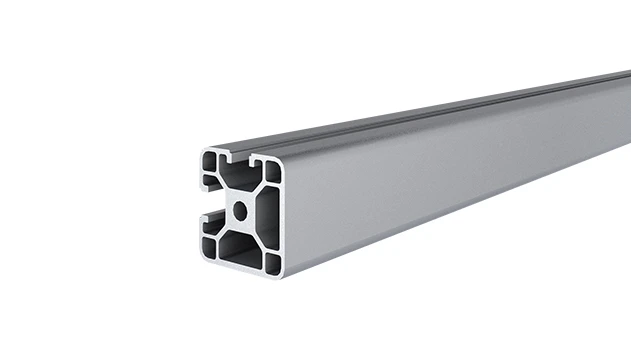
4040E is a 4.00x4.00 CM fractional 40 series square extrusion T-slot profile with two side open T-slots, two side with closed face, each side with 4.00cm face. The profile has align-a-grooves to assist in aligning connecting profiles.
Walk into any manufacturing facility, and you'll quickly spot the backbone of daily operations: workbenches. These unassuming platforms are where assembly lines hum, tools find their home, and products take shape. But for the workers standing at them—hour after hour, day after day—a poorly designed workbench isn't just a minor hassle. It's a silent contributor to fatigue, strain, and even long-term injuries. Ergonomics, the science of designing tools and environments to fit human capabilities, has become a cornerstone of modern manufacturing, and at the heart of this revolution lies a surprisingly versatile component: the 4040E EU Standard Aluminum Profile. In this article, we'll explore how this unassuming aluminum extrusion is redefining what an ergonomic workbench can be, making factories safer, more efficient, and more worker-centric than ever before.
What Is the 4040E EU Standard Aluminum Profile, Anyway?
Before diving into ergonomics, let's get familiar with the star of the show: the 4040E EU Standard Aluminum Profile. If you've ever seen a modular workbench, shelving unit, or machine frame in a factory, chances are it's built with something like this. The "4040" refers to its dimensions—40mm by 40mm, a sweet spot that balances strength and versatility. The "E" denotes its specific groove design (part of the EU standard), featuring T-slots along all four sides. These slots are the profile's secret weapon: they let you attach accessories, adjust components, and reconfigure structures with minimal effort, using nothing more than a hex key or quick-release fastener.
Made from high-grade aluminum alloy, the 4040E profile is lightweight yet surprisingly strong—think of it as the manufacturing world's equivalent of a Swiss Army knife. It resists corrosion, handles daily wear and tear, and conducts heat (useful for dissipating warmth in electronics assembly). But what truly sets it apart is its modularity. Unlike rigid steel frames or fixed wooden benches, 4040E profiles can be combined with aluminum profile accessories—things like 90° aluminum profile connectors, end caps, and guide rails—to create custom setups tailored to specific tasks. This adaptability isn't just about convenience; it's the foundation of its ergonomic superpowers.
Why Ergonomics Matters for Manufacturing Workbenches
Ergonomics is often talked about in offices, but in manufacturing, its impact is even more critical. Workers on the factory floor aren't typing at a desk—they're lifting, reaching, assembling, and repeating motions hundreds of times a day. A workbench that's too high forces shoulders to hunch; too low means constant bending. Poorly placed tools require overreaching, straining the back and neck. Over time, these small discomforts add up to chronic issues: carpal tunnel syndrome, lower back pain, or rotator cuff injuries. The result? Higher absenteeism, lower morale, and increased workers' compensation claims.
But ergonomics isn't just about avoiding pain—it's about boosting performance. When a workbench fits the worker, tasks take less energy. Movements become smoother, errors decrease, and productivity rises. Studies by the Occupational Safety and Health Administration (OSHA) show that ergonomic interventions can reduce injury costs by up to 40% and increase productivity by 10-15%. For manufacturers, this translates to a healthier bottom line and a more engaged workforce. The challenge? Traditional workbenches—often fixed, one-size-fits-all, and hard to modify—rarely meet these ergonomic needs. That's where the 4040E profile steps in.

How 4040E Aluminum Profile Transforms Ergonomics
The 4040E EU Standard Aluminum Profile isn't just a building material—it's an ergonomic toolkit. Its design addresses the core principles of workplace ergonomics: adjustability, accessibility, and adaptability. Let's break down how it enhances each area.
1. Custom Height Adjustment: No More "One-Size-Fits-All"
The average factory has workers of all heights, from 5'2" to 6'4". A workbench set at 36 inches might be perfect for someone in the middle, but for a shorter employee, it means raised shoulders and strained arms; for a taller worker, constant bending and lower back pressure. Traditional workbenches fix this height in place, forcing workers to adapt to the bench instead of the other way around.
The 4040E profile changes the game. Thanks to its T-slot design and compatible aluminum profile accessories like height-adjustable feet and 90° connectors, you can tweak the bench height in minutes. Need to raise it by 2 inches for a taller assembler? Loosen the bolts in the T-slots, adjust the legs, and retighten. Want to lower it for a worker seated during precision tasks? Swap out the fixed feet for adjustable ones with anti-slip pads (like the suction cup antiskid foundation from the accessories list). Some setups even let workers adjust height on the fly using hand cranks or pneumatic lifts—all made possible by the profile's modular frame. The result? A workbench that fits the person, not the other way around.
2. Modular Layouts: Tools and Materials Right Where You Need Them
Ergonomists often talk about the "golden zone"—the area within arm's reach that requires minimal movement. In traditional workbenches, tools and materials are often scattered: a screwdriver on a shelf above, parts bins on the floor, a tape measure hanging from a distant hook. Each time a worker stretches, bends, or twists to grab something, they waste energy and risk strain.
With 4040E profiles, you design the bench around the golden zone. Using T-slot aluminum profile accessories, you can mount tool holders, parts bins, and even monitors directly onto the bench frame. Need a shelf for frequently used components? Attach aluminum guide rail A to the side of the profile, then slide on a shelf bracket. Want a tool panel above the work surface? Use 45° aluminum profile connectors to angle it at 15 degrees, reducing neck strain. Even small details matter: 4040 aluminum profile end caps cover sharp edges, preventing snags on clothing or skin, while plastic roller track guide rails (in yellow or grey) can be embedded into the work surface to let parts glide smoothly into place—no more reaching across the bench.
Take the aluminum workbench A, a popular model built with 4040E profiles. It starts as a basic frame but can be tricked out with everything from LED task lights (mounted via T-slot brackets) to anti-fatigue matting (secured with hook-and-loop strips on the surface). Workers can customize their "stations" based on their tasks: an electronics assembler might add a static-dissipative mat and ESD tool holders, while a mechanic could opt for a pegboard and heavy-duty shelf for wrenches. This level of personalization turns a generic bench into a workspace that feels like an extension of the worker's body.
3. Material Flow: Reducing Reaching and Lifting with Aluminum Guide Rails
In assembly lines, materials and (semi-finished products) need to move smoothly from one station to the next. Traditional setups often rely on workers picking up bins and placing them on the bench—a repetitive lifting motion that strains the lower back. The 4040E profile integrates seamlessly with aluminum guide rail systems, creating gravity-fed or powered tracks that bring materials directly to the worker.
For example, aluminum guide rail A, a U-shaped track that mounts to 4040E profiles, can be angled slightly downward. Parts placed at the higher end glide along plastic roller track guide rails (yellow for visibility, grey for low-key setups) right to the worker's fingertips. No bending, no lifting—just a gentle push to position the part. In larger setups, roller conveyors (another accessory compatible with 4040E) can extend the track across multiple workbenches, creating a continuous flow. This isn't just about ergonomics; it's also a cornerstone of lean system principles, reducing waste (in this case, unnecessary movement) and keeping production flowing smoothly.
Even better, these guide rails are adjustable. If a new product requires longer parts, you can extend the track using roller track placon mount connectors. Need to change the angle for heavier components? Loosen the T-slot bolts, tilt the rail, and retighten. It's flexibility that grows with your needs.
4. Durability Meets Comfort: Long-Lasting Ergonomics
Ergonomic design doesn't matter if the bench falls apart after six months. Traditional workbenches often use particleboard tops that warp, steel frames that rust, or plastic accessories that crack under heavy use. The 4040E profile, made from high-strength aluminum, is built to last. It resists dents, won't corrode in humid environments, and stands up to daily bumps from tools or carts.
But durability alone isn't enough—comfort matters too. That's why many 4040E workbenches pair the aluminum frame with ergonomic tops, like aluminum honeycomb panels (lightweight but rigid) or anti-fatigue rubber mats. The frame's T-slots even let you add footrests or knee pads for seated workstations, reducing pressure on legs during long shifts. And when parts do wear out—say, a plastic roller track guide rail gets scuffed—you can replace just that accessory, not the entire bench. It's sustainable, cost-effective, and ensures the ergonomic benefits last for years.
Traditional Workbenches vs. 4040E Ergonomic Workbenches: A Comparison
| Feature | Traditional Workbench | 4040E Aluminum Profile Workbench |
|---|---|---|
| Height Adjustment | Fixed; requires tools and disassembly to modify. | Tool-free adjustment using aluminum profile accessories (e.g., adjustable feet, 90° connectors); adapts to workers 5'2" to 6'4". |
| Layout Customization | Static; shelves/accessories bolted or glued in place. | Modular; add/remove shelves, tool holders, or guide rails via T-slots and aluminum profile accessories. |
| Material Flow | Manual lifting/carrying of bins; risk of back strain. | Integrated aluminum guide rail A or roller tracks; materials glide to the worker, reducing lifting. |
| Durability | Particleboard tops warp; steel frames rust; plastic parts crack. | Aluminum frame resists corrosion/dents; replaceable accessories extend lifespan. |
| Lean System Compatibility | Hard to reconfigure; requires rebuilding for new tasks. | Quickly reconfigurable to reduce waste (e.g., excess movement); adapts to lean workflows. |
Real-World Impact: How a Electronics Plant Improved Ergonomics with 4040E
To see the 4040E profile in action, let's look at a mid-sized electronics manufacturer in Germany. Before switching to 4040E workbenches, their assembly line relied on wooden benches with fixed shelves and steel legs. Workers reported frequent shoulder and lower back pain, and the plant had a 12% absenteeism rate due to work-related injuries.
The company invested in aluminum workbench A setups, built with 4040E profiles and aluminum profile accessories. Here's what changed:
- Height Adjustment: Workbenches were adjusted to fit each worker's elbow height (measured during onboarding). Within a month, reports of shoulder strain dropped by 65%.
- Tool Accessibility: Using 90° aluminum profile connectors, the team added tool panels above the work surface, placing screwdrivers, tweezers, and soldering irons within the golden zone. Workers reported "less stretching, more focus" during shift interviews.
- Material Flow: Aluminum guide rail A was installed along the bench, with plastic roller track guide rails (yellow) feeding circuit boards directly to each station. Lifting injuries fell to zero, and production speed increased by 8% as workers spent less time retrieving parts.
- Adaptability: When the plant introduced a new smartphone model with larger components, they extended the guide rails using roller track placon mount brackets—no need to buy new benches. The reconfiguration took two hours instead of two days.
After six months, absenteeism dropped to 4%, and worker satisfaction scores (measured via monthly surveys) rose by 22%. The plant manager summed it up: "We didn't just buy workbenches—we invested in our team. The 4040E profiles made ergonomics feel less like a 'nice-to-have' and more like a daily reality."
Why 4040E Stands Out in a Crowded Market
There are plenty of modular profiles out there, so why does the 4040E EU Standard Aluminum Profile stand out? It's the combination of three factors: standardization, compatibility, and focus on ergonomics. As part of the EU standard, manufacturers worldwide produce compatible accessories—meaning you're not locked into one brand's overpriced parts. Need a 45° connector? A quick search finds dozens of suppliers. Want to mix and match guide rails from one company with feet from another? The T-slot design ensures they'll work together.
This standardization also drives innovation. Suppliers are constantly creating new aluminum profile accessories—like internal rotatary aluminum joints for swiveling shelves or caster wheels for mobile workstations—that plug right into 4040E profiles. It's a ecosystem of ergonomic solutions that grows every year.
Conclusion: Ergonomics Isn't a Luxury—It's a Foundation
In the fast-paced world of manufacturing, it's easy to prioritize speed and cost over worker comfort. But as forward-thinking plants are discovering, ergonomics and productivity go hand in hand. The 4040E EU Standard Aluminum Profile isn't just a building material; it's a tool for creating workplaces where workers feel valued, supported, and able to do their best work.
From adjustable heights to modular layouts, from smooth material flow to long-lasting durability, the 4040E profile turns workbenches from static obstacles into dynamic, worker-centric hubs. It's a small change that makes a big difference—reducing injuries, boosting morale, and proving that when you design for people, productivity follows.
So the next time you walk through a factory, take a closer look at the workbenches. If they're built with 4040E profiles, chances are the workers standing at them aren't just getting the job done—they're thriving.