- Company Articles
- Products and Technology
- Product knowledge
- How 4040E EU Standard Aluminum Profile Reduces Assembly Time in Modular Workstations

How 4040E EU Standard Aluminum Profile Reduces Assembly Time in Modular Workstations
Related Product
4040E EU Standard Aluminum Profile
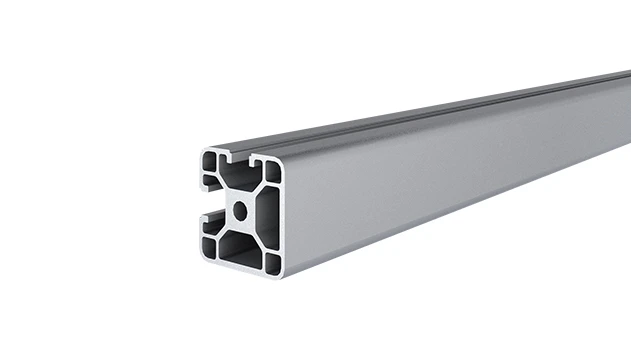
4040E is a 4.00x4.00 CM fractional 40 series square extrusion T-slot profile with two side open T-slots, two side with closed face, each side with 4.00cm face. The profile has align-a-grooves to assist in aligning connecting profiles.
The Race for Efficiency: Why Assembly Time Matters in Modern Manufacturing
In today's fast-paced manufacturing world, every second counts. Whether you're running a small workshop or a large-scale production facility, the time it takes to set up, adjust, or expand workstations directly impacts your bottom line. Assembly time isn't just a logistical detail—it's a bottleneck that can slow down production, delay orders, and eat into profits. For years, manufacturers have grappled with rigid, time-consuming workstation setups: steel frames that require welding, custom-cut wooden benches that crack under heavy use, or generic metal structures that demand hours of drilling and adjusting just to get parts to fit. But what if there was a way to cut that assembly time in half, or even more? Enter the 4040E EU Standard Aluminum Profile—a game-changer in modular workstation design that's redefining how teams build, adapt, and scale their workspaces.
The Assembly Time Challenge: The Hidden Cost of Traditional Workstations
To understand why the 4040E profile is such a breakthrough, let's first look at the problem it solves: traditional workstation assembly. Think about the last time you had to build a workbench or material rack. If you were using steel, you'd likely start with heavy pipes that require two people to lift, a welding torch to join, and hours of grinding to smooth rough edges. Even "simpler" setups with wooden boards demand precise cutting, sanding, and screwing—all of which leave little room for error. And if you later need to add a shelf, rearrange the layout, or replace a damaged part? You're back to square one: disassembling, recutting, and rewelding or re-screwing, which means downtime for your team and lost productivity.
The numbers tell the story. A recent survey of small to mid-sized manufacturers found that assembling a single custom workstation using traditional steel or wood materials takes an average of 6–8 hours. That's a full workday for one or two employees, not including time spent sourcing mismatched parts or fixing errors (like a pipe that's slightly bent, making the entire frame lopsided). Worse, these setups are often "one and done"—once built, they're hard to modify, so if your production needs change (say, you need to add a conveyor or adjust the height for ergonomics), you're looking at another full day of work. For companies scaling up or adapting to shifting market demands, this rigidity is a major roadblock.

Meet the 4040E EU Standard Aluminum Profile: Designed for Speed
The 4040E EU Standard Aluminum Profile isn't just another piece of metal—it's a product of decades of innovation in aluminum extrusion profile design. Part of the EU standard series, it's engineered with one core goal: to make assembly faster, simpler, and more intuitive. At its core, the 4040E is a rectangular aluminum extrusion, 40mm by 40mm in cross-section, crafted from high-grade aluminum alloy (typically 6063-T5, known for its strength and corrosion resistance). But its real magic lies in the details: precision-engineered T-slots, consistent sizing, and compatibility with a vast ecosystem of aluminum profile accessories that turn hours of work into minutes.
What sets the 4040E apart from generic aluminum profiles? It starts with compliance. As an EU standard profile, it adheres to strict dimensional tolerances—meaning every 4040E profile you order, whether from a lean pipe supplier or a specialized aluminum extrusion manufacturer, will fit with every other 4040E part. No more "close enough" measurements or parts that almost fit but require filing or forcing. This consistency alone eliminates a huge chunk of assembly time, as workers don't waste time troubleshooting mismatched components.
5 Key Features That Slash Assembly Time
Let's dive into the specific design choices that make the 4040E profile a time-saving powerhouse. These features work together to turn the once-daunting task of workstation assembly into a streamlined, even enjoyable process.
1. Precision Extrusion: No Guesswork, Just Perfect Fits
Aluminum extrusion profile manufacturing is an art, and the 4040E masters it. The extrusion process uses dies to shape molten aluminum into the 40mm x 40mm cross-section with T-slots running along all four sides. The result? Profiles with near-microscopic consistency in width, height, and slot dimensions. When you pick up two 4040E profiles, they're identical—no warping, no bulges, no uneven edges. This means when you connect them with an aluminum joint, they align perfectly on the first try. No measuring twice, no forcing parts into place, no rework. For example, attaching a 90° aluminum pipe joint to two 4040E profiles takes seconds: slide the joint onto the end of one profile, tighten the set screw with a hex key, and repeat with the second profile. It's that simple.
2. T-Slot Design: Aluminum Profile Accessories, No Drilling Required
If precision extrusion is the foundation, the T-slot design is the 4040E's secret weapon. Running the length of each profile are T-shaped grooves that act as built-in attachment points for aluminum profile accessories. Need to add a shelf? Slide a T-slot nut into the groove, bolt the shelf bracket onto the nut, and tighten—no drilling, no welding, no damage to the profile. Want to mount a lamp or a small conveyor? Use a T-slot bracket and a few screws, and you're done in minutes. This design eliminates the most time-consuming part of traditional assembly: creating holes or welds to attach components. Even complex setups, like a multi-level material rack B (3 row and 3 floor), become straightforward—just connect 4040E uprights with horizontal profiles using T-slot brackets, and add shelves using sliding nuts. Compare that to drilling 12 holes in steel pipes and hoping they line up, and the time savings become obvious.
3. Lightweight Yet Strong: Less Labor, More Speed
Aluminum is inherently lighter than steel—about 1/3 the weight for the same strength. A 1-meter length of 4040E profile weighs just 0.8–1.2kg, compared to 3–4kg for a steel pipe of similar size. This lightness transforms assembly: one person can easily carry, position, and adjust 4040E profiles, no second worker needed. No more struggling with heavy steel beams that risk back injuries or require forklifts to move. For example, building a workbench E (single deck-without caster) with 4040E takes one worker instead of two, cutting labor time in half. And because aluminum doesn't rust or corrode, there's no need for time-consuming painting or coating—just wipe it clean and it's ready to use.
4. Modular Aluminum Joints: Snap-and-Go Connections
The 4040E's ecosystem of aluminum joints is where speed truly shines. Unlike traditional steel joints that require welding or heavy bolts, 4040E-compatible joints are designed for quick, tool-light assembly. Take the internal rotatary aluminum joint: this clever accessory lets you connect two profiles at any angle (0° to 180°) with a simple twist. Just insert the joint into the end of one profile, rotate it to your desired angle, and tighten the set screw—no measuring, no marking, no hassle. Or consider the parallel aluminum joint a, which locks two profiles side-by-side in seconds, perfect for building sturdy frames. Even complex connections, like the 90° aluminum crossing joint (which connects four profiles at once in a cross shape), take less than a minute to secure with a hex key. These joints turn assembly into a puzzle—one where all the pieces fit together on the first try.
5. Pre-Cut and Ready-to-Use: Skip the Saw
Most 4040E suppliers, from large distributors to niche lean pipe suppliers, offer pre-cutting services. Need a profile 120cm long for your workbench? Order it pre-cut to that exact length, and it arrives ready to assemble—no need to haul out a saw, measure twice, or risk cutting too short. This might seem like a small detail, but it adds up: a traditional steel setup often requires on-site cutting, which takes 10–15 minutes per pipe (plus cleanup). With pre-cut 4040E profiles, that time vanishes. Workers can unbox the parts, lay them out, and start connecting immediately—turning a half-hour of cutting into zero.
Real-World Results: How Manufacturers Are Saving Hours (and Money)
Numbers on paper are one thing—real-world impact is another. Let's look at a case study: a mid-sized electronics manufacturer in Germany that recently switched from steel workstations to 4040E aluminum extrusion profile setups. Previously, assembling a single workstation (including a workbench, material rack, and small conveyor) took two workers 8 hours. The process involved cutting steel pipes, welding the frame, drilling holes for shelves, and painting to prevent rust. If a mistake was made (e.g., a shelf hole was drilled too low), they'd have to start over, adding another 2–3 hours.
After switching to 4040E, the same workstation now takes one worker just 2 hours to assemble. Here's how: they order pre-cut 4040E profiles, aluminum joint, and T-slot accessories from their lean system supplier. The worker lays out the profiles, connects the frame using internal rotatary aluminum joints (adjusting angles in seconds), slides shelf brackets into the T-slots, and secures them with hand-tightened bolts. Even adding a small roller track (for moving parts between stations) is simple: the roller track placon mount for aluminum profile flat snaps into the T-slot, and the track clicks into place. No welding, no drilling, no paint. The result? A workstation built in 2 hours instead of 8, with zero rework. Over a month, assembling 10 workstations saves the company 60 hours of labor—equivalent to nearly 8 full workdays.
But the savings don't stop at assembly. When the manufacturer needed to reconfigure their line to accommodate a new product, they disassembled the 4040E workstations in 30 minutes, rearranged the parts, and rebuilt them in another hour. With steel, this would have taken a full day of cutting and rewelding. For a company that adapts its production lines quarterly, this flexibility translates to tens of thousands of euros in saved labor costs annually.
By the Numbers: 4040E vs. Traditional Assembly
To put the time savings in perspective, here's a comparison of assembly time and effort between 4040E aluminum extrusion profile, traditional steel, and generic (non-standard) aluminum profiles:
| Aspect | 4040E EU Standard Aluminum Profile | Traditional Steel Workstation | Generic Aluminum Profile |
|---|---|---|---|
| Assembly Time (Single Workstation) | 1–2 hours (1 worker) | 6–8 hours (2 workers) | 3–4 hours (1–2 workers) |
| Tools Required | Hex key (included with joints) | Welding torch, angle grinder, drill, wrench set | Drill, wrench, file (to fix mismatched parts) |
| Modification Time (e.g., Adding a Shelf) | 15–30 minutes | 4–6 hours (disassemble, recut, reweld) | 1–2 hours (drill new holes, adjust parts) |
| Weight (Per 1m Profile) | 0.8–1.2kg | 3–4kg | 1.5–2kg |
| Error Rate (Parts Mismatch/Rejects) | Less than 1% | 10–15% (due to imprecise cutting/welding) | 5–8% (inconsistent sizing) |
Beyond Time: Why 4040E Makes Sense for the Long Run
While assembly time is the star of the show, the 4040E offers other benefits that make it a smart long-term investment. First, durability: aluminum extrusion profile is resistant to rust, corrosion, and wear, so workstations last 10+ years with minimal maintenance (just occasional tightening of joints). Unlike wood, it doesn't warp or rot; unlike steel, it doesn't require repainting. Second, sustainability: aluminum is 100% recyclable, and the modular design means parts can be reused or repurposed instead of thrown away when needs change. Third, ergonomics: the lightweight profiles make it easy to adjust workstation heights (using adjustable leveling feet, another T-slot accessory), reducing worker strain and injury risk.
Perhaps most importantly, the 4040E aligns with lean system principles—eliminating waste (time, labor, materials) and creating flexible, adaptable workspaces. In a world where manufacturing needs shift faster than ever, this agility is priceless. It's no wonder that lean pipe supplier and lean system supplier networks are expanding their 4040E offerings: demand is soaring as more companies realize that "fast assembly" isn't a luxury—it's a competitive advantage.
Conclusion: The Future of Workstations Is Fast, Flexible, and 4040E
Assembly time has long been a hidden bottleneck in manufacturing, but the 4040E EU Standard Aluminum Profile is changing that. By combining precision extrusion, T-slot versatility, lightweight design, and modular aluminum joints, it turns hours of tedious work into a quick, intuitive process. Whether you're building a single workbench or outfitting an entire factory, the 4040E saves time, reduces labor costs, and lets you adapt to change in minutes—not days.
For manufacturers, this isn't just about building workstations faster. It's about unlocking new levels of productivity, agility, and innovation. When your team spends less time assembling and more time creating, you're not just keeping up with the competition—you're leaving them in the dust. So if you're still wrestling with steel pipes, mismatched parts, and endless assembly hours, it's time to ask: what could your team accomplish with 60 extra hours a month? With the 4040E aluminum extrusion profile, the answer is simple: more, faster, better.