- Company Articles
- Products and Technology
- Solution
- How 85 Steel Roller Track Reduces Labor Costs in Manufacturing

How 85 Steel Roller Track Reduces Labor Costs in Manufacturing
Related Product
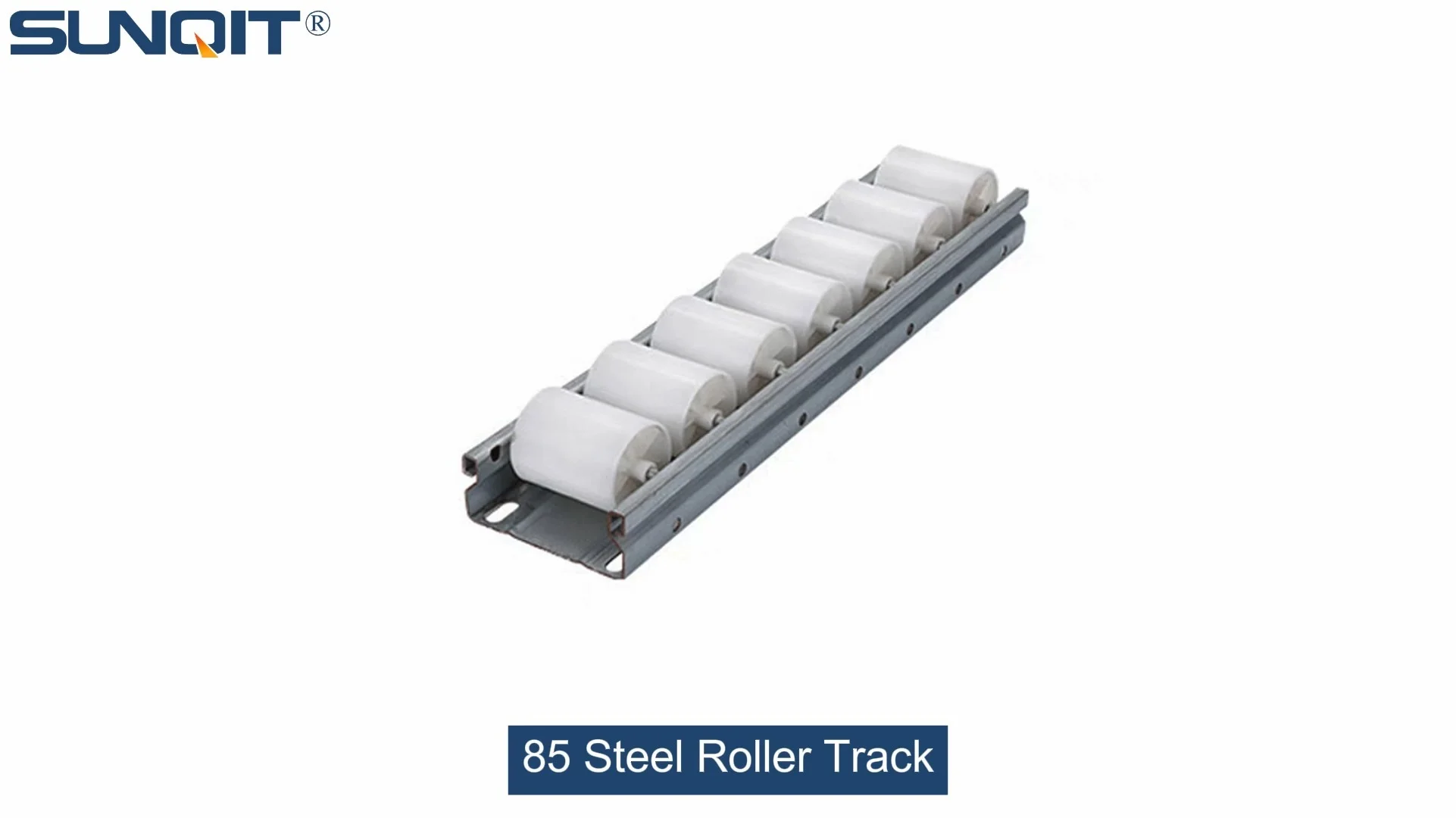
85 Steel Roller Track
85 heavy duty modular system roller track.Its use is focused on the transport of heavy products. Its implantation is carried out by creating a slope for the product to move under the force of gravity.
In today's fast-paced manufacturing landscape, where every second and every dollar counts, labor costs remain one of the biggest challenges for factory managers. From repetitive material handling to inefficient workflow bottlenecks, manual processes not only drain resources but also increase the risk of errors and worker fatigue. Enter the 85 Steel Roller Track – a seemingly simple yet powerful component that's quietly revolutionizing how factories operate. More than just a piece of equipment, it's a bridge between lean manufacturing principles and real-world productivity, designed to ease the burden on workers while slashing unnecessary expenses. Let's dive into how this unassuming tool is becoming a game-changer for cost-conscious manufacturers.
The Hidden Cost of Manual Material Handling
Before we explore the solutions, let's first understand the problem. In a typical manufacturing facility – whether it's assembling smartphones, packaging medical devices, or building automotive parts – material movement is the unsung backbone of production. Workers spend hours each day pushing carts, lifting bins, and maneuvering components from storage to assembly lines. A 2023 industry report found that manufacturing plants lose up to 30% of labor hours to non-value-added tasks like these. Worse, repetitive lifting and bending lead to higher injury rates, resulting in increased downtime, workers' compensation claims, and turnover – costs that rarely appear on spreadsheets but eat into profits silently.
Consider a mid-sized electronics factory producing circuit boards. Each shift, two workers are dedicated solely to moving component trays from the warehouse to the lean pipe workbench stations. By the end of the day, they've walked over 10 miles, pushed 500+ pounds of materials, and spent 60% of their time just transporting items instead of contributing to actual assembly. Multiply this by 3 shifts and 250 working days a year, and the labor costs add up to tens of thousands of dollars – all for tasks that don't directly create value for the product.
What Makes 85 Steel Roller Track Different?
At first glance, the 85 Steel Roller Track might look like any other conveyor component – a series of steel rollers mounted on a sturdy frame. But its true magic lies in its design philosophy: let gravity and precision do the work, not people . Engineered with 85mm-diameter steel rollers, a robust aluminum or steel frame, and precision bearings, it creates a smooth, low-friction surface that allows materials to glide with minimal effort. Unlike fixed shelving or basic conveyor belts, it's built for flexibility – adjustable angles, modular lengths, and compatibility with existing systems make it adaptable to almost any workflow.
Key Features That Drive Efficiency:
- High Load Capacity: Built to handle heavy bins, cartons, and even small assemblies (up to 500kg per linear meter), making it ideal for automotive and industrial parts.
- Stainless Steel Durability: Resistant to corrosion and wear, even in harsh factory environments with oils, dust, or moisture – reducing replacement and maintenance costs.
- Customizable Angles: Tilted between 3-7 degrees, it uses gravity to move materials forward, eliminating the need for motorized power (and electricity bills).
- Seamless Integration: Works with flow racks , lean pipe systems , and workstations, creating a continuous material flow from storage to production.

4 Ways 85 Steel Roller Track Cuts Labor Costs
1. Eliminating Manual Material Transport
The most obvious impact is reducing the need for workers to physically move materials. By integrating 85 Steel Roller Tracks into flow rack systems, factories can set up "pick-to-light" or "push-to-assembly" stations where components slide directly to the operator. For example, in a 3C assembly plant producing smartwatches, component trays now roll from the warehouse rack to the assembly line via roller tracks – eliminating the need for dedicated material handlers. A case study from a leading consumer electronics manufacturer showed a 40% reduction in material transport labor after installing 85 Steel Roller Tracks, allowing those workers to be reassigned to higher-value tasks like quality control.
2. Speeding Up Order Picking and Kitting
In warehouses and distribution centers, order picking is another labor-intensive process. Workers often waste time searching for parts, sorting bins, and aligning materials. The 85 Steel Roller Track streamlines this by creating a "first-in, first-out" (FIFO) flow, where new stock is loaded from the back and older stock automatically moves to the front. This not only reduces picking errors but also cuts down the time spent organizing inventory. A medical device manufacturer reported that after retrofitting their kitting area with roller tracks, pickers were able to process 25% more orders per hour, reducing the need for overtime during peak seasons.
3. Reducing Worker Fatigue and Error Rates
Ergonomics play a huge role in labor efficiency. When workers are tired, they move slower, make more mistakes, and take longer breaks. The 85 Steel Roller Track addresses this by bringing materials to waist height – eliminating the need to bend, stoop, or reach overhead. At a automotive parts plant in Guangdong, assembly line workers using roller-track-equipped workstations reported a 35% reduction in shoulder and back strain, leading to a 15% drop in error rates and a 20% decrease in unscheduled breaks. Over time, this translates to fewer defects, less rework, and a more engaged workforce – all of which directly impact the bottom line.
4. Enabling Flexible, Scalable Production
Modern manufacturing demands agility. Factories need to switch between product models quickly, adapt to small-batch orders, and scale up or down without massive overhauls. The 85 Steel Roller Track's modular design makes this possible. Unlike fixed conveyor systems that require expensive reconfiguration, roller tracks can be easily adjusted, extended, or repositioned using basic tools. A lean solution provider recently helped a medical equipment manufacturer reconfigure their production line in just 8 hours (down from 3 days with traditional conveyors) by simply rearranging roller track segments and aluminum pipe supports. This flexibility reduces downtime during line changes and allows factories to take on more diverse orders without hiring extra labor.
Real-World Impact: A 3C Manufacturer's Success Story
Let's put these benefits into perspective with a real example. A Shenzhen-based manufacturer of tablet computers was struggling with rising labor costs and missed delivery deadlines. Their main pain points: 4 full-time workers dedicated to material transport, frequent delays in component delivery to assembly lines, and high turnover due to repetitive lifting tasks.
After consulting with a lean solution provider, they installed 85 Steel Roller Tracks alongside their existing lean pipe workbench stations and flow racks . The results were striking:
| Metric | Before Roller Tracks | After Roller Tracks | Improvement |
|---|---|---|---|
| Material Transport Labor | 4 workers/shift | 1 worker/shift (supervising flow) | 75% reduction |
| Assembly Line Downtime (due to material delays) | 120 minutes/shift | 15 minutes/shift | 87.5% reduction |
| Worker Turnover Rate | 25%/year | 8%/year | 68% reduction |
| Annual Labor Cost Savings | - | $142,000 | ROI in 6 months |
The factory manager noted, "We didn't just save money – we changed how our team works. Workers now focus on assembling tablets, not moving parts. Morale is up, and we're hitting delivery dates consistently. The roller tracks paid for themselves in half a year, and we're now expanding them to other production lines."

Beyond the Track: Building a Complete Lean Ecosystem
While the 85 Steel Roller Track is a star player, its true power shines when integrated into a broader lean system . Pair it with lean pipe workbench stations, and operators can access materials directly at their workstations without walking away. Combine it with conveyor systems for long-distance transport, and you create a seamless flow from receiving to shipping. For factories with strict electrostatic discharge (ESD) requirements – like those producing semiconductors or medical devices – ESD-safe versions of roller tracks ensure components stay protected while moving, eliminating costly damage from static electricity.
What's more, many manufacturers offer custom solutions tailored to specific industries. A medical device plant might need sanitizable stainless steel tracks for sterile environments, while a automotive supplier could opt for heavy-duty versions to handle engine parts. This customization ensures the roller tracks fit the unique needs of each factory, maximizing their impact on labor efficiency.

Is 85 Steel Roller Track Right for Your Factory?
If your facility struggles with any of these issues, it's time to consider investing in 85 Steel Roller Tracks:
- Workers spend more than 20% of their time moving materials (not assembling, testing, or inspecting).
- Assembly lines frequently stop due to "starvation" (lack of components at workstations).
- High turnover in material handling roles due to physical strain.
- Difficulty adapting to small-batch, high-mix production orders.
The good news? Implementing roller tracks doesn't require a complete factory overhaul. Many systems are designed to retrofit existing lean pipe structures or flow racks , keeping upfront costs manageable. Start small – perhaps with a single assembly line or warehouse zone – and scale as you see results.
Conclusion: More Than Cost-Cutting – Empowering Workers
At the end of the day, the 85 Steel Roller Track is about more than just reducing labor costs. It's about respecting the people behind the production – the workers who show up each day to build the products that power our world. By taking over the repetitive, physically demanding tasks, it frees them to focus on skilled, meaningful work: problem-solving, quality control, and innovation. In doing so, factories don't just save money – they build stronger, more resilient teams and lay the foundation for long-term success.
So, if you're ready to stop pouring money into inefficient processes and start investing in a smarter, more human-centered way of manufacturing, the 85 Steel Roller Track might just be the first step. After all, in today's competitive market, the best factories aren't just those that work harder – they're the ones that work smarter, with tools that lift people up rather than wear them down.