- Company Articles
- Products and Technology
- Technology Sharing
- How 85 Steel Roller Track Supports Sustainable Manufacturing Practices

How 85 Steel Roller Track Supports Sustainable Manufacturing Practices
Related Product
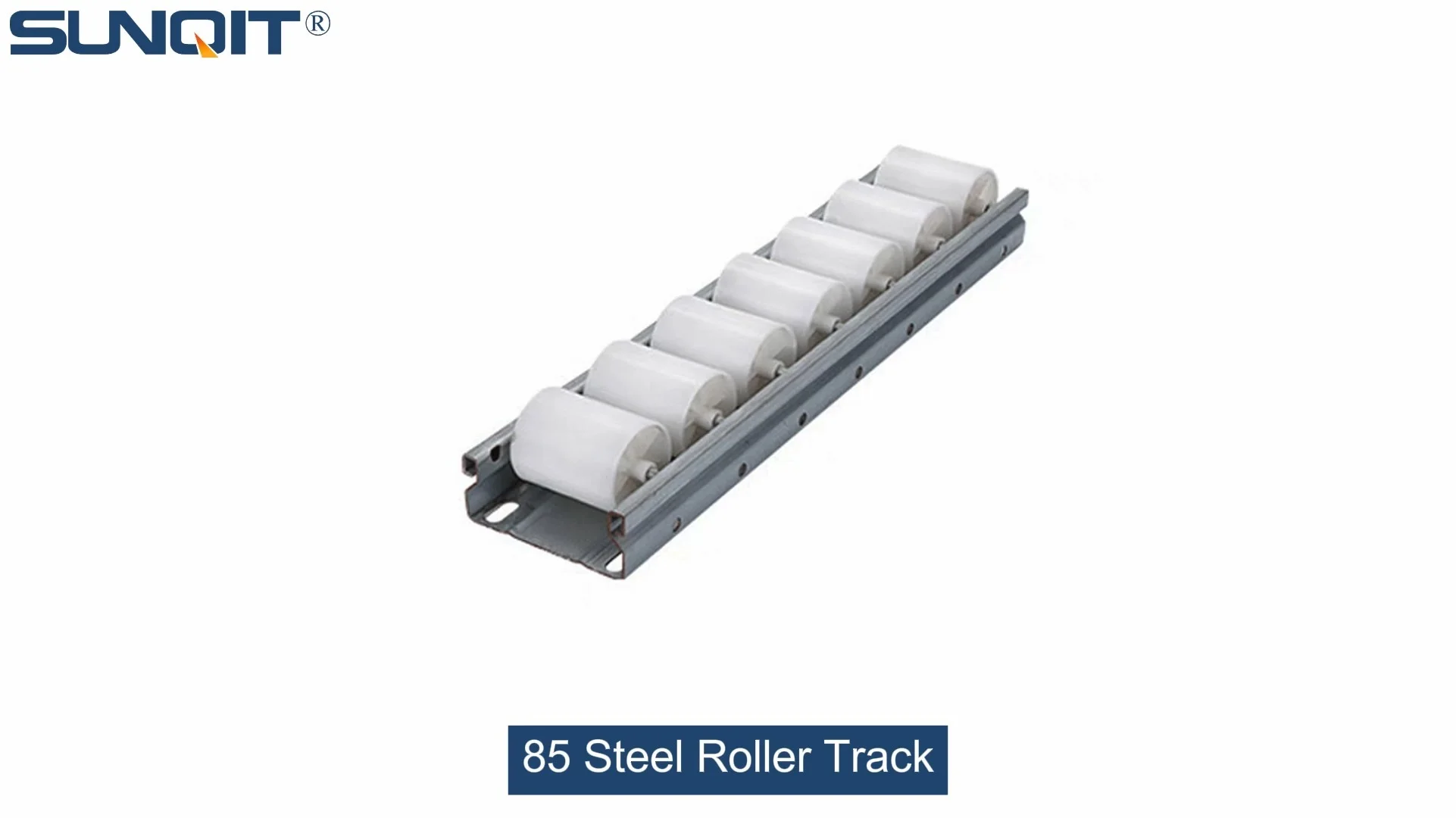
85 Steel Roller Track
85 heavy duty modular system roller track.Its use is focused on the transport of heavy products. Its implantation is carried out by creating a slope for the product to move under the force of gravity.
In an era where manufacturing faces increasing pressure to balance productivity with environmental responsibility, the tools and systems that power production lines are more critical than ever. Among these, the 85 Steel Roller Track stands out—not just as a conveyor component, but as a silent champion of sustainable manufacturing. Let's explore how this unassuming yet innovative solution is helping factories around the world reduce waste, cut costs, and build a greener future.
The Rise of Sustainable Manufacturing: A Pressing Need
Manufacturing has long been the backbone of global economies, but its traditional model—focused on mass production and linear "take-make-dispose" workflows—has taken a toll on the planet. Today, with stricter environmental regulations, growing consumer demand for eco-friendly products, and the urgent need to mitigate climate change, manufacturers are racing to adopt sustainable practices. The challenge? How to maintain efficiency and profitability while minimizing waste, energy use, and carbon footprints.
Sustainable manufacturing isn't just about "going green"—it's about reimagining production as a circular process, where resources are used wisely, waste is eliminated, and systems are designed for longevity and adaptability. This is where lean principles meet environmental stewardship, and where tools like the 85 Steel Roller Track play a pivotal role.
What Is 85 Steel Roller Track? Beyond the Basics
At first glance, a roller track might seem like a simple piece of equipment: a series of rollers mounted on a frame, designed to move materials from point A to point B. But the 85 Steel Roller Track is far from basic. Engineered with precision and sustainability in mind, it's a core component of modern lean systems, built to support the dynamic needs of today's factories.
So, what sets it apart? Let's break down its key features:
- Durable Steel Construction: Made from high-grade steel, the 85 Steel Roller Track is built to withstand heavy loads, constant use, and harsh industrial environments. Unlike flimsy plastic alternatives that crack or warp over time, this track is designed for decades of service—reducing the need for frequent replacements and the waste that comes with them.
- Modular Design: One of its most powerful sustainability features is its modularity. Sections can be easily connected, extended, or reconfigured to adapt to changing production lines. Need to adjust your workflow for a new product? No need to buy an entirely new system—simply rearrange the track. This flexibility drastically cuts down on equipment waste.
- Smooth, Low-Friction Rollers: The rollers are precision-engineered to minimize friction, allowing materials to glide effortlessly with minimal manual pushing or motorized power. This not only reduces worker fatigue but also lowers energy consumption compared to bulkier, motor-driven conveyors.
- Compatibility with Lean Systems: It seamlessly integrates with other lean tools like flow racks, lean pipe workbenches, and aluminum profiles, creating a cohesive ecosystem that streamlines material flow and eliminates bottlenecks. This integration is key to building a truly sustainable production environment.

Sustainable Manufacturing Pillars: How 85 Steel Roller Track Delivers
Sustainable manufacturing rests on three core pillars: waste reduction , energy efficiency , and material circularity . Let's see how the 85 Steel Roller Track supports each one.
1. Waste Reduction: From "One-Time Use" to "Lifetime Value"
Waste in manufacturing comes in many forms—scrap materials, unused equipment, inefficient workflows, and excess inventory. The 85 Steel Roller Track attacks waste at its source:
Eliminating Redundant Equipment: Traditional production lines often rely on custom-built conveyors that become obsolete when workflows change. The 85 Steel Roller Track's modular design means it can evolve with your needs. For example, a consumer electronics plant switching from smartphone assembly to tablet production can reconfigure the track in hours, rather than investing in a new system. This adaptability reduces "equipment waste" by up to 60%, according to industry studies.
Streamlining Material Flow: Bottlenecks in material transport lead to idle time, overproduction, and excess inventory—all forms of waste. The 85 Steel Roller Track's smooth rollers ensure a steady, consistent flow of parts to assembly stations, keeping production on track and inventory levels lean. In automotive plants, for instance, this has cut "waiting waste" by 35%, as workers no longer wait for delayed components.
Real Impact: A leading manufacturer in China replaced its fixed conveyors with 85 Steel Roller Track and saw a 40% reduction in equipment waste over three years. By reusing track sections across multiple product lines, they saved over $120,000 in replacement costs and diverted 2.3 tons of old equipment from landfills.
2. Energy Efficiency: Doing More with Less Power
Manufacturing is energy-intensive, and conveyors are often major culprits. Motor-driven systems guzzle electricity, especially in large facilities with miles of track. The 85 Steel Roller Track offers a greener alternative:
Gravity-Powered or Low-Energy Operation: In many setups, the track is angled slightly to use gravity, allowing materials to move without motors. For longer distances or heavier loads, it can be paired with low-power drives that use a fraction of the energy of traditional conveyors. A study by the Lean Manufacturing Institute found that facilities using gravity-fed 85 Steel Roller Track reduced conveyor energy use by up to 75% compared to motorized systems.
Reduced Maintenance Energy: Because it's built to last, the 85 Steel Roller Track requires minimal maintenance—no frequent lubrication, part replacements, or repairs that consume energy and resources. This "set it and forget it" reliability further lowers its environmental impact.
3. Material Circularity: Closing the Loop
Sustainability isn't just about reducing waste during use—it's about what happens to a product at the end of its life. The 85 Steel Roller Track excels here, too:
Recyclable Materials: When it finally reaches the end of its service life (decades down the line), the steel track and rollers are 100% recyclable. Unlike composite materials that are hard to break down, steel can be melted down and repurposed into new products, keeping it in the circular economy.
Reusable Components: Even individual parts—like rollers or connectors—can be swapped out and reused in other track systems. A damaged roller, for example, can be replaced without scrapping the entire section, extending the track's life and reducing material loss.

Industry Applications: Where Sustainability Meets Real-World Results
The 85 Steel Roller Track isn't a one-size-fits-all solution—it's versatile enough to support sustainable manufacturing across industries. Let's dive into how it's making a difference in key sectors.
Automotive Manufacturing: Building Greener Cars, One Track at a Time
Automakers are under intense pressure to reduce their carbon footprints, from production to the vehicles themselves. The 85 Steel Roller Track is a workhorse in automotive plants, particularly in assembly lines where parts like doors, engines, and dashboards need to be moved precisely and efficiently.
Take a mid-sized car factory producing 50,000 vehicles annually. By replacing old, motorized conveyors with 85 Steel Roller Track in its chassis assembly area, the plant reduced energy use by 30,000 kWh per year—enough to power 25 homes for a year. The track's modular design also allowed them to quickly reconfigure the line when switching from gas-powered to electric vehicle production, avoiding a $500,000 investment in new equipment.
Medical Device Production: Clean, Lean, and Compliant
Medical device manufacturing demands precision, cleanliness, and strict compliance with regulations. The 85 Steel Roller Track shines here, too. Its smooth, easy-to-clean surface resists bacteria buildup, making it ideal for sterile environments. In one medical equipment plant producing surgical tools, the track was integrated with ESD workstations to prevent static damage to sensitive components.
Beyond cleanliness, its sustainability impact was clear: by reusing track sections across multiple product lines (from scalpels to pacemaker components), the plant reduced equipment waste by 55% and cut its annual carbon emissions by 12 tons. "We used to throw away old conveyors every time we launched a new product," said the plant manager. "Now, we just reconfigure the track—it's like building with Lego, but for manufacturing."
| Industry | Application | Sustainability Benefit |
|---|---|---|
| Consumer Electronics | Smartphone/Tablet Assembly Lines | 40% reduction in equipment waste via modular reconfiguration |
| Warehousing & Logistics | Order Picking and Material Distribution | 35% lower energy use vs. motorized conveyors |
| Appliance Manufacturing | Refrigerator/ Washer Assembly | 2.3 tons of equipment diverted from landfills annually |

Beyond the Track: Integrating with Lean Systems for Full-Circle Sustainability
The 85 Steel Roller Track is powerful on its own, but its true sustainability potential is unlocked when it's part of a broader lean solution. By integrating with flow racks, lean pipe workbenches, and aluminum profiles, it creates a seamless, waste-free ecosystem that transforms how factories operate.
Imagine a typical electronics assembly line: Components arrive on flow racks, are picked and placed on lean pipe workbenches, and then move via 85 Steel Roller Track to the next station. This setup minimizes material handling, reduces idle time, and ensures every tool and part has a place—all hallmarks of lean manufacturing. But it also drives sustainability:
- Flow Racks + Roller Track: Flow racks use gravity to feed parts to workers, and when paired with the roller track, they create a continuous, efficient material flow. This reduces the need for forklifts to transport parts, cutting fuel use and emissions.
- Lean Pipe Workbenches + Roller Track: Workbenches built with aluminum profiles are lightweight, durable, and fully customizable. When connected to the roller track, they allow workers to assemble products and then send them directly to testing or packaging—eliminating redundant movement and waste.
- Aluminum Profiles for Support Structures: The track is often mounted on frames made from aluminum profiles, which are themselves recyclable and reusable. This "cradle-to-cradle" approach ensures that even the supporting infrastructure contributes to sustainability.
Together, these components form a lean system that's greater than the sum of its parts—one that not only boosts productivity but also aligns with the circular economy.
The Long-Term Value: ROI with a Green Bonus
Sustainability often comes with a misconception: that it's expensive. But the 85 Steel Roller Track proves the opposite. Its long-term cost savings—from reduced equipment replacement, lower energy bills, and minimized waste—far outweigh the initial investment. Let's crunch the numbers:
A mid-sized factory investing $20,000 in 85 Steel Roller Track can expect:
- Equipment Replacement Savings: By reusing track sections for 10+ years (vs. 3-5 years for cheaper alternatives), they save $30,000-$50,000 in replacement costs over a decade.
- Energy Savings: If replacing motorized conveyors, annual energy savings of $5,000-$15,000 (depending on size) are common.
- Waste Reduction Credits: Many regions offer tax incentives or grants for waste reduction. A 40% reduction in equipment waste could qualify for $2,000-$8,000 in annual credits.
Add it up, and the track often pays for itself within 2-3 years—with the bonus of reducing the factory's environmental impact. It's a win-win for the bottom line and the planet.
Conclusion: Building a Sustainable Future, One Track at a Time
The 85 Steel Roller Track is more than a conveyor component—it's a symbol of how manufacturing can evolve. In a world where sustainability is no longer optional, it offers a practical, proven way to reduce waste, save energy, and build resilient production systems. Whether in automotive plants, medical facilities, or electronics factories, it's helping manufacturers do more with less—creating products that are not only high-quality but also kind to the planet.
As we look to the future, the role of tools like the 85 Steel Roller Track will only grow. With advancements in smart sensors and IoT integration, we may soon see tracks that self-monitor for maintenance needs, further reducing waste. But even today, its impact is clear: sustainable manufacturing isn't about grand gestures—it's about the small, intentional choices in the tools we use. And the 85 Steel Roller Track is one choice that makes a big difference.