- Company Articles
- Products and Technology
- Solution
- How Adjustable Leveling Feet Contribute to 5S Principles in Lean Manufacturing

How Adjustable Leveling Feet Contribute to 5S Principles in Lean Manufacturing
Related Product
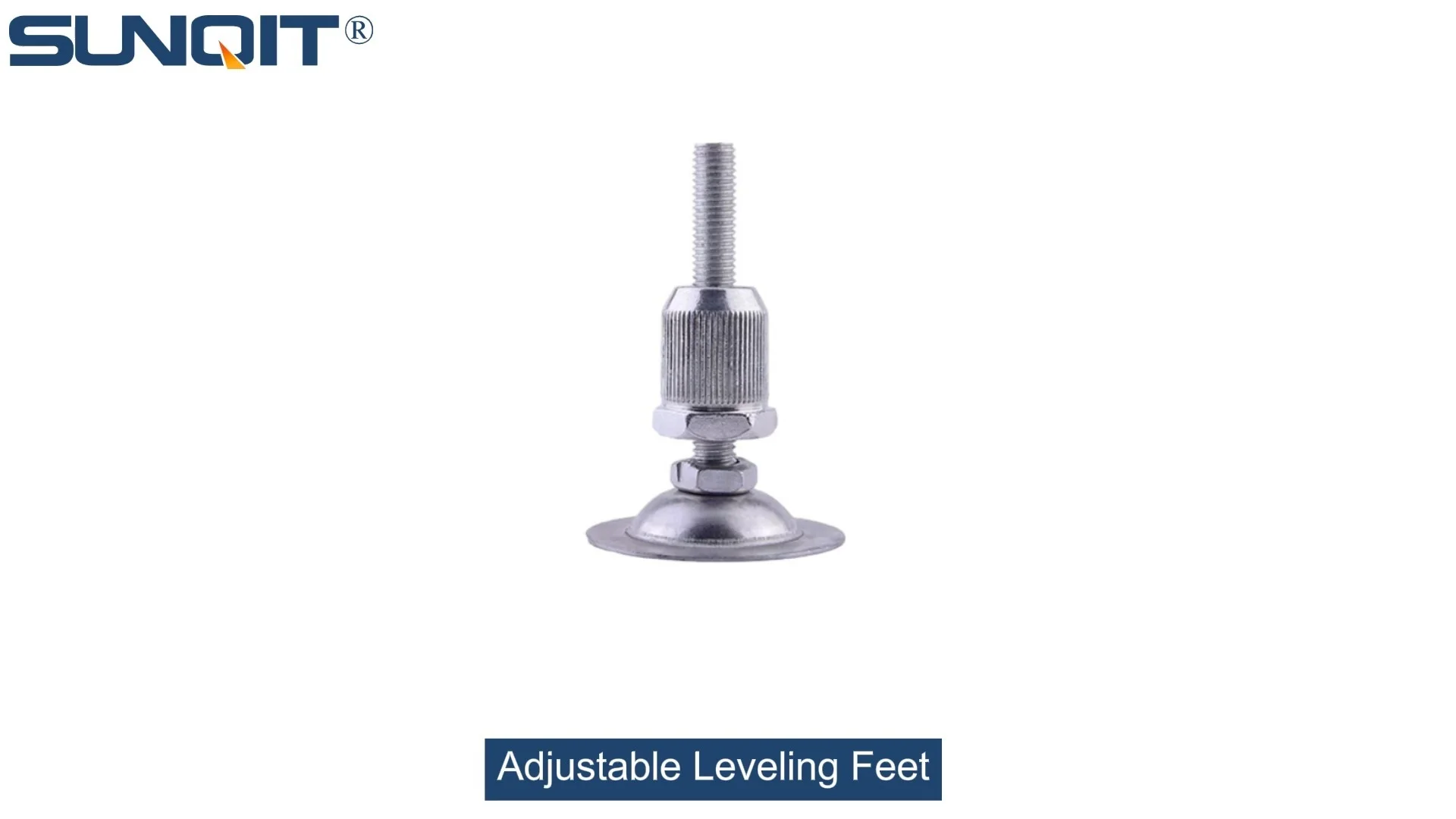
Adjustable Leveling Feet
Adjustable leveling feet are designed to keep machines level when placed on uneven or sloped ground. Otherwise known as adjustable equipment feet, they are available to order in a wide variety of size and load capacity combinations.
In the world of lean manufacturing, where efficiency, organization, and continuous improvement are the cornerstones of success, it's often the smallest components that make the biggest difference. While large machinery and high-tech systems grab headlines, the unsung heroes of the factory floor are the tools that streamline workflows, reduce waste, and keep operations running like well-oiled machines. One such unsung hero? Adjustable leveling feet. These unassuming devices, often overlooked in discussions about lean systems, play a critical role in upholding the 5S principles—Sort, Set in Order, Shine, Standardize, and Sustain—that form the backbone of lean manufacturing. In this article, we'll explore how adjustable leveling feet, when paired with lean pipe and integrated into workbenches and other equipment, become essential allies in maintaining a 5S-compliant workspace.
Understanding 5S: The Foundation of Lean Manufacturing
Before diving into the specifics of adjustable leveling feet, let's first ground ourselves in what 5S entails. Developed in Japan and adopted globally, 5S is a methodology designed to create and maintain a clean, organized, and efficient workplace. Each "S" represents a step toward operational excellence:
- Sort (Seiri): Separate necessary items from unnecessary ones, removing clutter and distractions from the workspace.
- Set in Order (Seiton): Arrange necessary items in a logical, accessible manner so that anyone can find what they need quickly.
- Shine (Seiso): Clean the workspace regularly to maintain a safe, hygienic environment and identify potential issues early.
- Standardize (Seiketsu): Establish consistent processes and procedures to ensure 5S practices are followed uniformly across the organization.
- Sustain (Shitsuke): Foster a culture of continuous improvement, ensuring 5S practices become ingrained in daily operations and aren't just a one-time project.
At first glance, adjustable leveling feet might seem unrelated to these principles. After all, they're simple devices—typically a threaded rod with a base, designed to stabilize equipment by adjusting height and leveling out uneven surfaces. But when you consider the chaos that arises from wobbly workbenches, misaligned conveyor belts, or unstable material racks, it becomes clear: stability is the unsung foundation of organization. And where there's stability, 5S thrives.
Adjustable Leveling Feet: More Than Just "Stabilizers"
To appreciate the role of adjustable leveling feet in 5S, let's first understand what they are and how they work. These components are exactly what their name suggests: feet attached to the bottom of equipment (like workbenches, flow racks, or turnover trolleys) that can be adjusted in height to level the equipment on uneven floors. They're typically made from durable materials like stainless steel or aluminum—resistant to corrosion and wear—and come in various designs, including anti-slip bases, heavy-duty options for large machinery, and even ESD (electrostatic discharge) variants for sensitive electronics manufacturing.
But their purpose extends beyond just "keeping things from wobbling." In a lean system, every piece of equipment must contribute to efficiency. Adjustable leveling feet do this by:
- Ensuring ergonomic alignment: By adjusting the height of workbenches, they reduce strain on workers, minimizing fatigue and errors.
- Preventing equipment damage: Level equipment distributes weight evenly, reducing wear and tear on components like conveyor belts or roller tracks.
- Facilitating cleaning: Raising equipment slightly off the floor (via adjustable feet) creates space for easy sweeping or mopping, supporting the "Shine" principle.
- Supporting modularity: When paired with lean pipe—flexible, reusable tubes used to build custom workstations—adjustable leveling feet allow for quick reconfiguration of workspaces, aligning with lean's focus on adaptability.
Now, let's explore how these benefits directly support each of the 5S principles.

1. Sort (Seiri): Removing Clutter, One Stable Surface at a Time
The first 5S principle, Sort, is all about eliminating unnecessary items from the workspace. A cluttered area not only wastes time (workers searching for tools) but also increases the risk of accidents. So, how do adjustable leveling feet contribute to "Sorting"?
Consider a common scenario: a workbench that's wobbly because the floor is uneven. To stabilize it, workers might resort to makeshift fixes—stacking old rags, pieces of wood, or even spare parts under the legs. Over time, these "quick fixes" accumulate, creating clutter. What started as a single shim becomes a pile of debris under the bench, attracting dust and making it harder to distinguish between necessary tools and unnecessary junk. This directly undermines the Sort principle: instead of removing clutter, the workspace is now adding to it.
Adjustable leveling feet eliminate the need for these makeshift solutions. By providing a permanent, clean way to stabilize equipment, they prevent the accumulation of unnecessary items. With no shims or rags cluttering the area, workers can focus on identifying and removing truly unnecessary tools, materials, or debris. The result? A workspace that's not just stable, but intentionally organized—exactly what Sort aims to achieve.
For example, at a automotive parts manufacturer in Ohio, workers on the assembly line had long used stacks of cardboard under their lean pipe workbenches to fix wobbling. After switching to adjustable leveling feet, the plant manager reported a 40% reduction in "floor clutter" within the first month, as workers no longer needed to hoard materials for shimming. This made it easier to spot and remove unused tools, aligning perfectly with the Sort principle.

2. Set in Order (Seiton): Organizing with Precision
If Sort is about removing the unnecessary, Set in Order is about arranging the necessary items so they're easy to find and use. In lean manufacturing, this means tools have designated places, workflows follow logical paths, and equipment is positioned to minimize movement. Adjustable leveling feet play a starring role here by enabling precise alignment of workbenches, conveyor systems, and material racks.
Imagine a production line where workbenches are misaligned by even a few centimeters. Parts might slide off, workers might have to reach awkwardly, or conveyor belts might jam as items catch on uneven surfaces. This disorganization disrupts the flow, leading to delays and frustration. With adjustable leveling feet, however, each workbench can be precisely leveled and aligned with adjacent equipment. A conveyor leading to a workbench, for instance, can be raised or lowered to ensure parts glide smoothly onto the bench—no more jams, no more wasted time adjusting parts by hand.
To illustrate, let's compare traditional fixed feet with adjustable leveling feet in terms of their impact on Set in Order:
| Aspect | Traditional Fixed Feet | Adjustable Leveling Feet |
|---|---|---|
| Alignment Precision | Limited; dependent on floor flatness. Misalignment common. | Highly precise; can be adjusted to 0.1mm increments for perfect alignment. |
| Workflow Integration | Static; hard to reposition if workflows change. | Flexible; easy to realign when rearranging workstations (e.g., for new product lines). |
| Accessibility | Fixed height may force workers into awkward positions. | Height-adjustable to match worker ergonomics, reducing movement waste. |
| Space Utilization | Often requires extra space to accommodate misalignment (e.g., gaps between equipment). | Enables tight, efficient spacing between equipment, maximizing floor space. |
This table highlights why adjustable leveling feet are indispensable for Set in Order: they turn chaos into precision, ensuring every piece of equipment has a purposeful place in the workflow. When workbenches, conveyors, and racks are aligned with this level of accuracy, workers spend less time searching or adjusting and more time adding value to the product.

3. Shine (Seiso): Cleaning Made Simple
Shine—the third S—emphasizes regular cleaning to maintain a safe, healthy workspace. A clean environment isn't just about aesthetics; it helps identify leaks, cracks, or wear on equipment before they become major issues. But cleaning is often overlooked in busy manufacturing settings, especially when equipment is hard to reach or the area underneath is cluttered.
Adjustable leveling feet solve this problem by elevating equipment slightly off the floor. Even a small gap—say, 5-10 centimeters—makes a world of difference. A mop or broom can easily slide underneath, removing dust, spills, or debris that would otherwise accumulate. This is particularly important in industries like food processing or pharmaceuticals, where hygiene is critical, but it's equally valuable in any manufacturing setting.
Consider a flow rack used to store components. Without adjustable feet, the rack sits directly on the floor, trapping dirt and small parts underneath. Over time, this becomes a "dead zone" where debris builds up, attracting pests or hiding misplaced tools. With adjustable leveling feet, the rack is raised, allowing janitors to clean underneath during daily or weekly maintenance. This not only keeps the area clean but also makes it easier to spot dropped parts or tools, which can then be returned to their proper place (supporting Set in Order).
Additionally, many adjustable leveling feet feature anti-slip, non-porous bases that resist staining and are easy to wipe down. Unlike wooden shims or rubber mats (which can absorb spills and harbor bacteria), these feet maintain their cleanliness with minimal effort, further supporting the Shine principle.
4. Standardize (Seiketsu): Consistency Across the Board
Standardization is what turns 5S from a "project" into a sustainable practice. It means defining clear, repeatable processes so that every worker knows exactly how to Sort, Set in Order, and Shine. Adjustable leveling feet contribute to standardization by ensuring equipment setup is consistent across the entire facility.
In a large manufacturing plant, workbenches might be spread across multiple production lines. Without standardization, each bench could be at a slightly different height, leading to inconsistent workflows and increased training time for new workers. With adjustable leveling feet, however, every workbench can be set to the same height (e.g., 80cm for standing workstations), ensuring that tools, bins, and processes are identical across lines. This uniformity reduces errors: a worker moving from Line A to Line B won't waste time adjusting to a new bench height or searching for tools in a different location.
Standardization also extends to maintenance. Adjustable leveling feet are designed for easy adjustment—often with a simple wrench or even by hand—so when a floor settles or equipment is moved, workers can quickly readjust the feet to the standard height. This consistency ensures that 5S practices aren't dependent on "the way things have always been done" but are instead codified and replicable.
For example, a electronics manufacturer might standardize ESD workstations to a height of 75cm, with ESD-compliant adjustable leveling feet to prevent static buildup. By setting this standard, the company ensures that every workstation meets safety requirements, reducing the risk of damaged components and ensuring compliance with industry regulations. This level of consistency is impossible with fixed feet, which can't adapt to variations in floor flatness or worker preferences.
5. Sustain (Shitsuke): Building a Culture of Continuous Improvement
The final and most challenging S is Sustain—ensuring that 5S practices become part of the company culture, not just a one-time initiative. This requires that the tools and systems put in place are durable, easy to maintain, and visibly contribute to success. Adjustable leveling feet support Sustain in three key ways:
Durability: Made from robust materials like stainless steel or aluminum, adjustable leveling feet withstand the wear and tear of daily manufacturing. Unlike temporary fixes (like wooden blocks), they don't rot, warp, or break, meaning they won't need constant replacement. This reliability ensures that the Set in Order and Shine practices remain intact over time.
Worker buy-in: When employees see that management invests in small but impactful tools—like leveling feet that make their workbench stable and comfortable—they're more likely to take ownership of 5S practices. A wobbly workbench is frustrating; a stable one shows that the company cares about their comfort and efficiency. This boosts morale and encourages workers to maintain the workspace, as they see the direct benefits of 5S.
Adaptability: Lean manufacturing isn't static; workflows change as products evolve. Adjustable leveling feet support this adaptability by making it easy to reconfigure workspaces. For example, if a company introduces a new product line that requires longer workbenches, existing lean pipe workbenches can be extended and re-leveled with minimal effort. This flexibility ensures that 5S practices don't become rigid or outdated—they can evolve with the business, keeping the culture of continuous improvement alive.
Case Study: How Adjustable Leveling Feet Boosted 5S Compliance at PrecisionWorks Manufacturing
To put this in context, let's look at a real-world example. PrecisionWorks Manufacturing, a mid-sized producer of automotive components, was struggling with 5S compliance in its assembly department. Workers frequently complained about wobbly workbenches, tools going missing, and difficulty cleaning under equipment. The plant manager, eager to improve efficiency, decided to upgrade all workbenches and flow racks with adjustable leveling feet (paired with lean pipe for flexibility).
Within three months, the results were clear:
- Sort: A 35% reduction in "unnecessary items" on the shop floor, as workers no longer needed to keep shims or spare materials for stabilizing equipment.
- Set in Order: Tool retrieval time decreased by 20%, as workbenches were aligned with conveyors, reducing the need to manually adjust parts.
- Shine: Cleaning time for the assembly area dropped by 25%, thanks to the gap under equipment created by the leveling feet.
- Standardize: New worker training time decreased by 15%, as all workbenches were set to the same height and layout.
- Sustain: 5S audit scores improved from 65% to 92% over six months, with workers reporting higher satisfaction with their workspace.
The plant manager attributed much of this success to the adjustable leveling feet, noting, "We'd tried 5S before, but the little things—like wobbly benches—kept pulling us back. The leveling feet removed those daily frustrations, making it easier for everyone to stick to the system."
Conclusion: Small Tools, Big Impact
In the grand scheme of lean manufacturing, adjustable leveling feet might seem. But as we've explored, they're far more than just "stabilizers." They're enablers of 5S, supporting Sort by reducing clutter, Set in Order by enabling precise alignment, Shine by simplifying cleaning, Standardize by ensuring consistency, and Sustain by fostering durability and adaptability.
The lesson here is clear: lean manufacturing isn't just about big investments or radical process overhauls. It's about paying attention to the details—the small components that, when optimized, create a ripple effect of efficiency across the entire operation. Adjustable leveling feet, paired with lean pipe and integrated into workbenches and equipment, are a perfect example of this. They remind us that 5S success lies not in perfection, but in precision—and that even the humblest tool can be a catalyst for transformation.
So, the next time you walk through a manufacturing plant, take a moment to look down. Underneath those workbenches and conveyor systems, you'll find the unsung heroes of 5S: adjustable leveling feet, quietly supporting the lean system and proving that great things really do come in small packages.