- Company Articles
- Products and Technology
- Product knowledge
- How Adjustable Leveling Feet Improve Ergonomics in Lean Pipe Workstations

How Adjustable Leveling Feet Improve Ergonomics in Lean Pipe Workstations
Related Product
Adjustable Leveling Feet
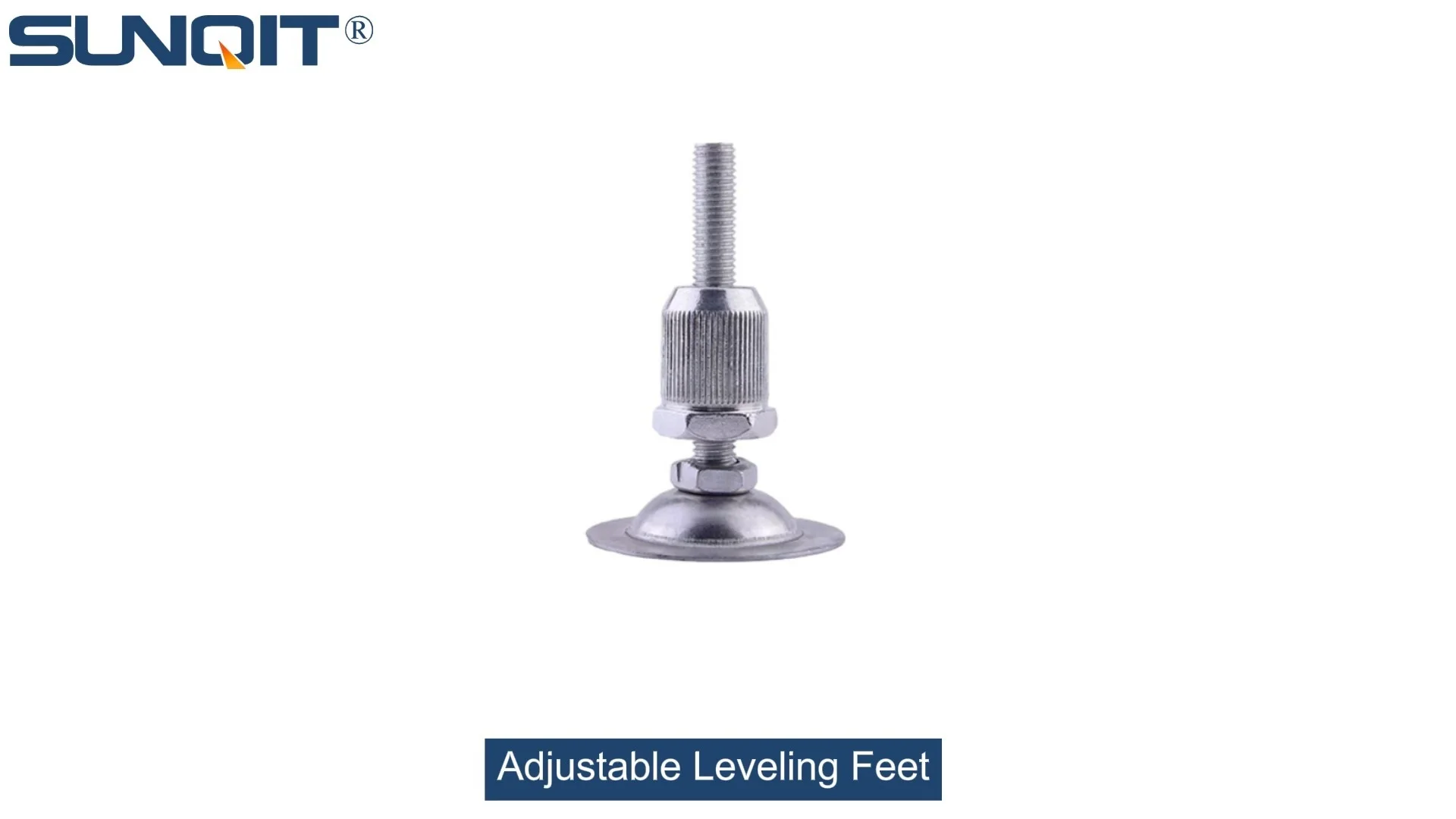
Adjustable leveling feet are designed to keep machines level when placed on uneven or sloped ground. Otherwise known as adjustable equipment feet, they are available to order in a wide variety of size and load capacity combinations.
Walk into any modern manufacturing plant, warehouse, or assembly facility, and you'll likely notice a common thread: the focus on people. Behind the hum of machinery and the rhythm of production lines, there's a quiet revolution happening—one that prioritizes the well-being of the workers who keep operations running. Ergonomics, once dismissed as a "nice-to-have" buzzword, has become a cornerstone of efficient, sustainable workplaces. And in this revolution, even the smallest components are stepping into the spotlight. Today, we're diving into one such unsung hero: adjustable leveling feet, and how they transform the ergonomics of lean pipe workstations.
Lean systems have long been celebrated for their ability to eliminate waste and boost productivity, but what happens when the very workstations that power these systems are at odds with the people using them? A wobbly bench, a surface that's just an inch too low, or a table that tilts because the floor isn't perfectly level—these might seem like minor nuisances, but over a full shift, they add up. They lead to strained backs, aching shoulders, and distracted workers. And in a lean environment, where every second and every movement counts, that's waste of a different kind: wasted energy, wasted potential, and wasted well-being.
Enter the lean pipe workbench—a staple in factories and workshops worldwide. Lightweight, modular, and endlessly customizable, these workstations are designed to adapt to the needs of the task at hand. But even the most thoughtfully designed lean pipe workbench is only as good as its foundation. That's where adjustable leveling feet come in. These small, unassuming components might not grab headlines, but they hold the key to turning a functional workstation into an ergonomic powerhouse. Let's explore why.
The Ergonomic Challenge in Modern Workstations
To understand the impact of adjustable leveling feet, we first need to grasp the ergonomic challenges workers face daily. Imagine Maria, a line worker at an electronics assembly plant. Her shift starts at 8 a.m., and by 10 a.m., she's already rubbing her lower back. The lean pipe workbench in front of her is supposed to be her command center, but it's not cooperating. The floor under her station slopes slightly—nothing drastic, just enough that the bench wobbles when she reaches for tools. To compensate, she's been shifting her weight to one hip, straining her back muscles. By lunch, her shoulders are tight from hunching over a surface that's an inch too low, and her wrists ache from typing on a keyboard that tilts.
Maria's experience isn't unique. According to the Bureau of Labor Statistics, over 30% of workplace injuries in manufacturing are related to overexertion or repetitive motion—often linked to poor workstation ergonomics. Uneven floors, a common issue in older facilities or those with high foot traffic, are a major culprit. A workbench that isn't level doesn't just wobble; it forces workers into awkward postures as they adjust their bodies to maintain balance or reach for items. Over time, these micro-adjustments lead to chronic pain, decreased focus, and even long-term injuries.
Then there's the "one-size-fits-all" problem. Lean systems thrive on standardization, but workers aren't standard. A workbench set at 36 inches might be perfect for a 5'10" worker but torturous for someone who's 5'2". Fixed-height benches leave little room for customization, forcing shorter employees to stand on tiptoes or taller ones to hunch. Add in the fact that tasks change—one day assembling small components, the next packing larger boxes—and the need for flexibility becomes even clearer.
In short, ergonomics isn't just about comfort. It's about creating workstations that adapt to people, not the other way around. And in that mission, adjustable leveling feet are a game-changer.
Lean Pipe Workstations: The Backbone of Lean Systems
Before we dive into the specifics of adjustable leveling feet, let's take a moment to appreciate the star of the show: the lean pipe workbench. These workstations are the workhorses of lean systems, and for good reason. Made from lightweight yet durable materials like aluminum pipe or steel, they're designed to be modular—meaning you can add shelves, tool holders, or conveyor attachments with ease. They're cost-effective, easy to assemble, and infinitely adaptable, making them ideal for everything from small-scale workshops to large manufacturing lines.
But what truly sets lean pipe workbenches apart is their alignment with lean principles. They reduce waste by maximizing space efficiency, they promote flexibility by allowing quick reconfiguration, and they empower workers to design their own workflows. However, even the most modular bench falls short if its base isn't stable and adjustable. A wobbly or poorly positioned bench undermines the very efficiency lean systems aim to achieve. It's like building a house on a shaky foundation—no matter how well you design the rooms, the structure will fail.
This is where the marriage of lean pipe workbenches and adjustable leveling feet becomes critical. The bench provides the framework for productivity; the feet provide the stability and customization needed to make that productivity sustainable.

What Are Adjustable Leveling Feet, Anyway?
At first glance, adjustable leveling feet might seem simple—and in many ways, they are. But their simplicity is part of their genius. These small components attach to the bottom of workbench legs, replacing fixed feet or even casters in some cases. They typically consist of three parts: a threaded stem, a base (often rubber or plastic), and a knob or hex nut for adjustment. By rotating the knob, you raise or lower the foot, fine-tuning the height of each leg to level the bench or adjust its overall height.
But don't let their basic design fool you. Modern adjustable leveling feet are engineered for durability and precision. Many are made with corrosion-resistant materials like stainless steel or aluminum—important in environments where spills or moisture are common. The bases often feature anti-slip rubber pads to grip floors and prevent the bench from sliding, even when adjusted to their maximum height. Some models even include locking mechanisms to keep the feet from shifting once set—a must for high-vibration areas like near heavy machinery.
One of the key advantages of adjustable leveling feet is their compatibility with lean pipe workbenches. Since lean pipe systems use modular components like aluminum profile frames and connectors, adding or replacing feet is a breeze. No need for specialized tools or major rework—simply unscrew the old fixed feet and screw in the adjustable ones. This modularity aligns perfectly with lean principles, allowing for quick upgrades without disrupting workflows.

Three Ways Adjustable Leveling Feet Transform Ergonomics
1. Conquering Uneven Floors: Stability Where It Matters
Let's go back to Maria's wobbly bench. The root cause? A floor that slopes by just ¼ inch across her workstation. In most cases, that's too minor to justify resurfacing the entire floor—a costly and time-consuming project. But with adjustable leveling feet, it's a 5-minute fix. By turning the knob on the foot under the lower side of the bench, Maria (or her supervisor) can raise that leg by ¼ inch, leveling the surface. Suddenly, the wobble is gone. No more shifting weight, no more strained back. The bench feels solid, and Maria can focus on her work instead of balancing on an uneven surface.
Stability isn't just about comfort; it's about safety. A wobbly bench increases the risk of tools or materials sliding off, leading to spills, broken parts, or even trips and falls. Adjustable leveling feet create a secure base, ensuring the workbench stays put—even when workers lean on it or move heavy items across the surface. In warehouses or loading areas, where floors often bear the brunt of pallet jacks and forklifts, this stability is invaluable.
2. Custom Height: One Bench, Many Workers
Remember the "one-size-fits-all" problem? Adjustable leveling feet solve that by letting workers tailor the bench height to their body. Let's say Raj, who's 6'2", takes over Maria's station in the afternoon. The bench, set to Maria's ideal height of 34 inches, is too low for him. Instead of hunching, he can adjust the leveling feet to raise the bench by 2 inches, bringing the surface to 36 inches—perfect for his elbows to rest comfortably at a 90-degree angle. When Maria returns the next day, she can lower it back. No tools, no hassle, just a quick twist of the knobs.
This level of customization is a game-changer for multi-shift facilities or workstations shared between workers of different heights. It also adapts to changing tasks. If a worker is assembling small components in the morning, they might lower the bench to 32 inches for better precision. In the afternoon, when packing boxes, they raise it to 38 inches to avoid bending. This flexibility ensures the workstation always supports the task, not the other way around.
3. Reducing Vibration and Noise: A Quieter, Calmer Workspace
It's not just about stability and height—adjustable leveling feet also dampen vibration. In facilities with nearby machinery, vibrations can travel through the floor and into the workbench, making tools rattle and small parts shift. Over time, this constant buzz is distracting and fatiguing. The rubber bases on many adjustable feet act as shock absorbers, reducing the transfer of vibrations from the floor to the bench. The result? A quieter, calmer workspace where workers can focus better and feel less drained by the end of the shift.

Adjustable vs. Fixed: The Ergonomic Showdown
You might be wondering: Why not just use fixed feet? Or casters, for mobility? The answer lies in trade-offs. Fixed feet are cheap and simple, but they offer zero adjustability—if the floor is uneven, the bench wobbles. Casters are great for moving workstations, but they sacrifice stability; even locked casters can shift under heavy loads, and they don't solve height issues. Adjustable leveling feet strike a balance, offering stability, adjustability, and ergonomic benefits that fixed feet and casters can't match.
| Feature | Fixed Feet | Casters | Adjustable Leveling Feet |
|---|---|---|---|
| Stability on uneven floors | Poor (wobbles) | Fair (may shift even when locked) | Excellent (can level to floor irregularities) |
| Height adjustability | None (fixed at installation) | None (height fixed by caster size) | High (typically ½" to 2" adjustment range) |
| Ergonomic customization | None (one height for all workers) | None (height can't be tailored to user) | High (workers set height to fit their body) |
| Vibration dampening | Low (hard materials transfer vibration) | Low (wheels don't absorb shock well) | High (rubber bases reduce vibration transfer) |
| Mobility | None (bench is stationary) | High (easy to move) | Low (stationary, but some models combine with casters) |
For many facilities, the ideal solution is a hybrid: workbenches with both casters and adjustable leveling feet. When you need to move the bench, engage the casters; when you're ready to work, lock the casters and adjust the feet for stability and height. This "best of both worlds" approach is becoming increasingly popular in lean systems, where flexibility and ergonomics go hand in hand.
Beyond the Workbench: The Ripple Effect of Better Ergonomics
The benefits of adjustable leveling feet extend far beyond individual workstations. When workers like Maria and Raj are comfortable, focused, and pain-free, the entire operation thrives. Let's break it down:
Happier, More Engaged Workers: A study by the International Ergonomics Association found that workers in ergonomically optimized workplaces report 25% higher job satisfaction. When employees feel that their well-being is a priority, they're more likely to stay with the company, reducing turnover—a major cost in manufacturing. Lower turnover means less time spent training new hires and more consistency in production quality.
Fewer Injuries, Less Downtime: As we mentioned earlier, poor ergonomics leads to injuries. By reducing strain and awkward postures, adjustable leveling feet lower the risk of back pain, carpal tunnel syndrome, and other musculoskeletal disorders. Fewer injuries mean fewer workers' compensation claims, less absenteeism, and a more reliable workforce. For a lean system, where every worker is critical to the flow, this reliability is priceless.
Boosted Productivity: Comfortable workers are efficient workers. When Maria isn't shifting her weight to stabilize a wobbly bench, she can assemble components faster. When Raj isn't hunching over a low surface, he makes fewer mistakes. Over a shift, these small gains add up. One electronics manufacturer reported a 12% increase in line speed after upgrading to adjustable leveling feet on their lean pipe workbenches—all because workers could focus on the task, not the workstation.
Choosing the Right Adjustable Leveling Feet for Your Lean Pipe Workbench
Not all adjustable leveling feet are created equal. To maximize ergonomic benefits, you'll need to choose the right ones for your workspace. Here are a few key factors to consider:
Load Capacity
First, check the weight your workbench will hold. If you're using it for heavy tools or materials, opt for feet with a higher load capacity (typically 200–500 lbs per foot). Look for models with reinforced stems and sturdy bases to avoid bending or breaking under pressure.
Floor Type
Rubber bases are ideal for concrete or tile floors, as they grip well and won't scratch. For sensitive floors like hardwood (common in labs or offices), choose feet with soft plastic bases to prevent damage.
Adjustment Range
Most feet offer ½" to 2" of adjustment—enough for minor floor unevenness or height tweaks. If you anticipate larger gaps (e.g., in older facilities with significant floor slopes), look for feet with a wider range (3" or more).
Material
Stainless steel feet are best for wet or corrosive environments (think food processing or chemical labs). Aluminum feet are lightweight and corrosion-resistant, making them a great all-purpose choice. For budget-friendly options, plated steel works well in dry environments.
The Bottom Line: Small Feet, Big Impact
In the world of lean manufacturing, we often focus on big-picture solutions: optimizing workflows, reducing inventory, streamlining processes. But as adjustable leveling feet remind us, some of the most powerful improvements come from the smallest details. These unassuming components don't just level a workbench—they level the playing field for workers, giving them the stability, comfort, and customization they need to do their best work.
Maria no longer leaves her shift with a sore back. Raj can stand tall at his workstation without hunching. And their facility? It's seeing fewer injuries, higher morale, and smoother production flows. All because someone decided to invest in the foundation of their lean pipe workstations.
So the next time you walk through a manufacturing plant or workshop, take a look under the workbenches. You might just see the future of ergonomics—and lean systems—right there, in the form of adjustable leveling feet. Small, simple, and silently revolutionizing how we work.