- Company Articles
- Products and Technology
- Product knowledge
- How Adjustable Leveling Feet Improve Safety in Medical Device Packaging Lines

How Adjustable Leveling Feet Improve Safety in Medical Device Packaging Lines
Related Product
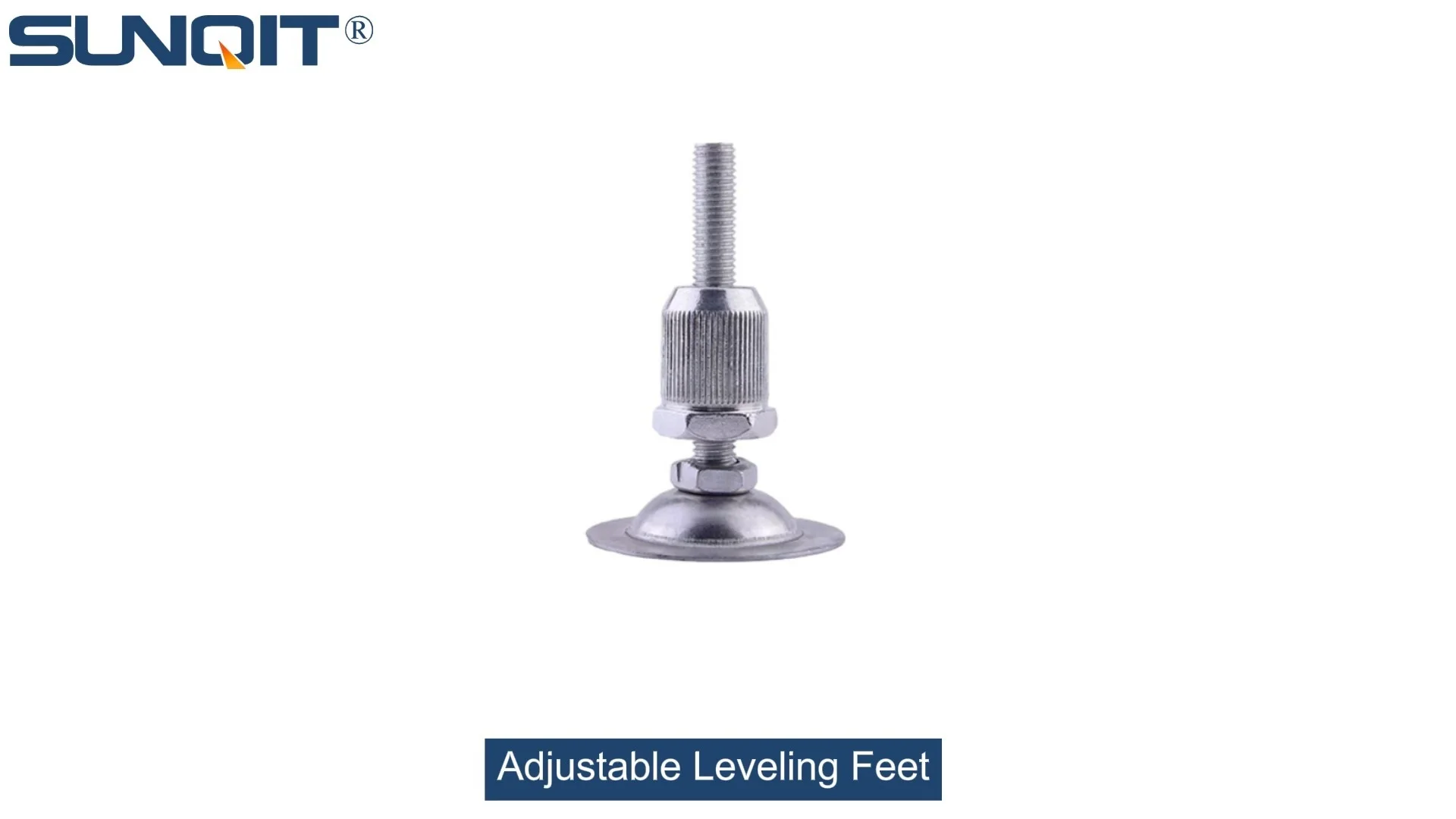
Adjustable Leveling Feet
Adjustable leveling feet are designed to keep machines level when placed on uneven or sloped ground. Otherwise known as adjustable equipment feet, they are available to order in a wide variety of size and load capacity combinations.
In the world of medical device manufacturing, every detail matters. From the precision of a surgical instrument to the sterility of a diagnostic kit, the smallest oversight can have life-altering consequences for patients. Nowhere is this more critical than in medical device packaging lines—where products transition from production to distribution, requiring meticulous handling to maintain integrity, sterility, and compliance with strict regulatory standards. While much attention is paid to high-tech machinery and automated systems, one often-overlooked component plays a quiet yet vital role in ensuring safety: adjustable leveling feet. These unassuming parts are the unsung heroes that stabilize equipment, reduce risks, and safeguard both workers and the life-saving devices they handle.
The Stakes of Safety in Medical Device Packaging
Medical device packaging is a high-stakes environment where "safety" has two equally critical dimensions: protecting the workers operating the line and preserving the quality of the devices themselves. For workers, unstable equipment can lead to strains, trips, or falls. For the devices, even minor disruptions—like a wobbling workbench or misaligned roller track—can compromise sterility, cause physical damage, or disrupt delicate assembly steps. Consider a scenario where a packaging line's workbench sits unevenly on a factory floor with a slight slope. Over time, this tilt could cause tools to slide, packaging materials to misalign, or automated filling systems to dispense incorrect amounts of sterile solution. The result? A batch of contaminated or defective devices that never should reach a patient.
Regulatory bodies like the FDA (Food and Drug Administration) and ISO (International Organization for Standardization) enforce rigorous standards to prevent such outcomes. ISO 13485, for example, mandates quality management systems specifically for medical device manufacturers, with strict guidelines for equipment maintenance and process control. The FDA's 21 CFR Part 820 goes further, requiring manufacturers to document and validate all production processes—including the stability and calibration of equipment used in packaging. In this context, "safety" isn't just about avoiding accidents; it's about proving, through data and documentation, that every step of the packaging process is controlled and consistent. This is where adjustable leveling feet enter the picture: by ensuring equipment stability, they become a foundational element of regulatory compliance and product safety.
The Hidden Risks of Unstable Equipment
To understand why adjustable leveling feet matter, it's first important to recognize the challenges medical packaging lines face daily. Factory floors, even in state-of-the-art facilities, are rarely perfectly flat. Years of heavy equipment use, shifts in concrete, or uneven installations can create subtle slopes, bumps, or depressions. Fixed equipment feet—those that can't be adjusted—turn these minor imperfections into major problems. A workbench with fixed feet, for instance, might rock slightly during operation, transferring vibrations to sensitive devices being inspected or packaged. Over time, this vibration can loosen components, misalign tools, or even damage delicate electronics in devices like pacemakers or glucose monitors.
Then there's the issue of static electricity, a silent threat in environments handling sensitive medical electronics. ESD workstations are designed to dissipate static charges, preventing them from damaging microchips or delicate sensors. But if an ESD workstation isn't level, its grounding system—critical for channeling static away from devices—can fail. A single unlevel foot might lift the workstation slightly, breaking the connection between the grounding mat and the floor. Suddenly, static builds up, putting devices at risk of invisible damage that only becomes apparent when a patient's life depends on them.
Roller tracks, which move packages through filling, sealing, and labeling stations, face their own set of challenges. When unlevel, these tracks can cause packages to veer off course, jam, or scrape against edges—damaging packaging materials and compromising sterility. A jammed roller track isn't just a production delay; it often requires a worker to reach into moving machinery to clear the blockage, creating a direct safety hazard. In worst-case scenarios, misaligned tracks can even cause packages to fall, risking damage to the device inside and injury to nearby staff.

What Are Adjustable Leveling Feet?
At their core, adjustable leveling feet are simple devices: threaded components attached to the bottom of equipment (like workbenches, ESD workstations, or roller track supports) that can be extended or retracted to fine-tune height. Most consist of a base (often rubber, plastic, or metal), a threaded rod, and a nut or handle for adjustment. When twisted, the rod extends, raising that corner of the equipment; twisted the other way, it retracts, lowering it. This allows operators to compensate for uneven floors, ensuring the equipment sits perfectly level, even on the most imperfect surfaces.
But their simplicity belies their versatility. Modern adjustable leveling feet come in a range of designs to suit medical packaging environments. Heavy-duty models, with stainless steel rods and reinforced bases, support the weight of large roller tracks or multi-tiered workbenches. Anti-slip rubber bases prevent equipment from shifting during operation, even when subjected to vibrations from nearby machinery. For cleanrooms or sterile environments, some feet are made with non-porous materials that resist bacteria growth and are easy to sanitize. Perhaps most importantly for ESD workstations, conductive leveling feet can be integrated into the grounding system, ensuring static charges are safely dissipated even as the feet adjust to uneven floors.

How Adjustable Leveling Feet Enhance Safety: A Closer Look
Stabilizing the Workbench: Precision in Every Task
Workbenches are the heart of medical device packaging lines. This is where technicians inspect devices for defects, assemble components into sterile packaging, and prepare products for final sealing. A level workbench isn't just a matter of convenience—it's essential for precision. Imagine a technician aligning a tiny catheter tip with its packaging tray on an unlevel surface. The slightest tilt could cause the catheter to shift, leading to misalignment in the tray. If the sealing machine then applies heat unevenly (because the tray isn't flat), the package might not seal properly, allowing bacteria to enter and compromise sterility.
Adjustable leveling feet eliminate this risk by creating a perfectly flat work surface. By tweaking each foot, operators can ensure the workbench remains stable, even if the floor beneath it isn't. This stability reduces operator fatigue, too: technicians no longer have to compensate for a wobbling surface, allowing them to focus on the meticulous tasks at hand. The result? Fewer human errors, more consistent packaging, and a lower risk of defective products reaching patients.
Protecting ESD Workstations: Grounding That Never Fails
ESD workstations are designed to protect sensitive medical electronics from static damage, but their effectiveness hinges on a continuous grounding path. This path starts at the workstation's surface (often a conductive mat), flows through the frame, and ends at the floor via grounding wires or conductive feet. If any part of this path is broken—including a lifted or unlevel foot—the workstation can no longer dissipate static. Adjustable leveling feet solve this by ensuring all four feet remain in contact with the floor, maintaining the grounding connection even on uneven surfaces.
Some adjustable leveling feet are specifically engineered for ESD environments, with conductive materials that integrate directly into the grounding system. For example, feet with brass or stainless steel components conduct static charges from the workstation frame to the floor, bypassing any rubber or plastic parts that might insulate. This design ensures that even as the feet are adjusted to level the workstation, the grounding path remains unbroken. For devices like neurostimulators or implantable sensors—where a single static discharge can render them useless—this continuity is non-negotiable.
Aligning Roller Tracks: Smooth Flow, Fewer Risks
Roller tracks keep packaging lines moving, but their efficiency depends on precise alignment. When level, packages glide smoothly from one station to the next, ensuring consistent filling, sealing, and labeling. When unlevel, they become a source of frustration and risk. A package that veers left on an unlevel track might scrape against a metal guardrail, tearing its sterile outer layer. A jam caused by misalignment could stop the line entirely, requiring workers to manually intervene—often in close proximity to moving parts.
Adjustable leveling feet on roller track supports allow operators to fine-tune the track's angle, ensuring packages move in a straight, steady path. By adjusting feet along the track's length, they can compensate for floor slopes, ensuring the track remains horizontal. This not only reduces jams and product damage but also lowers the risk of worker injury. With fewer jams, there's less need for hands-on intervention, keeping workers safely away from moving machinery. Additionally, smooth-moving packages reduce wear and tear on the track itself, extending its lifespan and reducing maintenance-related downtime.

The Safety Impact: By the Numbers
To quantify the difference adjustable leveling feet make, consider a hypothetical (but realistic) medical packaging facility before and after upgrading its equipment. Prior to installing adjustable feet, the facility struggled with:
- 12 product damage incidents per month due to unstable workbenches
- 8 ESD-related device failures per quarter, traced to unlevel ESD workstations
- 20+ roller track jams monthly, leading to 10+ hours of downtime
- Repeated regulatory citations for uneven equipment surfaces
After retrofitting workbenches, ESD workstations, and roller tracks with adjustable leveling feet, the results were striking:
- Product damage incidents dropped by 83% (to just 2 per month)
- ESD failures fell to zero, as grounding systems remained consistent
- Roller track jams decreased by 90% (to 2 per month), cutting downtime by 8 hours
- The facility passed its next FDA audit with zero findings related to equipment stability
These improvements aren't just about numbers—they translate to safer devices, more confident workers, and better patient outcomes. When a batch of insulin pens is packaged on a stable workbench, or a pacemaker's electronics are handled on a properly grounded ESD workstation, patients can trust that the devices will work as intended when needed most.
Choosing the Right Adjustable Leveling Feet for Your Line
Not all adjustable leveling feet are created equal, and selecting the right ones depends on your specific needs. Here are key factors to consider:
Load Capacity
Workbenches loaded with inspection tools and packaging materials require feet with lower load capacities (typically 200–500 lbs per foot), while heavy roller tracks or automated packaging machines may need feet rated for 1,000+ lbs. Always check the manufacturer's load ratings to ensure the feet can support your equipment.
Material
For cleanrooms or sterile environments, stainless steel feet resist corrosion and are easy to sanitize. Rubber or urethane bases provide better grip and vibration absorption, making them ideal for workbenches and ESD workstations. Avoid plastic bases in high-heat areas, as they can warp over time.
Adjustment Range
Look for feet with enough adjustment range to compensate for your facility's floor unevenness. Most standard feet adjust 1–2 inches, but specialized models can extend up to 4 inches for severely uneven surfaces.
ESD Compatibility
For ESD workstations, choose conductive feet with metal components (brass, stainless steel) that integrate with your grounding system. Non-conductive feet (e.g., all-plastic) will break the grounding path and should be avoided.
Ease of Adjustment
Tool-free adjustment (via a hand wheel or knob) saves time during installation and re-leveling. For hard-to-reach feet, consider models with extended adjustment handles or removable knobs.
| Feature | Fixed Feet | Adjustable Leveling Feet | Safety Benefit |
|---|---|---|---|
| Stability on Uneven Floors | Poor; rocks or tilts | Excellent; compensates for slopes/bumps | Reduces tool misalignment and product damage |
| Vibration Absorption | Low; transfers vibrations to equipment | High (with rubber/urethane bases) | Protects sensitive devices from vibration-related damage |
| ESD Grounding | Unreliable; may break grounding path | Reliable (with conductive materials) | Prevents static damage to medical electronics |
| Maintenance Flexibility | None; requires shimming or repositioning | High; easy to re-adjust as floors shift | Ensures long-term compliance with regulatory standards |
Best Practices for Maintenance
Even the best adjustable leveling feet require regular maintenance to perform optimally. Here's how to keep them in top shape:
- Inspect monthly: Check for loose nuts, worn rubber bases, or debris buildup around the threads. Tighten loose components and clean threads with a brush to prevent binding.
- Re-level after moving equipment: Any time a workbench, ESD workstation, or roller track is moved, re-adjust the feet to ensure levelness. Floors rarely have the same slope in two locations.
- Lubricate threads annually: A light coat of anti-seize lubricant prevents threads from rusting or seizing, making adjustments smoother.
- replace worn bases: Rubber or urethane bases degrade over time (especially in high-traffic areas). replace them at the first sign of cracks or flattening to maintain grip and vibration absorption.
Conclusion: Small Parts, Big Impact
In the complex world of medical device packaging, it's easy to focus on flashy technologies—automated sealers, AI-powered inspectors, sterile filling systems. But safety often lies in the details: the parts we don't see but rely on daily. Adjustable leveling feet are one such detail. By stabilizing workbenches, ensuring ESD workstations stay grounded, and keeping roller tracks aligned, they prevent product damage, reduce worker risk, and help facilities meet the strictest regulatory standards.
These unassuming components are a reminder that safety in medical manufacturing isn't just about big investments—it's about thoughtful design and attention to the basics. When every foot is level, every workbench stable, and every track aligned, the result is more than just efficient production. It's peace of mind: for workers, for manufacturers, and most importantly, for the patients who depend on the devices that pass through these lines. In the end, adjustable leveling feet don't just improve safety—they save lives.