- Company Articles
- Products and Technology
- Product knowledge
- How Adjustable Leveling Feet Prevent Material Rack B From Tilting in High-Traffic Areas

How Adjustable Leveling Feet Prevent Material Rack B From Tilting in High-Traffic Areas
Related Product
Adjustable Leveling Feet
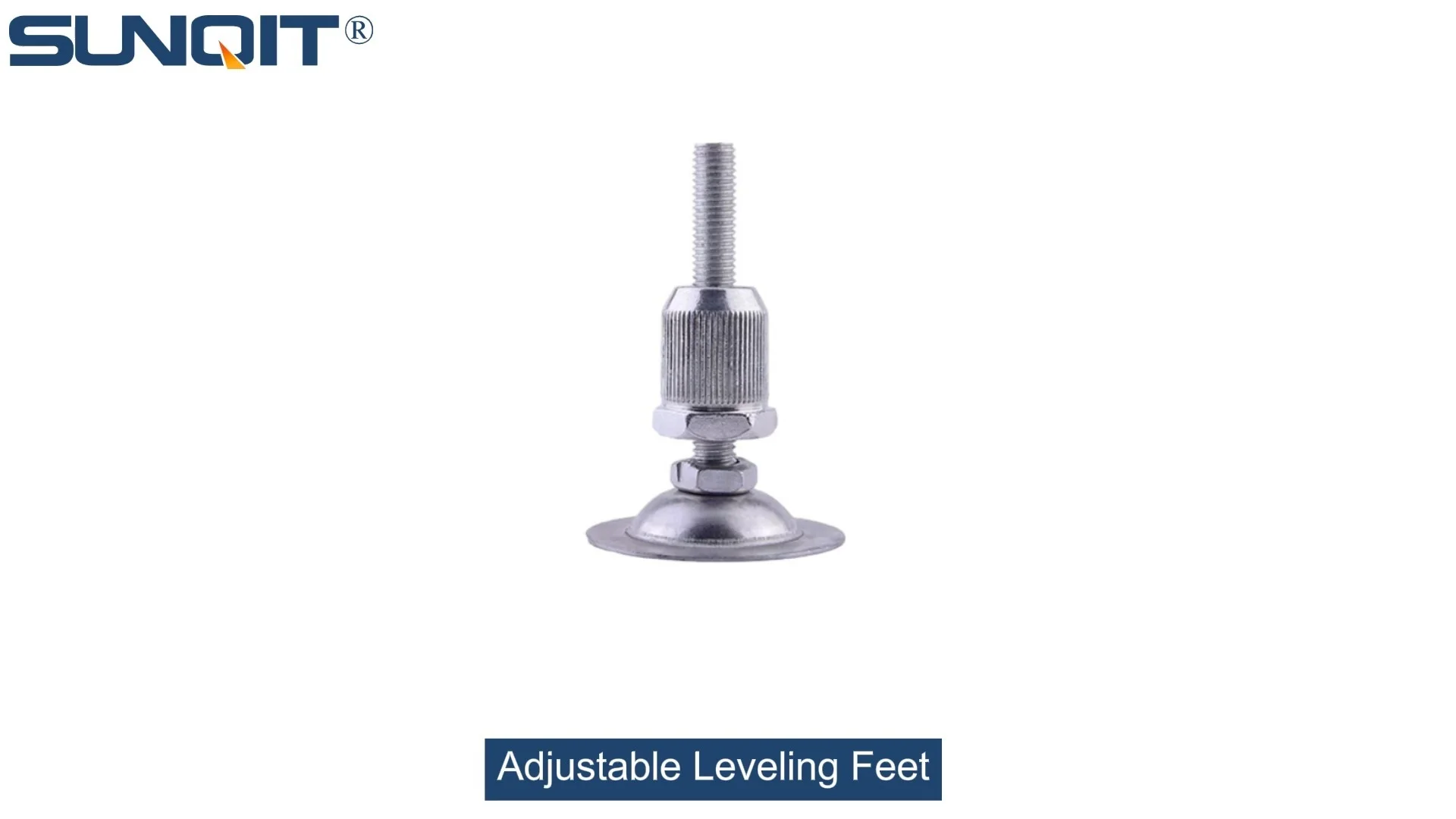
Adjustable leveling feet are designed to keep machines level when placed on uneven or sloped ground. Otherwise known as adjustable equipment feet, they are available to order in a wide variety of size and load capacity combinations.
Walk into any busy warehouse, manufacturing plant, or distribution center, and you'll feel it immediately—the hum of activity. Forklifts zip past, workers wheel carts loaded with components, and conveyor belts chug along, moving products from one station to the next. In these high-traffic areas, every piece of equipment has a job to do, and none work harder than the humble material rack. But here's the thing: with all that motion, vibration, and weight, even the sturdiest racks can start to wobble. And when a rack tilts, it's not just a nuisance—it's a safety risk, a productivity killer, and a threat to the materials it holds. Today, we're diving into one unsung hero that keeps these racks upright: adjustable leveling feet . Specifically, we'll explore how they protect one of the most common workhorses in these spaces: Material Rack B (3 row and 3 floor) .
Meet Material Rack B: The Workhorse of High-Traffic Zones
Before we talk about tilting, let's get to know the star of the show: Material Rack B. If you've spent time in a facility that deals with parts, components, or finished goods, you've probably seen it without even realizing it. Designed with three rows and three floors (hence the "3 row and 3 floor" label), this rack is a master of organization. Its open-frame structure makes it easy to load and unload items from any side, while the tiered design maximizes vertical space—critical in areas where floor space is at a premium.
What makes Material Rack B so popular in high-traffic areas? For starters, it's versatile. You'll find it holding everything from small electronic parts in an assembly line to bulky automotive components in a warehouse. Its modular design means it can be customized with dividers, bins, or even roller track accessories to let materials slide smoothly from one level to another. And unlike some heavier, fixed shelving units, Material Rack B is often built with mobility in mind—many models come with caster wheels to make repositioning a breeze when layouts change.
But here's the catch: that mobility, combined with the chaos of high-traffic zones, is exactly what puts Material Rack B at risk of tilting. Let's break down why.
The Tilt Threat: Why Racks Wobble in Busy Areas
Imagine this: It's 10 a.m. on a Tuesday, and the production floor is in full swing. A worker slams a cart into the side of Material Rack B while rushing to meet a deadline. A forklift rumbles past, vibrating the concrete floor. Meanwhile, the rack itself is loaded unevenly—heavier boxes on the top shelf, lighter ones below. By lunchtime, you notice it: the rack is leaning ever so slightly to one side. By the end of the day, that lean has grown, and now the top shelf's contents are inches from sliding off. What caused this?
Let's start with the obvious: uneven floors . Even in brand-new facilities, concrete floors aren't perfectly flat. Over time, foot traffic, heavy equipment, and temperature changes can create small dips, bumps, or cracks. A rack with fixed feet will sit unevenly on these surfaces, putting extra stress on one side. In high-traffic areas, where the floor takes more abuse, these imperfections are worse—and so is the wobble.
Then there's load distribution . Material Rack B's three floors are great for storage, but they're also a temptation to overload. Workers in a hurry might pile too much weight on one shelf or push items to the far end of a row, shifting the rack's center of gravity. Add in the vibration from nearby machinery or passing forklifts, and that off-balance weight becomes a recipe for tilting.
Mobility plays a role, too. Many Material Rack B units come with caster wheels to make moving them easier. But casters, by design, roll—and even with brakes, they can creep or shift under heavy loads or vibration. A rack that's supposed to stay put might slowly drift, leading to uneven contact with the floor and, you guessed it, tilting.
Finally, there's wear and tear . In high-traffic areas, racks take a beating. Casters get scuffed, feet get bent, and joints loosen over time. A small crack in a weld or a bent caster bracket might not seem like much, but it's enough to throw off the rack's stability. Before you know it, that once-sturdy rack is teetering.

Adjustable Leveling Feet: The Unsung Hero of Stability
So, what's the solution? Enter adjustable leveling feet —the quiet problem-solvers that keep racks like Material Rack B standing tall. At first glance, they might not look like much: small, often metal or rubber components that attach to the bottom of the rack's legs. But don't let their size fool you. These feet are engineered to fight tilting in three key ways: by adapting to uneven floors, distributing weight evenly, and locking the rack into place when mobility isn't needed.
Let's start with their design. Most adjustable leveling feet have a threaded stem that screws into the rack's leg, with a flat, non-slip base (often rubber or plastic) at the bottom. By twisting the stem, you can raise or lower the foot by fractions of an inch—just enough to compensate for those small dips or bumps in the floor. Some models even have a locking nut to keep the foot from unscrewing over time, which is crucial in high-vibration areas.
Materials matter, too. In industrial settings, you'll often find leveling feet made of stainless steel or zinc-plated steel for corrosion resistance (important if the area is prone to spills or humidity). The base might be rubber to grip the floor and dampen vibration, or plastic for a gentler touch on sensitive surfaces like polished concrete. Either way, the goal is simple: create a stable, non-slip connection between the rack and the ground.
How Do They Work with Casters?
You might be wondering: If Material Rack B has caster wheels for mobility, why add leveling feet? Great question. The magic is in the combination. Think of it like a car: you want wheels to move, but you need brakes to stop. Similarly, casters let you reposition the rack when needed, but once it's in place, you want it to stay put. Adjustable leveling feet solve this by acting as "brakes for stability." When you're ready to lock the rack down, you lower the leveling feet until they make contact with the floor, lifting the casters slightly off the ground (or at least taking pressure off them). This way, the rack is supported by the feet, not the rolling casters, eliminating drift and wobble.
Some racks even come with a hybrid design: two casters and two leveling feet, or four casters with leveling feet that can be engaged when stationary. This gives you the best of both worlds—mobility when you need it, stability when you don't.

The Science of Stability: How Leveling Feet Prevent Tilting
Now, let's get into the nitty-gritty: exactly how do adjustable leveling feet stop Material Rack B from tilting in high-traffic areas? It all comes down to three principles: load distribution, floor adaptability, and vibration dampening.
1. Load Distribution: Spreading the Weight
When a rack is uneven, most of its weight rests on just a few legs, creating "hot spots" of pressure. Over time, these hot spots can bend the legs, damage the floor, or cause the rack to tip. Adjustable leveling feet ensure that all four (or more) legs bear equal weight. By each foot to make contact with the floor, the rack's load is spread evenly across its base. Think of it like a table with wobbly legs: when you adjust the feet to level it, suddenly the table feels solid because the weight is no longer concentrated on one corner.
For Material Rack B, which often holds unevenly distributed loads (hello, three floors of varying weights), this even distribution is critical. A heavy box on the top shelf might pull the rack forward, but with properly adjusted feet, the entire base resists that pull, keeping the rack upright.
2. Floor Adaptability: Fighting the "Unlevel Floor" Battle
Remember those dips and bumps we talked about earlier? Adjustable leveling feet turn uneven floors from a problem into a non-issue. Let's say your warehouse floor has a ¼-inch dip near the loading dock—a common spot for wear and tear. Without leveling feet, the rack's leg in that dip would sit lower than the others, causing the rack to lean. But with leveling feet, you simply screw that foot down ¼ inch to meet the floor, bringing the rack back to level. It's like giving the rack its own set of "custom shoes" for the floor it's standing on.
This adaptability is especially important in older facilities, where floors might have settled over decades. In one plant I visited, the maintenance manager told me they'd tried everything to fix a tilting Material Rack B near a wall—shims, wooden blocks, even stacking quarters under the leg (yes, really). Nothing worked until they installed adjustable leveling feet. "It was like night and day," he said. "Now we just twist the feet and forget about it."
3. Vibration Dampening: Soaking Up the Chaos
High-traffic areas are noisy, and that noise comes with vibration—from forklifts, conveyor belts, even workers dropping tools. Over time, that vibration can loosen bolts, shift loads, and make a stable rack start to wobble. Adjustable leveling feet help here, too. The rubber or plastic bases act like mini shock absorbers, dampening the vibration before it reaches the rack. This not only prevents tilting but also extends the life of the rack itself by reducing wear on its joints and legs.

Comparing Solutions: Why Leveling Feet Beat the Alternatives
Adjustable leveling feet aren't the only way to stabilize a rack, but they're often the best. Let's compare them to other common solutions to see why:
| Solution | How It Works | Pros | Cons for High-Traffic Areas |
|---|---|---|---|
| Fixed Feet | Non-adjustable metal or plastic feet welded or bolted to the rack legs. | Simple, cheap, low maintenance. | Can't adapt to uneven floors; tilting is inevitable over time. |
| Shims/Wood Blocks | Sliding small pieces of metal, plastic, or wood under the legs to level the rack. | Quick, temporary fix for minor unevenness. | Shift or slip under vibration; not durable; can damage floors. |
| Casters Only | Relying solely on caster wheels with brakes to keep the rack stable. | Max mobility; easy to reposition. | Brakes can fail; casters creep under vibration; poor weight distribution. |
| Adjustable Leveling Feet | Threaded feet that raise/lower to level the rack and lock it in place. | Adapts to uneven floors; distributes weight evenly; dampens vibration; works with casters. | Slightly higher upfront cost than fixed feet; requires occasional adjustment. |
As the table shows, adjustable leveling feet offer the best balance of adaptability, durability, and stability—especially in high-traffic areas where floors are uneven, loads are heavy, and vibration is constant. Shims are a band-aid, fixed feet are too rigid, and casters alone can't handle the chaos. Leveling feet, on the other hand, are built to thrive in that chaos.
Installation and Maintenance: Getting the Most Out of Your Leveling Feet
Okay, so you've decided to add adjustable leveling feet to your Material Rack B—great choice! But to make sure they work as well as they should, you need to install and maintain them properly. Here's how:
Installation Tips:
1.
Start with a level baseline.
Before installing the feet, check the rack for existing damage (bent legs, loose joints) that might affect stability. Fix those first.
2.
Adjust on a flat surface (if possible).
If you're installing the feet yourself, set the rack on a level floor first to get a feel for how much adjustment each foot needs. Then, move it to its final location and fine-tune.
3.
Use a level tool.
Don't rely on "eyeballing" it. Place a bubble level on the top shelf of Material Rack B and adjust each foot until the bubble is centered. This ensures the rack is level from front to back and side to side.
4.
Lock the nuts.
Once adjusted, tighten the locking nut (if your feet have one) against the rack leg to prevent the foot from unscrewing due to vibration.
5.
Pair with caster brakes.
If your rack has casters, engage the brakes
after
adjusting the leveling feet. This adds an extra layer of security.
Maintenance Tips:
1.
Check monthly.
In high-traffic areas, vibration can loosen even locked nuts. Once a month, grab a wrench and make sure the feet are still tight and the rack is level.
2.
Clean the bases.
Dirt, debris, or oil on the foot bases can reduce grip. Wipe them down occasionally with a damp cloth.
3.
replace worn parts.
If the rubber base starts to crack or the threads get stripped, replace the foot immediately. A damaged foot is worse than no foot at all.
4.
Re-adjust after moving.
If you use the casters to reposition the rack, always re-level the feet once it's back in place. Floors can vary from one spot to another!
Real-World Impact: When Leveling Feet Saved the Day
To put this all in perspective, let's look at a real scenario. A mid-sized electronics manufacturer in Ohio was struggling with a recurring problem: their Material Rack B, located near the assembly line (a high-traffic area with constant foot traffic and nearby conveyor belts), kept tilting. The rack held small circuit boards and delicate components, and twice in one month, boxes had slid off the top shelf, damaging parts and causing delays.
The maintenance team first tried shims, but they kept slipping. Then they replaced the casters with heavier-duty ones, but the rack still wobbled. Finally, they installed adjustable leveling feet. Here's what happened next:
- Immediate stability: After adjusting the feet with a level tool, the rack stopped wobbling. Even when workers bumped into it with carts, it stayed put.
- Fewer damaged parts: Over the next six months, there were zero incidents of components sliding off the rack.
- Happy workers: The assembly line team reported feeling more confident loading and unloading the rack, knowing it wouldn't tip. Productivity even ticked up slightly, as they spent less time worrying about stability and more time focusing on their tasks.
The best part? The total cost for four adjustable leveling feet was less than $50—far cheaper than replacing damaged components or losing production time. As the plant manager put it: "We should have installed these years ago. It's one of those small investments that makes a huge difference."
Conclusion: Invest in Stability, Invest in Success
In the chaos of high-traffic areas, it's easy to overlook the small components that keep everything running smoothly. But adjustable leveling feet are more than just "small components"—they're the foundation of stability for racks like Material Rack B (3 row and 3 floor) . By adapting to uneven floors, distributing weight evenly, and dampening vibration, they prevent tilting, protect materials, and keep workers safe.
So, the next time you walk through a busy facility, take a second look at the racks. Chances are, the ones that look the sturdiest—even in the thick of the action—have adjustable leveling feet doing their job. And if you're responsible for maintaining equipment in such a space, remember this: when it comes to preventing tilting, it's not about overbuilding the rack itself. It's about giving it the right tools to stand its ground. And those tools? They're small, they're simple, and they're called adjustable leveling feet.
Stability isn't just a feature—it's the backbone of a productive, safe workspace. Don't let tilting racks slow you down.