- Company Articles
- Products and Technology
- Technology Sharing
- How Adjustable Leveling Feet Support Sustainable Manufacturing (Reusable Design)

How Adjustable Leveling Feet Support Sustainable Manufacturing (Reusable Design)
Related Product
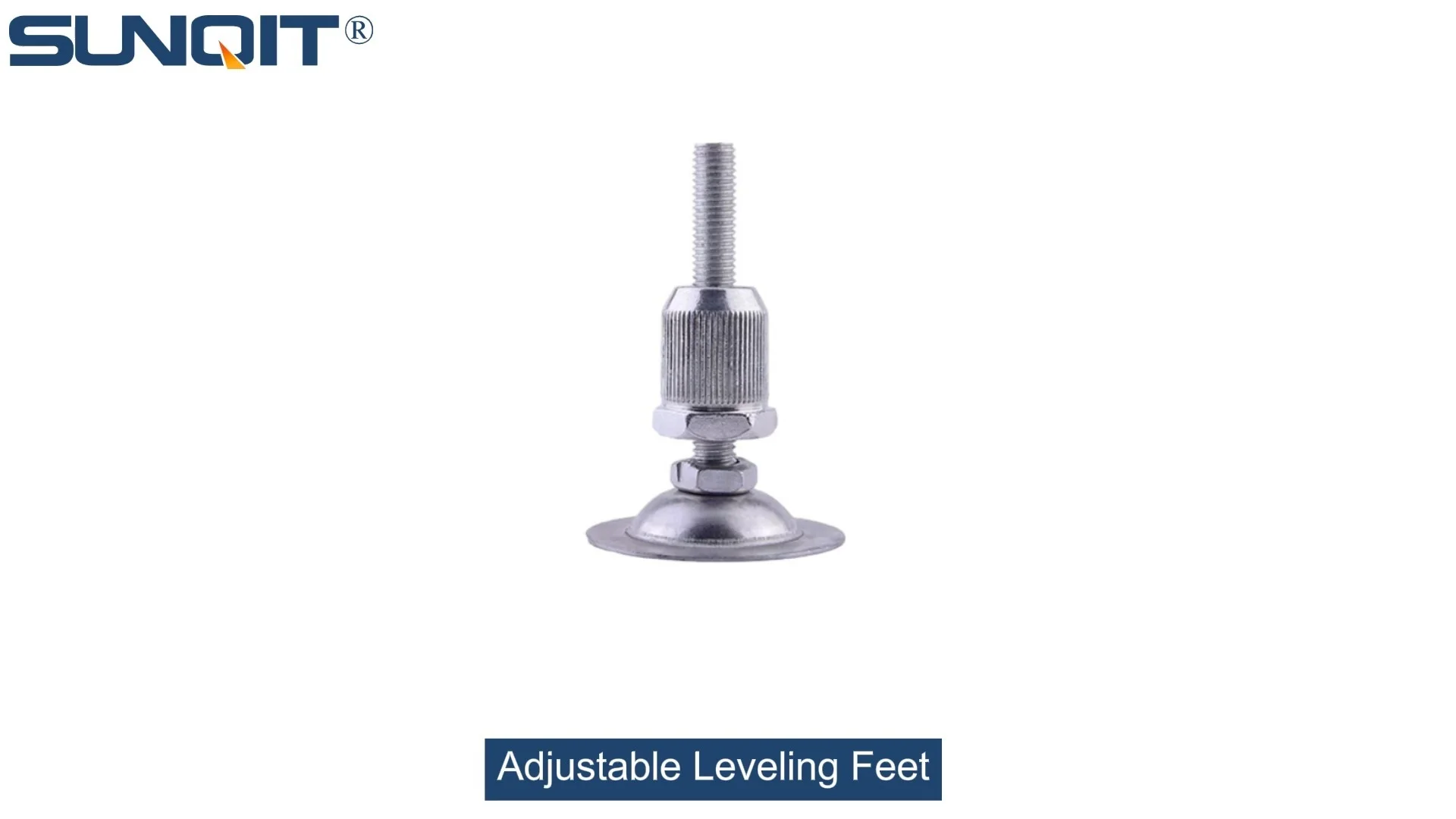
Adjustable Leveling Feet
Adjustable leveling feet are designed to keep machines level when placed on uneven or sloped ground. Otherwise known as adjustable equipment feet, they are available to order in a wide variety of size and load capacity combinations.
In today's fast-paced manufacturing landscape, sustainability isn't just a buzzword—it's a critical business imperative. As companies strive to reduce their environmental footprint, cut costs, and meet evolving regulatory demands, the focus has shifted toward reusable design and lean principles. At the heart of this transformation lies a humble yet indispensable component: adjustable leveling feet. These unassuming parts play a quiet but powerful role in creating flexible, durable, and eco-friendly production systems. Let's dive into how adjustable leveling feet are reshaping sustainable manufacturing, particularly when integrated with lean systems, aluminum profiles, and workbenches.
The Rise of Sustainable Manufacturing: Why Reusability Matters
Sustainable manufacturing is about more than just recycling—it's about reimagining how products are designed, built, and used to minimize waste from the start. Traditional manufacturing setups often rely on fixed, single-use components that end up in landfills when production lines change or equipment is upgraded. This approach not only harms the planet but also drains company resources, as constant replacements eat into budgets and disrupt operations.
Reusable design flips this script. By prioritizing components that can be repurposed, adjusted, or reconfigured, manufacturers reduce their reliance on raw materials and cut down on waste. Think of it as building with Lego blocks: instead of throwing away an entire structure when you need a new shape, you simply rearrange the pieces. This mindset is at the core of lean systems, which emphasize efficiency, waste reduction, and continuous improvement. And in this Lego-like world of manufacturing, adjustable leveling feet are the unsung heroes that hold everything together—literally and figuratively.
What Are Adjustable Leveling Feet, and Why Do They Matter?
At first glance, adjustable leveling feet might seem like simple hardware. They're the small, often threaded components attached to the bottom of workbenches, conveyor systems, material racks, and machinery to stabilize them on uneven surfaces. But their simplicity is deceptive. These feet are engineered to solve a common manufacturing headache: uneven floors. In any factory or workshop, floors rarely stay perfectly level over time. Heavy machinery, temperature changes, and regular wear and tear can create dips, bumps, or slopes that throw off equipment alignment. A wobbly workbench, for example, can lead to inaccuracies in assembly, slower production times, and even safety hazards.
Adjustable leveling feet fix this by allowing operators to tweak the height of each foot individually. Most designs feature a threaded rod that screws into a base, with a rotating footpad that can be turned to raise or lower the component. Some include anti-slip materials or suction cups to enhance stability, while others are made from durable metals like aluminum or stainless steel to withstand heavy loads. But beyond their functional role, it's their reusable nature that makes them a cornerstone of sustainable manufacturing.
The Sustainability Superpowers of Adjustable Leveling Feet
So, how exactly do these small components contribute to sustainability? Let's break it down into three key areas: waste reduction, extended equipment lifespan, and material efficiency.
1. Waste Reduction Through Reusability
Traditional fixed feet or shims (small pieces of wood, plastic, or metal used to prop up uneven equipment) are often single-use. When a workbench is moved, a production line is reconfigured, or a machine is replaced, those shims or fixed feet are typically discarded. Over time, this adds up to significant waste. Adjustable leveling feet, by contrast, are designed to be detached, reattached, and reused across different pieces of equipment. A foot that was once stabilizing a workbench can be unscrewed and repurposed on a material rack, a turnover trolley, or a conveyor system. This reusability cuts down on the need for constant replacements, reducing both material consumption and landfill waste.
2. Extending Equipment Lifespan
Stability isn't just about safety and efficiency—it's also about protecting equipment. When machinery or workbenches wobble, they experience unnecessary stress and vibration, which can lead to premature wear and tear. A misaligned conveyor belt, for example, might fray faster, or a workbench with uneven legs could develop cracks in its frame. By keeping equipment stable, adjustable leveling feet reduce this stress, helping machines and workstations last longer. The longer a piece of equipment remains functional, the fewer resources are spent on manufacturing replacements—a win for both the environment and the bottom line.
3. Material Efficiency and Recyclability
Many adjustable leveling feet are made from aluminum or aluminum alloys, which are not only lightweight and strong but also highly recyclable. Unlike plastic feet, which can degrade over time and release harmful chemicals, aluminum feet can be melted down and repurposed at the end of their life cycle with minimal loss of quality. Additionally, aluminum profiles (another key component in modern manufacturing setups) often pair seamlessly with these feet. The combination of aluminum leveling feet and aluminum profile workbenches creates a system where nearly every part is recyclable, closing the loop on material waste.

Integrating Adjustable Leveling Feet with Lean Systems: A Match Made in Manufacturing Heaven
Lean systems are all about eliminating waste—whether it's time, materials, or energy. They focus on creating value for the customer by streamlining processes, reducing inefficiencies, and fostering continuous improvement. Adjustable leveling feet align perfectly with these goals, making them a natural fit for lean manufacturing environments.
Consider a typical lean production line. Workstations are arranged in a continuous flow to minimize movement, tools are placed within easy reach to reduce wasted motion, and inventory is kept low to avoid overproduction. Now, imagine that one of these workstations is slightly uneven. Without adjustable leveling feet, operators might spend valuable time searching for shims, or the wobble could slow down assembly times. In a lean system, every second counts, and even small delays can ripple through the entire line.
Adjustable leveling feet eliminate this waste by allowing quick, tool-free adjustments. An operator can stabilize a workstation in minutes, ensuring that production stays on track. But their contribution to lean systems goes beyond speed. Because they're reusable, they support the lean principle of "flexibility." In a dynamic manufacturing environment, production lines are often reconfigured to accommodate new products, higher demand, or changing customer needs. With adjustable leveling feet, workbenches, conveyors, and racks can be moved and restabilized without needing new hardware. This flexibility reduces the lead time for reconfigurations and cuts down on the cost of new components—both of which are central to lean thinking.
Take, for example, a electronics manufacturer that produces both smartphones and tablets. During peak smartphone season, the production line is optimized for small, delicate components. When tablet production ramps up, the line needs to be reconfigured for larger parts and different assembly steps. With adjustable leveling feet, the workbenches and material racks can be moved, adjusted, and restabilized in hours instead of days. There's no need to buy new feet or shims, and the old setup's feet can be reused on the new configuration. This not only saves time and money but also aligns with the lean commitment to minimizing waste.

Aluminum Profiles and Adjustable Leveling Feet: A Sustainable Partnership
Aluminum profiles have revolutionized manufacturing with their lightweight strength, modularity, and recyclability. These extruded aluminum beams, with their T-slot designs, allow for easy assembly of workbenches, frames, and structures without welding or drilling. And when paired with adjustable leveling feet, they create a system that's both sustainable and highly adaptable.
Aluminum profiles are inherently eco-friendly. Aluminum is 100% recyclable, and recycling it uses just 5% of the energy required to produce new aluminum. This makes aluminum profile workbenches and racks a greener alternative to those made from steel or plastic. But their sustainability is amplified when combined with adjustable leveling feet. Here's how:
Modular Design = Less Waste
Aluminum profiles are designed to be cut to length and connected with brackets, making them easy to customize. When a workbench built with aluminum profiles needs to be resized or repurposed, the profiles can be disassembled, cut down, and reassembled into a new shape. Adjustable leveling feet fit into this modularity perfectly. Since they attach to the bottom of the profiles via threaded holes or brackets, they can be removed and reused when the profile is repurposed. This means that even as the structure changes, the feet live on, reducing the need for new hardware.
Durability = Longevity
Aluminum profiles are resistant to corrosion, rust, and wear, which means they last for decades. When paired with adjustable leveling feet made from the same durable aluminum, the entire system becomes built to last. A workbench that might have been discarded after a few years due to instability can now be kept in service for 10, 15, or even 20 years—simply by readjusting the feet or swapping them out for new ones (which, again, are recyclable). This longevity drastically reduces the frequency of replacements, cutting down on material waste and the carbon footprint associated with manufacturing new equipment.
Weight Efficiency = Lower Energy Use
Aluminum is lighter than steel, which makes aluminum profile structures easier to move and reconfigure. When combined with lightweight adjustable leveling feet, the overall weight of the system is reduced. This lower weight means less energy is needed to transport or reposition equipment, whether it's within the factory or during shipping. Over time, these energy savings add up, contributing to a more sustainable operation.

Workbenches: The Perfect Canvas for Adjustable Leveling Feet
If adjustable leveling feet are the unsung heroes of sustainable manufacturing, then workbenches are their primary stage. Workbenches are the heart of any production line—where assembly, testing, packaging, and quality control happen. A stable, well-adjusted workbench can boost productivity, reduce errors, and improve ergonomics. And adjustable leveling feet are key to making that happen.
Consider a typical assembly workbench in an automotive parts plant. It holds tools, components, and sometimes heavy machinery like drills or presses. If the bench is uneven, the tools might slide around, the components could misalign during assembly, and the operator might strain to compensate for the wobble. Over time, this can lead to increased errors, higher fatigue, and even injuries. Adjustable leveling feet solve this by ensuring the bench stays level, regardless of the floor condition.
But again, it's the reusability that makes them sustainable. A workbench might start its life on the automotive line, but after a few years, it could be moved to a packaging area, then to a quality control station, and finally to a maintenance workshop. At each stage, the adjustable leveling feet can be readjusted to fit the new floor and the new use. There's no need to buy a new bench or new feet—just a quick twist of the leveling mechanism, and the bench is ready for its next role. This kind of adaptability is crucial for manufacturers looking to maximize the value of their assets and minimize waste.
Some workbenches, like the "Workbench E (single deck-without caster)" mentioned in manufacturing catalogs, are specifically designed with modularity in mind. These benches often come with pre-drilled holes for easy installation of adjustable leveling feet, making it simple to swap out feet as needed. Whether the bench is used with casters for mobility or with leveling feet for stability, the hardware is designed to be interchangeable—another nod to reusable design.
A Closer Look: Traditional vs. Adjustable Leveling Feet (The Numbers Don't Lie)
To truly understand the impact of adjustable leveling feet, let's compare them to traditional alternatives like fixed feet and shims. The table below breaks down the key differences in terms of sustainability, cost, and efficiency:
| Feature | Traditional Fixed Feet | Shims (Wood/Plastic/Metal) | Adjustable Leveling Feet |
|---|---|---|---|
| Reusability | Low. Typically permanently attached to equipment; hard to remove and reuse. | Very low. Often break or become misshapen; rarely reused after removal. | High. Designed to be detached, adjusted, and reused across multiple equipment types. |
| Waste Generation | High. Discarded when equipment is replaced or moved. | Very high. Single-use; generate ongoing waste with every reconfiguration. | Low. Minimal waste, as they're reused repeatedly; recyclable at end of life. |
| Cost Over Time | High. Need to purchase new feet with each equipment replacement. | Very high. Ongoing costs for new shims with every reconfiguration. | Low. One-time purchase; reused across multiple equipment cycles. |
| Installation Time | Medium. Often require tools and precise alignment during installation. | High. Time-consuming to find, cut, and test shims for proper fit. | Low. Tool-free adjustments; can be stabilized in minutes. |
| Stability | Medium. Fixed height; can't adapt to floor changes over time. | Low. Prone to slipping or compressing; may need frequent readjustment. | High. Adjustable to floor conditions; many designs include anti-slip features. |
| Environmental Impact | High. Frequent replacement leads to more manufacturing and disposal emissions. | Very High. Constant production and disposal of single-use materials. | Low. Reusability reduces manufacturing demand; recyclable materials lower disposal impact. |
The data speaks for itself. Adjustable leveling feet outperform traditional alternatives in nearly every category, especially when it comes to sustainability and long-term cost savings. For manufacturers committed to reducing waste and improving efficiency, the choice is clear.
Real-World Impact: How One Manufacturer Cut Waste by 40% with Adjustable Leveling Feet
To put these benefits into perspective, let's look at a hypothetical but realistic case study. Imagine a mid-sized electronics manufacturer that produces circuit boards for medical devices. The company has a 50,000-square-foot facility with 20 workbenches, 10 material racks, and 5 conveyor systems. Like many manufacturers, they've struggled with uneven floors and frequent production line reconfigurations to keep up with changing product demands.
Before switching to adjustable leveling feet, the company relied on wooden shims and fixed steel feet. Every time they reconfigured a production line (about 4 times per year), they discarded approximately 50 shims and 10 fixed feet. Over the course of a year, this added up to 200 shims and 40 feet—all of which ended up in landfills. The cost of these shims and feet, plus the labor time spent replacing them, totaled around $12,000 annually.
In 2023, the company decided to invest in adjustable leveling feet for all their workbenches, racks, and conveyors. The initial cost was $8,000 (about $400 per workstation), but the results were immediate. During their first production line reconfiguration, they reused 100% of the leveling feet. No shims were needed, and there was no waste to dispose of. Labor time for reconfiguration dropped from 8 hours to 2 hours, as operators no longer had to hunt for shims or drill new holes for fixed feet.
By the end of the year, the company had saved $6,000 in material costs (shims and fixed feet) and $4,000 in labor costs. More importantly, they reduced their landfill waste by over 40% for equipment hardware. The adjustable feet also improved workstation stability, leading to a 15% reduction in assembly errors and a 5% increase in production speed. Two years later, they're still using the same leveling feet, and they've expanded their use to new equipment, further compounding the savings.
This case study isn't an anomaly. Manufacturers across industries—from automotive to food processing—are reporting similar results after adopting adjustable leveling feet. The key takeaway? Small changes in hardware can lead to big wins for sustainability and the bottom line.
The Future of Adjustable Leveling Feet: Innovation in Sustainable Design
As manufacturing continues to evolve, so too will the design of adjustable leveling feet. Innovations in materials, technology, and engineering are making these components even more sustainable and efficient. Here are a few trends to watch:
1. Smart Leveling Feet with IoT Integration
Imagine leveling feet equipped with sensors that monitor stability in real time. If a workstation starts to wobble due to floor shifts or component wear, the sensor could send an alert to maintenance staff, allowing for proactive adjustments. This not only prevents downtime but also extends the life of the feet by catching issues early. Some prototypes even include Bluetooth connectivity, letting operators adjust feet via a smartphone app—eliminating the need for manual tools.
2. Bio-Based and Recycled Materials
While aluminum and stainless steel are already recyclable, researchers are exploring bio-based plastics and recycled composites for leveling feet. These materials could reduce reliance on virgin metals and further lower the carbon footprint of manufacturing hardware. For example, feet made from recycled plastic reinforced with hemp fibers are being tested for light-duty applications, offering a sustainable alternative to traditional plastics.
3. Modular Footpads for Customization
Some manufacturers are developing leveling feet with interchangeable footpads. Need more grip on a concrete floor? Swap in a rubber pad. Working on a sensitive surface like a lab floor? Use a soft, non-marring pad. This modularity ensures that the same leveling foot can be used in multiple environments, increasing reusability and reducing the need for specialized feet.
Conclusion: Small Parts, Big Impact
In the grand scheme of manufacturing, adjustable leveling feet might not get the same attention as solar-powered factories or electric delivery trucks. But their role in sustainable manufacturing is undeniable. By enabling reusability, reducing waste, extending equipment lifespan, and integrating seamlessly with lean systems and aluminum profiles, these small components are helping companies build a more sustainable future—one stable workstation at a time.
As manufacturers continue to prioritize sustainability, the demand for reusable, efficient hardware like adjustable leveling feet will only grow. They're a reminder that sustainability doesn't always require big, expensive overhauls. Sometimes, the most impactful changes come from reimagining the small, everyday components that keep our factories running. So the next time you walk through a workshop or production line, take a moment to look down. Those feet under the workbench? They're not just holding up the equipment—they're holding up the future of sustainable manufacturing.