- Company Articles
- Products and Technology
- Application Cases
- How Aluminum Guide Rail B Supports "Reusable Systems" in Lean Manufacturing

How Aluminum Guide Rail B Supports "Reusable Systems" in Lean Manufacturing
Related Product
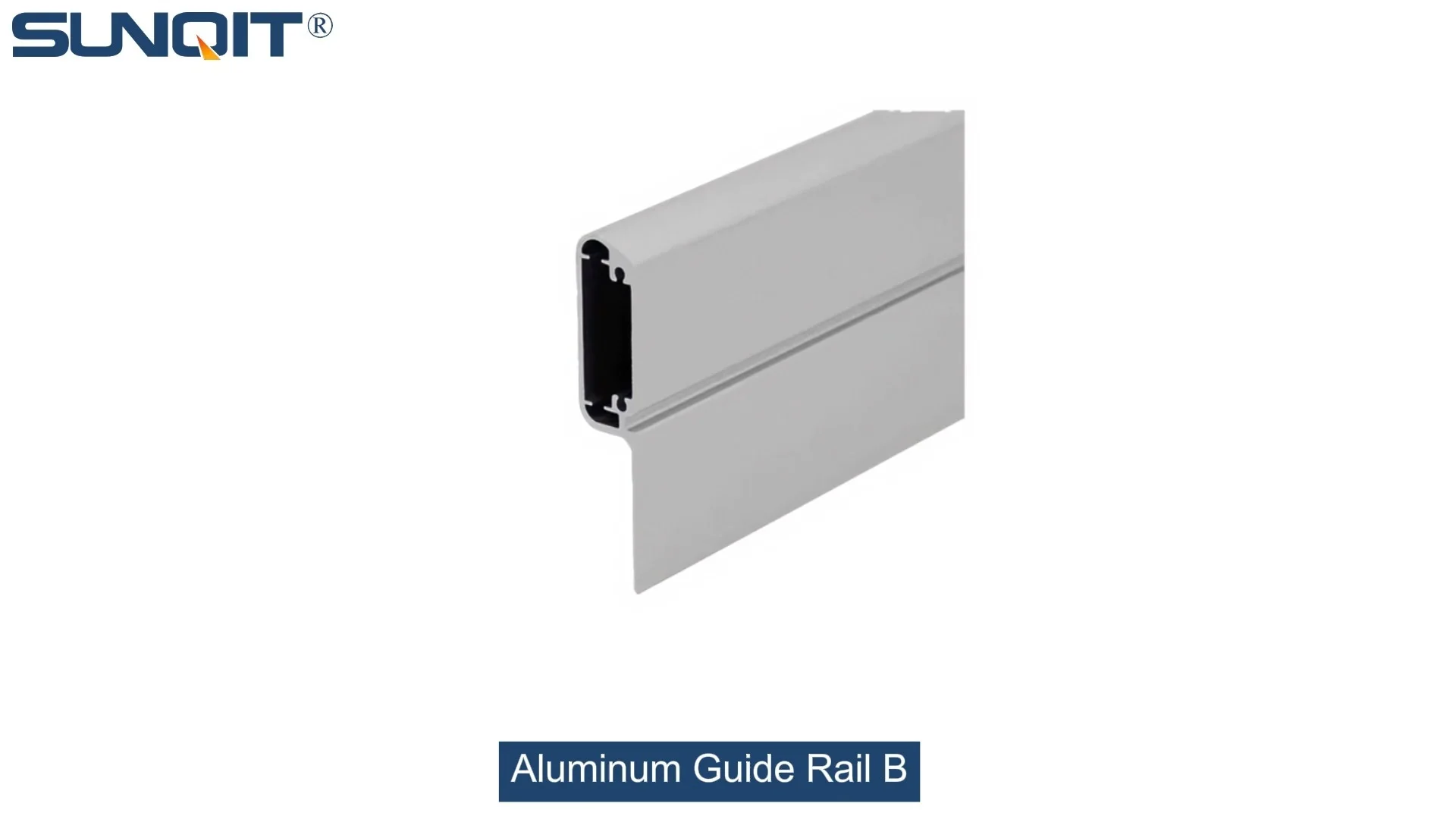
Aluminum Guide Rail B
The aluminum guide rails hold the transport goods securely on the roller track. For installation, the guide rails are simply pushed over the roller tracks.To protect sensitive products.
The unsung hero behind flexible, sustainable production lines—where adaptability meets durability to redefine manufacturing efficiency
In the fast-paced world of modern manufacturing, where every second counts and waste is the enemy, there's a quiet revolution happening on factory floors around the globe. It's not about flashy robots or cutting-edge AI (though those have their place). Instead, it's about the foundational pieces—the humble components that hold production lines together, yet remain flexible enough to evolve with changing needs. Today, we're shining a light on one such unsung hero: Aluminum Guide Rail B . This unassuming piece of aluminum extrusion might not grab headlines, but in the realm of lean manufacturing, it's the backbone of "reusable systems" that save time, cut costs, and reduce environmental impact.
Imagine a production line that doesn't just work for today's needs, but can be reimagined tomorrow. A system where rearranging a workstation or scaling up a flow rack doesn't mean tearing everything down and starting over. Where sustainability isn't an afterthought, but built into every joint, rail, and connection. That's the promise of lean manufacturing—and Aluminum Guide Rail B is the key that unlocks it. Let's dive into how this simple yet ingenious component is transforming industries from 3C assembly to medical device manufacturing, one adjustable, reusable section at a time.
What Makes Aluminum Guide Rail B Different? More Than Just Metal—It's a Philosophy
At first glance, Aluminum Guide Rail B might look like any other metal rail. But pick it up, examine its design, and you'll quickly realize it's engineered with a purpose: to make "reusability" not just possible, but effortless. Let's break down its standout features, and why they matter in the context of lean manufacturing.
Lightweight Durability: The Best of Both Worlds
Aluminum has long been a favorite in manufacturing for its unique blend of strength and lightness, and Guide Rail B takes full advantage of this. Unlike heavy steel rails that require forklifts to move or risk warping under stress, Aluminum Guide Rail B can be handled by a single worker during reconfiguration. This might sound like a small detail, but on a factory floor where production lines are constantly adjusted to meet shifting demand, that lightness translates to faster changeovers and reduced labor costs .
But don't mistake lightness for fragility. Made from high-grade aluminum extrusion, this rail is built to withstand the daily grind of manufacturing. It resists corrosion, doesn't rust like steel, and holds up under repeated use—whether it's guiding components down a flow rack or supporting the sliding mechanisms of a lean pipe workbench. In fact, manufacturers report Guide Rail B lasting 5-7 years in high-traffic areas, even with minimal maintenance. That's a lifespan that outperforms many plastic or low-grade metal alternatives, which often crack or degrade after just a year or two.
Modular Design: Snap, Adjust, Repeat
The real magic of Aluminum Guide Rail B lies in its modularity. Designed to work seamlessly with aluminum pipe accessories like connectors, brackets, and end stops, it eliminates the need for welding, drilling, or specialized tools during installation. Want to extend a flow rack by 3 feet? Simply slide another section of Guide Rail B into place and secure it with a few bolts. Need to angle a workstation for better ergonomics? Swap out a straight rail for a curved section (yes, they're compatible!) without replacing the entire frame.
Real-World Example: A 3C electronics manufacturer in Shenzhen recently needed to shift production from smartphone chargers to wireless earbuds—a change that required narrower workstations and tighter flow racks. By using Aluminum Guide Rail B, their team reconfigured 12 workstations in just 8 hours, compared to the 3 days it would have taken with their old steel rail system. The secret? The rails snapped into existing aluminum profiles, and accessories like roller track placon mounts adjusted to the new layout without custom fabrication.
This modularity also means Guide Rail B plays well with other lean components. Pair it with a lean pipe workbench, and it becomes a smooth glide path for tools. Integrate it into a conveyor system, and it ensures products move evenly without jamming. Even in complex setups—like ESD workstations for sensitive electronics—it maintains consistency, grounding static safely while keeping materials flowing. It's not just a rail; it's a connector that turns individual parts into a cohesive, adaptable system.
From "One-and-Done" to "Reuse-and-Refine": How Guide Rail B Enables Reusable Systems
Lean manufacturing isn't just about efficiency—it's about eliminating waste in all forms: time, materials, labor, and even environmental impact. Traditional production systems often fall into the "one-and-done" trap: built for a specific product, then scrapped when that product is phased out. But with Aluminum Guide Rail B at the core, manufacturers are shifting to "reuse-and-refine" models that align with the lean principle of kaizen (continuous improvement). Here's how it works.
Minimizing Material Waste: Less Scrap, More Savings
Every year, manufacturing facilities worldwide discard tons of metal rails, brackets, and frames because they can't be repurposed for new projects. Steel rails get bent during removal, plastic components crack, and custom-fabricated parts don't fit new layouts. Aluminum Guide Rail B changes this equation. Since it's designed to be disassembled and reassembled repeatedly, it rarely ends up in landfills. Instead, it's repurposed: a rail from a decommissioned automotive line might find new life in a medical device flow rack, or a section from a warehouse conveyor could become part of a lean pipe workbench in a small workshop.
The numbers speak for themselves: Companies using reusable aluminum systems report a 40-60% reduction in material waste compared to traditional setups. For a mid-sized manufacturer, that translates to saving tens of thousands of dollars annually on replacement parts alone. And when a rail does reach the end of its life (after decades of use!), aluminum is 100% recyclable—unlike plastic rails, which often end up as microplastics or emit toxic fumes when incinerated.
Adapting to Demand: No More "Overbuilding" for the Future
One of the biggest challenges in manufacturing is predicting demand. Build a production line too small, and you'll bottleneck during peak seasons. Build it too large, and you're wasting space and resources during lulls. Aluminum Guide Rail B solves this with its "right-sized" flexibility. Instead of overbuilding a system to accommodate hypothetical future needs, manufacturers can start small and scale incrementally.
Take a medical equipment maker that produces surgical tools. Their demand spikes during flu season but drops in the summer. With Guide Rail B, they can add temporary flow rack sections during peak times (using rails stored in their warehouse) and remove them in slower months—no need to invest in permanent infrastructure that sits idle half the year. This "just-in-time" approach to system design aligns perfectly with lean principles, ensuring every component earns its keep.
"We used to think of production lines as 'set it and forget it'—but with consumer demands changing so fast, that's a death sentence. Aluminum Guide Rail B lets us be agile. Last quarter, we switched from making 200 units/day to 500 units/day by reusing rails from our old line. No new purchases, no waste—just smart, sustainable adaptation."
— Production Manager, Medical Device Firm, Suzhou

In Action: Guide Rail B's Role in Key Lean Systems
To truly understand Aluminum Guide Rail B's impact, let's look at how it integrates with three critical lean manufacturing systems: lean pipe workbenches , flow racks , and conveyors . In each case, it's not just a component—it's the enabler that turns static structures into dynamic, reusable assets.
1. Lean Pipe Workbenches: Ergonomics Meets Adaptability
A lean pipe workbench is the heart of any assembly line, and Aluminum Guide Rail B makes it work smarter , not harder. Mounted along the edges or under the work surface, the rail serves as a track for tool holders, part bins, or even sliding trays. For example, in a 3C assembly workstation, Guide Rail B can support a sliding ESD mat (to prevent static damage to circuit boards) that adjusts to the worker's arm reach—no more stretching or straining.
But the real value comes when the workbench needs to evolve. Suppose a company shifts from assembling laptops (which require wide work surfaces) to smartwatches (which need more storage for tiny components). With traditional wooden or steel workbenches, this would mean buying new furniture. With Aluminum Guide Rail B, the same bench can be retrofitted: add dividers along the rail to create bins, or mount a second tier of rails for overhead tool storage. It's like having a workbench that grows with your needs .
2. Flow Racks: Keeping Materials Moving—Efficiently
Flow racks are all about "first in, first out" (FIFO) material handling, ensuring components move smoothly from receiving to assembly. Aluminum Guide Rail B is the secret to their reliability. Unlike plastic rollers that wear out or get stuck with debris, the rail's smooth aluminum surface (often paired with stainless steel swivel roller balls) ensures consistent, low-friction movement—even for heavy parts like automotive brackets or medical device casings.
What sets Guide Rail B apart here is its adjustability. Need to slow down the flow of fragile components? Add friction pads along the rail (no tools required). Want to separate different part sizes? Snap in dividers using aluminum profile accessories. A warehouse in Guangzhou recently reported a 22% reduction in material jams after switching to Guide Rail B in their flow racks—all because the rail's consistent width and smooth finish eliminated the "sticking points" that plagued their old system.
3. Conveyors: The Backbone of Automated Efficiency
In automated lines, conveyors are the arteries that keep production flowing. Aluminum Guide Rail B integrates seamlessly with roller conveyors, belt conveyors, and even chain conveyors, providing a stable track for products while reducing noise and vibration. Its lightweight design also cuts down on the energy needed to power conveyor motors—a small but cumulative saving that adds up to lower utility bills over time.
For example, a consumer electronics manufacturer in Dongguan uses Guide Rail B in their belt conveyors to guide smartphone cases through quality control. When they introduced a new, larger case model, they simply adjusted the rail spacing using quick-release brackets—no need to replace the entire conveyor bed. The result? A 98% uptime during the transition, with zero downtime for retooling.
| System | Role of Aluminum Guide Rail B | Key Benefit for Reusability |
|---|---|---|
| Lean Pipe Workbench | Track for tool holders, sliding trays, and dividers | Retrofit without replacing the entire bench |
| Flow Rack | Low-friction surface for FIFO material flow | Adjust speed/friction without new rollers |
| Conveyor | Stable guide for product alignment | Resize for new product dimensions in minutes |

Beyond the Factory Floor: Sustainability and the Bottom Line
In today's manufacturing landscape, sustainability isn't just a buzzword—it's a business imperative. Customers, regulators, and investors are increasingly demanding eco-friendly practices, and Aluminum Guide Rail B delivers on this front in ways that go beyond just reusability.
First, aluminum is one of the most recyclable materials on the planet. When a Guide Rail B finally reaches the end of its lifespan (after decades of use), it can be melted down and repurposed into new rails, profiles, or even other products—with 95% of its original energy retained. Compare that to steel, which loses strength when recycled, or plastic, which often ends up in landfills. For companies aiming to reduce their carbon footprint, this is a tangible win.
Second, the rail's durability and reusability directly cut down on waste. A single section of Guide Rail B can replace multiple disposable plastic rails over its lifetime, reducing the need for raw material extraction and manufacturing. According to the Aluminum Association, using recycled aluminum saves 95% of the energy required to produce new aluminum—meaning every reused Guide Rail B section is a step toward lower emissions.
The Numbers Speak: A mid-sized manufacturer using Aluminum Guide Rail B across 50 workstations and 20 flow racks can expect to:
- Reduce material waste by ~1,200 kg/year (compared to plastic rails)
- Cut energy costs for production line reconfigurations by 35%
- Lower carbon emissions by ~2.3 tons/year (from reduced manufacturing and transportation of new parts)
But sustainability isn't just about the environment—it's about the bottom line. Companies that adopt reusable systems like those enabled by Aluminum Guide Rail B often qualify for green manufacturing grants or tax incentives. Plus, they're better positioned to meet customer demands for eco-friendly products—a growing market segment that's projected to reach $1.5 trillion globally by 2027.

Why Choose Aluminum Guide Rail B? It's About More Than a Rail
At the end of the day, Aluminum Guide Rail B is more than just a piece of metal. It's a philosophy in action —a commitment to lean principles, sustainability, and adaptability. In a manufacturing world where change is the only constant, it's the difference between being left behind and leading the pack.
Whether you're a small workshop looking to optimize your first lean line or a multinational corporation aiming to scale sustainably, Guide Rail B delivers: faster changeovers , lower costs , less waste , and a production system that grows with your business. It's not just an investment in a component—it's an investment in the future of manufacturing.
So the next time you walk a factory floor, take a closer look at the rails guiding materials, supporting workbenches, and keeping lines moving. Chances are, if it's aluminum, lightweight, and built to adapt, it's Aluminum Guide Rail B—quietly working to make manufacturing smarter, greener, and more resilient. And in today's world, that's not just a win for your business—it's a win for everyone.