- Company Articles
- Products and Technology
- Product knowledge
- How Aluminum Honeycomb Panels Improve Tooling Durability in Machining Centers

How Aluminum Honeycomb Panels Improve Tooling Durability in Machining Centers
Related Product
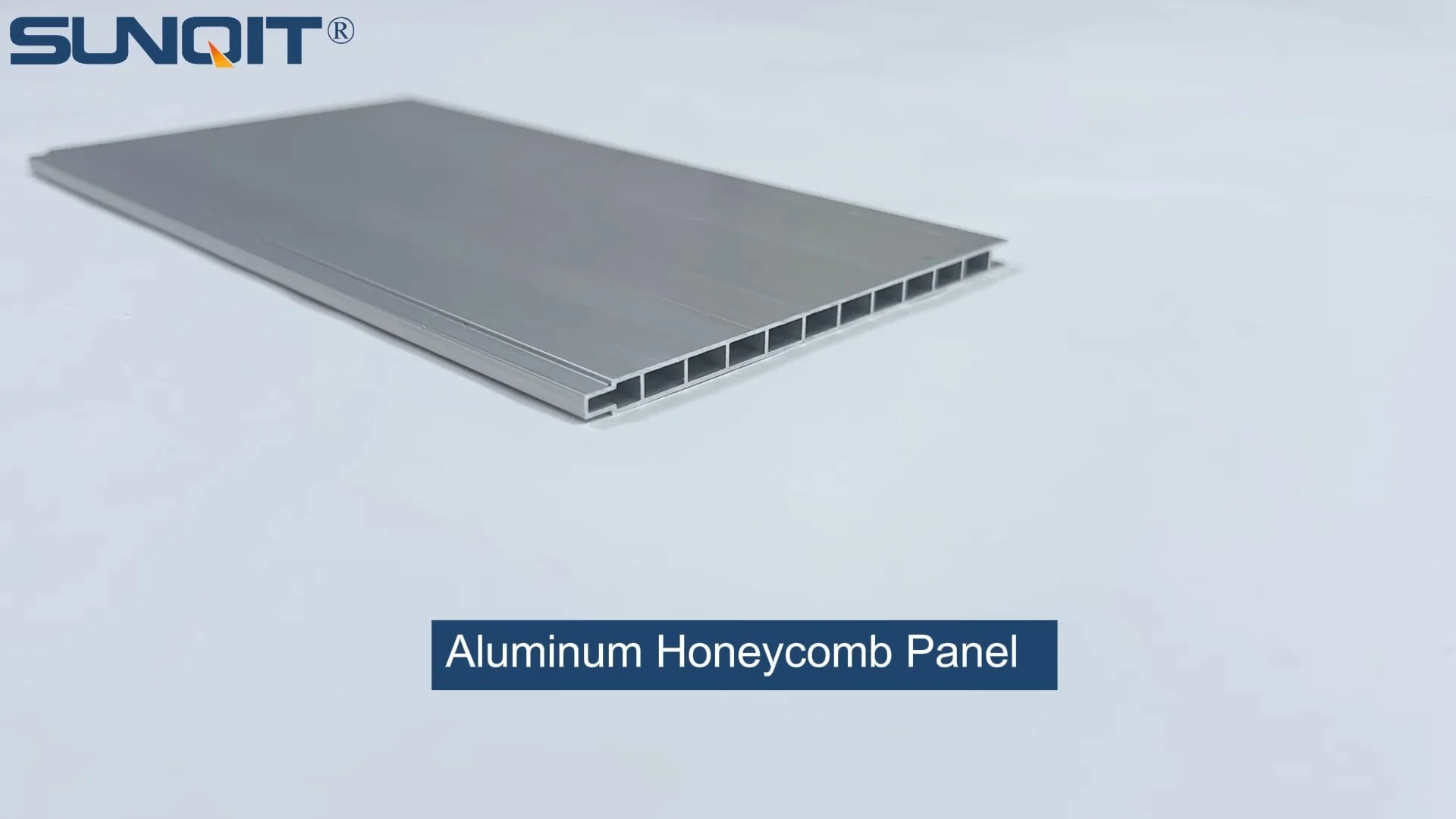
Aluminum Honeycomb Panel
Aluminum honeycomb panel used as table top, side wall, it is connected one pcs by one pcs from the side slot to make a full pieces.This panel width 105mm, 55mm, 35mm are optional for slection.
Walk into any modern machining center, and you'll quickly notice the unsung heroes of the operation: the tooling. From workbenches and fixtures to machine guards and storage racks, these components form the backbone of precision manufacturing. Yet for all their importance, they're often taken for granted—until they start to fail. A warped workbench surface throws off a critical part's dimensions. A vibrating fixture causes a drill bit to wander, turning a perfect hole into a costly scrap. Over time, wear and tear don't just hurt productivity; they chip away at a shop's bottom line. But what if there was a material that could stand up to the harsh realities of machining while keeping tooling lighter, stiffer, and more resilient? Enter aluminum honeycomb panels—a game-changing solution that's quietly revolutionizing how manufacturers approach durability.
The Hidden Cost of Tooling Wear in Machining Centers
To understand why durability matters, let's start with the daily grind of a machining center. Picture a shop floor where spindles hum at 10,000 RPM, cutting tools bite into steel and aluminum, and chips fly like shrapnel. Every day, tooling components absorb thousands of impacts: a carbide end mill slamming into a fixture, a heavy workpiece being slid across a workbench, coolant and lubricants eating away at surfaces. Over months and years, even the toughest materials show signs of strain.
Take workbenches, for example. Traditional options like solid steel or cast iron are strong, but they're also heavy—often weighing 300+ pounds for a standard 4-foot bench. That weight makes them hard to reconfigure as production needs change, limiting a shop's flexibility. Worse, their rigidity works against them in high-vibration environments. When a machine nearby revs up, the bench vibrates in sync, transferring those oscillations to the workpiece. For precision jobs requiring tolerances of ±0.001 inches, even minor vibration can mean the difference between a pass and a fail.
Then there's thermal stress. Machining generates intense heat—from friction between cutting tools and materials, and from the ambient temperature swings common in busy shops. Solid metal tooling expands and contracts with these changes, warping subtly over time. A fixture that held a part perfectly in the morning might be slightly out of alignment by afternoon, leading to inconsistent results. Add in corrosion from coolants (many of which are water-based) and you've got a recipe for premature failure. The cost? Replacing worn tooling every 12–18 months, not to mention the scrap, rework, and downtime that come with it.
Aluminum Honeycomb Panels: A Durability Powerhouse
Aluminum honeycomb panels aren't new—they've been used in aerospace and automotive industries for decades, prized for their strength-to-weight ratio. But their adoption in machining centers is a more recent development, and it's easy to see why. At first glance, they look like any other panel, but their structure is ingeniously simple: a lightweight honeycomb core (typically aluminum) sandwiched between two thin, rigid face sheets (also aluminum). This design borrows from nature—think of a beehive's hexagonal cells, which distribute weight evenly while using minimal material.
The magic lies in that honeycomb core. Each hexagonal cell acts as a tiny structural beam, resisting compression and bending forces. When combined with the face sheets, which handle tension and shear, the result is a panel that's stiff enough to support heavy loads but light enough to be moved by two people. For machining tooling, this translates to components that are both durable and adaptable—no more struggling to reposition a 500-pound workbench when a job changes.
Key Properties That Make a Difference
What sets aluminum honeycomb panels apart from traditional materials like steel or solid aluminum? Let's break down their most impactful characteristics:
Lightweight Strength: Aluminum honeycomb panels weigh up to 60% less than solid aluminum panels of the same size and stiffness. A 4-foot by 8-foot honeycomb panel, for example, might weigh just 35 pounds, compared to 90 pounds for a solid aluminum panel of equal thickness. This lightness reduces strain on floor structures and makes tooling easier to install, reconfigure, or relocate—critical in today's fast-paced, custom-order manufacturing environments.
Exceptional Rigidity: Despite their low weight, honeycomb panels are surprisingly stiff. The hexagonal core distributes loads evenly across the entire panel, preventing flexing or warping even under heavy pressure. For a workbench, this means a surface that stays flat over time, ensuring consistent part placement and measurement accuracy. For fixtures, it means less deflection during cutting, keeping tools on path and reducing scrap.
Vibration Damping: Machining is inherently noisy, but the real problem is the vibrations that come with it. Uncontrolled vibration not only wears out tools faster but also reduces cut quality. Aluminum honeycomb panels excel here: the honeycomb core acts like a series of tiny shock absorbers, dissipating vibration energy instead of transferring it to the workpiece. In tests, honeycomb panels have shown up to 40% better vibration damping than solid aluminum, leading to smoother cuts and longer tool life.
Resistance to Corrosion and Chemicals: Aluminum's natural oxide layer makes it resistant to rust, but honeycomb panels take this a step further. The panels are often treated with protective coatings (like anodizing) that shield against coolants, lubricants, and cutting fluids—common culprits in tooling degradation. Unlike steel, which can rust if paint chips, aluminum honeycomb panels maintain their integrity even when exposed to harsh shop chemicals day in and day out.
Thermal Stability: Machining generates heat, and tooling that expands or contracts with temperature changes can throw off precision. Aluminum honeycomb panels have low thermal conductivity, meaning they absorb and release heat slowly, minimizing warping. This stability is especially valuable in high-precision applications, like aerospace part manufacturing, where even a 0.0005-inch shift can ruin a part.

Aluminum Honeycomb Panels in Action: Tooling Applications That Last
Now that we understand their properties, let's explore how aluminum honeycomb panels are being used to boost durability in key machining tooling components. From workbenches to fixtures, these panels are proving their mettle in real-world applications.
Workbenches: The Foundation of Precision
A workbench is more than just a table—it's a machinist's command center. It's where parts are measured, clamped, and prepped for machining. A warped, vibrating, or heavy workbench isn't just inconvenient; it's a barrier to accuracy. Aluminum honeycomb workbenches address all three issues.
Consider a typical setup: a 3/4-inch thick honeycomb panel mounted on an aluminum extrusion profile frame. The panel's core absorbs vibrations from nearby machines, keeping the surface steady during measurements with a micrometer or dial indicator. Its light weight makes it easy to add casters (another common tooling accessory) for mobility, letting machinists roll the bench to the job instead of carrying parts across the shop. And unlike wood or particleboard, which swell with moisture, or steel, which dents and rusts, the aluminum face sheets resist dents, scratches, and corrosion—staying smooth and flat for years.
One Midwest aerospace supplier recently swapped its steel workbenches for aluminum honeycomb models. Within six months, they reported a 22% reduction in scrap parts related to measurement errors, citing the panels' stability as a key factor. "We used to have to recheck every part twice because the bench vibrated so much," said the shop foreman. "Now, we trust the surface, and we're getting parts right the first time."
Fixtures and Jigs: Holding Tight, Even Under Pressure
Fixtures and jigs are the unsung heroes of precision machining, holding parts in place while tools cut, drill, or mill. A weak fixture can flex during cutting, leading to imprecise parts or broken tools. Aluminum honeycomb panels are increasingly used here, often as bases or clamping surfaces, thanks to their rigidity and vibration-damping properties.
Take a fixture for machining engine blocks. Traditional steel fixtures are heavy, making them hard to load onto CNC tables, and their mass can amplify vibrations from the machine spindle. A honeycomb-based fixture, by contrast, is lighter (easier to handle) and stiffer (less flex). The core's ability to absorb vibration also reduces tool chatter, extending cutter life. One automotive parts manufacturer found that switching to honeycomb fixtures reduced tool wear by 15% on its cylinder head machining line—saving over $40,000 annually in tool replacement costs.
Machine Guards and Enclosures: Protection That Lasts
Machine guards are critical for safety, shielding operators from flying chips, coolant, and rotating parts. But they also take a beating: chips hit them at high speeds, coolant splashes corrode surfaces, and operators bump into them with tools or workpieces. Traditional guards, often made of sheet metal, dent easily and rust over time, requiring frequent replacement.
Aluminum honeycomb guards solve this with a one-two punch: the aluminum face sheets resist dents and corrosion, while the honeycomb core absorbs impact energy. A chip traveling at 50 mph might leave a small mark on a honeycomb guard, but it won't puncture or bend it. And since the panels are lightweight, guards can be made larger without adding excessive weight to machine frames—a win for both safety and durability.

Comparing Materials: How Aluminum Honeycomb Stacks Up
To truly appreciate the benefits of aluminum honeycomb panels, let's compare them to the materials they're replacing. Below is a breakdown of how they stack up against solid steel, solid aluminum, and wood-based panels in key categories:
| Property | Aluminum Honeycomb Panel | Solid Steel | Solid Aluminum | Wood/Particleboard |
|---|---|---|---|---|
| Weight (per sq. ft.) | 2–4 lbs | 10–15 lbs | 6–8 lbs | 3–5 lbs |
| Stiffness (Bending Rigidity) | High (comparable to solid aluminum) | Very High | High | Low (prone to warping) |
| Vibration Damping | Excellent (40% better than solid aluminum) | Poor (amplifies vibrations) | Fair (conducts vibrations) | Good (but degrades with moisture) |
| Corrosion Resistance | Excellent (aluminum oxide layer) | Poor (rusts without coating) | Excellent | Poor (swells with moisture) |
| Durability (Lifespan) | 10–15 years (minimal wear) | 5–8 years (rust, dents) | 8–12 years (scratching, bending) | 3–5 years (warping, rot) |
| Cost (Initial) | Moderate (higher than wood/steel, lower than solid aluminum) | Low | High | Low |
| Cost (Lifetime) | Low (minimal replacement/maintenance) | High (frequent repairs/replacement) | Moderate (longer lifespan, higher initial cost) | High (short lifespan, frequent replacement) |
The table tells a clear story: while aluminum honeycomb panels have a higher initial cost than steel or wood, their long-term durability and performance make them the most cost-effective choice. They combine the best of solid aluminum (corrosion resistance, rigidity) with the lightness of wood, minus the warping and rot. For shops focused on reducing downtime and scrap, the investment pays off quickly.
Beyond Durability: The Ripple Effects of Better Tooling
The benefits of aluminum honeycomb panels extend far beyond just longer-lasting tooling. They create a ripple effect that touches nearly every aspect of a machining center's operation.
Improved Safety: Lighter tooling means fewer injuries from lifting heavy components. A 35-pound honeycomb workbench is easier to move than a 90-pound steel one, reducing strain on machinists' backs and shoulders. Additionally, the panels' resistance to corrosion and warping means fewer sharp edges or unstable surfaces—lowering the risk of cuts or falls.
Energy Savings: Lighter tooling on CNC machines reduces the load on motors, cutting energy consumption. One study found that replacing steel fixtures with honeycomb models reduced a machine's power draw by 8–10% during rapid positioning moves. Over a year, that adds up to significant savings on utility bills.
Sustainability: Aluminum is 100% recyclable, and honeycomb panels use less material than solid alternatives, reducing waste. Many manufacturers also source their aluminum from recycled content, lowering the panels' carbon footprint. For shops aiming to meet green manufacturing goals, this is a major plus.
Choosing the Right Aluminum Honeycomb Panel for Your Needs
Not all aluminum honeycomb panels are created equal. To maximize durability, it's important to select the right panel for your specific application. Here are key factors to consider:
Core Density: The honeycomb core's cell size and wall thickness determine its strength. For heavy-duty applications like fixtures, opt for a higher density core (smaller cells, thicker walls). For lighter uses like machine guards, a lower density core may suffice.
Face Sheet Thickness: Thicker face sheets (0.08–0.12 inches) offer better dent resistance, while thinner sheets (0.04–0.06 inches) save weight. Workbenches and fixtures typically benefit from thicker sheets, while guards or storage racks can use thinner ones.
Coating: Anodized or powder-coated face sheets add an extra layer of protection against corrosion and scratches. In shops with heavy coolant use, anodizing is a smart investment, as it creates a hard, non-porous surface that resists chemical damage.
Adhesive: The bond between the core and face sheets is critical. Look for panels bonded with high-strength, heat-resistant adhesives (like epoxy) that can withstand the high temperatures and humidity of machining environments.
The Future of Tooling Durability: What's Next for Aluminum Honeycomb Panels?
As machining centers push for higher speeds, tighter tolerances, and lower costs, the demand for durable tooling will only grow. Aluminum honeycomb panels are poised to play an even bigger role, thanks to ongoing innovations in materials and manufacturing.
One emerging trend is the integration of aluminum honeycomb panels with smart technology. Imagine a workbench surface embedded with sensors that monitor vibration levels or temperature, alerting operators to potential issues before they affect parts. Or panels with built-in RFID tags for tool tracking, making inventory management a breeze.
Another area of development is hybrid panels, which combine aluminum honeycomb cores with advanced face sheets like carbon fiber or titanium. These ultra-light, ultra-stiff combinations could open new doors for high-precision applications, like semiconductor manufacturing or medical device machining, where even the smallest vibration can ruin a part.
Conclusion: Investing in Durability Pays Off
In the world of machining, tooling durability isn't just about making things last—it's about making things better. Aluminum honeycomb panels bring together lightweight strength, vibration damping, and corrosion resistance in a package that addresses the biggest pain points of traditional tooling materials. From workbenches that stay flat for years to fixtures that hold tight under pressure, these panels are proving that durability doesn't have to come at the cost of weight or flexibility.
For shop owners and machinists, the message is clear: upgrading to aluminum honeycomb tooling isn't an expense—it's an investment. It's an investment in fewer scrap parts, lower tooling replacement costs, and a safer, more efficient shop floor. And in an industry where precision and productivity are everything, that's an investment that pays dividends every day.
So the next time you walk into a machining center, take a closer look at the tooling. If you see a workbench that's light but steady, a fixture that doesn't vibrate, or a guard that's still looking new after years of use, there's a good chance aluminum honeycomb panels are behind it. Because in the end, durability isn't just about surviving the grind—it's about thriving in it.