- Company Articles
- Products and Technology
- Solution
- How Aluminum Pipe Clamps Support Reusable Manufacturing Systems

How Aluminum Pipe Clamps Support Reusable Manufacturing Systems
Related Product
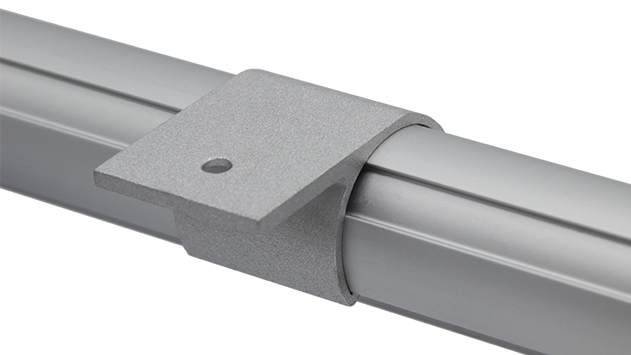
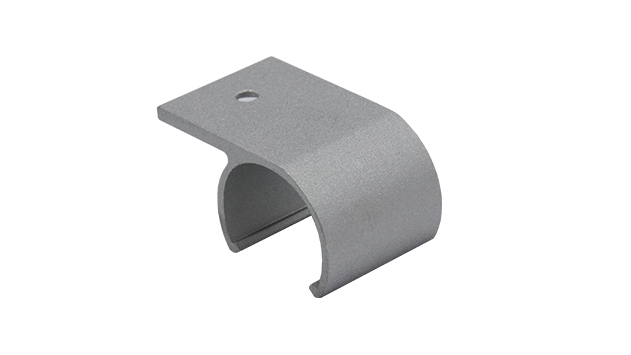
Aluminum Pipe Clamp
Aluminum pipe side clamp used for 28mm aluminum pipe connect with table top, or other accessories.

In today's fast-paced manufacturing landscape, the pressure to stay agile, reduce waste, and cut costs has never been higher. Factories and production facilities are no longer just about churning out products—they're about building systems that can adapt, evolve, and stand the test of time. Enter reusable manufacturing systems: frameworks designed to be disassembled, reconfigured, and repurposed, rather than discarded when needs change. At the heart of these systems lies a humble yet powerful component: the aluminum pipe clamp. Often overlooked, these small but mighty tools are the glue that holds flexible production lines together, enabling everything from custom workbenches to dynamic flow racks. Let's dive into how aluminum pipe clamps are transforming manufacturing floors, one connection at a time.
What Are Aluminum Pipe Clamps, Anyway?
Before we explore their role in reusable systems, let's get clear on what aluminum pipe clamps actually are. Simply put, they're specialized accessories designed to connect aluminum pipes, profiles, and extrusion profiles (think of aluminum extrusion profiles as the backbone of modular structures) into stable, functional assemblies. Unlike traditional welding or permanent fasteners, these clamps create secure yet (detachable) joints, allowing users to adjust, modify, or break down structures with minimal effort.
Most aluminum pipe clamps are made from lightweight, corrosion-resistant aluminum alloy, making them ideal for industrial environments where durability and longevity matter. They come in various designs—some clamp onto t-slot aluminum profiles (a popular choice for modular systems), others wrap around basic aluminum tubes, and many feature quick-release mechanisms or tightening knobs for tool-free adjustments. This versatility is key: whether you're building a workbench, a material rack, or a conveyor system, there's an aluminum pipe clamp tailored to the job.
The Role of Aluminum Pipe Clamps in Reusable Manufacturing Systems
Reusable manufacturing systems thrive on three principles: flexibility, sustainability, and cost-effectiveness. Aluminum pipe clamps excel at all three, making them indispensable for modern production lines. Let's break down their impact.
1. Flexibility: Adapt or Die (But With Clamps, You Adapt)
Manufacturing needs change—fast. A factory might produce 10,000 units of Product A one month, then shift to Product B the next, requiring a complete overhaul of workstations and material flow. Traditional systems, built with welded steel or fixed wooden structures, can't keep up. They're rigid, time-consuming to modify, and often end up in landfills when they're no longer useful.
Aluminum pipe clamps flip this script. Imagine a workbench built with aluminum extrusion profiles and aluminum pipe clamps. If a new product requires a taller surface, you loosen the clamps, adjust the height, and retighten—no saws, no welders, no hassle. Need to add a shelf for tools? Slide a new aluminum profile into the existing clamps and secure it. This adaptability isn't just convenient; it's a game-changer for lean system implementation. Lean manufacturing, after all, is about eliminating waste—including the waste of time and resources spent on rebuilding fixed structures.
Take a real-world example: a small electronics manufacturer recently switched from assembling smartphones to smartwatches. Their old workbenches, built with fixed wooden frames, were too large and had no built-in storage for tiny watch components. Using aluminum pipe clamps, they disassembled the old benches, cut down the aluminum profiles to size, and reassembled them into compact, custom workstations with integrated tool holders—all in a single weekend. No new materials were bought; no old structures were thrown away. That's the power of flexibility.
2. Sustainability: Building for a Circular Economy
Waste is the enemy of sustainability, and traditional manufacturing systems are notoriously wasteful. According to the EPA, the manufacturing sector generates over 11 million tons of non-hazardous waste annually in the U.S. alone—much of it from discarded production equipment. Reusable systems, powered by aluminum pipe clamps, help slash this number by extending the lifecycle of materials.
Aluminum itself is a sustainable material: it's 100% recyclable, and recycling it uses just 5% of the energy required to produce new aluminum. When paired with aluminum pipe clamps, which allow structures to be reconfigured instead of replaced, the environmental impact plummets. A flow rack built with aluminum profiles and clamps today can be taken apart next year, and its components reused to build a conveyor system, a turnover trolley, or even a new workbench. There's no need to mine new materials or send old ones to the dump—everything gets a second (or third, or fourth) life.
Consider a large automotive plant that used to replace its material racks every two years. By switching to aluminum pipe clamps and aluminum extrusion profiles, they've reduced rack waste by 70%. When a new car model requires different part storage, they reconfigure existing racks instead of buying new ones. Over five years, that's saved them tens of thousands of dollars in material costs and drastically cut their carbon footprint. Sustainability isn't just good for the planet—it's good for the bottom line.
3. Cost-Effectiveness: Pay Once, Use (and Reuse) Forever
At first glance, aluminum pipe clamps might seem pricier than cheap plastic fasteners or basic screws. But looks can be deceiving. Let's do the math: a traditional wooden workbench costs $200 to build but needs to be replaced every 2–3 years. A modular workbench built with aluminum extrusion profiles and aluminum pipe clamps costs $300 upfront, but can be reconfigured dozens of times over a decade. Over 10 years, the traditional bench would cost $600–$1,000 (plus disposal fees), while the modular one? Still $300, with zero waste.
Beyond direct material costs, aluminum pipe clamps save money in labor. Setting up a fixed steel structure might require hiring a welder for a day; assembling a modular system with clamps? Any factory worker can do it in an hour with basic tools. When production lines need to shift, there's no downtime waiting for contractors—your team can make changes on the fly. For a factory running 24/7, even a few hours of downtime can cost thousands. Aluminum pipe clamps turn "we need to stop production to rebuild" into "we'll adjust during the lunch break."
Real-World Applications: Where Aluminum Pipe Clamps Shine
Aluminum pipe clamps aren't just theoretical—they're hard at work in factories, warehouses, and workshops worldwide. Here are a few common applications where they make a tangible difference:
Workbenches: Customized for Every Task
Workbenches are the workhorses of manufacturing, and no two tasks require the same setup. A mechanic might need a bench with a vice and tool hooks, while an electronics assembler needs anti-static surfaces and small parts bins. Aluminum pipe clamps let you build a workbench that fits your exact needs—and change it when those needs evolve. For example, a "workbench E (single deck-without caster)" (a basic model) can be upgraded with casters (using caster accessories) for mobility, or extra shelves (using aluminum extrusion profiles and clamps) for storage. No more one-size-fits-all benches that leave workers stretching or straining.
Flow Racks: Keeping Materials Moving
Flow racks are essential for just-in-time production, ensuring materials move smoothly from storage to assembly lines. Aluminum pipe clamps are critical here, as they allow you to adjust roller track heights, angles, and lengths to match the size and weight of materials. For instance, if you're switching from heavy metal parts to lightweight plastic components, you can reposition the roller track (using roller track connectors and clamps) to reduce slope, preventing materials from sliding too quickly. This adaptability ensures your flow rack works for any product, not just the one it was originally built for.
Turnover Trolleys: Mobile and Modular
Turnover trolleys transport materials across the factory floor, and their design needs to match the load. A trolley carrying large boxes requires sturdy sides, while one carrying small parts needs dividers. Aluminum pipe clamps make it easy to build trolleys that adapt. Add a shelf here, a side rail there, or swap out casters for heavier-duty wheels—all without rebuilding the entire trolley. It's like having a fleet of custom trolleys for the price of one.
Traditional vs. Aluminum Pipe Clamp Systems: A Quick Comparison
| Feature | Traditional Manufacturing Systems | Aluminum Pipe Clamp Systems |
|---|---|---|
| Flexibility | Low—fixed structures; hard to modify | High—easily disassembled and reconfigured |
| Cost Over Time | High—needs replacement every 2–3 years | Low—one-time purchase; reusable indefinitely |
| Waste Production | High—discarded structures end up in landfills | Low—materials reused; minimal disposal |
| Setup Time | Long—requires welding, cutting, or professional installation | Short—assembled by workers with basic tools |
| Durability | High but rigid—prone to damage if modified | High and adaptable—aluminum resists corrosion and wear |

The Future of Manufacturing: Small Clamps, Big Impact
As manufacturing continues to evolve—with trends like mass customization, shorter product lifecycles, and stricter sustainability regulations—reusable systems will only become more critical. Aluminum pipe clamps, once seen as niche tools, are now essential for any factory looking to stay competitive. They're not just about connecting pipes; they're about connecting manufacturers to a more agile, sustainable, and cost-effective future.
So the next time you walk through a factory, take a closer look at the workbenches, flow racks, and trolleys. Chances are, aluminum pipe clamps are holding them together—quietly enabling the flexibility that keeps production lines moving, waste low, and innovation high. In a world where change is the only constant, these small but mighty clamps are proof that the best solutions often come in the simplest packages.