- Company Articles
- Products and Technology
- Product knowledge
- How Aluminum Pipe with Board Holder Reduces Workplace Waste

How Aluminum Pipe with Board Holder Reduces Workplace Waste
Related Product
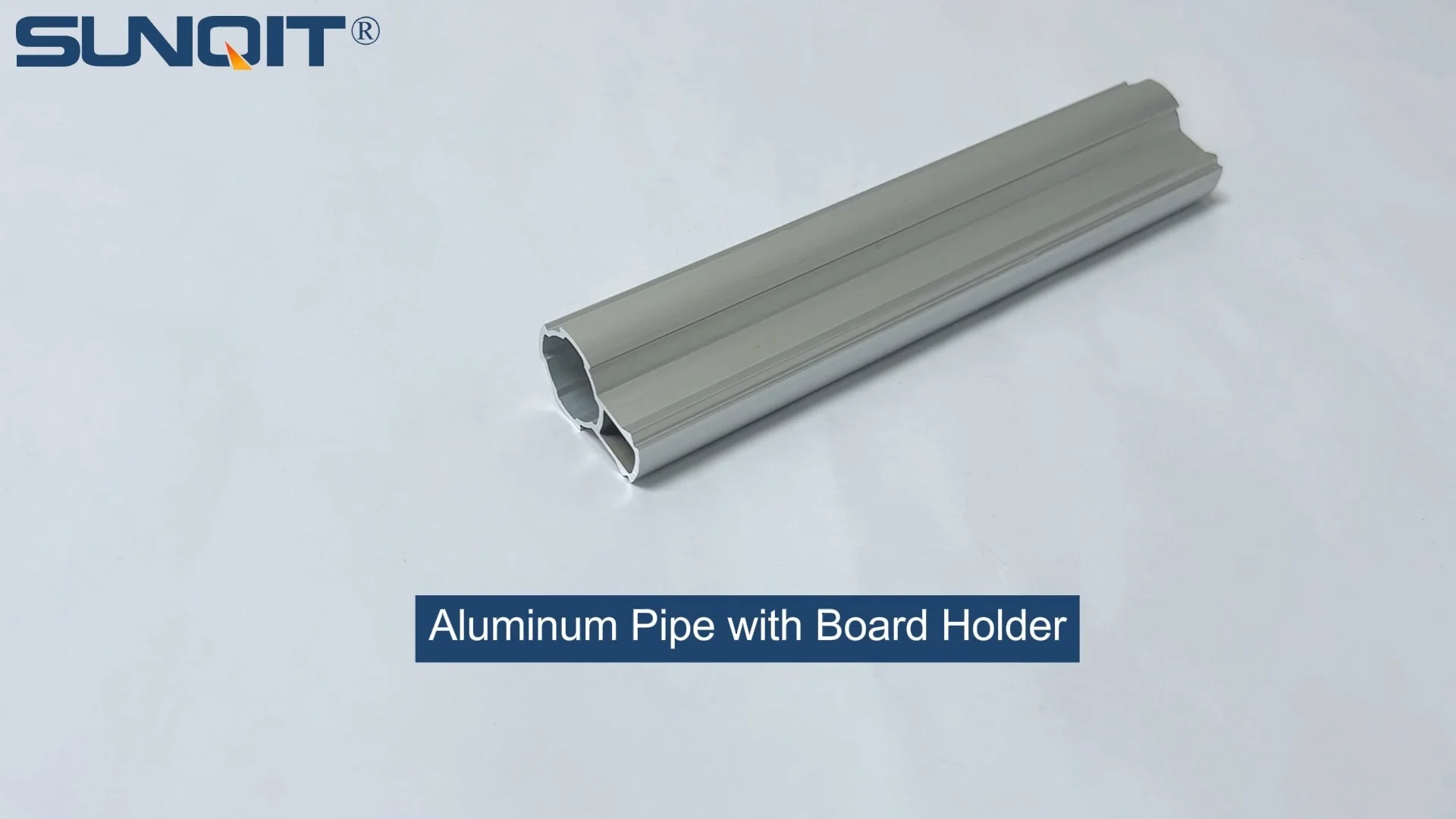
Aluminum Pipe with Board Holder
The linear rolling assembly can be arbitrarily connected in the protruding part of the card slot to increase the rigidity of the track.
Walk into almost any busy workshop, factory, or warehouse, and you'll likely spot the same silent productivity killer: waste. It's in the time spent hunting for tools buried under a cluttered workbench. It's in the space wasted by rigid, one-size-fits-all storage racks that can't adapt to shifting needs. It's in the frustration of watching materials get damaged because there's no efficient way to move them from Point A to Point B. For years, these inefficiencies have been written off as "just part of the job." But what if they didn't have to be? Enter the aluminum pipe with board holder—a deceptively simple tool that's quietly revolutionizing how workplaces operate, one modular setup at a time.
This isn't just another piece of industrial equipment. It's a solution rooted in the principles of the lean system, designed to cut through the chaos of traditional work environments. By combining lightweight, durable aluminum pipes with versatile board holders, businesses are finding new ways to streamline workflows, reclaim space, and put an end to the kind of waste that eats into profits and employee morale. Let's dive into how this unassuming tool is making such a big difference.
What Is Aluminum Pipe with Board Holder, Anyway?
Before we get into the "how," let's clarify the "what." Aluminum pipe with board holder is exactly what it sounds like: a system of lightweight aluminum pipes (often paired with T-slot designs for easy attachment) and specialized holders that secure boards, shelves, or panels. But don't let the simplicity fool you. These systems are built to be modular, meaning you can assemble, disassemble, and reconfigure them in minutes—no welding, no heavy tools, no permanent modifications required.
Think of it as the ultimate building block for workplaces. Need a new workbench for a team expanding into electronics assembly? Snap together aluminum pipes, attach a board holder with a sturdy plywood or metal top, and you're ready. Want to add a shelf above that workbench to store frequently used parts? Just add a few more pipes and a second board holder. Need to rearrange the entire floor plan next month to accommodate a new production line? Take it apart, move the pieces, and rebuild—no wasted materials, no downtime waiting for custom furniture.
What makes this system stand out is its adaptability. Unlike traditional steel racks or fixed wooden workbenches, aluminum pipes are lightweight enough for one person to handle but strong enough to support heavy loads. The board holders, meanwhile, come in various sizes and styles, so you can secure everything from thin plastic dividers to thick, industrial-grade work surfaces. It's a tool that grows with your business, not against it.
The Lean System Connection: Waste Reduction at Its Core
To understand why aluminum pipe with board holder is such a game-changer, we need to talk about the lean system. At its heart, lean is about eliminating waste—whether that's wasted time, space, materials, or effort. Traditional work setups often fail here because they're static. A fixed workbench might work perfectly for one task, but as soon as your process changes (and in today's fast-paced market, it always does), that workbench becomes a liability. You either with a suboptimal setup or spend money replacing it entirely.
Aluminum pipe with board holder flips this script. It's lean by design. Let's break down the seven types of waste (or "muda," as they're known in lean terminology) and see how this system addresses each one:
- Transportation Waste: Moving materials unnecessarily. With aluminum pipe systems, you can build custom flow racks that guide materials directly to where they're needed—no more carrying heavy boxes across the shop floor.
- Inventory Waste: Storing more materials than needed. Modular shelves and board holders let you organize inventory by frequency of use, so you only keep what's essential within arm's reach.
- Motion Waste: Unnecessary movement by workers (e.g., bending, reaching, walking). A well-designed aluminum pipe workbench keeps tools and materials at waist height, reducing strain and saving seconds that add up to hours over a week.
- Waiting Waste: Time lost waiting for tools, materials, or equipment. When everything has a designated spot on a board holder-equipped shelf, workers spend less time searching and more time producing.
- Overprocessing: Doing more work than needed (e.g., using a heavy steel rack for lightweight parts). Aluminum pipes are lightweight but strong, so you're never overbuilding—saving on material costs and setup time.
- Overproduction: Making more than needed to "stay ahead." With better organization via board holders, you can track inventory in real time, reducing the urge to overproduce to avoid stockouts.
- Defects: Damaged materials or products. Smooth, stable board holders and flow racks protect fragile items during storage and transport, cutting down on costly defects.
It's not just about checking boxes on a lean checklist, though. It's about creating a workplace where waste is actively prevented, not just cleaned up after. And that starts with tools that adapt to your needs, not the other way around.

Reducing Waste in Action: Real-World Scenarios
Let's move from theory to practice. How does aluminum pipe with board holder actually reduce waste in day-to-day operations? Let's look at three common workplace pain points and how this system solves them.
1. Time Waste: The Cluttered Workbench Dilemma
Imagine a small electronics assembly shop where two workers share a single, oversized wooden workbench. The surface is covered in tools, half-assembled circuit boards, and loose screws. Every time they need a specific tool—a soldering iron, a pair of pliers—they have to sift through the mess. On average, each worker spends 10 minutes per hour just searching for items. Over an 8-hour shift, that's 80 minutes of lost productivity per worker, or 160 minutes total. Multiply that by 5 days a week, and you're looking at over 13 hours of wasted time monthly—time that could be spent building products.
Now, replace that wooden workbench with an aluminum pipe with board holder setup. The workers install a lightweight aluminum frame, attach a smooth board holder surface, and add overhead shelves using additional pipes and holders. They use dividers on the board holder to separate tools, parts bins, and work-in-progress. Suddenly, everything has a home: soldering irons hang from hooks on the pipe frame, screws are sorted into labeled bins on the board holder, and circuit boards rest on a dedicated section of the surface. Search time drops to 2 minutes per hour. Over the same 8-hour shift, that's just 16 minutes of lost time per worker—saving 128 minutes (over 2 hours) daily. That's nearly 45 hours of recovered productivity per month, just from reorganizing the workspace.
2. Space Waste: The Rigid Flow Rack Problem
A warehouse that distributes small auto parts has long relied on fixed steel flow racks to store boxes of components. The racks are tall, heavy, and built to hold standard-sized boxes. But recently, the warehouse started receiving more orders for larger, irregularly shaped parts—think plastic bumpers or wiring harnesses. The old flow racks can't accommodate these new items, so the warehouse staff has resorted to stacking them on the floor, taking up valuable space and creating tripping hazards. What's more, the fixed racks are spaced too far apart for the smaller boxes they still handle, leaving gaps of unused space between them.
By switching to aluminum pipe with board holder flow racks, the warehouse transforms its layout. The modular aluminum pipes are easy to adjust: they shorten the vertical distance between shelves to fit smaller boxes, add wider board holders to accommodate the larger parts, and even angle some sections to create gravity-fed flow (so boxes slide forward as they're emptied, reducing the need to reach deep into the rack). The result? The same floor space now holds 30% more inventory. The floor is clear of clutter, and workers no longer have to navigate around piles of boxes. What was once wasted space is now generating revenue.
3. Material Waste: The "One-and-Done" Setup Trap
A furniture manufacturer frequently switches between producing chairs, tables, and bookshelves. Each product requires a different workstation setup: chairs need a lower work surface for upholstery, tables need a larger surface for assembly, and bookshelves need specialized jigs to hold panels in place. In the past, the company built custom wooden workstations for each product, but when production shifts, those workstations become obsolete. They're either stored (taking up space) or thrown away (wasting materials). Over a year, this costs thousands in lumber and labor for replacements.
With aluminum pipe with board holder, the manufacturer builds one base frame and multiple interchangeable board holders. For chairs, they attach a lower board holder surface and add u-shaped pipe frames to hold upholstery tools. For tables, they swap in a wider board holder and add clamps along the edges. For bookshelves, they install a board holder with pre-drilled holes to secure jigs. When production changes, workers simply swap out the board holders—no new materials, no waste. The aluminum pipes are reused indefinitely, and the board holders (which are often made from recycled or recyclable materials) last for years. The company estimates it's cut material waste by 60% and reduced setup time between product runs from 4 hours to 30 minutes.

Traditional vs. Aluminum Pipe with Board Holder: A Comparison
Still not convinced? Let's put traditional setups head-to-head with aluminum pipe with board holder systems in a side-by-side comparison. The table below breaks down key factors like cost, flexibility, and waste reduction:
| Factor | Traditional Setups (Wood/Steel) | Aluminum Pipe with Board Holder |
|---|---|---|
| Initial Cost | Lower upfront, but hidden costs (e.g., customization, replacement) | Slightly higher upfront, but no hidden costs (modular, reusable) |
| Flexibility | Fixed; cannot be reconfigured without major modifications | Highly flexible; reconfigurable in minutes with basic tools |
| Space Usage | Inefficient; often oversized or underutilized | Optimized; adapts to space constraints and changing needs |
| Time to Assemble/Reconfigure | Hours to days (requires skilled labor, tools like saws/welders) | Minutes to hours (no skilled labor needed; snap-together design) |
| Waste Generation | High (frequent replacement, material waste from customization) | Low (reusable components, minimal scrap during reconfiguration) |
| Long-Term Durability | Wood rots/warps; steel rusts; fixed design becomes obsolete | Aluminum resists rust/corrosion; modular design stays relevant |
The data speaks for itself. While traditional setups might seem cheaper at first glance, their lack of flexibility leads to higher long-term costs and waste. Aluminum pipe with board holder, on the other hand, is an investment that pays dividends in reduced waste, increased productivity, and adaptability.
Why It Matters for Modern Workplaces
In today's economy, businesses can't afford to waste resources. Margins are tight, competition is fierce, and customers demand faster turnaround times. Aluminum pipe with board holder isn't just a tool for reducing waste—it's a tool for survival. By streamlining workflows, reclaiming space, and cutting down on unnecessary costs, it frees up resources to invest in what really matters: innovation, employee training, and growing your business.
But it's not just about the bottom line. Workers notice when their workplace is designed with efficiency and respect for their time. A cluttered, frustrating setup leads to burnout and high turnover. An organized, adaptable workspace, on the other hand, boosts morale. When employees don't have to fight against their environment, they're more engaged, more productive, and more likely to stay. In a world where talent retention is critical, that's priceless.
And let's not forget sustainability. As consumers and regulators push for greener practices, businesses are under pressure to reduce their environmental footprint. Aluminum pipe with board holder supports this by minimizing waste (no more throwing away old workbenches) and using recyclable materials. It's a small change that adds up to a big impact on your company's sustainability goals.
Conclusion: The Future of Workplace Efficiency
Waste in the workplace isn't inevitable. It's a choice—either to accept the status quo or to invest in solutions that eliminate it. Aluminum pipe with board holder is more than just a piece of equipment; it's a commitment to efficiency, flexibility, and respect for your team and resources. By combining the modularity of aluminum pipes with the practicality of board holders, businesses are finally able to build workspaces that adapt to them, not the other way around.
Whether you're running a small workshop or a large manufacturing plant, the message is clear: static setups belong in the past. The future of work is lean, adaptable, and waste-free. And it starts with tools like aluminum pipe with board holder—simple, effective, and ready to transform how you work, one pipe at a time.