- Company Articles
- Products and Technology
- Solution
- How Aluminum Pipe with Tray Holder Supports Continuous Improvement in Lean Cells

How Aluminum Pipe with Tray Holder Supports Continuous Improvement in Lean Cells
Related Product
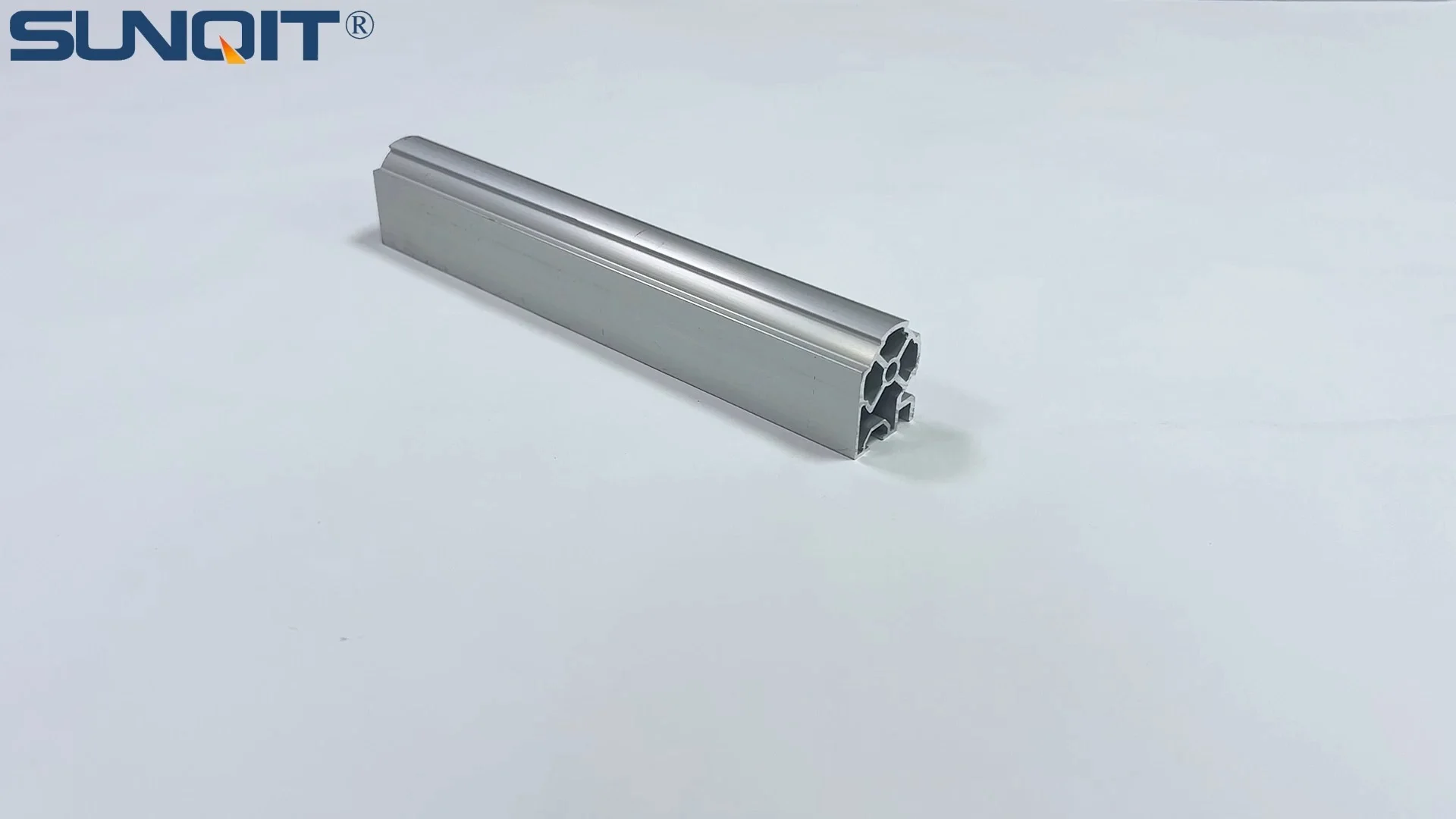
Aluminum Pipe with Tray Holder
Aluminum pipe with tray holder,the pipe one side connected by a joint, the other side with a slot which can hold a tray or a aluminum pannel.
In the fast-paced world of manufacturing, where every second counts and efficiency is the cornerstone of success, lean cells have emerged as beacons of productivity. These tightly integrated workspaces are designed to minimize waste, streamline workflows, and foster a culture of continuous improvement. But here's the thing: even the most well-designed lean cell can hit a wall if its physical infrastructure—think workbenches, material racks, and flow systems—can't keep up with evolving needs. That's where aluminum pipe with tray holder comes in. More than just a collection of tubes and brackets, this modular solution is quietly revolutionizing how teams build, adapt, and optimize their lean environments. Let's dive into how it works, why it matters, and the tangible ways it fuels the never-ending journey of getting better.
The Heartbeat of Lean: Why Continuous Improvement Can't Thrive in Rigid Spaces
Before we talk about aluminum pipes and tray holders, let's ground ourselves in what makes lean cells tick. At their core, lean manufacturing principles—like those pioneered by Toyota—revolve around eliminating waste (muda) in all its forms: wasted time, motion, inventory, and even talent. Continuous improvement (kaizen) isn't just a buzzword here; it's a daily practice. Teams regularly gather to ask, "How can we make this step faster? Safer? Less tiring?" But imagine trying to answer that question in a workspace where the workbench is bolted to the floor, the material rack can't be adjusted for a new product size, or the conveyor system is so fixed it feels like it's frozen in time. Rigidity kills kaizen. When your tools and workspaces can't bend, your team's ability to innovate bends too.
Traditional solutions—think heavy steel workbenches or fixed wooden racks—were built for stability, not adaptability. They last forever, sure, but that's the problem. A steel workbench might serve you well for five years, but when your product line changes, or you adopt a new assembly process, suddenly that "forever" piece of equipment becomes a roadblock. You either live with inefficiencies or shell out thousands to replace it. And let's not forget the human cost: workers contorting their bodies to reach tools on a too-high shelf, or wasting steps moving materials from a distant rack because the current setup can't be reconfigured. That's not just waste; it's a disservice to the people who keep your operations running.
Aluminum Pipe with Tray Holder: The Modular Game-Changer
Enter aluminum pipe with tray holder: a system built for the way modern lean cells actually operate—dynamic, iterative, and people-centric. At first glance, it might look simple: lightweight aluminum tubes, connectors that snap into place without welding, and tray holders that attach securely to hold tools, parts, or finished goods. But simplicity is the point. This isn't just about building a workbench; it's about building a workspace that grows with your team's ideas.
Let's break down the basics. The aluminum pipes themselves are lightweight yet surprisingly strong—strong enough to support tools, materials, and even small machinery, but light enough that a single worker can carry and reposition them. The magic, though, is in the accessories: swivel joints that let you angle pipes at 30°, 45°, or 90°, tray holders that adjust in height and width, and connectors that lock securely but can be with a hex key when it's time to redesign. Add in aluminum profile accessories like guide rails or roller tracks, and you've got a system that can morph from a simple assembly workbench to a multi-tiered flow rack or even a mini conveyor setup in hours, not days.
Take the tray holder, for example. Unlike fixed shelves, these holders can be slid up or down the aluminum pipe to match a worker's height, reducing bending and reaching. They can also be swapped out for different sizes—deeper trays for bulkier parts, shallower ones for small components—without replacing the entire structure. And because the aluminum pipes are corrosion-resistant, you don't have to worry about rust weakening the system over time, even in busy factories where spills or humidity are common.

Flexibility: The Foundation of Kaizen-Ready Workspaces
If there's one word that defines aluminum pipe with tray holder, it's "flexibility." And in lean cells, flexibility isn't a nice-to-have—it's the foundation of continuous improvement. Let's say your team identifies a bottleneck: parts are piling up at Station B because the current material rack is too far away. With a traditional setup, solving this might mean calling a contractor to build a new rack, which takes weeks and costs a fortune. With aluminum pipe? Your team could measure the space, grab a few pipes, connectors, and tray holders, and have a new, custom rack positioned right next to Station B by the end of the shift. No welding, no heavy lifting, no waiting.
This speed of reconfiguration turns "what if" conversations into action. Maybe your assembly line switches from producing small widgets to larger gadgets. Instead of buying a new workbench, your team can adjust the height of the aluminum pipes, add extra tray holders for larger parts, and even attach a roller track to feed materials directly into the workspace—all in an afternoon. Or consider cross-training: when workers rotate between stations, their tools and materials need to move with them. Aluminum pipe systems let you create portable, personalized workstations on casters (another handy accessory) that can be wheeled to wherever they're needed, reducing setup time and errors.
Flexibility also extends to scalability. Start small: a single workbench with a few tray holders for a new project. As the project grows, add more pipes, connect multiple workbenches into a U-shape for better flow, or attach a flow rack to feed materials directly into the cell. There's no need to over-invest upfront; you build exactly what you need, when you need it, and expand as your operations grow. This "pay-as-you-go" approach not only saves money but also keeps your workspace from getting cluttered with unused equipment—a common source of waste in lean environments.

Ergonomics: Putting People at the Center of Improvement
Continuous improvement isn't just about processes; it's about people. A workspace that's easy to use reduces fatigue, cuts down on injuries, and boosts morale—all of which translate to better productivity and lower turnover. Aluminum pipe with tray holder shines here because it's designed to adapt to the human body, not the other way around.
Consider a typical assembly worker's day: repeated reaching, bending, or twisting to grab tools or parts. Over time, that takes a toll. With aluminum pipe systems, you can customize every inch of the workspace to fit the worker. The tray holder can be positioned at elbow height, so tools are always within easy reach. The workbench surface can be adjusted to standing or sitting height, depending on the task. Even the angle of the pipes can be tweaked—tilting a tray slightly downward so parts roll gently toward the worker, reducing the need to stretch.
One manufacturer I worked with recently shared a story that stuck with me. Their team had been struggling with high turnover on a night shift, partly due to complaints about uncomfortable workstations. They switched to aluminum pipe workbenches with adjustable tray holders, and within a month, not only did turnover drop, but error rates decreased too. Why? Workers felt like the company cared about their comfort, so they were more engaged. And with tools and parts right where they needed them, they could focus on quality instead of frustration. That's the power of ergonomics: it's not just good for workers; it's good for your bottom line.
Workflow Optimization: From Chaos to Flow with Flow Racks and Rollers
Lean cells thrive on flow—materials moving smoothly from one step to the next, with no bottlenecks or delays. Aluminum pipe with tray holder isn't just for workbenches; when paired with accessories like roller tracks or flow racks, it becomes a backbone for optimizing material flow.
Flow racks, for example, are a staple in lean environments, designed to ensure materials are picked in the order they're needed (first in, first out). Traditional flow racks are often fixed in size, but with aluminum pipes, you can build a flow rack that adjusts to the size of your containers. Need to switch from small bins to larger boxes? Swap out the roller tracks for wider ones, adjust the angle of the rack for better flow, and add extra tray holders to separate different part types—all without replacing the entire structure.
Roller tracks, another key accessory, turn static workspaces into dynamic ones. Attach them to aluminum pipes, and suddenly you've got a mini conveyor system that moves parts from a flow rack to the workbench, or from one station to the next. The tracks are lightweight, so you can reposition them as your workflow changes, and they're compatible with different wheel types—plastic for lightweight parts, steel for heavier loads, or ESD-safe wheels for electronics manufacturing to prevent static damage.
Let's put this into context. Imagine a lean cell assembling circuit boards. Materials start in a flow rack built with aluminum pipes and roller tracks, feeding into a workbench where the board is assembled. Once assembled, the board moves along another roller track to a testing station, then to packaging. If you need to add a quality check step, you can insert a new aluminum pipe workstation with a tray holder for testing tools between the assembly and packaging stations—no need to reroute an entire conveyor system. That's the beauty of integration: every component works together, but none are locked in place.
Cost Efficiency: Saving Money While Getting Better
At this point, you might be thinking, "This all sounds great, but isn't aluminum more expensive than steel or wood?" It's true: aluminum pipe systems often have a higher upfront cost than basic steel or wooden setups. But lean is about the long game, and when it comes to total cost of ownership, aluminum pipe with tray holder wins hands down.
Let's break it down with a simple comparison:
| Factor | Traditional Steel Workbench | Aluminum Pipe Workbench with Tray Holder |
|---|---|---|
| Upfront Cost | Lower ($500–$800) | Higher ($800–$1,200) |
| Reconfiguration Cost | High (often requires replacement) | Low (uses existing pipes/accessories) |
| Installation Time | Long (needs tools/welders) | Short (assembled by 1–2 workers in hours) |
| Ergonomic Adjustments | Limited (fixed height/size) | Unlimited (adjustable height, trays, angles) |
| Longevity | 5–7 years (prone to rust/dents) | 10+ years (corrosion-resistant, reusable parts) |
The steel workbench is cheaper to buy, but when you need to change its height, add shelves, or move it to a new location, you're often out of luck. You either pay to modify it (if possible) or buy a new one. With aluminum, reconfiguration costs are minimal—just reuse the pipes and connectors, and maybe buy a few new accessories. Over five years, that adds up to significant savings. Plus, aluminum is lightweight, so you save on shipping and installation costs from the start. No need to hire a crew with a forklift to move a steel workbench; two workers can carry an aluminum one with ease.
There's also the cost of downtime to consider. Traditional setups take days to install or modify, during which your lean cell is out of commission. Aluminum pipe systems can be assembled or reconfigured in hours, so your team is back to work faster. And because they're modular, you can make changes during off-hours—no disrupting production to upgrade your workspace.
Real-World Impact: Stories from the Factory Floor
Numbers and features tell part of the story, but real change happens when these systems are put to work. Let's look at a few examples of how aluminum pipe with tray holder has transformed lean cells across different industries.
Electronics Manufacturer: A company producing smartphone components was struggling with frequent changeovers between product models. Each change required retooling workbenches and rearranging material racks, taking up to eight hours and delaying production. They switched to aluminum pipe workbenches with adjustable tray holders and roller tracks. Now, their team can reconfigure a workstation in under an hour by adjusting the pipe heights, swapping out tray holders for different part sizes, and repositioning roller tracks to feed new components. Changeover time dropped by 87%, and they've since expanded the system to three more lean cells.
Automotive Supplier: A supplier of car door handles was dealing with high injury rates due to workers bending to lift heavy bins from the floor. They installed aluminum flow racks with tray holders positioned at waist height, paired with roller tracks to slide bins directly to the assembly line. Workers no longer bend or lift—bins glide into place, and parts are within easy reach. Over six months, injury claims dropped by 60%, and productivity increased by 15% as workers spent less time recovering from strain.
Medical Device Maker: A manufacturer of surgical tools needed a workspace that could be easily sanitized and adapted for small-batch production. Aluminum pipe systems, with their smooth, non-porous surfaces and modular design, were the perfect fit. They built workbenches with removable tray holders that can be washed in a sanitizing machine, and added ESD-safe roller tracks to protect sensitive electronics. The system has supported 12 new product launches in two years, with each launch requiring minimal reconfiguration time.
The Future of Lean Cells: Adaptability as a Competitive Edge
In a world where customer demands change overnight and new technologies emerge faster than ever, the ability to adapt isn't just a nice skill—it's a competitive advantage. Lean cells that can pivot quickly, experiment with new processes, and scale up (or down) without major overhauls will win. Aluminum pipe with tray holder isn't just a tool for today's improvements; it's an investment in tomorrow's flexibility.
Think about the rise of small-batch manufacturing, or the shift toward customization. A fixed workspace can't keep up with orders for 100 unique products. But a modular aluminum system? It thrives on variety. Need to produce a custom part for a client? Build a mini workstation in a corner, test the process, and disassemble it when you're done—no wasted space, no wasted money. Or consider the integration of automation: collaborative robots (cobots) are becoming common in lean cells, and they need workspaces that can adapt to their movements. Aluminum pipes can be reconfigured to create safe, efficient zones for humans and robots to work side by side.
Sustainability is another growing priority. Aluminum is 100% recyclable, and because the system is modular, you're less likely to throw away entire workbenches when you need a change—just reuse the pipes and connectors. Many suppliers also offer recycled aluminum options, aligning with green manufacturing goals and reducing your carbon footprint.
Final Thoughts: Building a Culture of Improvement, One Pipe at a Time
Continuous improvement isn't about grand gestures; it's about the small, daily changes that add up to big results. Aluminum pipe with tray holder empowers those changes by removing the biggest barrier to improvement: rigid infrastructure. It turns "we can't" into "we can try," and "that's how we've always done it" into "what if we tried this instead?"
At the end of the day, lean cells are about people working together to make things better. When your workspace supports that collaboration—when it's as flexible, creative, and resilient as your team—you don't just build better products; you build a better way of working. And in manufacturing, that's the ultimate competitive edge.
So, the next time your team gathers for a kaizen meeting and someone says, "We could improve this if we just…", don't let "but our workspace can't handle it" be the end of the conversation. With aluminum pipe with tray holder, the answer is almost always, "Let's build it and see." Because in lean, the best improvements aren't just planned—they're built, tested, and refined, one pipe at a time.