- Company Articles
- Products and Technology
- Product knowledge
- How Aluminum Profile 3 Way Connectors Reduce Downtime in Production

How Aluminum Profile 3 Way Connectors Reduce Downtime in Production
Related Product
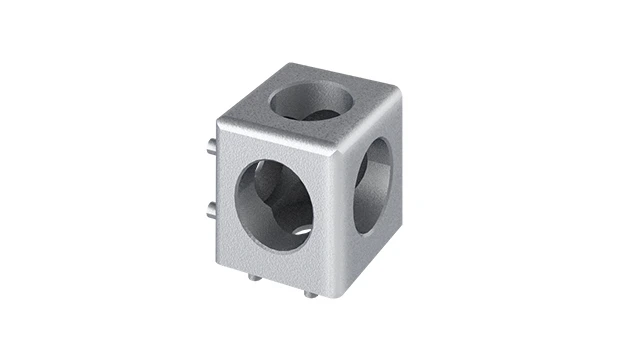
Aluminum Profile 3 Way Connector
The 3 way - squared corner connector is an external fastening method that is typically used to create a corner connection between three profiles. It is a heavy-duty connection that is simple to use and provides a polished look.
The Hidden Cost of Downtime in Production
In the bustling world of manufacturing, every second counts. A production line that grinds to a halt isn't just a minor inconvenience—it's a cascade of lost opportunities. Workers stand idle, deadlines creep closer, and the bottom line takes a hit. According to industry reports, unplanned downtime costs manufacturers an average of $50,000 per hour. For small to mid-sized facilities, that's a blow that can derail quarterly goals. But what if the solution to slashing this downtime wasn't in expensive automation or overhauls, but in a humble component that's often overlooked? Enter the aluminum profile 3 way connector—a small part with a massive impact on keeping production lines moving.
Downtime rarely happens in a vacuum. It might start with a workbench that's too rigid to adapt to a new product, a flow rack that jams because its components are welded in place, or a conveyor system that takes days to reconfigure for a seasonal order. Traditional production setups, built with fixed steel structures and permanent fasteners, were never designed for the speed of modern manufacturing. They're sturdy, yes, but they're also slow to build, harder to repair, and nearly impossible to repurpose without halting operations. This is where modular systems—built around aluminum extrusion profiles and versatile connectors—are changing the game. And at the heart of this revolution? The aluminum profile 3 way connector.
The Evolution of Production Systems: From Rigid to Adaptive
Walk into a factory from 30 years ago, and you'd likely find production floors dominated by heavy, welded steel structures. Workbenches were bolted to the ground, flow racks were custom-built for specific parts, and conveyors followed fixed paths. These systems were built to last decades, but they came with a steep trade-off: inflexibility. When a new product line was introduced, or demand shifted, manufacturers faced a tough choice: spend weeks (or months) rebuilding infrastructure, or with suboptimal setups that slowed production.
Then came the rise of lean manufacturing, which emphasized eliminating waste—including the waste of time spent on reconfigurations and repairs. Lean principles demanded systems that could adapt quickly, and aluminum extrusion profiles emerged as the perfect answer. Lightweight yet strong, these profiles (extruded aluminum bars with T-slots for easy attachment) could be assembled into almost any structure, from workbenches to material racks. But profiles alone weren't enough. To truly unlock their potential, manufacturers needed connectors that could join profiles securely, yet allow for quick adjustments. This is where the 3 way connector stepped in.
Unlike traditional bolts or welds, 3 way connectors are designed for both strength and speed. They slide into the T-slots of aluminum extrusion profiles, lock into place with a simple twist or bolt, and can be disassembled just as easily. This means a workbench that took a team of welders two days to build can now be assembled in hours by a single worker with basic tools. More importantly, when that workbench needs to be reconfigured—say, to add a shelf or adjust its height—the connectors can be loosened, parts rearranged, and the system back up and running in minutes, not days. This adaptability is the key to cutting downtime.

Meet the Unsung Hero: Aluminum Profile 3 Way Connectors
At first glance, an aluminum profile 3 way connector might not look like much—a small, often L-shaped or T-shaped piece of aluminum with holes or grooves to fit over profiles. But its simplicity is its strength. These connectors are engineered to join three pieces of aluminum extrusion profile at once, creating stable, rigid joints that can support heavy loads (think toolboxes, raw materials, or even entire workbench surfaces) while remaining adjustable.
Most 3 way connectors are made from high-grade aluminum alloy, chosen for its balance of strength and lightness. They're often anodized to resist corrosion, ensuring they hold up in factory environments where dust, moisture, or chemicals might otherwise take a toll. The design varies slightly by manufacturer, but the best ones feature a "clamping" mechanism: when a bolt is tightened, the connector grips the profile's T-slot, creating a bond that's secure enough for industrial use but easy to release when changes are needed.
What makes these connectors so versatile is their ability to create complex structures from simple parts. Need a corner joint for a workbench? A 3 way connector can join two profiles at 90 degrees. Want to add a vertical shelf to a flow rack? Use a 3 way connector to attach the shelf's profile to the rack's uprights. Even angled joints or cross-sections are possible with specialized 3 way designs. This flexibility means manufacturers aren't limited to pre-designed structures—they can build exactly what they need, when they need it, without waiting for custom parts.

How 3 Way Connectors Slash Downtime: 5 Critical Mechanisms
1. Rapid Assembly: No Welding, No Waiting
Traditional steel workbenches or flow racks require welding—a skilled trade that takes time and creates fumes, sparks, and mess. A single workbench might take a welder 8-10 hours to build, and that's before painting or finishing. With aluminum extrusion profiles and 3 way connectors, the same workbench can be assembled in under 2 hours by a worker with no specialized training. No welding, no grinding, no waiting for paint to dry. Just slide the connectors onto the profiles, tighten the bolts, and the structure is ready to use. This alone cuts assembly-related downtime by 80% or more.
2. On-the-Fly Reconfiguration: Adapting to Changing Needs
Imagine a scenario: a manufacturer gets a rush order for a new product, and the existing workbench is too short to accommodate the longer parts. With a traditional wooden or steel bench, this would mean stopping production, finding a new bench (if available), or cobbling together a temporary solution that slows workers down. With a modular aluminum workbench built with 3 way connectors, the fix is simple: loosen the connectors, add a few extra profile sections to extend the bench, retighten, and you're back to work in 15 minutes. No line stoppage, no lost time.
3. Minimal Maintenance: Durability That Keeps Systems Running
Welded steel joints are strong, but they're also prone to cracking over time, especially under heavy use or vibration. When a weld fails, the entire structure might need to be replaced or re-welded, causing hours of downtime. Aluminum profile 3 way connectors, by contrast, don't rely on heat or fusion—they clamp onto profiles mechanically. This means they're less likely to fail, and if they do (say, a bolt wears out), replacing the connector takes 5 minutes. Aluminum's natural resistance to rust also means less maintenance than steel, which often requires painting or coating to prevent corrosion. All this adds up to fewer unexpected breakdowns and shorter repair times.
4. Seamless Compatibility: Working with Workbenches, Flow Racks, and Conveyors
A production line isn't just workbenches—it's a ecosystem of workbenches, flow racks, conveyors, and material trolleys. The best 3 way connectors are designed to work with all these components. For example, a flow rack built with aluminum extrusion profiles and 3 way connectors can easily integrate with a roller conveyor (another modular system), creating a smooth material flow from storage to assembly. When the conveyor needs to be extended, 3 way connectors allow workers to add sections without disrupting the entire line. This compatibility eliminates the "patchwork" setups that often cause jams or slowdowns.
5. Scalability Without Disruption: Growing Without Halting Production
As a business grows, production systems need to grow with it. Adding a new section to a traditional steel flow rack might require shutting down the line, removing the old rack, and welding in extensions. With modular systems, it's as simple as adding new profiles and 3 way connectors to the existing rack during a shift change or break. Workers can even build the new section offline and attach it when ready, so production never stops. This scalability means manufacturers can take on larger orders without worrying about infrastructure bottlenecks or downtime.
Real-World Impact: Case Studies in Downtime Reduction
Case Study 1: Automotive Parts Manufacturer Cuts Downtime by 25%
A mid-sized automotive parts manufacturer was struggling with frequent product changes. Their production line built various brackets and hinges for different car models, and each change required reconfiguring workbenches and flow racks. Using traditional steel systems, each reconfiguration took 8-10 hours, often requiring weekend overtime to avoid disrupting weekday production. The company estimated they lost 200+ production hours annually to reconfigurations alone.
In 2023, they switched to modular aluminum extrusion profiles and 3 way connectors. Workers were trained to assemble and reconfigure workbenches and flow racks themselves. The first reconfiguration with the new system took just 90 minutes, and subsequent ones averaged 45 minutes. By year-end, the company had reduced reconfiguration-related downtime by 70%, totaling 140 saved hours. They also saw a 15% reduction in maintenance-related downtime, as the aluminum systems were easier to repair. Overall, annual downtime dropped by 25%, boosting output by 18% and increasing profits by $1.2 million.
Case Study 2: Electronics Plant Eliminates 90% of Maintenance Downtime
An electronics assembly plant producing circuit boards relied on a network of steel flow racks to move components between stations. Over time, the welded joints on the racks began to loosen, causing shelves to sag and parts to jam. Each jam stopped the line for 30-60 minutes while workers cleared the blockage and reinforced the joints. The plant averaged 2-3 jams per week, totaling over 50 hours of downtime annually.
The plant replaced the steel racks with modular aluminum flow racks using 3 way connectors. The new racks were lighter, sturdier, and the connectors allowed workers to tighten loose joints in seconds. In the first six months, there were zero jams. When a shelf did start to sag (due to overloading), a worker simply added an extra support bracket with 3 way connectors during a 5-minute break. Over a year, maintenance-related downtime dropped by 90%, and workers reported feeling less stressed about line stoppages. The plant manager noted, "The connectors turned a daily headache into a non-issue. Our team can focus on building boards, not fixing racks."
Comparing Traditional vs. Modular Systems: A Downtime Breakdown
| Metric | Traditional Steel Systems | Modular Aluminum Systems with 3 Way Connectors |
|---|---|---|
| Assembly Time (Workbench) | 8-10 hours (welding + finishing) | 1-2 hours (no welding) |
| Reconfiguration Time | 8-10 hours (requires tools/skilled labor) | 30-60 minutes (basic tools, any worker) |
| Maintenance Frequency | Monthly (welds, rust, loose bolts) | Quarterly (occasional bolt tightening) |
| Scalability Ease | Difficult (requires custom fabrication) | Easy (add profiles/connectors on-site) |
| Average Annual Downtime | 200+ hours | 50-75 hours |
Beyond the Connector: Building a Complete Lean System
While 3 way connectors are critical, they're just one piece of the modular puzzle. To maximize downtime reduction, manufacturers should pair them with other aluminum extrusion profile accessories. Casters, for example, turn static workbenches into mobile carts that can be moved to where they're needed, eliminating the need to transport materials across the factory floor. Aluminum honeycomb panels create lightweight, durable workbench surfaces that resist scratches and heat. And roller tracks (often used in flow racks) can be attached with 3 way connectors to create gravity-fed systems that keep materials flowing smoothly to workers, reducing pick-and-place time.
Suppliers also play a key role. The best aluminum profile suppliers offer not just connectors and profiles, but also pre-configured kits for common structures like workbenches or flow racks, cutting lead times from weeks to days. They also provide technical support, helping manufacturers design custom solutions that meet their specific needs without overcomplicating things. This partnership ensures that when a manufacturer needs to adapt quickly, they have the parts and expertise to do so—avoiding supply chain-related downtime.
At its core, this modular approach aligns with lean manufacturing principles: eliminating waste, empowering workers, and building systems that adapt to customer needs. By reducing downtime, manufacturers can produce more with the same resources, improve worker morale (no more standing around waiting for repairs), and stay competitive in a fast-paced market.
Choosing the Right 3 Way Connectors: What to Look For
Not all 3 way connectors are created equal. To ensure they deliver the downtime reduction you need, keep these factors in mind:
- Material Quality: Look for connectors made from 6061 or 6063 aluminum alloy—these grades offer the best strength-to-weight ratio and corrosion resistance.
- Load Capacity: Check the manufacturer's load ratings. A good 3 way connector should support at least 50-100 kg per joint, depending on the application.
- Clamping Mechanism: Opt for connectors with a secure clamping design (e.g., bolted or cam-locking) that won't loosen under vibration.
- Compatibility: Ensure the connector fits your existing aluminum extrusion profiles (common sizes include 20x20mm, 30x30mm, or 40x40mm).
- Supplier Reliability: Choose a supplier with a track record of on-time delivery and responsive customer support. You don't want to wait weeks for replacement connectors when a breakdown happens.
The Future of Production: Agility as the New Standard
As manufacturing continues to evolve—with shorter product cycles, custom orders, and global competition—agility is no longer a nice-to-have; it's a necessity. Customers demand faster turnaround times, and manufacturers that can't adapt risk losing business to competitors with more flexible systems.
Aluminum profile 3 way connectors are more than just a tool for reducing downtime—they're a foundation for this agility. They allow manufacturers to build systems that grow, change, and repair themselves with minimal disruption. In the factories of tomorrow, downtime will be measured in minutes, not hours, and much of that progress will trace back to small, clever components like the 3 way connector.
So, the next time you walk through a production line, take a closer look at the workbenches, flow racks, and conveyors. Chances are, the ones keeping the line moving smoothly are held together by aluminum profile 3 way connectors—quietly, reliably, and without a single weld. In the battle against downtime, sometimes the smallest parts make the biggest difference.