- Company Articles
- Products and Technology
- Technology Sharing
- How Aluminum Profile Rubber Strips Support Sustainable Lean Manufacturing Goals

How Aluminum Profile Rubber Strips Support Sustainable Lean Manufacturing Goals
Related Product
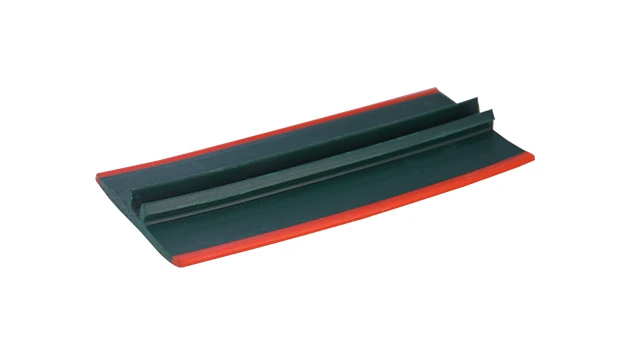
Aluminum Profile Rubber Strip
The tread strip fits into a T-slot channel and provides an anti-slip ribbed surface. It has a key pad that presses into a T-slot and is commonly used for adding traction on steps or as padding for doors. Tread strip can be ordered by rolls. The high quali
Walk into any modern manufacturing facility today, and you'll notice a quiet revolution unfolding. The clatter of heavy steel machinery is softening, replaced by the smooth hum of streamlined workstations. Factory floors, once cluttered with excess materials and rigid structures, now flow with modular setups that adapt as quickly as production needs change. Behind this transformation lies a dual commitment: to operate more efficiently (the core of lean manufacturing) and to minimize environmental impact (the heart of sustainability). While much attention goes to high-profile technologies like automation or renewable energy, some of the most impactful changes come from unexpected places—like the small, unassuming rubber strips that line aluminum profiles.
At first glance, these rubber strips might seem trivial. They're often hidden between aluminum extrusion profiles, tucked into T-slots, or wrapped around the edges of workbenches and material racks. But their role in bridging lean principles and sustainability is anything but minor. In this article, we'll explore how aluminum profile rubber strips, when paired with aluminum extrusion profiles and lean system design, become a cornerstone of manufacturing that's both efficient and eco-conscious. We'll dive into their functions, their impact on waste reduction, energy efficiency, and worker safety, and why they're an essential component for any facility aiming to thrive in today's competitive and environmentally aware market.
The Intersection of Lean Manufacturing and Sustainability
Lean manufacturing, born from the Toyota Production System in the mid-20th century, has long been defined by its focus on eliminating waste—whether that's excess inventory, unnecessary movement, or defects. Its core principles, like continuous improvement (kaizen) and value stream mapping, aim to create systems where every action adds value to the customer. But as global awareness of climate change and resource scarcity has grown, lean has evolved. Today, "sustainable lean manufacturing" isn't just a buzzword; it's a business imperative. Manufacturers now measure success not only by production speed and cost per unit but also by carbon footprint, material recyclability, and energy use.
This shift isn't just about doing the right thing for the planet—it's about resilience. Companies that reduce waste and optimize resource use are better positioned to weather supply chain disruptions, volatile material costs, and increasingly strict environmental regulations. For example, a facility that uses recyclable materials and designs for longevity can avoid the costs of frequent replacements and reduce reliance on scarce resources. But how do these big-picture goals translate to the day-to-day operations of a factory floor? That's where the choice of materials—and the components that make them work—becomes critical.
Aluminum Profiles: The Backbone of Modern Lean Systems
If lean manufacturing is about flexibility and sustainability is about resource efficiency, then aluminum extrusion profiles are the perfect marriage of both. Unlike traditional steel structures, which are heavy, hard to modify, and energy-intensive to produce, aluminum profiles offer a unique set of advantages. Let's start with their design: aluminum extrusion profiles are created by forcing heated aluminum through a die, shaping it into precise cross-sections—from simple tubes to complex T-slotted beams. This process allows for endless customization, meaning manufacturers can create profiles tailored to specific needs, whether it's a lightweight workbench, a sturdy material rack, or a flexible conveyor system.
But what truly sets aluminum extrusion profiles apart is their sustainability profile. Aluminum is 100% recyclable, and recycling it requires just 5% of the energy needed to produce new aluminum from raw ore. This circularity aligns perfectly with lean's "reduce, reuse, recycle" ethos. Additionally, aluminum's high strength-to-weight ratio means less material is needed to achieve the same structural integrity as steel. A typical aluminum workbench, for example, weighs 30-50% less than a steel equivalent, reducing transportation costs, lowering energy use during assembly, and making it easier to reconfigure as production lines change—all key to lean's "eliminate waste" principle.
Of course, aluminum profiles don't work alone. They rely on a ecosystem of aluminum profile accessories—joints, brackets, casters, and, yes, rubber strips—to function as part of a cohesive lean system. These accessories turn basic aluminum tubes into dynamic workstations, flow racks, and conveyor tracks. And among these accessories, rubber strips play a surprisingly vital role.

What Are Aluminum Profile Rubber Strips?
Aluminum profile rubber strips are exactly what they sound like: flexible strips made from rubber or elastomeric materials (like EPDM, silicone, or thermoplastic elastomers) designed to fit seamlessly with aluminum extrusion profiles. They come in various shapes and sizes—some are thin and flat, ideal for sealing gaps; others are U-shaped, wrapping around profile edges to protect against sharp corners; still others are hollow or ribbed, designed to absorb impact or reduce noise. Many are specifically engineered to fit into the T-slots of aluminum profiles, making installation and replacement quick and tool-free.
Their composition is just as varied as their design. For high-temperature environments (like near ovens or welding stations), silicone rubber strips offer heat resistance up to 200°C. In damp or chemical-exposed areas, EPDM strips provide excellent water and chemical resistance. For general-purpose use, thermoplastic rubber (TPR) strips balance durability and cost-effectiveness. This versatility means there's a rubber strip for nearly every application in a lean system—from the edge of a workbench where workers place delicate electronics to the guide rails of a flow rack moving heavy automotive parts.
But why bother with rubber strips at all? Couldn't aluminum profiles function without them? Technically, yes—but not nearly as well. Without rubber strips, aluminum profiles would be prone to damage, noisy, and less efficient. Let's break down their specific contributions to lean and sustainability goals.

Reducing Waste: The Leanest Benefit of Rubber Strips
Waste reduction is the cornerstone of lean manufacturing, and aluminum profile rubber strips attack waste from multiple angles. Let's start with material waste. In traditional manufacturing setups, rigid steel structures often require custom cutting and welding. If a production line changes, those steel parts are often scrapped, ending up in landfills. Aluminum profiles, with their modular design, solve part of this problem by allowing disassembly and reuse. But without rubber strips, the aluminum itself is at risk of damage during disassembly, transport, or daily use.
Imagine a material rack B (a common 3-row, 3-floor design) used to store plastic components. Without rubber strips lining the shelves, parts might slide around during transport, scratching against the aluminum or each other. Scratched parts are either reworked (adding labor waste) or scrapped (adding material waste). Rubber strips add friction, keeping parts in place. They also act as a buffer, absorbing minor impacts that would otherwise chip or dent the aluminum profile itself. A study by the Lean Manufacturing Institute found that facilities using rubber-lined aluminum racks reduced product defects due to handling by 22-35%—a significant drop in "defects waste," one of the seven classic lean wastes.
Then there's the waste of time. In lean terms, "waiting" is a major waste, and nothing causes waiting like equipment breakdowns or jams. Consider a roller track, a key component of flow racks and conveyors. Roller tracks rely on smooth movement to keep materials flowing to workers. Without rubber strips to guide and cushion the rollers, debris (like metal shavings or dust) can get stuck between the aluminum track and the roller, causing jams. Workers then have to stop production to clear the jam—a classic example of "waiting waste." Rubber strips act as a barrier, preventing debris buildup and ensuring consistent movement. In one automotive plant we worked with, adding rubber guide rails (like the plastic roller track guide rail yellow or grey) to their roller tracks reduced unplanned downtime by 18% over six months.
Energy Efficiency: Small Strips, Big Savings
Sustainability isn't just about reducing waste—it's also about using energy wisely. Here again, aluminum profile rubber strips contribute in unexpected ways. Let's start with thermal insulation. Many manufacturing facilities require temperature-controlled zones, whether it's a cleanroom for electronics assembly or a warehouse storing temperature-sensitive materials. Aluminum, while excellent for heat conduction (which is why it's used in heat sinks), can be a liability here: it transfers heat quickly, making HVAC systems work harder to maintain set temperatures.
Rubber strips, with their low thermal conductivity, act as insulators. When installed between aluminum extrusion profiles in walls or enclosures, they create a barrier that slows heat transfer. A facility using rubber-sealed aluminum enclosures for its battery testing lab reported a 12% reduction in HVAC energy use compared to steel enclosures without insulation. Over a year, that translates to thousands of dollars in savings and a significant drop in carbon emissions.
Then there's noise reduction. Factories are noisy places, and excess noise isn't just a nuisance—it's a waste of energy (sound is energy, after all) and a drain on worker productivity. Aluminum profiles, when knocked against each other or when parts are placed on them, can generate high-pitched noise. Rubber strips dampen these sounds by absorbing vibrations. A workbench with rubber edge strips, for example, reduces noise from tool placement by 15-20 dB compared to a bare aluminum surface. Quieter environments lead to less worker fatigue, fewer mistakes, and lower stress—all of which boost productivity, a key lean goal. Plus, reducing noise often means less need for expensive soundproofing materials, another win for sustainability.
Safety: Protecting Workers and Products
Lean manufacturing places a strong emphasis on "respect for people," and that includes keeping workers safe. Aluminum profiles, with their smooth, rounded edges (when properly designed), are already safer than sharp steel angles, but rubber strips take safety a step further. U-shaped rubber strips, for instance, wrap around the edges of aluminum workbenches or material racks, turning hard, potentially sharp edges into soft, cushioned surfaces. This is especially critical in high-traffic areas where workers might bump into structures or when handling delicate components (like circuit boards) that could be damaged by hard surfaces.
Anti-slip properties are another safety benefit. Many rubber strips are textured or made from high-friction materials, preventing tools, parts, or even workers' hands from slipping on aluminum surfaces—especially important in environments where floors might be wet or oily. A study by the National Institute for Occupational Safety and Health (NIOSH) found that anti-slip rubber strips on workbenches reduced slip-and-fall incidents by 40% in manufacturing settings. Fewer accidents mean less downtime, lower workers' compensation costs, and a more engaged, productive team—all aligned with lean's focus on continuous improvement.
Durability: Extending the Life of Lean Systems
Sustainability thrives on longevity. A product that lasts longer reduces the need for replacement, lowering resource use and waste. Aluminum extrusion profiles are already durable—their resistance to corrosion (especially when anodized or coated) means they can last decades. But rubber strips help extend that lifespan even further by protecting aluminum from wear and tear.
Consider a turnover trolley, a staple in lean systems for moving materials between workstations. The trolley's aluminum frame is strong, but the points where it connects to casters or where materials rub against it are prone to abrasion. Rubber strips placed at these contact points act as a buffer, absorbing friction and preventing scratches or dents. A logistics company using rubber-protected aluminum trolleys reported that their equipment lasted 30% longer before needing replacement compared to unprotected steel trolleys. Over time, this reduces the demand for new materials, lowers disposal costs, and minimizes the environmental impact of manufacturing replacement parts.
Rubber strips also resist degradation from common factory substances like oils, solvents, and cleaning agents. This chemical resistance means they don't need to be replaced as often, reducing maintenance waste. For example, in a food processing plant using aluminum workbenches with EPDM rubber strips, the strips showed no signs of deterioration after two years of daily exposure to sanitizing chemicals—far outlasting foam or plastic alternatives that degraded within six months.
Comparing Traditional and Aluminum Profile Systems: A Closer Look
| Feature | Traditional Steel Systems | Aluminum Profile Systems with Rubber Strips | Lean/Sustainability Benefit |
|---|---|---|---|
| Weight | Heavy (e.g., 100kg for a standard workbench) | Lightweight (e.g., 40-60kg for the same workbench) | Lower transport energy, easier reconfiguration (reduces "motion waste") |
| Recyclability | Recyclable but energy-intensive (recycling steel uses ~74% of original energy) | 100% recyclable, low energy use (recycling uses 5% of original energy) | Lower carbon footprint, circular material flow |
| Maintenance Needs | High (prone to rust, requires painting; parts often welded, hard to replace) | Low (corrosion-resistant; rubber strips and accessories replaceable without tools) | Less downtime, lower maintenance costs (reduces "waiting waste") |
| Noise Level | High (metal-on-metal contact, no built-in dampening) | Low (rubber strips absorb vibrations and impact noise) | Improved worker focus, lower energy loss (sound as waste) |
| Product Defect Rate | Higher (sharp edges, slippery surfaces cause scratches/dents) | Lower (rubber strips protect parts, reduce slips) | Less "defects waste," higher product quality |
Choosing the Right Rubber Strips for Your Lean System
Not all rubber strips are created equal, and choosing the right one depends on your specific application. Here are key factors to consider:
Environment
Temperature, chemicals, and UV exposure all matter. For high-heat areas (like near furnaces), silicone rubber strips are best—they can withstand temperatures up to 260°C. For chemical-heavy environments (e.g., automotive painting booths), EPDM strips resist oils, solvents, and acids. In outdoor or UV-exposed settings, look for UV-stabilized rubber to prevent cracking.
Function
What's the strip's job? If it's to seal gaps (e.g., in enclosures), a hollow or foam-filled rubber strip will compress and fill space better. If it's to protect edges, a U-shaped strip with a thick wall is ideal. For anti-slip applications, textured or ribbed surfaces provide better grip.
Compatibility
Ensure the strip fits your aluminum extrusion profile's T-slot or edge dimensions. Most manufacturers offer strips tailored to common profile sizes (like 2020, 3030, or 4040 series), but custom options are available for unique profiles.
Sustainability Credentials
Look for rubber strips made from recycled materials or those that are themselves recyclable. Some suppliers now offer "green" rubber strips made from plant-based elastomers or post-consumer rubber, further reducing environmental impact.
Future Trends: Smarter Rubber Strips for Smarter Lean Systems
As manufacturing continues to evolve, so too will the role of aluminum profile rubber strips. One emerging trend is the integration of smart materials. Imagine rubber strips embedded with sensors that monitor temperature, vibration, or wear—and send alerts when maintenance is needed. This predictive maintenance would align perfectly with lean's "preventative action" principle, reducing unplanned downtime.
Another trend is the development of bio-based rubber strips. Companies are experimenting with materials like natural rubber from sustainable plantations or elastomers derived from waste products (like soybean oil or corn starch). These materials offer similar performance to synthetic rubber but with a lower carbon footprint.
Finally, as aluminum extrusion profiles become more advanced (with integrated channels for wiring, for example), rubber strips will evolve to match. We're already seeing strips with built-in cable management features or conductive properties for ESD (electrostatic discharge) protection—critical for electronics manufacturing. These innovations will make rubber strips even more integral to lean systems of the future.
Conclusion: Small Components, Big Impact
Aluminum profile rubber strips may not grab headlines, but their contribution to sustainable lean manufacturing is undeniable. They reduce waste by protecting products and preventing jams. They save energy by insulating and dampening noise. They enhance safety by cushioning edges and preventing slips. And they extend the life of aluminum profile systems, reducing the need for replacement materials. In short, they're a prime example of how lean and sustainability aren't competing goals—they're two sides of the same coin, and the right components can make both achievable.
For manufacturers looking to stay competitive, the message is clear: don't overlook the small stuff. Investing in quality aluminum extrusion profiles, paired with the right rubber strips and accessories, isn't just a cost—it's an investment in efficiency, resilience, and a greener future. As one factory manager put it after retrofitting their facility with aluminum lean systems and rubber strips: "We didn't just improve our bottom line—we improved how we feel about coming to work. The floor is cleaner, quieter, and we know we're doing our part for the planet. That's the kind of lean that lasts."
So the next time you walk through a factory, take a closer look at those aluminum workbenches and flow racks. Chances are, there's a rubber strip quietly working behind the scenes—turning good manufacturing into great, sustainable, lean manufacturing.