- Company Articles
- Products and Technology
- Product knowledge
- How Aluminum Side Guards Reduce the Risk of Product Damage During Handling

How Aluminum Side Guards Reduce the Risk of Product Damage During Handling
Related Product
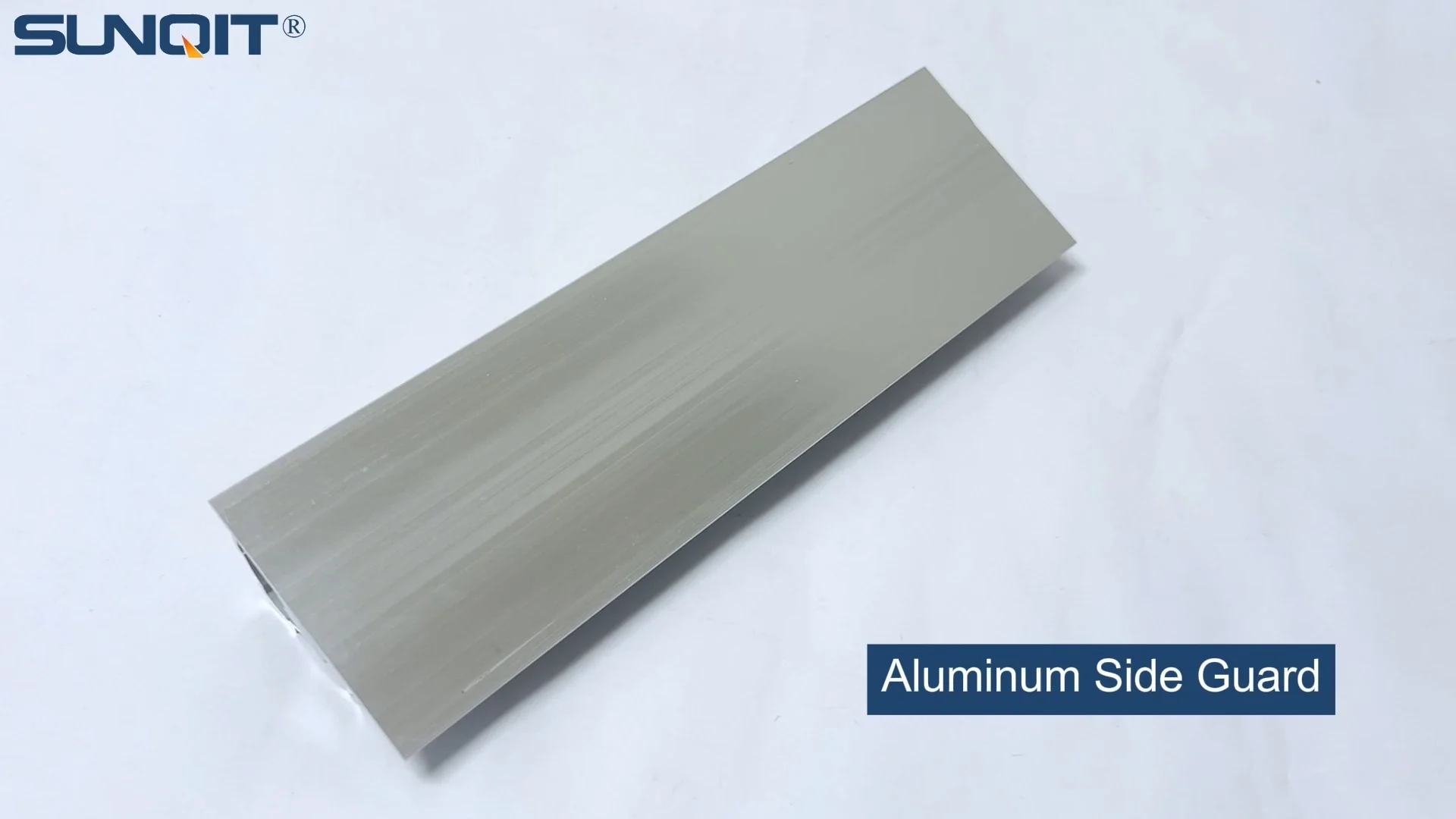
Aluminum Side Guard
Aluminum side guard, it works with a aluminum pipe or a roller track as side guard to prevent material drop,or move to wrong direction.
Picture this: It's a busy Tuesday morning in a small electronics assembly workshop. Maria, a line operator with five years of experience, is carefully moving a tray of delicate circuit boards along a roller track toward the next workstation. She's done this a hundred times before, but today, a slight misalignment in the track causes the tray to wobble. In an instant, two circuit boards slide off the edge, hitting the concrete floor. The sound of cracking plastic makes her wince—those boards cost $45 each, and now they're ruined. Worse, this is the third time this month. Her supervisor sighs, adding the cost to the growing "damage log" that's eating into the company's profits. Sound familiar? If you've ever managed a warehouse, factory, or distribution center, product damage during handling is likely more than just an occasional annoyance—it's a silent budget drain.
The good news? There's a simple, often overlooked solution that can turn these frustrating moments into a thing of the past: aluminum side guards. These unassuming barriers, made from lightweight yet durable aluminum profile, are designed to line the edges of roller tracks, workbenches, material racks, and conveyors, creating a protective boundary that keeps products where they belong. In this article, we'll dive into why aluminum side guards are a game-changer for businesses of all sizes, how they integrate seamlessly into existing workflows, and why they're a smarter investment than you might think. Whether you're dealing with fragile electronics, heavy automotive parts, or anything in between, by the end, you'll understand exactly how these guards can save you time, money, and plenty of headaches.
The Hidden Costs of Product Damage: More Than Just Broken Parts
Before we get into how aluminum side guards work, let's talk about why product damage matters. It's easy to write off a fallen box or a cracked component as a "small loss," but the numbers tell a different story. According to the Material Handling Equipment Distributors Association (MHEDA), the average warehouse loses 1-3% of its annual inventory to damage during handling and storage. For a business with $1 million in annual inventory, that's $10,000-$30,000 in avoidable losses—money that could go toward hiring new staff, upgrading equipment, or expanding operations.
But the costs don't stop at replacement parts. Let's break it down:
Direct Costs: The most obvious hit is the price of replacing damaged goods. For high-value items like medical devices or precision tools, a single damaged unit can cost hundreds or even thousands of dollars. Then there's the labor involved in cleaning up the mess, documenting the incident, and processing insurance claims (if you're lucky enough to be covered). In some cases, damaged products can't be repaired and end up in landfills, adding disposal fees to the tally.
Indirect Costs: These are the "hidden" expenses that sneak up on you. When a product is damaged, production lines might slow down or stop entirely while staff address the issue. For example, if a tray of parts falls off a workbench, the operator can't proceed until the area is cleared and replacement parts are fetched—wasting 15, 30, or even 60 minutes of productive time. Multiply that by multiple incidents per week, and you're looking at hours of lost labor. Then there's the impact on morale: No one likes cleaning up avoidable messes, and repeated damage can make teams feel frustrated or demotivated, leading to higher turnover.
Reputational Costs: If damaged products make it to customers—say, a dented package or a broken component inside—you risk losing trust. In today's world of online reviews, a single complaint about "shoddy handling" can deter potential buyers. For businesses that supply parts to other companies, consistent damage might even lead clients to seek more reliable suppliers, putting long-term partnerships at risk.
The worst part? Many businesses accept this damage as "unavoidable." They blame "clumsy workers" or "busy days," never realizing that a simple upgrade to their handling equipment—like adding aluminum side guards—could cut these losses by 50% or more. Let's take a closer look at how these guards work, and why aluminum is the material of choice.
What Are Aluminum Side Guards, Anyway? A Closer Look at Design and Function
At first glance, aluminum side guards might seem like nothing more than "rails" attached to the edges of your equipment. But their design is surprisingly thoughtful, combining simplicity with effectiveness. Let's start with the basics: Aluminum side guards are long, narrow strips (or "rails") made from extruded aluminum profile—think of the same material used in high-quality window frames or aircraft parts. This isn't just any aluminum, though; it's typically 6063-T5 aluminum, an alloy known for its strength, corrosion resistance, and lightweight properties (about 1/3 the weight of steel, but just as strong in many applications).
Most side guards are between 1 and 4 inches tall, depending on the size of the products they're meant to protect. They're designed to mount directly onto the edges of roller tracks, workbenches, material racks, or conveyor belts using simple accessories like aluminum profile brackets or T-slot connectors. Some guards even come with pre-drilled holes or slots, making installation a breeze—no welding or specialized tools required.
But what really sets aluminum side guards apart is their versatility. Unlike rigid plastic guards (which crack easily) or wooden rails (which warp and rot), aluminum guards can be cut to custom lengths, bent into curves (for circular tracks), or combined with other accessories like rubber strips for extra impact absorption. For example, if you're moving small, lightweight items like cosmetic bottles, a 1-inch tall guard might be enough. For heavier goods like automotive batteries, a 3-inch guard with a reinforced base ensures nothing slips over the edge.
Another key feature? Their low profile. Aluminum side guards are sleek and unobtrusive, so they don't interfere with loading or unloading products. Operators can still easily reach across a workbench or slide items onto a roller track without having to "climb over" a bulky barrier. This is crucial in fast-paced environments where every second counts—you don't want to slow down workflow to prevent damage.

How Aluminum Side Guards Integrate with Your Existing Workflow
One of the biggest objections we hear from businesses is, "But we already have roller tracks/workbenches/material racks—will these guards even fit?" The answer is almost always yes. Aluminum side guards are designed to work with the equipment you already own, making them a cost-effective upgrade rather than a complete overhaul. Let's break down how they integrate with three common systems:
1. Roller Track Systems: Keeping Products on the Straight and Narrow
Roller tracks are the backbone of many material handling operations. They use gravity or motorized rollers to move products from point A to point B, which is efficient but leaves room for error—especially if the track is long, has curves, or handles unevenly shaped items. Aluminum side guards are a perfect match here. By mounting them along both sides of the roller track, you create a "lane" that guides products forward without swaying.
Take the example of a food distribution center moving cases of canned goods. Without guards, a case might hit a bump in the track and tip sideways, spilling cans everywhere. With aluminum guards, the case stays centered, even if the track isn't perfectly level. For inclined tracks (where gravity speeds up product movement), guards prevent "runaway" items from jumping the track entirely—a common cause of damage in warehouses.
Installation is straightforward: Most roller tracks have pre-drilled holes or T-slots along the edges, so you can attach guards using simple bolts or aluminum profile accessories like "placon mounts" (small brackets that slide into T-slots). Even older tracks can be retrofitted with adhesive-backed guards (though we recommend bolt-on for heavy use). In less than an hour, a single technician can outfit a 10-foot track with guards—no need to shut down production for days.
2. Workbenches: Protecting Parts During Assembly and Inspection
Workbenches are where the "magic" happens—assembly, inspection, packaging, and more. But they're also hotspots for product damage. Think about it: Operators are juggling tools, parts, and paperwork, and it's easy for a small component (like a screw or a resistor) to get knocked off the edge. Over time, these "small" losses add up—especially if the parts are hard to replace.
Aluminum side guards turn a standard workbench into a "contained workspace." By mounting 1-2 inch guards along the front and sides (leaving the back open for access), you create a barrier that catches wayward parts. For example, in a jewelry workshop, a bench with guards prevents tiny gemstones from rolling onto the floor. In a mechanic's shop, they keep nuts and bolts from disappearing under machinery.
Many workbenches, especially those made with aluminum profile (like the "aluminum workbench A" or "workbench E" from your supplier's list), are already compatible with T-slot side guards. For wooden or steel benches, you can drill small holes and bolt the guards directly to the edge, or use clamp-on brackets that require no permanent modification. Some guards even come with a "lip" that hangs over the bench edge, preventing items from sliding under the guard itself—genius for thin, flat objects like circuit boards or sheet metal.
3. Material Racks: Securing Stored Items During Retrieval
Material racks—whether they're "material rack B (3 row and 3 floor)" units or simple shelving—are another area where damage occurs. When workers pull items from a rack, especially from high shelves, there's a risk of knocking adjacent products off the edge. A box of printer paper, for example, might slide off a shelf and tear open when it hits the ground. With aluminum side guards along the front of each shelf, you add a "safety net" that keeps items in place, even during hurried retrieval.
Aluminum guards are particularly useful for racks that hold irregularly shaped items, like power tools or spare parts. Unlike wire mesh dividers (which can bend), aluminum guards maintain their shape, ensuring consistent protection. They're also easy to adjust: If you reconfigure your rack to hold taller items, simply remove the existing guards and replace them with longer ones—no need to buy a whole new shelf.

Beyond Protection: 5 Unexpected Benefits of Aluminum Side Guards
We've covered how aluminum side guards prevent product damage, but their value goes far beyond that. Here are five additional perks that make them a smart investment:
1. Durability That Saves You Money Long-Term
Aluminum might seem pricier upfront than plastic or wood, but it's a classic "buy once, cry once" scenario. A high-quality aluminum side guard can last 10+ years with minimal maintenance, while plastic guards might crack after 1-2 years, and wooden rails warp or rot in humid environments. Let's do the math: A 10-foot plastic guard costs $20 but needs replacement every 2 years. Over 10 years, that's $100. An aluminum guard costs $50 but lasts 10 years—saving $50. Multiply that by 50 guards in a large warehouse, and you're looking at $2,500 in savings. Plus, aluminum is 100% recyclable, so when it finally does wear out, you can sell it for scrap (adding a little extra cash to your bottom line).
2. Improved Workplace Safety for Your Team
Product damage isn't just costly—it can be dangerous. A falling box of heavy parts could injure a worker's foot, or shattered glass from a broken container could cause cuts. Aluminum side guards create a safer environment by keeping products contained, reducing the risk of trips, falls, and impact injuries. In fact, OSHA (Occupational Safety and Health Administration) reports that "falling objects" are a leading cause of warehouse accidents; guards help mitigate this risk, keeping your team safe and reducing workers' compensation claims.
3. A Cleaner, More Organized Workspace
Ever walked into a workshop where tools, parts, and debris are scattered across the floor? It's not just messy—it's a productivity killer. When items stay on workbenches and racks (thanks to side guards), floors stay clear, making it easier to clean, inspect, and navigate. This might seem like a small change, but a tidy workspace has been proven to boost morale and efficiency. Employees feel more valued when their environment is well-maintained, and they spend less time searching for lost parts or cleaning up spills.
4. Compatibility with Lean Manufacturing Principles
If your business follows lean manufacturing or "kaizen" practices (continuous improvement), aluminum side guards are a natural fit. Lean systems focus on eliminating waste—including waste from damaged products, excess inventory (held to replace damaged items), and unplanned downtime. By reducing damage, side guards help streamline workflows, cut costs, and free up resources to invest in other lean initiatives (like better training or automation). They're also modular, so you can start small (guarding high-risk areas first) and expand as needed—aligning with the "start small, scale fast" lean mindset.
5. A Professional Image for Clients and Auditors
First impressions matter. If a client or auditor visits your facility and sees disorganized, damaged products, they might question your attention to detail. On the other hand, a workshop with clean, guarded roller tracks and workbenches sends a message: "We care about quality." This can be a competitive advantage when bidding for contracts, especially in industries like aerospace, medical devices, or pharmaceuticals, where precision and reliability are non-negotiable.
Choosing the Right Aluminum Side Guards: A Practical Guide
Now that you're convinced aluminum side guards are worth investing in, how do you choose the right ones for your needs? Here's a step-by-step breakdown to help you decide:
Step 1: Identify High-Risk Areas
Start by walking through your facility and noting where damage occurs most often. Is it along a specific roller track? On a particular workbench? At the edges of a material rack? Jot down the location, the type of product being handled, and how often damage happens. For example: "Roller track near packing station: 2-3 cosmetic bottles fall off weekly." This will help you prioritize which areas to guard first.
Step 2: Measure the Environment
For each high-risk area, measure the length of the edge you need to guard (e.g., a 12-foot roller track, a 6-foot workbench). Also, note the height of the products—guards should be at least 1/3 the height of the tallest item to prevent tipping. For example, if you're moving 6-inch tall boxes, a 2-inch guard is ideal.
Step 3: Consider the Load and Impact
How heavy are the products? Light items (under 10 lbs) can use standard aluminum guards. Heavy items (50+ lbs) need reinforced guards with thicker aluminum profile (e.g., 1.5mm vs. 1.0mm thickness) or added brackets. If products are frequently "slammed" onto the track (like in a busy shipping department), look for guards with rubber or foam padding to absorb impact.
Step 4: Check Compatibility with Existing Equipment
Most modern roller tracks, workbenches, and material racks use T-slot aluminum profile, which makes attaching guards easy. If your equipment is older (e.g., wooden shelves, steel roller tracks), ask your supplier about clamp-on or adhesive-backed guards. Some suppliers, like the "lean pipe supplier" or "aluminum profile supplier" on your keyword list, offer custom mounting solutions for non-standard equipment.
| Application | Recommended Guard Height | Aluminum Thickness | Best Accessories |
|---|---|---|---|
| Small parts (e.g., screws, jewelry) | 0.5-1 inch | 1.0mm | Adhesive rubber strip (prevents scratches) |
| Electronics (e.g., circuit boards, phones) | 1-1.5 inches | 1.0-1.2mm | Foam padding (shock absorption) |
| Boxed goods (e.g., clothing, cosmetics) | 2-3 inches | 1.2-1.5mm | T-slot brackets (easy installation) |
| Heavy machinery parts (e.g., engine components) | 3-4 inches | 1.5-2.0mm | Reinforced base brackets (extra stability) |
Step 5: Don't Forget About Customization
Every facility is unique, so don't settle for "one-size-fits-all" guards. Many suppliers offer custom cutting, bending, or color options (anodized aluminum comes in silver, black, or blue). For example, if you have a curved roller track, ask for guards bent to a 90-degree or 180-degree angle. If you want to color-code zones (e.g., red guards for high-risk areas), anodized colors make this easy.
Real-World Results: How One Small Business Cut Damage by 65% in 3 Months
Let's put all this into perspective with a real story. Meet Carlos, the owner of a family-run furniture manufacturing shop in Texas. His team builds custom wooden chairs and tables, and for years, they struggled with damage to chair legs during the finishing process. The legs—delicate, with intricate carvings—were moved along a 20-foot roller track from the sanding station to the painting booth. Despite careful handling, 8-10 legs per week would fall off the track, getting scratched or chipped. Each damaged leg cost $25 in materials and 30 minutes of labor to repair, adding up to $1,000-$1,250 in losses monthly.
Carlos had tried everything: adding rubber mats under the track (too slippery), training staff to move slower (slowed production), even hiring an extra worker to "babysit" the track (expensive). Nothing worked—until he stumbled on aluminum side guards at a trade show. Skeptical but desperate, he ordered 20 feet of 2-inch tall guards with foam padding, designed to fit his existing roller track. Installation took his maintenance guy 2 hours, and they were back up and running by lunch.
The results? In the first month, only 3 legs were damaged—a 62% drop. By the third month, the number fell to 2-3 per month (a 65% total reduction). Carlos estimates he's saving $750 monthly, which adds up to $9,000 per year. "I wish I'd done this years ago," he told us. "The guards paid for themselves in under two months, and my team is less stressed now that they don't have to worry about breaking parts."
Carlos's story isn't unique. From small workshops to large warehouses, businesses that invest in aluminum side guards consistently report 50-70% reductions in product damage. The key? They're not just buying a "product"—they're investing in a solution that solves a specific, costly problem.
Installation and Maintenance: Keeping Your Guards Working Like New
Installing aluminum side guards is easier than you might think, and maintenance is minimal. Here's what you need to know:
Installation Tips
Tools You'll Need: A tape measure, hacksaw (for cutting custom lengths), drill (if bolting to non-T-slot equipment), and a rubber mallet (to tap brackets into place). Most suppliers include mounting hardware (bolts, brackets) with the guards, but double-check before you start.
Step-by-Step: 1) Measure and cut the guard to length. 2) Attach brackets to the guard (if using T-slot, slide brackets into the slot; if bolting, drill holes). 3) Align the guard with the edge of the track/workbench/rack. 4) Secure brackets to the equipment (tighten bolts until snug, but don't over-tighten—aluminum can strip). 5) Test by sliding a product along the edge; adjust if needed.
Pro Tip: For long roller tracks, install guards in 4-6 foot sections instead of one continuous piece. This makes replacement easier if a section gets damaged, and allows for expansion later.
Maintenance 101
Aluminum side guards are low-maintenance, but a little care goes a long way:
Weekly: Wipe down guards with a damp cloth to remove dust and debris (this prevents buildup that could scratch products). Check for loose bolts or brackets and tighten as needed.
Monthly: Inspect for dents or bends (unlikely, but possible if hit by heavy equipment). Small dents can be gently hammered out; severe damage means replacing that section.
Annually: If using foam or rubber accessories, check for wear and replace if cracked or torn. Lubricate T-slot brackets (if applicable) with a dry silicone spray to keep them sliding smoothly.
Final Thoughts: Protect Your Products, Protect Your Profits
Product damage during handling is a problem that's easy to ignore—until it's eating into your profits, frustrating your team, and damaging your reputation. Aluminum side guards aren't a "luxury" or a "nice-to-have"—they're a practical, affordable solution that pays for itself in months. Whether you're running a small workshop or a large distribution center, these simple barriers can transform your workflow from chaotic and costly to smooth and efficient.
So, what's next? Take 15 minutes to walk through your facility and identify your high-risk areas. Note the length of edges, product sizes, and existing equipment. Then, reach out to a reputable supplier (like the "aluminum profile supplier" or "lean pipe supplier" on your keyword list) for a quote. Most suppliers offer free samples or consultations, so you can test guards in your space before committing.
Remember Maria, the line operator from the beginning? After her company installed aluminum side guards on their roller tracks and workbenches, she hasn't had a single damaged circuit board in six months. "It's like night and day," she told us. "I can focus on my work instead of worrying about things falling off. And my supervisor? He's stopped sighing every time he walks by."
Don't let product damage be the silent killer of your business. Invest in aluminum side guards today—and start protecting what matters most.