- Company Articles
- Products and Technology
- Product knowledge
- How Aluminum Workbench A Enhances Workplace Safety in Industrial Settings

How Aluminum Workbench A Enhances Workplace Safety in Industrial Settings
Related Product
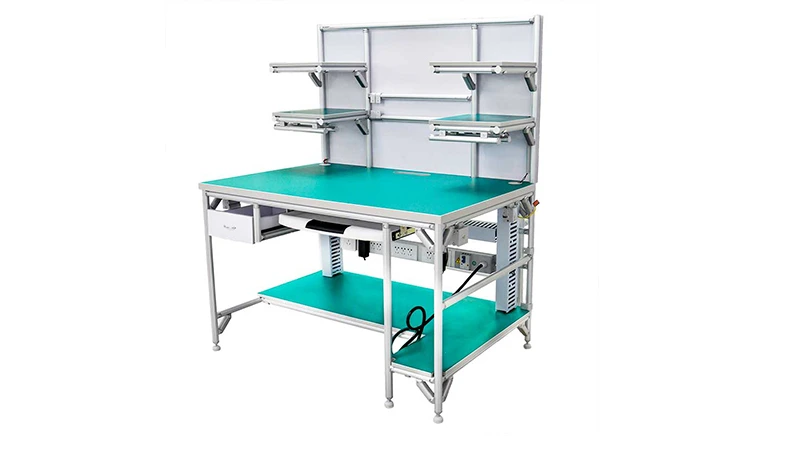
Aluminum Workbench A
Aluminum tube workbench is more flexible and durable, compared with traditional PE/ABS coated steel tube. It is easy to assemble, anti corrosion, rust protection, and recycle use after disassemble.
In the fast-paced world of manufacturing and industrial work, safety isn't just a buzzword—it's the foundation of every productive, sustainable operation. Every tool, every piece of equipment, and every workspace design choice plays a role in protecting the people who keep the industry moving. Today, we're diving into a workhorse of modern industrial setups: Aluminum Workbench A. More than just a surface to work on, this tool is a safety-first solution designed to address common hazards, reduce risks, and create environments where workers can thrive. Let's explore how its thoughtful design, premium materials, and integration with lean systems make it a game-changer for workplace safety.
Understanding Aluminum Workbench A: More Than Just a Workbench
Before we jump into safety benefits, let's get to know Aluminum Workbench A. At first glance, it might look like any other workbench, but a closer look reveals intentional design choices that prioritize both functionality and safety. Built with high-grade aluminum profile, this workbench is lightweight yet incredibly sturdy—a balance that's hard to achieve with traditional materials like wood or steel. Its modular design means it can be customized with accessories like tool holders, shelves, and even caster wheels, adapting to the unique needs of any workspace.
What truly sets Aluminum Workbench A apart is its focus on the human element. Industrial workbenches are where workers spend hours each day, assembling components, testing products, or packing goods. A poorly designed bench can lead to fatigue, strain, and even accidents. Aluminum Workbench A flips that script by centering worker comfort and safety in every detail—from adjustable heights to ESD workstation compatibility. Let's break down how these features translate to real-world safety improvements.
Ergonomics: Reducing Strain, Preventing Injury
Adjustable Heights for Every Worker
One of the most common sources of workplace injury is repetitive strain from working at awkward heights. Imagine a scenario: Maria, a production assembler, spends 8 hours a day hunched over a fixed-height wooden workbench that's 2 inches too low for her 5'10" frame. By the end of the week, her lower back aches, and her shoulders are tight. Over time, this could lead to chronic pain or even a debilitating injury. Now, replace that wooden bench with Aluminum Workbench A. With its easy-to-adjust height mechanism, Maria can raise the surface to elbow level, keeping her spine straight and her muscles relaxed. No more hunching, no more strain—just a workspace that fits her .
This adjustability isn't just about comfort; it's about compliance with ergonomic standards. OSHA estimates that musculoskeletal disorders (MSDs) account for over 30% of workplace injuries, often linked to poor workstation design. Aluminum Workbench A directly addresses this by allowing workers to customize their setup, reducing the risk of MSDs like carpal tunnel syndrome, tendonitis, and lower back injuries.
Spacious, Clutter-Free Surfaces
A cluttered workspace is an accident waiting to happen. Tools left scattered, components piled high, or cords snaking across the surface—these aren't just messy; they're tripping hazards, fire risks, and distractions. Aluminum Workbench A combats this with a generous, flat work surface and optional add-ons like overhead shelves and under-bench storage. By keeping tools and materials organized and within arm's reach, it reduces the need for workers to stretch, bend, or reach awkwardly—movements that often lead to slips, trips, or falls.
Take, for example, a busy electronics assembly line. Workers here handle small, delicate components that can easily get lost in clutter. With Aluminum Workbench A's built-in tool trays and partitioned storage, each resistor, wire, and screwdriver has a designated spot. This not only speeds up work but also eliminates the risk of stepping on a dropped component or knocking over a pile of parts—keeping floors clear and workers on their feet.

Aluminum Profile: The Safety Secret in the Material
At the heart of Aluminum Workbench A is its use of aluminum profile—a material that brings a host of safety benefits to the table. Let's unpack why aluminum is a safer choice than traditional workbench materials:
Lightweight Strength: Reducing Manual Handling Risks
Steel workbenches are notoriously heavy. Moving one requires multiple workers or heavy machinery, increasing the risk of strains, crushed fingers, or dropped equipment. Aluminum profile, on the other hand, is about 30% lighter than steel while maintaining comparable strength. This means Aluminum Workbench A can be repositioned by just one or two workers (especially with optional caster wheels), reducing the need for strenuous lifting. Fewer heavy lifts translate to fewer overexertion injuries—a leading cause of workplace absences.
Corrosion Resistance: Long-Term Safety You Can Count On
Industrial environments are tough on equipment. Exposure to oils, chemicals, moisture, or even just humidity can cause steel to rust and wood to warp. A rusted steel bench might develop sharp edges; a warped wooden bench could become unstable, wobbling under heavy loads. Aluminum profile, however, is naturally corrosion-resistant. It doesn't rust, warp, or degrade when exposed to harsh conditions, ensuring the workbench remains stable and smooth-surfaced for years. No unexpected collapses, no splinters, no sharp, rusted edges—just consistent safety, day in and day out.
Non-Conductive: A Lifesaver for Electrical Work
In settings where electricity is part of the job—think electronics manufacturing or automotive repair—conductive work surfaces can be deadly. A stray wire, a static discharge, or a faulty tool could send electricity through a steel workbench, putting workers at risk of shock. Aluminum, while a metal, is non-magnetic and has low electrical conductivity compared to steel. When paired with ESD (Electrostatic Discharge) accessories, Aluminum Workbench A becomes an ESD workstation, safely dissipating static charges and protecting both workers and sensitive components from electrical damage. This is a game-changer for industries like semiconductor manufacturing, where even a tiny static spark can destroy millions of dollars in equipment.

Caster Wheels: Mobility Without Compromising Stability
Many industrial workspaces require flexibility—workbenches that can move to where the work is, rather than forcing workers to carry heavy items across the floor. Enter caster wheels: a seemingly small addition that has a huge impact on safety. Aluminum Workbench A can be equipped with high-quality caster wheels, turning it from a stationary fixture into a mobile workstation. But not all casters are created equal, and Aluminum Workbench A's design ensures mobility doesn't mean sacrificing stability.
Locking Mechanisms: Staying Put When It Matters
Imagine pushing a loaded workbench across the shop floor to a new location, only to have it roll away unexpectedly when you let go. That's a recipe for collisions, spills, or worse. Aluminum Workbench A's caster wheels come with robust locking brakes that engage with a simple tap of the foot. Once locked, the bench stays firmly in place, even on uneven floors. This feature is crucial during tasks that require precision, like assembling small parts or using power tools—no more worrying about the bench shifting mid-work.
Heavy-Duty Design: Supporting Loads Safely
A caster wheel is only as good as its ability to support weight. Overloaded casters can buckle, leading to the workbench tipping or collapsing. Aluminum Workbench A's casters are rated for heavy loads (up to 500 lbs, depending on the model), ensuring they can handle the weight of tools, materials, and even the occasional heavy component. This peace of mind means workers don't have to second-guess whether the bench can support their work—they can focus on the task at hand, knowing the casters have their back.
Smooth Rolling: Reducing Manual Handling Injuries
Manual handling—lifting, carrying, pushing, or pulling heavy objects—is a leading cause of workplace injuries, accounting for over 25% of non-fatal occupational injuries in the U.S. By making Aluminum Workbench A mobile, workers can roll materials directly to their station instead of carrying them. For example, a mechanic no longer needs to lug a 50-pound toolbox across the garage; they can roll the workbench (with the toolbox secured on top) right to the vehicle. This reduces strain on backs, shoulders, and knees, lowering the risk of sprains and chronic injuries.
Integration with Lean Systems: Safety Through Efficiency
In today's industrial landscape, lean systems are all about eliminating waste, streamlining workflows, and creating more efficient processes. But did you know lean principles also enhance safety? A disorganized, inefficient workspace is a breeding ground for hazards—clutter, unnecessary movement, and confusion all increase risk. Aluminum Workbench A is designed to integrate seamlessly with lean systems, turning efficiency into a safety advantage.
5S and Workplace Organization
The 5S methodology—Sort, Set in Order, Shine, Standardize, Sustain—is a cornerstone of lean systems, and Aluminum Workbench A is built to support every step. "Sort" (removing unnecessary items) is easier with its ample storage, ensuring only essential tools stay on the bench. "Set in Order" (organizing remaining items) is simplified with customizable tool holders and labeled compartments. "Shine" (cleaning regularly) is a breeze thanks to the smooth aluminum surface, which wipes clean with a damp cloth. "Standardize" (creating consistent processes) is possible because every Aluminum Workbench A can be configured identically, so workers know exactly where to find tools, no matter which station they're at. And "Sustain" (maintaining the system) is easier because the bench's durability means it stays organized and functional over time.
The result? A workspace that's free of clutter, where everything has a place, and where workers spend less time searching for tools and more time working safely. Studies show that organized workspaces reduce the risk of accidents by up to 35%—proof that lean systems and safety go hand in hand.
Reducing Waste, Reducing Risk
Lean systems focus on eliminating seven types of waste, one of which is "motion waste"—unnecessary movement by workers. Aluminum Workbench A cuts down on motion waste by bringing the work to the worker (via caster wheels) and keeping tools within arm's reach. Less movement means fewer opportunities for slips, trips, or falls. For example, in a warehouse picking operation, a mobile Aluminum Workbench A can follow the picker, reducing the need to walk back and forth between a stationary bench and the storage racks. This not only speeds up work but also lowers the risk of collisions with forklifts or other equipment in busy aisles.
Aluminum Workbench A vs. Traditional Workbenches: A Safety Comparison
To truly appreciate Aluminum Workbench A's safety benefits, let's compare it to traditional workbenches made from wood, steel, or generic materials. The table below highlights key safety features and how Aluminum Workbench A stacks up:
| Safety Feature | Traditional Workbench (Wood/Steel) | Aluminum Workbench A |
|---|---|---|
| Ergonomic Adjustability | Fixed height; no customization | Adjustable height; customizable for worker comfort |
| Weight & Mobility | Heavy (steel) or bulky (wood); hard to move | Lightweight aluminum profile; optional locking casters for easy, safe mobility |
| Surface Safety | Wood: splinters, warping; Steel: rust, sharp edges | Smooth, corrosion-resistant aluminum profile; no splinters or rust |
| ESD Protection | Minimal to none; conductive steel risks static discharge | Compatible with ESD workstation accessories; dissipates static safely |
| Durability & Longevity | Wood rots; steel rusts; requires frequent replacement | Aluminum profile resists wear, corrosion, and warping; long-lasting stability |
The difference is clear: Aluminum Workbench A isn't just incrementally better—it's a complete reimagining of what a workbench can do for safety. By addressing common pain points with traditional materials and designs, it creates a workspace that protects workers, reduces risks, and supports long-term health.
Real-World Impact: Safety Success Stories
Numbers and features tell part of the story, but real-world examples bring it to life. Let's look at two scenarios where Aluminum Workbench A made a tangible difference in workplace safety.
Case Study 1: Electronics Manufacturer Reduces Static Damage and Injuries
A mid-sized electronics manufacturer was struggling with two issues: frequent static discharge damage to circuit boards (costing thousands in wasted materials) and a high rate of worker complaints about back pain. Their old steel workbenches were conductive, leading to static issues, and their fixed height forced workers to hunch or stretch. After switching to Aluminum Workbench A with ESD workstation accessories and adjustable height, they saw immediate results: static damage dropped by 60%, and reported back pain incidents fell by 45% within three months. Workers could adjust their benches to comfortable heights, and the ESD-safe surface protected both the products and the team.
Case Study 2: Automotive Plant Improves Mobility and Organization
A large automotive plant needed to streamline its assembly line, where workers were spending too much time moving tools and parts between stations. Their stationary wooden workbenches were cluttered, and manual handling of heavy components was leading to strains. By equipping Aluminum Workbench A with caster wheels and integrating it into their lean system, they created mobile workstations that followed the assembly line. Workers reported less fatigue, and the plant saw a 30% reduction in trips and falls due to clearer walkways. Plus, the organized tool storage cut down on time spent searching for tools, increasing productivity while keeping the workspace safer.
Conclusion: Investing in Safety, Investing in People
Workplace safety isn't an expense—it's an investment. An investment in the well-being of your team, in the efficiency of your operations, and in the long-term success of your business. Aluminum Workbench A embodies this philosophy, proving that safety can be built into the very tools we use every day. From its ergonomic design and aluminum profile durability to its mobile caster wheels and lean system integration, every feature is a step toward a safer, healthier workplace.
So, if you're looking to reduce injuries, boost morale, and create a workspace that puts people first, consider Aluminum Workbench A. It's more than a workbench—it's a commitment to safety, and that's a commitment that pays dividends for years to come.