- Company Articles
- Products and Technology
- Solution
- How Aluminum Workbench A Reduces Downtime in Manufacturing Operations

How Aluminum Workbench A Reduces Downtime in Manufacturing Operations
Related Product
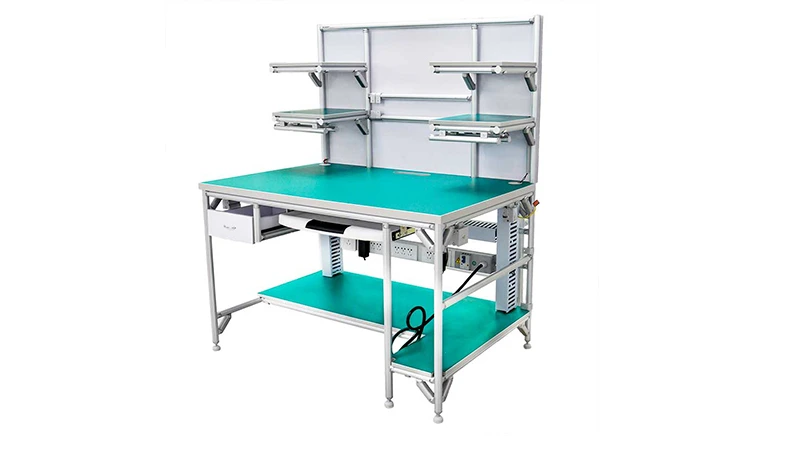
Aluminum Workbench A
Aluminum tube workbench is more flexible and durable, compared with traditional PE/ABS coated steel tube. It is easy to assemble, anti corrosion, rust protection, and recycle use after disassemble.
In the fast-paced world of manufacturing, every second counts. Whether you're running a small electronics assembly line or a large automotive plant, downtime isn't just an inconvenience—it's a direct hit to your bottom line. Missed deadlines, frustrated workers, and delayed shipments can turn a productive day into a costly setback. But what if there was a tool that didn't just keep your operations running, but actively cut down on those unexpected pauses? Enter Aluminum Workbench A—a yet powerful solution that's quietly revolutionizing how manufacturers tackle downtime.
At first glance, a workbench might seem like a basic piece of equipment. But in reality, it's the backbone of your production floor. It's where parts are assembled, tools are organized, and workers spend hours of their shift. A poorly designed workbench can become a bottleneck: clunky adjustments, flimsy materials, and rigid setups force teams to waste time adapting, fixing, or even replacing it. Aluminum Workbench A, however, is built with one goal in mind: to keep your line moving, no matter what.
What Makes Aluminum Workbench A Different?
Before diving into how it reduces downtime, let's clarify what Aluminum Workbench A actually is. Unlike traditional workbenches made of wood or steel, this model is constructed using high-grade aluminum profile—a material known for its strength, lightness, and flexibility. It's not just a flat surface; it's a modular system designed to adapt to your needs. From adjustable heights to customizable accessories, every component is engineered to minimize disruptions and maximize efficiency.
But don't just take our word for it. Let's break down the key features that make Aluminum Workbench A a downtime-fighting machine.
1. Ergonomics: Keeping Workers Comfortable, Keeping Lines Moving
Fatigue is one of the silent killers of productivity. When workers are straining to reach tools, bending awkwardly to access parts, or standing at a bench that's too high or too low, they slow down. Over time, this leads to more breaks, increased errors, and even absenteeism—all of which add up to downtime. Aluminum Workbench A addresses this head-on with its ergonomic design.
Adjustable height settings mean every worker, regardless of stature, can set the bench to a comfortable level. No more hunching over or stretching to reach materials. The result? Workers stay focused longer, make fewer mistakes, and take shorter breaks. In one case study, a mid-sized electronics manufacturer reported a 15% reduction in "micro-downtime" (short, unplanned pauses) after switching to height-adjustable Aluminum Workbench A models. That might not sound like much, but over a month, those extra minutes added up to nearly 40 hours of recovered production time.
But ergonomics isn't just about height. The bench's surface is also designed to reduce clutter. Integrated tool rails, built-in storage bins, and cable management channels keep the workspace organized. When tools are within arm's reach and cords aren't tangled, workers spend less time searching and more time assembling. It's a small change, but it adds up—especially in high-volume environments where seconds per unit translate to thousands of units per day.
2. Modular Design: Adapt Fast, Without the Fuss
Manufacturing needs change. One week, you're assembling small circuit boards; the next, you're scaling up to larger components. Traditional workbenches lock you into a single setup—if you need to add a shelf, reposition a tool holder, or even move the bench to a new location, you're looking at hours of disassembly, modification, and reassembly. That's downtime you can't afford.
Aluminum Workbench A solves this with its modular aluminum profile construction. Aluminum profile isn't just lightweight; it's designed to work with a range of accessories—think shelves, bins, lighting, and even small conveyors—that snap into place using simple connectors. Need to add a second shelf for larger parts? Just slide in a few aluminum profile brackets and secure them with a hex key. Want to attach a flow rack to the side for easy material access? It takes 10 minutes, not half a day.
Take the example of a furniture manufacturer that recently shifted from producing dining chairs to patio sets. Their old steel workbenches couldn't accommodate the larger, bulkier patio table components. Instead of shutting down production for a day to replace the benches, they reconfigured their Aluminum Workbench A units. By adding extendable aluminum profile arms and attaching a small roller track (another modular accessory), they had the new setup ready in under two hours. The line was back up and running with minimal disruption—something their old workbenches never could have done.
3. Durability: Less Maintenance, More Uptime
A workbench that breaks down is a workbench that causes downtime. Loose screws, warped surfaces, and rusted frames are common issues with traditional benches, especially in busy shops where spills, heavy loads, and constant use take their toll. Aluminum Workbench A, however, is built to last—thanks to its aluminum profile and high-quality components.
Aluminum is naturally resistant to rust and corrosion, making it ideal for environments where oils, coolants, or cleaning agents are present. Unlike wood, it won't warp or splinter when exposed to moisture. And unlike steel, it doesn't require regular painting or coating to stay in shape. The result? Maintenance costs plummet, and unexpected breakdowns become a thing of the past.
Consider a metal fabrication shop that previously used steel workbenches. Every six months, they'd have to replace at least two benches due to rust or bent frames—a process that involved ordering new benches, removing the old ones, and reinstalling the new ones, taking up an entire day each time. After switching to Aluminum Workbench A, they've gone three years without replacing a single unit. Even better, minor issues (like a loose joint) can be fixed on the spot with a quick tightening of the aluminum profile connectors—no need to shut down the line.
4. Integration with Lean Systems: Streamlining Workflows from Start to Finish
Lean manufacturing is all about eliminating waste—including the waste of time spent moving materials, searching for tools, or waiting for parts. Aluminum Workbench A isn't just a standalone tool; it's designed to fit seamlessly into lean systems, working alongside flow racks, conveyors, and other lean solutions to create a smooth, efficient workflow.
For example, pairing Aluminum Workbench A with a flow rack (a key lean system component) ensures materials are always within reach. Flow racks use gravity to feed parts to the bench, so workers never have to walk to a storage area to restock. This cuts down on "walking time," which studies show can account for up to 20% of a worker's shift in poorly organized facilities. By integrating a flow rack directly into the workbench setup, Aluminum Workbench A turns that wasted time into productive assembly time.
Conveyors are another area where integration shines. Small, tabletop conveyors can be attached to the bench to move partially assembled units to the next station. No more manually carrying parts across the floor—reducing the risk of drops (which cause rework and downtime) and freeing up workers to focus on assembly. A automotive parts supplier reported that adding conveyors to their Aluminum Workbench A stations cut down on part transportation time by 30%, allowing them to increase daily output by 12% without adding extra shifts.
5. Quick Setup and Teardown: Minimizing Planned Downtime
Not all downtime is unplanned. Sometimes you need to shut down the line for maintenance, reconfiguration, or even facility moves. Traditional workbenches make these planned stoppages longer than they need to be. Heavy steel benches require forklifts to move, and complex assembly means setting them up takes hours.
Aluminum Workbench A, with its lightweight aluminum profile and tool-free assembly, changes the game. A single worker can disassemble a bench in 20 minutes, move it to a new location, and reassemble it in another 20. No forklifts, no specialized tools, no team of technicians. This was a game-changer for a food packaging plant that recently rearranged their production floor to accommodate a new packaging machine. What was projected to be a two-day shutdown turned into a four-hour adjustment—all because their Aluminum Workbench A units could be moved and reconfigured on the fly.
Comparing Traditional Workbenches vs. Aluminum Workbench A: The Numbers Speak
Still not convinced? Let's put it all together with a side-by-side comparison. The table below looks at key metrics that impact downtime, comparing a standard steel workbench to Aluminum Workbench A:
| Feature | Traditional Steel Workbench | Aluminum Workbench A | Impact on Downtime |
|---|---|---|---|
| Setup/Reconfiguration Time | 4-6 hours for major changes | 30-60 minutes for major changes | Reduces planned downtime by ~85% |
| Maintenance Frequency | Quarterly (rust removal, tightening, repairs) | Annually (minor tightening only) | Fewer maintenance stoppages |
| Ergonomic Adjustability | Fixed height; limited customization | Height-adjustable; modular accessories | Reduces worker fatigue-related downtime by ~15% |
| Integration with Lean Systems | Limited (requires custom modifications) | Seamless (works with flow racks, conveyors, etc.) | Cuts material handling time by ~20-30% |
| Durability/Lifespan | 3-5 years (with regular maintenance) | 10+ years (minimal maintenance) | Fewer replacements = less unplanned downtime |
As the table shows, Aluminum Workbench A isn't just a marginal improvement—it's a paradigm shift. From setup time to lifespan, every feature is engineered to keep your line moving.
Real-World Results: How One Manufacturer Cut Downtime by 28%
Let's wrap up with a real story. A mid-sized automotive parts supplier was struggling with chronic downtime—both planned and unplanned. Their production line was frequently halted by workbench breakdowns, time-consuming reconfigurations, and worker fatigue. They were missing delivery deadlines and losing clients to competitors with more efficient operations.
In 2023, they decided to invest in Aluminum Workbench A units for their main assembly line. The results were staggering:
- Unplanned downtime dropped by 42% in the first month, thanks to the benches' durability and reduced maintenance needs.
- Planned downtime for reconfigurations fell from 8 hours per month to just 2 hours, freeing up valuable production time.
- Worker productivity increased by 18%, as ergonomic adjustments reduced fatigue and modular accessories kept tools and materials organized.
- Overall, the company saw a 28% reduction in total downtime within six months—enough to recover 1,200 production hours annually and win back two major clients.
Conclusion: Aluminum Workbench A—More Than a Bench, a Downtime Solution
Downtime in manufacturing isn't inevitable. It's often the result of outdated equipment that can't keep up with the demands of modern production. Aluminum Workbench A, with its ergonomic design, modular aluminum profile construction, and seamless integration with lean systems like flow racks and conveyors, is more than just a workbench—it's a strategic tool to fight downtime.
Whether you're dealing with micro-pauses from worker fatigue, hours-long delays from reconfigurations, or unexpected breakdowns, Aluminum Workbench A addresses the root causes. It's an investment that pays for itself in recovered production time, happier workers, and more reliable operations.
In the end, manufacturing is about efficiency. And efficiency starts with the tools your team uses every day. Aluminum Workbench A isn't just a place to work—it's a way to keep working, without the stops and starts. Because in manufacturing, the only thing better than a productive day is a day with zero downtime.