- Company Articles
- Products and Technology
- Solution
- How Aluminum Workbench A Supports Green Manufacturing Certifications

How Aluminum Workbench A Supports Green Manufacturing Certifications
Related Product
Aluminum Workbench A
Aluminum tube workbench is more flexible and durable, compared with traditional PE/ABS coated steel tube. It is easy to assemble, anti corrosion, rust protection, and recycle use after disassemble.
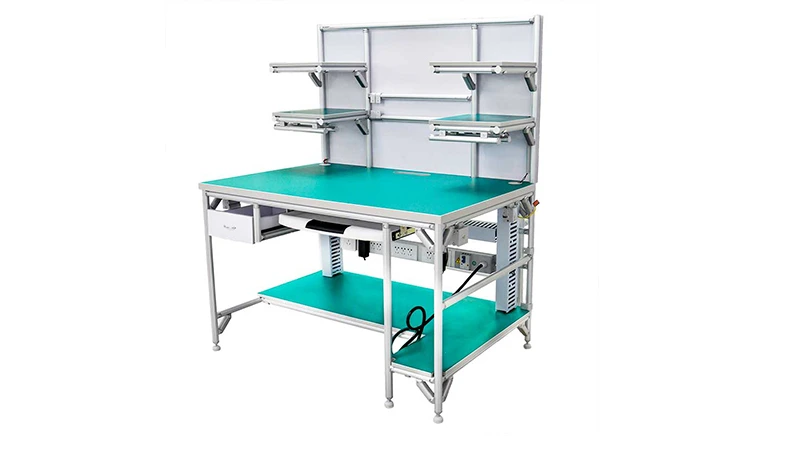
These days, walking into a manufacturing facility, you'll likely hear more than the hum of machinery. There's a quieter, persistent conversation happening too—one about certifications, carbon footprints, and the future of making things. Green manufacturing certifications aren't just badges to hang on a wall anymore. They're a promise: to the planet, to customers who care deeply about where their products come from, and to the teams who spend their days building those products. But here's the thing about promises—they're hard to keep without the right tools. That's where Aluminum Workbench A comes in. It's not just a surface to work on; it's a partner in turning those green goals into reality.
Let's start with why these certifications matter. Think about the last time you bought something and checked its label. Did you wonder if it was made responsibly? You're not alone. Consumers, regulators, and even investors are pushing manufacturers to do better—to use less, waste less, and leave a lighter mark. Certifications like ISO 14001, LEED, or even regional standards aren't just checkboxes. They're proof that a company is serious about sustainability. But achieving them? That's where the rubber meets the (recycled) road. And that road runs straight through the heart of your production floor—right where your workbenches stand.
The Unsung Hero of the Production Floor: Your Workbench
Workbenches are easy to overlook. They're the quiet backbone of manufacturing—steady, reliable, and always there. But here's the truth: the design of your workbench shapes everything. How efficiently your team moves materials. How much waste gets generated. How often you need to replace equipment. Traditional workbenches? They're often built with short-term goals in mind. Heavy wooden tops that warp, steel frames that rust, or plastic components that crack under pressure. Before you know it, you're replacing them, adding to landfill waste, and burning through budgets that could've gone toward sustainability initiatives.
That's the problem with "good enough" workbenches. They don't support the long-term vision of green manufacturing. They're static, wasteful, and out of step with the flexible, lean systems modern manufacturers need. But what if your workbench could do more? What if it was designed not just to hold tools, but to hold up your commitment to sustainability?
Aluminum Workbench A: Built for the Future, Rooted in Responsibility
Aluminum Workbench A isn't your average workspace. From the ground up, it's engineered with one question in mind: How can we make a workbench that helps manufacturers earn those green certifications—not just today, but for years to come? The answer starts with its core: aluminum extrusion profile. If you're not familiar with aluminum extrusion, think of it as the gold standard of material efficiency. It's a process where aluminum is pushed through a die to create precise, custom shapes—no excess, no waste, just exactly what you need. That precision isn't just good for functionality; it's great for the planet. Less material used means less energy spent in production, and fewer resources pulled from the earth.
But it's not just about the material. Aluminum Workbench A is built around the idea that sustainability and productivity go hand in hand. It's modular, so you can reconfigure it as your needs change—add a shelf here, adjust the height there—without throwing out the entire bench. It's durable, made to withstand the daily grind without chipping, rusting, or breaking. And it's ergonomic, designed to keep your team comfortable and efficient, because a happy worker is more likely to care about keeping waste off the floor (and in the recycling bin).

5 Ways Aluminum Workbench A Supports Green Manufacturing Certifications
Let's dive into the specifics. How exactly does this workbench turn green goals into certified achievements? Let's break it down.
1. Material Sustainability: Aluminum Extrusion Profile—Recyclable by Design
Aluminum is the unsung hero of sustainable materials. Unlike wood (which requires deforestation) or virgin steel (which guzzles energy to produce), aluminum is 100% recyclable. And here's a mind-blowing stat: recycling aluminum uses just 5% of the energy needed to make new aluminum. That's a massive reduction in carbon footprint right there. Aluminum Workbench A leans into this (pun intended) with its aluminum extrusion profile construction. The extrusion process itself is efficient—no scraps, no excess, just precise, strong components that fit together like a puzzle. When the day comes that you need to retire the workbench (and that day will be far off, thanks to its durability), every part can go back into the recycling stream, ready to be reborn as something new. No waste, no guilt—just a circular lifecycle that certifications love.
2. Lean System Integration: Waste Less, Do More
Lean manufacturing isn't just a buzzword; it's a philosophy of "less is more." Less waste, less time, less effort—all while making more value. And Aluminum Workbench A? It's a lean system dream come true. Its modular design means you can adapt it to your workflow, not the other way around. Need to add a tool rack for a new product line? Screw it on. Want to lower the height for a different team member? Adjust the legs. No need to buy a whole new bench. That adaptability cuts down on one of the biggest sustainability killers: overconsumption. Instead of replacing equipment every time your process changes, you're reusing what you have. It's lean, it's smart, and it's exactly the kind of efficiency auditors look for when certifying green practices.
3. Durability That Keeps On Giving (And Saving)
Here's a hard truth: nothing wastes resources like frequent replacements. A workbench that cracks, warps, or rusts after a year isn't just a hassle—it's a sustainability disaster. You're throwing away materials, spending energy on production, and creating more waste. Aluminum Workbench A? It's built to outlast the trends. Aluminum extrusion profile is strong, resistant to corrosion, and impervious to the daily bumps and spills of manufacturing. Think about it: a bench that lasts 10 years instead of 2? That's 8 fewer years of replacement cycles, 8 fewer times you're sending old equipment to the landfill, and 8 fewer times you're using energy to make new ones. Durability isn't just about saving money—it's about honoring the resources that went into making the bench in the first place.
4. Ergonomics: Happy Teams, Healthier Habits
Sustainability isn't just about materials and energy—it's about people. A team that's comfortable, safe, and engaged is more likely to care about sustainability. When workers are hunched over a poorly designed bench, straining to reach tools, or dealing with wobbly surfaces, their focus is on getting through the day—not on reducing waste. Aluminum Workbench A changes that. It's adjustable, so it fits every team member, not just the "average" worker. The aluminum profile edges are smooth, no splinters or sharp corners. Even the height can be tweaked to reduce fatigue. And when your team is happier? They're more likely to notice when a part is being wasted, or when a process could be more efficient. They become your sustainability allies—and that's priceless when it comes to earning certifications.
5. Compliance: Checking the Boxes (So You Don't Have To)
Certifications have rules—lots of them. Does your equipment meet low-VOC emissions standards? Is it made from recycled content? Can it be recycled at the end of its life? Aluminum Workbench A checks all these boxes and more. The aluminum extrusion profile is free of harmful chemicals, so it meets strict indoor air quality standards (hello, LEED credits). Its recyclable design helps hit waste reduction targets for ISO 14001. Even the way it's manufactured—with precision extrusion—cuts down on energy use, aligning with energy efficiency requirements. It's not just that it helps you comply; it makes compliance feel easy. No more scrambling to document materials or justify waste. The bench does the talking for you.

Traditional vs. Aluminum Workbench A: The Sustainability Showdown
Still not convinced? Let's put it side by side. Here's how Aluminum Workbench A stacks up against traditional workbenches when it comes to sustainability:
| Feature | Traditional Workbench (Wood/Steel/Plastic) | Aluminum Workbench A |
|---|---|---|
| Material Recyclability | Wood: ~30% (often downcycled to mulch); Steel: ~60% (high energy to recycle); Plastic: ~9% (most ends in landfill) | 95%+ recyclable (aluminum can be recycled infinitely with minimal energy loss) |
| Production Waste | High: Cutting wood/steel creates sawdust/scrap; plastic molding has excess runoff | Minimal waste (aluminum extrusion profile is precision-made, no excess material) |
| Lifespan | 2–5 years (wood warps, steel rusts, plastic cracks) | 10+ years (aluminum resists corrosion, warping, and wear) |
| Adaptability | Static: Can't reconfigure without major modification | Fully modular (add shelves, adjust height, reconfigure as needs change) |
| Energy Used in Production | High: Steel mining/forging, plastic polymerization, wood logging/processing | Low (aluminum extrusion uses 95% less energy than producing new aluminum; precision cuts energy waste) |
| Certification Support | Requires extra documentation; often falls short on recyclability/waste targets | Built-in compliance (meets ISO 14001, LEED, and low-VOC standards) |
From the Factory Floor: A Story of Green Success
Let's talk about real impact. Meet Raj, a production manager at a mid-sized electronics manufacturer in Ohio. His team had been chasing ISO 14001 certification for two years. They'd upgraded their lighting, switched to renewable energy, and trained staff on waste reduction. But there was one sticking point: their workbenches. The old wooden ones were warping, so they were replacing them every 3 years. The steel frames were rusting, leaving metal shavings on the floor (and in the landfill). And worst of all, they couldn't reconfigure them for new product lines, so they were buying new benches just to keep up.
Then they switched to Aluminum Workbench A. "It was like night and day," Raj told me. "First, the recyclability. We could finally document where our materials came from and where they'd go—no more guessing. Second, the modularity. When we launched our new smartphone line, we just added shelves and adjusted the height instead of buying 10 new benches. That alone cut our waste by 40% in six months. And the team? They loved how sturdy and comfortable the benches were. Suddenly, they were pointing out other ways to reduce waste—like reusing packaging or optimizing tool placement. It wasn't just the bench; it was a mindset shift."
Eight months later, they earned their ISO 14001 certification. And the best part? Their production costs went down, too. Less money spent on replacements, less time wasted on rework, and happier customers who saw their commitment to sustainability. All because of a workbench.
The Future of Green Manufacturing: It Starts at Your Workbench
Green manufacturing isn't a trend—it's the future. And the future belongs to companies that don't just talk about sustainability, but build it into every part of their process. Aluminum Workbench A isn't just a tool for today; it's an investment in that future. It's for the manufacturer who wants to do more than meet certifications—who wants to lead. It's for the team member who takes pride in knowing their workspace is as responsible as the products they build. It's for the customer who wants to buy from a company that walks the walk.
So, the next time you look at your production floor, think about the promises you're making. Are your tools helping you keep them? Aluminum Workbench A isn't just a workbench. It's a promise kept.