- Company Articles
- Products and Technology
- Solution
- How Aluminum Workbench A Supports Lean Manufacturing Principles

How Aluminum Workbench A Supports Lean Manufacturing Principles
Related Product
Aluminum Workbench A
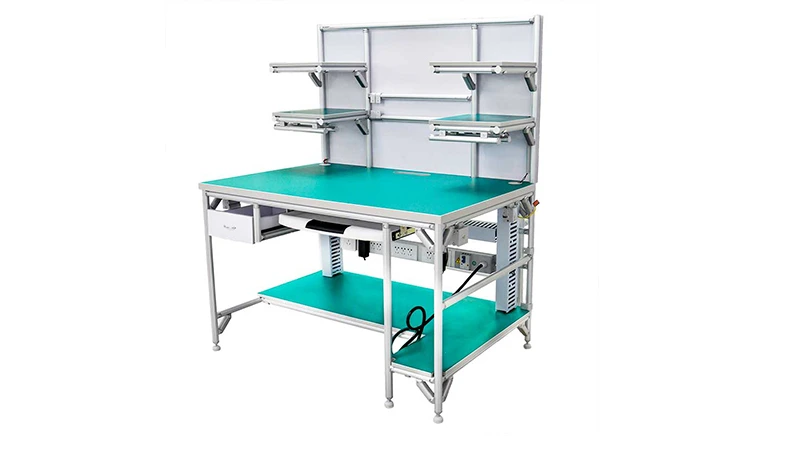
Aluminum tube workbench is more flexible and durable, compared with traditional PE/ABS coated steel tube. It is easy to assemble, anti corrosion, rust protection, and recycle use after disassemble.
Lean Manufacturing: More Than a Process—A Mindset
Walk into any successful manufacturing facility today, and you'll notice something beyond machines and assembly lines: a rhythm. A quiet, intentional flow where every action serves a purpose, every space is used wisely, and waste—whether time, materials, or effort—is actively rooted out. This isn't luck; it's lean manufacturing in action. At its core, lean is about creating more value with less work, and it starts with the tools we choose. Every bench, every rack, every conveyor isn't just equipment—it's a building block for efficiency. And in that toolkit, one piece stands out for its ability to adapt, support, and evolve with the needs of lean teams: Aluminum Workbench A.
Let's be clear: lean isn't about cutting corners or skimping on quality. It's about respect—for your team, your materials, and your customers. It's asking, "Does this step add value?" and "How can we make this easier, faster, or safer?" For frontline workers, the answer often lies in their immediate workspace. A cluttered, rigid workbench forces extra movement; a one-size-fits-all setup slows down changeovers; a flimsy surface risks damage to parts. But Aluminum Workbench A? It's designed to answer those lean questions before they're even asked. Let's dive into how this unassuming workbench becomes a silent partner in your lean journey.
Aluminum Workbench A: Built for the Lean Playbook
Before we connect the dots between the workbench and lean principles, let's get to know Aluminum Workbench A. Unlike traditional wooden or steel workbenches that are heavy, fixed, and hard to modify, this workbench is a product of modern manufacturing ingenuity. It's crafted from lightweight yet durable aluminum profile, paired with smart aluminum profile accessories that let you customize, reconfigure, and adapt on the fly. Think of it as a modular canvas: need a shelf for tools? Add it. Want to lower the height for a seated task? Adjust it. Switching from assembling small electronics to larger components? Rearrange the layout in minutes. This flexibility isn't just convenient—it's lean gold.
But Aluminum Workbench A isn't just about parts and pieces. It's designed with the entire value stream in mind—the sequence of activities that turns raw materials into finished products. Lean teaches us to map this stream and eliminate bottlenecks, and the workbench fits right into that map. Whether it's positioned alongside a flow rack to feed parts directly to the operator, or paired with a conveyor to move completed assemblies to the next station, it acts as a hub that keeps the flow steady. No more reaching across cluttered surfaces or walking to fetch tools—everything has a place, and that place is exactly where it needs to be.

Flexibility: The Foundation of Lean Adaptability
One of lean's biggest enemies is rigidity. In a world where customer demands shift, product designs evolve, and production runs get shorter, a "set it and forget it" workspace becomes a liability. Traditional workbenches lock teams into a single way of working; if you need to add a tool rail or reposition a shelf, you're looking at drilling holes, welding, or even buying a new bench. That's waste—of time, money, and potential. Aluminum Workbench A, however, thrives on change, thanks to its aluminum profile and accessories.
Let's say your team switches from assembling smartphone components to small appliances. The parts are bulkier, so you need more surface space. With Aluminum Workbench A, you don't replace the bench—you expand it. The aluminum profile accessories, like quick-connect brackets and extension rails, let you add a second tier or widen the surface in under 15 minutes. No tools, no hassle, no downtime. Or maybe you're running a low-volume, high-mix production day: one hour you're testing circuit boards, the next you're packaging finished units. The workbench's adjustable height (from seated to standing) and removable tool panels mean operators can reconfigure their space between tasks without skipping a beat. This isn't just convenience—it's
lean system
thinking in action: adapt quickly, minimize waste, and keep the focus on value.
And let's not overlook the little things. The workbench's aluminum frame is lightweight enough for two people to move, but sturdy enough to support heavy loads. Need to shift the entire line layout to accommodate a new conveyor? Roll it into place (if you've added casters, another easy accessory swap) and lock it down. Traditional steel benches? You'd need a forklift and a team of people, eating up hours of productive time. Aluminum Workbench A turns "we can't" into "we can—right now."

Flow: Keeping Production Moving, Without the Bottlenecks
Lean manufacturing lives and dies by flow—the uninterrupted movement of materials and work-in-progress from one step to the next. When flow stalls, waste piles up: parts sit idle, operators wait, deadlines slip. A poorly designed workbench is often the culprit, creating invisible barriers. Maybe it's too low, forcing operators to bend and slow down. Maybe it's positioned too far from the
flow rack
, adding extra steps to fetch parts. Or maybe it lacks a smooth way to pass completed work to the next station, leading to piles of inventory on the floor. Aluminum Workbench A is engineered to eliminate these barriers, acting as a bridge between upstream and downstream processes.
Picture this: Your assembly line runs in a U-shape, with Aluminum Workbench A at the center. To the left is a
flow rack
stocked with incoming parts, tilted at a slight angle so the next component is always within reach. To the right is a
conveyor
belt that carries finished assemblies to quality control. The workbench's surface is flush with both the flow rack and conveyor, so operators can slide parts from rack to bench, assemble, and push the result onto the conveyor—all with minimal arm movement. No reaching, no lifting, no wasted steps. The workbench even has built-in channels for routing cables and air hoses, so there's no tangled mess to trip over or slow down movement. Flow isn't just about speed; it's about consistency. Aluminum Workbench A turns "stop-and-go" into "steady-as-she-goes."
And when flow does hit a snag (because let's be real, no process is perfect), the workbench helps there too. Its open design means supervisors can easily see what's happening at each station, so bottlenecks are spotted early. Operators can flag issues by placing a red marker on the bench's edge—a visual cue that's instantly recognizable (another lean trick: visual management). Because the workbench itself isn't a barrier, teams can huddle around it to troubleshoot, adjust the process, and get back to flow—all without disrupting the entire line.
Ergonomics: Lean Starts with the People
Lean isn't just about machines and materials—it's about people. A tired, strained operator makes more mistakes, works slower, and disengage from the process. That's why ergonomics—the science of designing workspaces for human comfort—is a cornerstone of lean thinking. Aluminum Workbench A doesn't just check the ergonomic boxes; it redefines them.
Let's start with height. The average manufacturing team has operators of all heights, from 5'2" to 6'4". A fixed-height bench forces taller workers to hunch, shorter ones to stretch—both recipes for fatigue. Aluminum Workbench A's height adjusts from 30" to 42" with a simple crank (or electric lift, for heavy-duty models), so every operator can set it to their ideal working level. Studies show this alone reduces musculoskeletal injuries by up to 40% and increases productivity by 15%—that's lean value in terms of both safety and output.
Then there's the surface itself. The workbench uses a non-slip, scratch-resistant aluminum honeycomb panel that's gentle on delicate parts but tough enough for daily use. It's also angled slightly (adjustable, of course) to reduce glare and keep small tools from rolling off. Need to organize screws, washers, or tiny components? Magnetic bins and pegboards attach directly to the bench's frame, keeping everything within a 16-inch reach (the "golden zone" for ergonomics, where movement is minimal). No more digging through drawers or bending to grab parts from the floor. Even the edges are rounded to prevent cuts—a small detail, but one that shows respect for the people using the bench every day.
And let's talk about fatigue. Standing for 8 hours straight takes a toll, even on the fittest operators. That's why many teams pair Aluminum Workbench A with anti-fatigue mats and adjustable stools. The bench's sturdy frame supports both, so operators can switch between sitting and standing throughout the day, keeping blood flowing and energy levels high. When people feel valued—when their workspace is designed to make their job easier—they engage more, spot waste more readily, and take pride in their work. That's the human side of lean, and Aluminum Workbench A delivers it in spades.
Traditional vs. Aluminum Workbench A: A Lean Comparison
| Metric | Traditional Steel/Wood Workbench | Aluminum Workbench A |
|---|---|---|
| Setup/Reconfiguration Time | 2–4 hours (requires tools/welding) | 10–15 minutes (tool-free, aluminum profile accessories) |
| Adaptability to Product Changes | Low (fixed design; often needs replacement) | High (modular, expandable, height-adjustable) |
| Flow Integration | Poor (fixed position; hard to align with flow racks/conveyors) | Excellent (movable, flush surfaces for seamless material transfer) |
| Ergonomic Customization | None (fixed height, rigid surface) | Full (adjustable height, angle, and accessory layout) |
| Long-Term Cost (5-Year Lifespan) | Higher (replacement costs, downtime, injury risks) | Lower (durable aluminum, minimal maintenance, no replacement needed) |
Sustainability: Lean for the Planet, Too
Lean isn't just about efficiency today—it's about longevity. A truly lean operation considers the environmental impact of its choices, too. Aluminum Workbench A aligns with this by being built to last, not to be replaced. Aluminum is 100% recyclable, and the workbench's modular design means components can be reused or repurposed instead of thrown away. Need a new configuration? Swap out the accessories, don't scrap the bench. Over time, this reduces waste in landfills and cuts down on the energy used to manufacture new equipment. It's lean thinking extended to the planet: create value now, without compromising tomorrow.
In the Trenches: A Day in the Life with Aluminum Workbench A
Let's wrap up with a story—one that plays out in factories around the world. Meet Maria, a production lead at a mid-sized electronics manufacturer. Her team runs three shifts, five days a week, assembling everything from Bluetooth speakers to smart home sensors. A year ago, their workbenches were a hodgepodge of old steel tables and wooden shelves—heavy, fixed, and always in the way. Downtime for reconfigurations cost 4–5 hours a week. Ergonomic complaints were common, and parts often got lost in the clutter. Then they switched to Aluminum Workbench A.
Today, Maria's line runs like clockwork. On a typical morning, the team starts by adjusting their workbenches: Juan, who assembles speakers, raises his to standing height; Priya, who tests circuit boards, lowers hers and adds a magnifying lamp (attached via an aluminum profile accessory). The
flow rack
next to Priya's bench is stocked with components, tilted so the next part rolls forward as she uses them. When the team switches to sensors in the afternoon, they reposition the benches in 10 minutes, adding a second shelf for larger batteries. The
conveyor
behind the line carries finished units to packaging, with the workbench's surface perfectly aligned to slide products onto it. Fatigue complaints? Down 60%. Downtime? Almost eliminated. And Maria? She spends less time troubleshooting workspace issues and more time coaching her team—because the workbench is finally working
with
them, not against them.
Why Aluminum Workbench A Isn't Just a Bench—It's Your Lean Partner
Lean manufacturing isn't about perfection; it's about progress. It's about choosing tools that grow with you, adapt with you, and support your team's best work. Aluminum Workbench A does all that and more. It's flexible enough to keep up with changing demands, integrated enough to keep flow steady, and human-centered enough to keep your team engaged. It's not just a piece of equipment—it's a statement that your operation values efficiency, respect, and continuous improvement.
So, if you're building a lean system, don't overlook the workspace. The right workbench can turn a good line into a great one, a tired team into an energized one, and waste into value. Aluminum Workbench A isn't just built for manufacturing—it's built for the lean journey. And that journey starts with the space where your team creates, problem-solves, and delivers. Make it count.