- Company Articles
- Products and Technology
- Application Cases
- How Aluminum Workbench B Supports Flexible Production in Machinery Manufacturing

How Aluminum Workbench B Supports Flexible Production in Machinery Manufacturing
Related Product
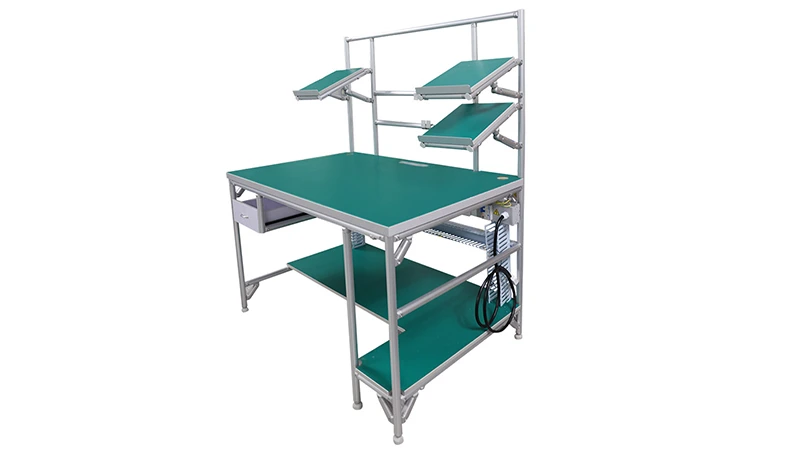
Aluminum Workbench B
Aluminum tube workbench is more flexible and durable, compared with traditional PE/ABS coated steel tube. It is easy to assemble, anti corrosion, rust protection, and recycle use after disassemble.
The Shifting Landscape of Machinery Manufacturing: Why Flexibility Matters More Than Ever
Walk into any modern machinery manufacturing facility, and you'll notice a quiet revolution unfolding. Gone are the days of rigid, one-size-fits-all production lines churning out identical products for years on end. Today's manufacturers are navigating shorter product lifecycles, custom orders, and rapid design changes—all while pressure mounts to cut costs and boost efficiency. In this environment, flexibility isn't just a buzzword; it's the difference between thriving and falling behind.
At the heart of this flexibility revolution is the humble workbench. It's where ideas take shape, components are assembled, and quality is ensured. But not all workbenches are created equal. Traditional steel workbenches, once the backbone of factories, are increasingly becoming a bottleneck. Heavy, hard to reconfigure, and slow to adapt, they struggle to keep up with the pace of modern manufacturing. Enter Aluminum Workbench B—a game-changer designed to meet the demands of today's dynamic production floors.
What Makes Aluminum Workbench B Stand Out?
Aluminum Workbench B isn't just another piece of equipment; it's a flexible, modular solution built with the realities of machinery manufacturing in mind. Let's break down what makes it unique:
Modularity at Its Core
Imagine needing to reconfigure your production line to accommodate a rush order for a new machine part. With a traditional workbench, this might mean hours (or even days) of disassembling, moving heavy steel frames, and rebolting everything into place. But Aluminum Workbench B? It's designed to adapt in minutes. Thanks to its compatibility with aluminum profile accessories and internal rotary aluminum joints, you can adjust height, add shelves, or reposition components with nothing more than a hex key. No welding, no heavy lifting—just quick, tool-free changes that keep your team focused on what matters: building quality products.
Lightweight Yet Durable
Aluminum has long been prized in manufacturing for its unique blend of strength and lightness, and Aluminum Workbench B leverages this to full advantage. Weighing up to 40% less than traditional steel workbenches, it's easy to move around the shop floor—whether you're rearranging workflows or repurposing it for a new project. But don't let its lightweight fool you: aluminum's natural resistance to corrosion and wear means this workbench can stand up to the daily grind of machinery manufacturing, from oil spills to heavy component assembly. It's a workhorse that won't weigh your team down.
Seamless Integration with Lean Systems
In machinery manufacturing, every second counts. That's why lean systems—focused on reducing waste and streamlining workflows—have become a cornerstone of modern operations. Aluminum Workbench B isn't just compatible with lean principles; it's built to enhance them. Its open design ensures tools and materials are always within arm's reach, minimizing unnecessary movement. Pair it with flow racks and conveyors, and you've got a material flow system that keeps components moving smoothly from one workstation to the next, eliminating bottlenecks and reducing idle time.

Aluminum Workbench B vs. Traditional Workbenches: A Real-World Comparison
Still not convinced that Aluminum Workbench B is worth the switch? Let's put it head-to-head with the traditional steel workbench in the scenarios that matter most to machinery manufacturers:
| Feature | Aluminum Workbench B | Traditional Steel Workbench |
|---|---|---|
| Reconfiguration Time | 15–30 minutes (tool-free adjustments with aluminum profile accessories) | 4–6 hours (requires welding, bolting, and heavy lifting) |
| Weight (per unit) | ~35 kg (easy for 2 people to move) | ~80 kg (requires forklift or multiple workers) |
| Compatibility with Lean Systems | Seamless integration with flow racks, conveyors, and material handling tools | Limited compatibility; often requires custom modifications |
| Long-Term Cost | Lower total cost of ownership (no repainting, minimal maintenance) | Higher (prone to rust, requires frequent repainting/replacement) |
| Ergonomics | Adjustable height options to reduce worker fatigue | Fixed height, increasing risk of strain injuries |
The numbers speak for themselves: Aluminum Workbench B isn't just more flexible—it's smarter, more cost-effective, and better for your team's productivity and well-being.

How Aluminum Workbench B Powers Lean Systems in Machinery Manufacturing
Lean manufacturing isn't just about cutting costs; it's about creating value for your customers by eliminating waste—whether that's wasted time, materials, or effort. Aluminum Workbench B is engineered to support lean principles at every turn, making it an indispensable tool for manufacturers looking to streamline operations.
Reducing Setup Time: From Days to Minutes
In machinery manufacturing, setup time is often the hidden enemy. When a new order comes in with slightly different specifications, your team shouldn't have to spend days reconfiguring workbenches to accommodate new tools or assembly steps. Aluminum Workbench B's modular design changes the game. For example, if you need to add a shelf for new measuring equipment, simply attach an aluminum profile bracket to the frame. Need to lower the work surface to accommodate a shorter worker? Adjust the internal rotary aluminum joints, and you're ready to go. What once took a team of engineers a day now takes a single operator 20 minutes. That's lean in action.
Optimizing Material Flow with Flow Racks and Conveyors
A lean system lives or dies by how smoothly materials move through the production process. Aluminum Workbench B isn't an island—it's part of a connected ecosystem. Pair it with flow racks (like Material Rack B, with its 3 rows and 3 floors) and conveyors, and you create a seamless material flow that minimizes handling and speeds up assembly. Imagine a scenario where components roll directly from a flow rack onto the workbench via a roller track, then move to the next station via a conveyor—all without a worker having to lift a finger. This isn't just efficient; it's safer, reducing the risk of strains and injuries.
Eliminating Waste with Customizable Workstations
Every square inch of your production floor is valuable, and Aluminum Workbench B is designed to maximize space efficiency. Unlike one-size-fits-all steel workbenches, it can be customized to fit your exact needs. Need a narrow bench for tight spaces? Opt for a single-deck configuration (Workbench E, without casters). Working on large components? Add an extra aluminum honeycomb panel for more surface area. By tailoring the workbench to your specific tasks, you eliminate wasted space and ensure every tool and material has a place—cutting down on time spent searching for supplies.
Real-World Impact: How One Machinery Manufacturer Boosted Productivity by 30% with Aluminum Workbench B
Let's take a look at a real example to see how Aluminum Workbench B transforms operations. Consider XYZ Machinery, a mid-sized manufacturer specializing in custom industrial pumps. A few years ago, XYZ was struggling to keep up with demand. Their production line relied on old steel workbenches that were heavy, hard to move, and impossible to reconfigure quickly. When a customer ordered a pump with a new seal design, the team spent 2 days modifying workbenches to accommodate the new assembly steps—delaying the order and frustrating the client.
Then, XYZ switched to Aluminum Workbench B. The results were immediate. Setup time for new orders dropped from 2 days to 2 hours. The team could now reconfigure workbenches on the fly, adding shelves or adjusting heights as needed. They paired the workbenches with flow racks and conveyors, reducing material handling time by 40%. Within six months, XYZ's productivity had increased by 30%, and on-time deliveries rose from 75% to 98%. "It's like night and day," said Maria, XYZ's production manager. "We're not just faster—we're more agile. If a customer needs a last-minute change, we don't panic anymore. We just adjust the workbench and keep going."
Why Aluminum? The Material Advantage in Machinery Manufacturing
You might be wondering: Why aluminum? Why not stick with steel, or even plastic? The answer lies in aluminum's unique properties, which make it ideal for modern manufacturing:
Durability Without the Weight
Steel is strong, but it's heavy—making it hard to move and expensive to ship. Aluminum, on the other hand, offers comparable strength at a fraction of the weight. This not only makes Aluminum Workbench B easier to reposition but also reduces shipping costs and energy use when transporting it to your facility.
Resistance to Corrosion and Wear
Machinery manufacturing environments can be tough, with oil, coolant, and metal shavings everywhere. Steel workbenches rust over time, requiring frequent repainting or replacement. Aluminum, however, forms a natural oxide layer that resists corrosion—meaning your workbench will look and perform like new for years, even in harsh conditions.
Sustainability and Cost-Effectiveness
Aluminum is 100% recyclable, making it a greener choice than steel (which requires more energy to produce and recycle). Over the long term, this translates to lower environmental impact and lower costs—no more replacing rusted workbenches every few years.
Choosing the Right Partner: Why Your Aluminum Profile Supplier Matters
Of course, even the best workbench is only as good as the supplier behind it. When investing in Aluminum Workbench B, look for a partner that offers not just the workbench itself, but a full range of aluminum profile accessories—from roller track connectors to caster wheels. This ensures you can customize your setup now and adapt it as your needs change. A reliable supplier will also provide expert support, helping you design the perfect workstation for your specific tasks and offering quick delivery to minimize downtime.
Conclusion: Aluminum Workbench B—Your Key to Flexible, Lean Manufacturing
In today's fast-paced machinery manufacturing world, flexibility and efficiency aren't optional—they're essential. Aluminum Workbench B isn't just a workbench; it's a tool that empowers your team to adapt, innovate, and thrive. Whether you're reconfiguring for a custom order, streamlining material flow with flow racks and conveyors, or simply creating a safer, more ergonomic workspace, it's the foundation of a lean, agile production line.
So, if you're tired of production bottlenecks, wasted time, and workbenches that hold your team back, it's time to make the switch. Aluminum Workbench B isn't just an investment in equipment—it's an investment in your team's productivity, your customers' satisfaction, and the future of your business. After all, in manufacturing, the ability to adapt isn't just about keeping up—it's about leading the way.