- Company Articles
- Products and Technology
- Solution
- How Aluminum Workbench C Adapts to Dynamic Production Changes in Factories

How Aluminum Workbench C Adapts to Dynamic Production Changes in Factories
Related Product
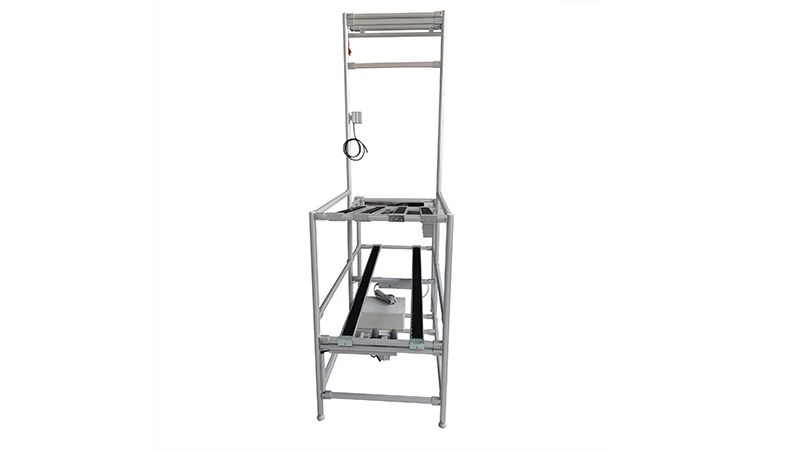
Aluminum Workbench C
aluminum-tube-workbench-is-more-flexible-and-durable,-compared-with-traditional-pe/abs-coated-steel-tube.-it-is-easy-to-assemble,-anti-corrosion,-rust-protection,-and-recycle-use-after-disassemble.
Walk into any modern factory, and you'll feel it immediately—the hum of activity that never quite settles into a predictable rhythm. One week, the production line is churning out small electronic components; the next, it's retooled for larger, custom parts. A new product launch demands rearranged workstations; a sudden surge in orders requires adding extra assembly stations overnight. In this world of constant flux, rigidity is the enemy. Factories don't just need tools—they need partners that can keep up, bend without breaking, and turn chaos into coordinated productivity. That's where Aluminum Workbench C steps in. More than just a table with a flat surface, it's a silent problem-solver, a chameleon of the production floor, designed to thrive when plans change. Let's dive into how this unassuming workstation has become the backbone of adaptable manufacturing.
The Hidden Cost of Rigidity: Why Factories Struggle with Static Workstations
To understand the value of Aluminum Workbench C, we first need to talk about the cost of the alternative. Traditional workbenches—often made of heavy wood, fixed steel frames, or particleboard—were built for a different era. Back when production lines ran the same product for months (or years), a stationary bench made sense. But today? Not so much. A factory manager in Shenzhen once told me, "We used to have a workshop full of those old steel benches. When we needed to shift from assembling smartwatches to fitness trackers, we spent three days just moving them around. Two benches cracked under the weight, and we had to buy new ones. That's three days of downtime, plus the cost of replacements—all because our workstations couldn't keep up."
This isn't an isolated story. Across industries—automotive, electronics, medical devices—factories face the same pressure: shorter product lifecycles, smaller batch sizes, and faster turnaround times. A 2024 survey by the Manufacturing Innovation Institute found that 78% of manufacturers report changing their production layouts at least quarterly, and 42% do so monthly. For these teams, a workstation that can't adapt isn't just a tool—it's a bottleneck. It slows down reconfiguration, increases labor costs, and even risks worker safety when teams are forced to jury-rig solutions with mismatched equipment.
The problem isn't just about movement, either. Traditional workbenches often come with fixed shelves, built-in tool holders, or permanent power strips—features that become liabilities when production needs shift. A bench designed for assembling circuit boards, for example, might have shallow shelves perfect for small components. But when that same line starts assembling larger devices, those shelves get in the way, turning a once-useful feature into wasted space. Workers end up stacking parts on the floor or balancing tools on unstable surfaces, creating clutter that breeds inefficiency and errors.
Aluminum Workbench C: More Than a Workstation—A Lean System Asset
Aluminum Workbench C wasn't designed in a vacuum. It emerged from a simple question: What if a workstation could be as flexible as the teams using it? At its core, it's a product of lean system thinking—prioritizing waste reduction, adaptability, and user-centric design. But to call it "just a workbench" would be like calling a Swiss Army knife "just a blade." Let's break down what makes it tick.
First, the basics: Aluminum Workbench C is a modular workstation built around aluminum extrusion profile, a material that's revolutionized factory equipment in recent decades. Unlike traditional steel or wood, aluminum extrusion profile is lightweight yet surprisingly strong—think of it as the "skeleton" of the bench. Its hollow, T-slot design isn't just for show; those slots are the secret to its adaptability, allowing accessories to be attached, adjusted, or removed in minutes without drilling or welding. Pair that with precision-engineered aluminum profile accessories—joints, brackets, and connectors—and you get a system that can be reimagined as often as your production schedule demands.
But Aluminum Workbench C isn't just about materials. It's about intentional design. Take its frame: instead of a fixed steel structure, it uses a grid of aluminum extrusion profiles connected by internal rotatary aluminum joints. These joints lock securely when in place but can be loosened with a simple hex key, letting workers adjust the bench's height, width, or depth in minutes. Need to lower the surface by 10cm for a team assembling smaller parts? Twist a few joints, reposition, and lock—done. Want to add a second shelf halfway up for tools? Slide brackets into the T-slots, secure with bolts, and you've got extra storage. No power tools, no waiting for maintenance—just a workstation that bends to your needs.

The Science of Adaptability: Why Aluminum Extrusion Profile Makes All the Difference
To truly appreciate Aluminum Workbench C, you have to start with its foundation: aluminum extrusion profile. This material isn't new, but its application in workstations has been a game-changer. Let's get technical for a moment—without getting lost in jargon. Aluminum extrusion profile is made by forcing heated aluminum through a die, creating long, uniform shapes with built-in features like T-slots. The result? A material that's 30% lighter than steel but with comparable strength, resistant to corrosion, and infinitely customizable.
Why does this matter for dynamic production? Let's compare it to traditional materials. Steel workbenches are tough, but their weight makes them nearly impossible to move without heavy equipment. Wood or particleboard benches are cheaper upfront, but they scratch easily, absorb moisture, and warp over time—hardly ideal for a factory floor. Aluminum extrusion profile, though, checks every box: it's light enough for two workers to reposition (or even mount on caster wheels for easy rolling), strong enough to support 200kg+ of equipment, and smooth enough to resist scratches from tools or parts. In a food packaging plant I visited last year, they'd been using the same aluminum benches for five years—no rust, no warping, just a quick wipe-down at the end of each shift to keep them clean.
But the real magic is in the T-slots. Imagine a workbench where every inch of the frame is a potential mounting point. Need to add a LED light bar above the surface? Slide a bracket into the T-slot, tighten a screw, and plug it in. Want to attach a power strip along the side? Use a T-slot nut to secure it—no drilling holes or damaging the frame. Even specialized tools, like electrostatic discharge (ESD) mats for electronics assembly, can be clamped directly to the aluminum edges using T-slot accessories. It's this flexibility that turns a static bench into a dynamic tool that grows with your needs.
And let's not overlook aluminum profile accessories. These small, unassuming parts—joints, brackets, connectors—are the glue that holds the system together. Take the internal rotatary aluminum joint, for example. Unlike rigid steel welds or flimsy plastic clips, these joints allow 360-degree rotation and secure locking at any angle. A worker assembling medical devices once told me, "We used to have to buy separate benches for different tasks—one for soldering, one for testing, one for packaging. Now, with these joints, we reconfigure the same bench three times a day. It's like having a new workstation without the cost."

Design Features That Turn "Can't" into "Can"
Aluminum Workbench C isn't just a pile of aluminum extrusion profiles and joints—it's a thoughtfully engineered system with features that solve real factory problems. Let's walk through the ones that matter most for dynamic production.
Mobility (When You Need It)
Not every workstation needs to move, but when it does, you'll wish it could. Aluminum Workbench C addresses this with optional caster wheel kits. These aren't your average office chair wheels—they're heavy-duty caster wheels with locking brakes, designed to roll smoothly over factory floors (even uneven concrete) while supporting the bench's full weight. A production supervisor in a toy factory explained, "Last month, we got a rush order for 5,000 holiday dolls. We needed to add three extra assembly stations—fast. We popped casters on three Aluminum Workbenches, rolled them into place, locked the brakes, and were up and running in 20 minutes. With our old steel benches, that would've taken half a day and a forklift."
And when mobility isn't needed? The caster wheels come off just as easily, replaced by adjustable feet that stabilize the bench on uneven surfaces. It's the best of both worlds: a workstation that can be stationary or mobile, depending on the day's demands.
Ergonomics That Keep Teams Productive
Factories aren't just about machines—they're about people. A workstation that's uncomfortable leads to fatigue, mistakes, and even injuries. Aluminum Workbench C prioritizes ergonomics with height-adjustable frames. Most models can be adjusted from 70cm to 100cm, ensuring workers of all heights can stand (or sit, with optional stool attachments) comfortably. "I used to leave work with a sore back every day," said a line worker at a automotive parts plant. "Now, I adjust my bench to hip height, and the pain's gone. I'm faster, too—I don't have to hunch over or stretch to reach tools."
But ergonomics go beyond height. The bench's surface options—from smooth aluminum to anti-slip ESD mats—are designed to reduce strain. Even the edges are rounded to prevent cuts, and optional LED task lights (mounted via T-slots, of course) reduce eye fatigue during long shifts. It's these small touches that turn a "functional" workstation into one that workers actually look forward to using.
Modular Accessories for Every Task
If aluminum extrusion profile is the skeleton, accessories are the muscles—and Aluminum Workbench C has a lot of muscles. Need a place to hang tools? Add a pegboard panel via T-slot brackets. Working with ESD-sensitive components? Clip on an ESD wrist strap holder and mat. Storing small parts? Attach plastic bins to the side using shelf brackets. The options are endless, and because they're all modular, you only pay for what you need—no more buying a "one-size-fits-all" bench with features you'll never use.
One accessory that stands out is the roller track. These simple rails, which can be mounted to the bench's edges or shelves, turn static storage into a dynamic material flow system. Imagine assembling circuit boards: parts come in on a roller track from the left, you assemble on the bench, and finished boards roll to the right onto a conveyor. No bending to pick up bins, no reaching across cluttered surfaces—just a smooth, efficient workflow. "We cut down on wasted motion by 30% after adding roller tracks to our Aluminum Workbenches," a lean coordinator at a PCB factory told me. "That translates to more boards assembled per hour, with fewer mistakes."

Aluminum Workbench C vs. Traditional Workstations: A Clear Winner for Dynamic Production
Still not convinced? Let's put Aluminum Workbench C head-to-head with traditional workstations. The table below compares key factors that matter most for factories facing constant change.
| Feature | Aluminum Workbench C | Traditional Steel Bench | Wood/Particleboard Bench |
|---|---|---|---|
| Weight | Light (50-80kg, depending on size) | Heavy (150-200kg) | Medium (80-120kg, but prone to water damage) |
| Assembly Time | 30-60 minutes (no special tools) | 2-4 hours (requires welding or bolting) | 1-2 hours (requires screws, glue, or nails) |
| Reconfiguration Ease | Adjustable in minutes (hex key only) | Nearly impossible (fixed structure) | Difficult (requires disassembling/rebuilding) |
| Durability | 10+ years (corrosion-resistant, scratch-resistant) | 5-7 years (prone to rust if not painted) | 2-3 years (warps, scratches, absorbs moisture) |
| Accessory Compatibility | Unlimited (T-slots accept all aluminum profile accessories) | Limited (requires drilling holes) | Very limited (no built-in mounting points) |
| Cost Over Time | Higher upfront, but lower long-term (reusable, no replacements) | Low upfront, high long-term (replacement costs, downtime) | Lowest upfront, highest long-term (frequent replacements) |
| Lean System Alignment | Perfect (supports 5S, just-in-time, waste reduction) | Poor (rigid, creates waste when production changes) | Very poor (disposable, not reusable) |
The numbers speak for themselves. Aluminum Workbench C isn't just better—it's designed for a world where production lines can't afford to stand still. Traditional workstations are stuck in the past, built for stability at the cost of flexibility. Aluminum Workbench C flips that script, offering stability when you need it and adaptability when you don't.
Real-World Stories: How Factories Are Using Aluminum Workbench C to Stay Ahead
Theory is one thing—real-world results are another. Let's look at how three different factories are using Aluminum Workbench C to navigate dynamic production changes.
Case Study 1: A Consumer Electronics Factory Adapts to Seasonal Demands
A factory in Dongguan produces smartphone chargers and power banks. Their production swings wildly with seasons: demand spikes in Q4 (holiday shopping) and drops in Q2. Before Aluminum Workbench C, they struggled to scale up and down. "We'd buy extra steel benches for Q4, then store them in a warehouse for 8 months—wasting space and money," said the operations manager. "When we switched to Aluminum Workbench C, everything changed."
Now, during slow seasons, they disassemble excess benches into parts (aluminum extrusion profiles, joints, shelves) that stack neatly in a corner—taking up 1/10th the storage space. When Q4 hits, they reassemble the benches in a day, add caster wheels to move them where needed, and are ready for the rush. "Last year, we saved $40,000 in storage costs alone," the manager noted. "Plus, we can reconfigure the same benches to make chargers in the morning and power banks in the afternoon—no downtime between shifts."
Case Study 2: A Medical Device Startup Navigates Rapid Prototyping
A small startup in Shanghai develops custom medical monitors. Their production runs are tiny—sometimes just 10 units of a new prototype—and each design requires different tools and workflows. "Our old wood benches were a disaster," said the lead engineer. "We'd drill holes for one prototype, then have to fill them when we moved to the next. The surfaces got so beat up, we couldn't keep them clean enough for medical standards."
Aluminum Workbench C solved their problems. They use the T-slots to mount temporary tool holders, ESD mats, and even small 3D printers directly to the bench. When a prototype is done, they remove the accessories, wipe down the aluminum surface, and reconfigure for the next project. "We've cut prototype development time by 25%," the engineer said. "And because the aluminum is easy to sanitize, we've passed every audit with flying colors."
Case Study 3: A Automotive Parts Plant Embraces Lean Manufacturing
A large automotive parts plant in Wuhan was struggling with lean implementation. Their production lines were rigid, and workers couldn't easily adjust workstations to eliminate waste. "We tried 5S, but our old steel benches made it impossible to keep work areas organized—tools were always out of reach, parts piled up," explained the lean director.
After replacing 50 steel benches with Aluminum Workbench C, everything clicked. Workers now customize their stations with tool holders at arm height, roller tracks for parts delivery, and adjustable shelves for bins. "One line that used to produce 200 parts per hour now makes 240," the director said. "And the best part? The workers did it themselves. They know their jobs better than anyone, so letting them design their workstations was the key. Aluminum Workbench C gave them the tools to make it happen."
Aluminum Workbench C and Lean System: A Match Made for Efficiency
If you're familiar with lean manufacturing, you'll recognize Aluminum Workbench C as more than a workstation—it's a lean system enabler. Lean is all about eliminating waste (muda), optimizing flow, and empowering workers. Aluminum Workbench C checks every box:
Eliminating Waste
Waste in factories comes in many forms: overproduction, waiting, unnecessary motion, defects, and more. Aluminum Workbench C attacks several of these. Take "unnecessary motion," for example. By allowing workers to position tools, parts, and equipment exactly where they need them, it reduces bending, reaching, and walking—cutting down on wasted time and energy. "We tracked worker movements with a lean app before and after installing Aluminum Workbenches," said a continuous improvement specialist. "The average worker was taking 400 extra steps per shift; now it's 50. That adds up to hours of saved time every week."
Then there's "waste of inventory" and "waste of waiting." With modular roller tracks and flow racks (easily integrated via aluminum profile accessories), parts arrive at the bench exactly when needed—no piling up, no waiting for bins to be delivered. A electronics manufacturer reported cutting work-in-progress inventory by 15% after integrating their Aluminum Workbenches with flow racks, freeing up valuable floor space and reducing storage costs.
Empowering Workers
Lean isn't just about processes—it's about people. Aluminum Workbench C puts control back in the hands of the workers who use it daily. Instead of waiting for maintenance to modify a bench, they can adjust height, add shelves, or rearrange tools themselves. This sense of ownership leads to higher engagement and better ideas for improvement. "Our team started suggesting small changes—like angling the tool shelf for better visibility—that we never would've thought of," said a supervisor. "Productivity went up, and so did morale. Workers feel like their input matters."
The Future of Factory Workstations: Adaptability as Standard
Factories will only get more dynamic. As customization becomes the norm, product lifecycles shrink, and global competition heats up, adaptability won't be a "nice-to-have"—it'll be essential. Aluminum Workbench C isn't just keeping up with this trend; it's setting the standard.
What's next? Manufacturers are already exploring smart features—like built-in sensors that track tool usage or weight sensors that alert workers when parts bins are low—all integrated via the T-slots of aluminum extrusion profiles. Imagine a workstation that not only adapts to your production changes but also helps you predict them. That's the future Aluminum Workbench C is building toward.
But even without gadgets, the core value remains: a workstation that grows with your factory, supports your team, and turns chaos into productivity. As one factory manager put it, "Investing in Aluminum Workbench C wasn't just about buying workstations—it was about future-proofing our business. In a world where change is the only constant, that's the best investment we could make."
Conclusion: The Workstation That Keeps Up with Your Factory's Pace
Dynamic production changes aren't going away. They're the reality of modern manufacturing, driven by customer demands, technological advances, and global competition. Factories that thrive will be those that can adapt quickly, efficiently, and without sacrificing quality.
Aluminum Workbench C isn't a silver bullet, but it's a powerful tool in the fight for adaptability. Built around aluminum extrusion profile and modular aluminum profile accessories, it's lightweight, durable, and infinitely reconfigurable. It supports lean system principles, empowers workers, and turns static production lines into dynamic, responsive ecosystems.
So, the next time your factory faces a production change—whether it's a new product, a rush order, or a lean initiative—ask yourself: Are your workstations holding you back, or are they helping you move forward? With Aluminum Workbench C, the answer is clear. It's not just a workstation. It's a partner in progress.