- Company Articles
- Products and Technology
- Solution
- How Aluminum Workbench D Supports Continuous Improvement in Manufacturing Workflows

How Aluminum Workbench D Supports Continuous Improvement in Manufacturing Workflows
Related Product
Aluminum Workbench D
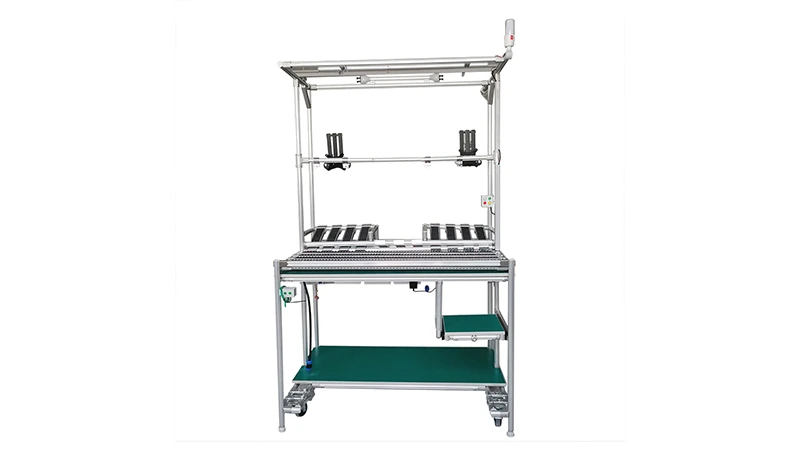
Aluminum tube workbench is more flexible and durable, compared with traditional PE/ABS coated steel tube. It is easy to assemble, anti corrosion, rust protection, and recycle use after disassemble.
The Evolving Landscape of Manufacturing: Why Continuous Improvement Matters
Walk into any modern manufacturing facility today, and you'll notice a quiet revolution unfolding. Gone are the days of rigid assembly lines and one-size-fits-all processes. Instead, factories are adapting to shorter product lifecycles, custom order demands, and the relentless pressure to do more with less. In this fast-paced environment, continuous improvement isn't just a buzzword—it's the lifeblood of survival. Manufacturers that stand still risk falling behind, while those that embrace adaptability, efficiency, and employee-centric design are the ones thriving.
At the heart of this revolution is the lean system —a philosophy that prioritizes eliminating waste, streamlining workflows, and empowering teams to drive change. But lean isn't just about processes and spreadsheets; it's about the physical tools and workspaces that shape how teams operate. From the layout of the factory floor to the equipment workers interact with daily, every element plays a role in either enabling or hindering progress. And among these tools, one often-overlooked hero is the humble workbench.
Think about it: A workbench is where the magic happens. It's where components are assembled, tools are organized, and products take shape. A poorly designed workbench can slow down tasks, create ergonomic strain, and limit how quickly teams can adapt to new projects. On the flip side, a well-designed workbench becomes a catalyst for efficiency—supporting lean goals, reducing friction, and making continuous improvement not just possible, but intuitive. This is where Aluminum Workbench D steps in.
Meet Aluminum Workbench D: More Than Just a Table
If traditional workbenches are the static, one-trick ponies of the manufacturing world, Aluminum Workbench D is the Swiss Army knife. Designed from the ground up to align with the needs of modern lean workflows, it's a modular, adaptable, and ergonomic solution that transforms how teams work. But what exactly makes it different? Let's start with the basics: its DNA.
Crafted primarily from high-grade aluminum profile —a material celebrated for its strength, lightweight nature, and versatility—Aluminum Workbench D brings a rare combination of durability and agility. Unlike heavy steel workbenches that require forklifts to move or wooden ones that warp with time, this workbench is built to evolve. It's not just a piece of furniture; it's a platform for innovation, designed to grow and change alongside your manufacturing needs.
But Aluminum Workbench D isn't defined by a single feature. It's the sum of thoughtful details: the way its frame connects with precision-engineered joints, the flexibility of its T-slot aluminum profile that lets you add accessories in seconds, the smooth-rolling caster wheel that turns a fixed workstation into a mobile command center. Every element is intentional, rooted in the understanding that manufacturing workflows can't be confined to a single spot or a single task.

Key Features of Aluminum Workbench D: Built for the Way You Work
To truly appreciate how Aluminum Workbench D drives continuous improvement, let's dive into its core features. Each one addresses a specific pain point in traditional manufacturing setups, turning inefficiencies into opportunities for growth.
1. Lightweight Strength: The Power of Aluminum Profile
At first glance, aluminum might seem less robust than steel, but that's a common misconception. The aluminum profile used in Aluminum Workbench D is extruded—meaning it's shaped under high pressure to create a structure with exceptional strength-to-weight ratio. This isn't the flimsy aluminum you find in soda cans; it's industrial-grade, designed to support heavy tools, components, and daily wear without bending or warping.
Why does this matter? For starters, it makes the workbench easy to move (more on that later), but it also reduces long-term maintenance costs. Unlike steel, aluminum resists rust and corrosion, even in humid or chemical-exposed environments. And because it's lightweight, installing or reconfiguring the workbench doesn't require a team of workers or specialized equipment. One person can adjust the height, add a shelf, or reposition the bench in minutes—empowering teams to take ownership of their workspace.
2. Mobility Redefined: Caster Wheels for On-Demand Flexibility
In many factories, the phrase "workstation" is a misnomer. Workers often find themselves walking back and forth between fixed workbenches, tools, and assembly lines—wasting precious time and energy. Aluminum Workbench D solves this with its integrated caster wheel system, turning a stationary desk into a mobile hub that goes where the work is.
These aren't just any caster wheels, either. They're heavy-duty swivel casters with locking brakes, designed to glide smoothly over factory floors (even uneven ones) and lock securely in place when precision is needed. Imagine a scenario where a sudden rush order requires reconfiguring an assembly line: instead of disassembling tools and moving them to a new spot, workers can simply unlock the caster wheels, roll the workbench to the new location, and lock it down. What once took hours now takes minutes—minimizing downtime and keeping production on track.
3. Modular Design: Adapt Without Limits
The most powerful tool in continuous improvement is adaptability, and Aluminum Workbench D this with its modular design. Thanks to the T-slot grooves in its aluminum profile , adding or removing accessories is as simple as sliding a bracket into place and tightening a screw. Need a tool holder for screwdrivers? Snap it on. Want a shelf for spare parts? Attach it in seconds. Need to reposition the light bar for better visibility? Adjust it without tools.
This modularity extends beyond accessories, too. The workbench itself can be expanded or reconfigured. Need a longer surface for a new project? Connect two Aluminum Workbench D units end-to-end. Prefer a U-shape layout to reduce motion waste? Rearrange the sections. Unlike traditional workbenches that require cutting, welding, or drilling to modify, this one adapts on the fly—making it easy to test new workflows, scale up for busy seasons, or downsize for smaller batches.
4. Ergonomics: Putting People at the Center
Continuous improvement isn't just about machines and metrics—it's about people. Fatigued, uncomfortable workers are less productive, more prone to errors, and less likely to contribute ideas for improvement. Aluminum Workbench D prioritizes ergonomics, ensuring that the workspace adapts to the worker, not the other way around.
Adjustable height is a key example. With a simple crank or motorized lift (depending on the model), workers can set the bench to their ideal height—whether they're standing, sitting, or using a stool. This reduces strain on the back, shoulders, and wrists, especially during long shifts. The work surface itself is also designed with care: non-slip, easy to clean, and available in ESD (electrostatic discharge) options for electronics manufacturing, where static protection is critical.
5. Seamless Integration with Lean Tools: From Flow Racks to Kanban Systems
A workbench can't drive continuous improvement in isolation—it needs to play well with other tools in the lean system toolkit. Aluminum Workbench D excels here, thanks to its compatibility with everything from flow rack systems to kanban boards and beyond.
Take flow rack integration, for example. A flow rack keeps materials organized and easily accessible, following the "first in, first out" (FIFO) principle to reduce waste. Aluminum Workbench D can be positioned adjacent to a flow rack, with its height adjusted to align perfectly with the rack's levels. This means workers can grab parts without bending or reaching, minimizing motion waste and speeding up assembly. Some models even come with built-in slots to attach mini flow racks directly to the workbench, keeping critical components within arm's reach.
Kanban systems benefit too. The T-slot aluminum profile makes it easy to mount kanban cards, visual management boards, or digital displays right above the work surface. This keeps priorities visible, reduces communication delays, and ensures everyone on the team is aligned—key elements of a lean, responsive workflow.

Real-World Impact: How Aluminum Workbench D Transforms Workflows
Features are important, but what does Aluminum Workbench D actually do for manufacturers? Let's step into the shoes of a mid-sized electronics manufacturer to see the difference it makes. We'll call them "TechPro," a company that produces custom circuit boards for medical devices—a field where precision, speed, and compliance are non-negotiable.
Before Aluminum Workbench D, TechPro's assembly area was a study in frustration. Workers used heavy steel workbenches bolted to the floor, each cluttered with tools, cables, and half-assembled boards. To access components, they'd walk 20 feet to a central flow rack , grab what they needed, and return—wasting up to 30 minutes per shift per worker on unnecessary movement. Ergonomics were an afterthought: the benches were fixed at 36 inches, too low for taller workers and too high for shorter ones, leading to back pain and a 10% error rate on complex soldering tasks.
Then came the decision to pilot Aluminum Workbench D. The transformation was immediate. First, the caster wheel made mobility a reality: workbenches were rolled directly to the assembly lines, eliminating the walk to the flow rack. Workers could now position their benches inches from the conveyor belt, with components delivered via a small, attachable flow rack mounted to the bench's side (thanks to the modular aluminum profile).
Ergonomic adjustments followed. Workers raised or lowered their benches to match their height, reducing strain and fatigue. The non-slip ESD work surface cut down on static-related component damage, while tool holders attached to the T-slots kept soldering irons, tweezers, and magnifying glasses within easy reach. Within a month, TechPro saw measurable results: a 15% increase in boards assembled per shift, a 25% drop in errors, and a 40% reduction in worker-reported discomfort.
But the biggest win? Continuous improvement became possible . With the flexibility to reconfigure workbenches, TechPro could test new layouts for small-batch orders, adjust workflows for new product designs, and empower workers to suggest tweaks (like adding a second shelf for frequently used tools). What started as a pilot quickly spread to the entire factory floor—and soon, Aluminum Workbench D became the foundation of TechPro's lean transformation.
Traditional vs. Aluminum Workbench D: A Side-by-Side Comparison
Still on the fence? Let's put Aluminum Workbench D head-to-head with traditional workbench options to see how it stacks up in key areas that matter for continuous improvement.
| Feature | Traditional Steel Workbench | Wooden Workbench | Aluminum Workbench D |
|---|---|---|---|
| Mobility | Fixed (requires forklift to move) | Heavy, difficult to move | Mobile via caster wheel (locks in place) |
| Customization | Limited (requires welding/drilling) | Basic (screws/nails, risk of damage) | Unlimited (modular aluminum profile accessories) |
| Ergonomics | Fixed height, no adjustability | Fixed height, uneven surfaces over time | Height-adjustable, non-slip work surface |
| Durability | High weight capacity, but prone to rust | Prone to warping, scratches, and moisture damage | Weather-resistant aluminum profile , rust-proof |
| Lean System Integration | Limited (static, hard to pair with flow rack ) | Minimal (no built-in tool for waste reduction) | Seamless (mobile, modular, pairs with flow racks/kanban) |
Investing in Continuous Improvement: Why Aluminum Workbench D Pays Off
Let's talk about the elephant in the room: cost. At first glance, Aluminum Workbench D may have a higher upfront price tag than a basic steel or wooden workbench. But manufacturing success isn't measured by initial costs—it's measured by long-term value. And when you factor in the savings from reduced waste, increased productivity, and lower maintenance, the ROI becomes clear.
Consider maintenance alone. Steel workbenches rust, requiring repainting every 2–3 years. Wooden benches warp or rot, needing replacement every 5–7 years. Aluminum Workbench D, with its corrosion-resistant aluminum profile and replaceable caster wheel components, lasts 15+ years with minimal upkeep. Its modular design also means you won't need to buy a new bench when your needs change—just add accessories or reconfigure the frame.
Then there's the human factor. Happy, healthy workers are more productive, more engaged, and more likely to contribute ideas for improvement. By reducing ergonomic strain and giving teams control over their workspace, Aluminum Workbench D isn't just a tool—it's an investment in your most valuable asset: your people. And in an industry where talent retention is a challenge, that's priceless.
Conclusion: Aluminum Workbench D—Your Partner in Continuous Improvement
In the end, manufacturing isn't just about making products—it's about making progress. Every day, teams strive to do better, waste less, and build a workplace that adapts to the future. Aluminum Workbench D is more than a workbench; it's a symbol of that mindset. It's a tool that says, "We believe in growth. We believe in our team. We believe in building systems that get better over time."
From its lightweight aluminum profile to its nimble caster wheel , from its modular design to its seamless integration with lean system tools like flow rack , Aluminum Workbench D is built for the way manufacturing works now—and the way it will work tomorrow. It's not just about supporting continuous improvement; it's about making it inevitable.
So, if you're ready to stop settling for static workspaces and start building a factory that grows with you, consider this: the next step in your continuous improvement journey might be sitting right under your team's hands. Aluminum Workbench D isn't just a purchase—it's a commitment to progress. And in manufacturing, progress is everything.