- Company Articles
- Products and Technology
- Application Cases
- How Aluminum Workbench D Supports Just-In-Time (JIT) Production Systems

How Aluminum Workbench D Supports Just-In-Time (JIT) Production Systems
Related Product
Aluminum Workbench D
Aluminum tube workbench is more flexible and durable, compared with traditional PE/ABS coated steel tube. It is easy to assemble, anti corrosion, rust protection, and recycle use after disassemble.
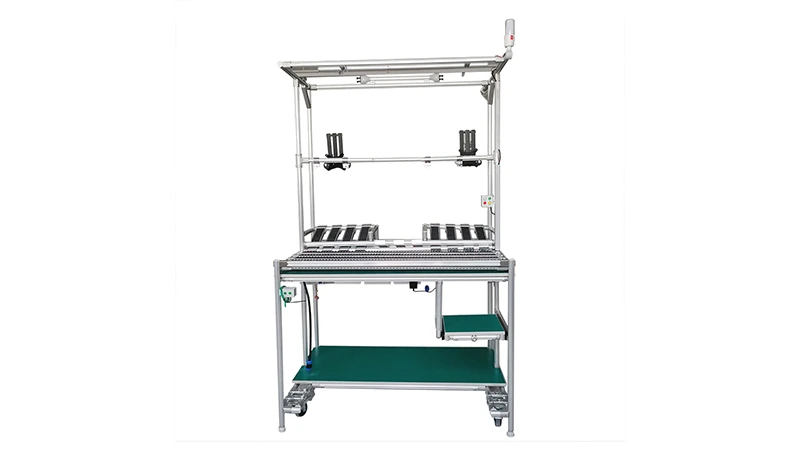
Bridging flexibility, efficiency, and lean principles for modern manufacturing
The Heartbeat of JIT: Why Workstations Matter
Walk into any high-performing manufacturing facility today, and you'll feel it—the steady, purposeful rhythm of Just-In-Time (JIT) production. No piles of inventory cluttering the floor, no workers waiting idle for parts, no last-minute scrambles to meet deadlines. Instead, everything flows: components arrive exactly when needed, assemblies move smoothly from one station to the next, and finished products roll out the door with minimal waste. It's a symphony of efficiency, but like any symphony, it needs the right instruments to hit the right notes.
At the center of this orchestration are the workstations—the literal and figurative workhorses where the magic happens. A poorly designed workstation can throw off the entire JIT rhythm: bottlenecks form when tools are hard to reach, inventory piles up when material flow stalls, and worker fatigue slows down production. That's where Aluminum Workbench D comes in. More than just a table with a surface, it's a strategic tool built to align with JIT's core principles: eliminate waste, optimize flow, and empower workers. Let's dive into how this unassuming piece of equipment becomes the backbone of a JIT system.
Material Flow: From Stagnation to Seamlessness
JIT lives and dies by material flow. In traditional setups, parts might sit in a warehouse for days before reaching the production line, or workers might trek across the shop floor to fetch components—both classic examples of "waste" in lean system terms. Aluminum Workbench D, however, is designed to integrate with the entire material ecosystem, turning isolated workstations into nodes in a continuous flow network.
Flow Racks: The Silent Deliverers
Imagine a line of flow racks positioned just steps from Aluminum Workbench D. Each rack is loaded with the exact components a worker needs for the next hour's worth of assemblies—no more, no less. Gravity does the heavy lifting: as parts are taken from the front, new ones slide down from the back, ensuring a constant, visual supply. This isn't just convenient; it's JIT in action. With Aluminum Workbench D's flat, stable surface, workers can place these flow rack-fed components within arm's reach, cutting down on motion waste (one of the seven wastes in lean) by up to 30%, according to manufacturing efficiency studies.
What makes this integration seamless? The workbench's aluminum profile construction. Unlike rigid wooden or steel workbenches, Aluminum Workbench D can be outfitted with custom brackets and mounts to attach flow racks directly to its frame. Need to adjust the height of the flow rack to match the workbench? No problem—aluminum profile accessories like angle brackets and clamps let you tweak the setup in minutes, not days. This flexibility ensures the flow rack and workbench operate as a single unit, keeping material moving at the pace of production.
Conveyors: The Invisible Hand of JIT
Once an assembly is complete at Aluminum Workbench D, it doesn't linger. Thanks to integrated conveyor systems, finished parts glide away to the next station—testing, packaging, or shipping—without a worker lifting a finger. Picture this: a small conveyor belt mounted to the side of the workbench, aligned perfectly with its surface. As soon as a worker finishes a circuit board assembly, they slide it onto the conveyor, and it's off to quality control. No stacking, no storing, no delays.
Aluminum Workbench D's modular design makes conveyor integration a breeze. Its aluminum extrusion profile has T-slots running along its length, allowing for quick attachment of conveyor brackets or guides. Whether it's a simple roller conveyor for light parts or a belt conveyor for delicate electronics, the workbench adapts. This isn't just about speed; it's about predictability. In JIT, knowing exactly when a part will arrive at the next station lets managers schedule labor and resources with pinpoint accuracy—no more overstaffing or underutilization.

Flexibility: Adapting to the Rhythm of Demand
JIT production isn't static. Customer orders fluctuate, product designs change, and new materials enter the mix. A workstation that works perfectly for today's product might be obsolete tomorrow. Aluminum Workbench D, built with aluminum profile and aluminum lean pipe, is the chameleon of manufacturing—ready to adapt without missing a beat.
Aluminum Profile: The Building Block of Customization
Aluminum profile isn't just lightweight and strong; it's modular by nature. The T-slots running along every extrusion mean you can add, remove, or reposition accessories in seconds. Need a shelf for tools? Screw a bracket into the T-slot. Want to mount a monitor arm for digital work instructions? Slide it into place and tighten a knob. Even the workbench's height can be adjusted using aluminum pipe clamp extensions, ensuring it fits workers of all sizes or accommodates different tasks—from standing assembly to seated inspection.
Consider a scenario where a manufacturer suddenly shifts from producing small sensors to larger control panels. A traditional wooden workbench would need to be replaced entirely, costing time and money. With Aluminum Workbench D? The team removes the upper shelf, swaps out the side rails for longer ones, and adds a deeper surface—all in under an hour. The workbench is now tailor-made for the new product, and production resumes without skipping a beat. That's the flexibility JIT demands.
Lean Tube and Accessories: Quick Fixes for Changing Needs
Aluminum Workbench D isn't alone in its adaptability. It pairs seamlessly with lean tube and accessories, like internal rotatory aluminum joints and parallel aluminum joints, to create custom structures on the fly. Need a temporary bin for scrap material? Bend a length of aluminum lean pipe, connect it with a 90° joint, and mount it to the workbench. Want to create a protective barrier around delicate components? Snap together aluminum guide rails and attach them to the bench's edge. These aren't permanent modifications—they're quick, reversible tweaks that let the workstation evolve with the job.
John, a production lead at a automotive parts plant, put it best: "Before Aluminum Workbench D, changing a workstation felt like remodeling a house. Now, it's like rearranging furniture. If the afternoon shift needs a different setup than the morning shift, they swap it out themselves. No waiting for maintenance, no downtime—it's just… easy."

Ergonomics: Empowering Workers, Not Exhausting Them
JIT isn't just about machines and materials; it's about people. A tired, strained worker can't maintain the focus and speed a JIT system requires. Aluminum Workbench D (single deck-without caster, as specified in many industrial setups) prioritizes ergonomics, turning a physical workspace into a tool that supports workers, not the other way around.
A Surface Built for the Human Body
The height of Aluminum Workbench D is no accident. At 36 inches (standard for many models), it reduces bending and reaching for workers standing during shifts. The surface itself is smooth but not slippery, with a slight texture that keeps parts from sliding around—no more fumbling with greasy components or chasing rolling screws. Even the edges are rounded to prevent cuts, a small detail that adds up to big comfort over a 10-hour shift.
For seated tasks, the workbench can be lowered using adjustable feet, ensuring knees are at a 90° angle and wrists stay straight while using tools. And because it's made of aluminum, the surface stays cool to the touch—no more sweaty palms on hot summer days, which might seem trivial until you've spent hours gripping a soldering iron.
Tools Within Arm's Reach: The 5S Connection
5S—Sort, Set in Order, Shine, Standardize, Sustain—is the backbone of lean system organization, and Aluminum Workbench D is a 5S champion. With integrated tool holders, pegboards, and bins (all attachable via those handy T-slots), every tool has a designated home. A screwdriver goes here, a wrench there, a pair of pliers right next to the assembly area. Workers don't waste time hunting for tools; they reach, grab, and get back to work.
Maria, an assembler at a medical device company, recalls the difference: "Before, my tools were in a box under the bench. I'd spend 10 minutes a day just digging for what I needed. Now, everything's on the wall above the workbench, color-coded. I can grab a torque wrench without looking. It sounds small, but over a week, that's an hour of extra work I get done." That's the power of ergonomics—turning frustration into focus, and focus into productivity.
The Lean System Connection: More Than a Workbench, a Philosophy
JIT isn't just a production method; it's a mindset—a commitment to continuous improvement, or kaizen. Aluminum Workbench D doesn't just support this mindset; it embodies it. Every feature is designed to make small, incremental improvements possible, turning "good enough" into "better" day after day.
Visual Management: A Glimpse Into Flow
In a JIT system, visibility is key. You need to see at a glance if material is flowing, if tools are in place, if there's a problem. Aluminum Workbench D's clean, uncluttered design makes visual management easy. The aluminum surface reflects light, illuminating the workspace so issues like missing parts or misaligned components stand out. Color-coded bins (attached via aluminum profile accessories) signal which parts go where, reducing errors. Even the flow racks and conveyors integrated with the bench act as visual cues: if a flow rack bin is empty, it's time to restock; if the conveyor is backed up, there's a bottleneck to fix.
Kaizen-Ready: Adapting to Improvement
Kaizen events—short, focused workshops to solve specific problems—are a staple of lean systems. Aluminum Workbench D thrives in these moments. Suppose a team identifies that workers are wasting time rotating parts 180° during assembly. In a traditional setup, solving this might require a custom fixture, taking weeks to design and build. With Aluminum Workbench D? The team uses aluminum lean pipe and a 180° internal rotatory aluminum joint to build a rotating platform in 20 minutes. They test it, tweak it, and by the end of the kaizen event, the rotation time is cut by 75%. No delays, no red tape—just action.
This ability to iterate quickly is why Aluminum Workbench D isn't just a workstation; it's a kaizen partner. It grows with the team's ideas, turning "what if" into "what works" overnight.
| Feature | Traditional Workbench | Aluminum Workbench D |
|---|---|---|
| Flexibility | Fixed design; requires full replacement for changes. | Modular aluminum profile allows tool/accessory reconfiguration in minutes. |
| Material Flow Integration | Isolated; workers must fetch parts from distant storage. | Seamless with flow racks and conveyors via T-slot mounts. |
| Ergonomics | One-size-fits-all; often causes worker strain. | Height-adjustable, customizable surface, and tool placement. |
| Lean System Compatibility | Hard to adapt to 5S or kaizen; cluttered workspaces common. | Designed for visual management and quick improvement cycles. |
| Cost Over Time | Low upfront cost, but high replacement/modification expenses. | Higher initial investment, but minimal long-term costs due to adaptability. |
Case Study: How ABC Electronics Cut Waste with Aluminum Workbench D
The Challenge: ABC Electronics, a mid-sized manufacturer of circuit boards, was struggling with JIT implementation. Their old wooden workbenches couldn't keep up with frequent product changes, material flow was erratic (parts often sat idle for hours), and workers reported high fatigue from awkward tool placement.
The Solution: The team replaced 12 traditional workbenches with Aluminum Workbench D, paired with flow racks, mini aluminum roller tracks, and conveyor systems. They also invested in aluminum profile accessories like tool holders and adjustable shelves.
The Results:
Within three months:
• Inventory waste dropped by 28%—flow racks delivered parts exactly when needed, reducing stockpiles.
• Worker movement waste decreased by 40%—tools and parts were within arm's reach on the workbench.
• Changeover time between products fell from 4 hours to 30 minutes—modular aluminum components made reconfiguration a breeze.
• Worker satisfaction scores rose by 35%—ergonomic design reduced strain and frustration.
Quote from the Plant Manager: "Aluminum Workbench D didn't just improve our production line—it changed our culture. Workers feel empowered to suggest improvements because they know the workbench can adapt. That's the heart of JIT, and we couldn't have done it without this tool."
Beyond the Workbench: Building a JIT Ecosystem
Aluminum Workbench D is powerful on its own, but its true strength lies in how it connects to the broader manufacturing ecosystem. It's not just a workstation; it's a node that links flow racks, conveyors, aluminum pipe accessories, and even digital systems (like barcode scanners mounted on aluminum profile arms) into a cohesive JIT network. Every component—from the swivel roller balls on the flow racks to the caster wheels on the mobile trolleys—works in harmony with the workbench to keep the rhythm steady.
Consider the journey of a single component: it arrives via a conveyor, slides into a flow rack next to Aluminum Workbench D, is picked up by a worker, assembled into a product, and sent out via another conveyor—all without stopping, all without waste. This is the JIT dream, and Aluminum Workbench D is the linchpin making it real.
Conclusion: The Workbench That Speaks JIT
Just-In-Time production isn't about perfection; it's about progress—constantly eliminating waste, optimizing flow, and empowering people. Aluminum Workbench D, with its aluminum profile flexibility, flow rack/conveyor integration, and lean system compatibility, is more than a tool for this journey; it's a partner. It adapts when demand shifts, connects when flow stalls, and supports when workers need it most.
In the end, JIT is about creating a system where every element has a purpose, every movement has a reason, and every worker has the tools to succeed. Aluminum Workbench D doesn't just fit into this system—it elevates it, turning the chaos of manufacturing into a symphony of efficiency. And in today's fast-paced world, that's not just an advantage; it's essential.
So the next time you walk through a JIT facility and feel that steady rhythm, take a closer look at the workstations. Chances are, you'll see Aluminum Workbench D at the center—quietly, reliably, keeping the beat.