- Company Articles
- Products and Technology
- Solution
- How Aluminum Workbench D Supports Sustainable Manufacturing: Reusability and Waste Reduction

How Aluminum Workbench D Supports Sustainable Manufacturing: Reusability and Waste Reduction
Related Product
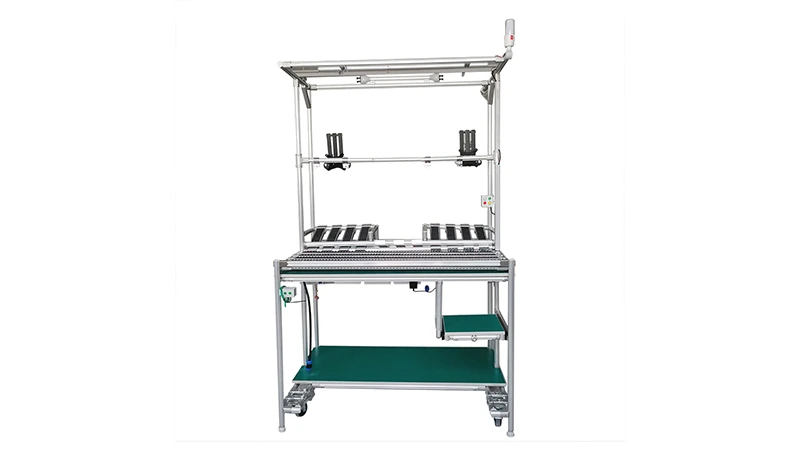
Aluminum Workbench D
Aluminum tube workbench is more flexible and durable, compared with traditional PE/ABS coated steel tube. It is easy to assemble, anti corrosion, rust protection, and recycle use after disassemble.
In an era where manufacturing facilities worldwide are racing to meet ambitious sustainability goals, the search for tools and equipment that align with eco-friendly practices has never been more critical. From reducing carbon footprints to minimizing waste, every component of the production process is under scrutiny—and rightfully so. The manufacturing sector, historically a heavy consumer of resources and a significant contributor to waste, is now at a crossroads: adapt to sustainable methods or risk falling behind in an increasingly eco-conscious market. Enter Aluminum Workbench D—a modular, durable, and surprisingly innovative solution that's quietly revolutionizing how we think about workspace efficiency and environmental responsibility. In this article, we'll explore how this unassuming piece of equipment is becoming a cornerstone of sustainable manufacturing, focusing on its two most powerful attributes: reusability and waste reduction. Along the way, we'll dive into its design, compare it to traditional workbenches, and highlight real-world examples of how it's making a difference.
What Exactly Is Aluminum Workbench D?
Before we unpack its sustainability benefits, let's take a moment to understand what Aluminum Workbench D is—and why it stands out from the crowd. At first glance, it might look like any other workbench: a flat surface supported by a sturdy frame, designed to hold tools, materials, and equipment during production. But that's where the similarities end. Aluminum Workbench D is a product of modular engineering, built from high-quality aluminum extrusion profiles and paired with a range of aluminum profile accessories that make it infinitely adaptable. Unlike fixed workbenches made from wood, steel, or plastic, this isn't a "one-and-done" piece of furniture. It's a system—a flexible, reconfigurable workspace that grows, shrinks, and transforms alongside your manufacturing needs.
Let's break down its components. The core structure relies on aluminum extrusion profiles—hollow, lightweight tubes with a T-slot design that allows for easy attachment of accessories. These profiles are strong yet surprisingly light, thanks to aluminum's natural properties. The workbench's surface, typically a single deck (though configurations vary), is mounted on a frame assembled using precision-engineered joints and brackets, many of which are part of the aluminum profile accessories lineup. What's most notable about Aluminum Workbench D, though, is its intentional simplicity: it's often designed as a single deck without casters (a nod to stability and reduced material use), but don't let that fool you. Its lack of wheels is a choice, not a limitation—one that prioritizes durability and minimizes unnecessary components, further aligning with sustainability principles.
To put it simply, Aluminum Workbench D is a blank canvas for manufacturers. Need to add a shelf? Screw in an aluminum bracket. Want to adjust the height? Swap out a few profiles. Moving to a new facility? Disassemble it in minutes and rebuild it at the new location. This modularity isn't just about convenience—it's the secret to its sustainability superpowers.
The Sustainability Crisis in Modern Manufacturing
To appreciate why Aluminum Workbench D matters, we first need to understand the problem it's solving: the unsustainable status quo of manufacturing workspaces. Traditional workbenches, while functional, are often designed with a "use-and-discard" mindset. Let's consider wood, for example. Wooden workbenches are cheap and familiar, but they're prone to warping, scratching, and water damage. Once they're worn out, they're typically thrown away—adding to landfill waste. Steel workbenches, on the other hand, are durable but heavy, energy-intensive to produce, and nearly impossible to reconfigure. When a production line changes or a facility upgrades, that steel bench becomes dead weight; cutting it down or modifying it is costly and time-consuming, so it's often scrapped. Even plastic workbenches, while lightweight, are made from non-biodegradable materials and rarely recyclable, contributing to the plastic pollution crisis.
The numbers paint a stark picture. According to the Environmental Protection Agency (EPA), the manufacturing sector generates over 11 million tons of non-hazardous waste annually in the United States alone, much of which comes from discarded equipment and furniture. Globally, the figure is even more alarming: the United Nations estimates that industrial waste accounts for nearly 20% of all solid waste generated worldwide. A significant portion of this waste is avoidable, stemming from short-lived, non-recyclable, or non-reconfigurable tools—including workbenches. Add to this the energy used to produce these traditional workbenches (steel production, for instance, is responsible for 7% of global greenhouse gas emissions) and the problem becomes clear: we need a better way.
Sustainability in manufacturing isn't just about reducing emissions or using renewable energy (though those are crucial). It's about rethinking every resource—from raw materials to finished products—to ensure they're used efficiently, preserved as long as possible, and recycled responsibly. This is where Aluminum Workbench D steps in, addressing both the waste and resource depletion issues head-on.

Reusability: The Heart of Aluminum Workbench D's Design
If there's one word that defines Aluminum Workbench D, it's "reusable." Unlike traditional workbenches that are built to serve a single purpose, this workbench is engineered to be reused—over and over again—in countless configurations. This isn't by accident; it's a deliberate design choice rooted in the principles of the lean system, which emphasizes minimizing waste and maximizing value. Let's explore how reusability is baked into every aspect of its construction.
Modularity: Adapt or Reuse, Don't replace
The T-slot aluminum extrusion profiles that form the workbench's frame are the key to its modularity. These profiles feature grooves (the "T-slots") that allow accessories—like brackets, shelves, tool holders, and even lighting—to be attached, adjusted, or removed without drilling, welding, or cutting. Need to raise the workbench height by six inches? Swap out the vertical profiles for longer ones. Want to add a second shelf for smaller parts? Slide in a few brackets and a new aluminum panel. The beauty here is that none of these changes require replacing the entire workbench. Instead of throwing away a perfectly good frame because the surface is too low or the shelves are in the wrong place, you simply reconfigure it. This adaptability means Aluminum Workbench D rarely becomes obsolete, even as production lines evolve, product designs change, or workspace layouts shift.
Consider a hypothetical scenario: a electronics manufacturer using Aluminum Workbench D to assemble smartphones suddenly pivots to larger tablets. The original workbench, designed for small components, is now too low and lacks storage for bulkier parts. With traditional workbenches, this would mean ordering new ones—a costly and wasteful process. With Aluminum Workbench D? The team disassembles the frame, replaces the vertical profiles with taller ones, adds deeper shelves using aluminum profile accessories, and within a day, the workbench is ready for the new product. No waste, no new materials—just reuse.
Durability: Built to Last (and Last)
Reusability means nothing if the product falls apart after a few years. Aluminum Workbench D avoids this pitfall by leveraging aluminum's natural durability. Aluminum is resistant to corrosion, rust, and wear—even in harsh manufacturing environments where chemicals, moisture, or heavy use might degrade other materials. Unlike wood, it doesn't warp or rot. Unlike steel, it doesn't rust without constant maintenance. And unlike plastic, it doesn't crack or fade under UV light. This longevity ensures that the workbench remains functional for decades, not just years. In fact, many manufacturers report using the same Aluminum Workbench D frames for 10+ years, with only minor replacements of accessories (like worn brackets or damaged panels) along the way. When you invest in a workbench that lasts this long, you're inherently reducing waste: fewer replacements mean fewer resources extracted, fewer products manufactured, and fewer items ending up in landfills.
Disassembly and Reassembly: A Second Life Elsewhere
Even when a manufacturing facility closes, relocates, or upgrades to a newer model, Aluminum Workbench D doesn't have to meet the dumpster. Its modular design makes it easy to disassemble into individual components—profiles, joints, panels, and accessories—that can be packed, shipped, and reassembled at a new location. This portability is a game-changer for businesses with evolving needs. A small startup might begin with a single Aluminum Workbench D, then expand to five as it grows. Later, if it moves to a larger facility, those five workbenches can be taken apart, transported, and rebuilt in the new space. Alternatively, they can be sold or donated to other businesses, extending their lifecycle even further. This "second life" potential is a far cry from traditional workbenches, which are often too heavy, too fixed, or too damaged to be reused elsewhere—leading to their inevitable disposal.

Waste Reduction: From Production to Disposal
Reusability is a powerful tool for sustainability, but Aluminum Workbench D doesn't stop there. It also excels at reducing waste across its entire lifecycle—from the moment its raw materials are mined to the day it's finally recycled. Let's trace its journey and see how it minimizes waste at every step.
Raw Materials: Aluminum's Low-Impact Advantage
Aluminum, the primary material in Aluminum Workbench D, is already a more sustainable choice than many alternatives. For starters, it's 100% recyclable, and recycling it requires just 5% of the energy needed to produce new aluminum from bauxite ore. That's a staggering reduction in carbon emissions—up to 95% fewer greenhouse gases per ton of recycled aluminum compared to virgin production. But Aluminum Workbench D takes this a step further by using high-quality aluminum extrusion profiles, which are manufactured using a process that minimizes material waste. Extrusion involves forcing heated aluminum through a die to create specific shapes (like the T-slot profiles used in the workbench). This method is far more efficient than cutting or casting, as it produces minimal scrap. Any scrap that is generated during extrusion is almost always recycled on-site, feeding back into the production process and reducing the need for new raw materials.
Compare this to steel workbenches, which often require welding, cutting, and grinding—processes that generate significant metal shavings and waste. Or wooden workbenches, which start with logging (a resource-intensive process) and often result in sawdust and off-cuts that are rarely reused. Aluminum Workbench D's raw material stage is inherently low-waste, setting the tone for its entire lifecycle.
Manufacturing: Precision Without Waste
The assembly of Aluminum Workbench D is another area where waste is minimized. Because the workbench is modular, it's built using pre-cut aluminum extrusion profiles and standardized aluminum profile accessories. There's no need for custom fabrication, on-site welding, or drilling—steps that often lead to mistakes, rework, and excess material use. Instead, components are mass-produced to precise specifications, ensuring a perfect fit every time. This precision reduces the likelihood of defective parts (which would otherwise be discarded) and eliminates the need for "trial and error" assembly. Even the packaging for these components is designed with sustainability in mind: many manufacturers use recyclable cardboard or reusable plastic crates, avoiding excessive foam or single-use plastics.
End-of-Life: Closing the Loop with Recycling
No product lasts forever, but Aluminum Workbench D ensures that when its useful life finally ends, it doesn't become waste. Because it's made almost entirely of aluminum, every component—from the extrusion profiles to the brackets and panels—can be recycled. Unlike workbenches made from mixed materials (e.g., a wooden top with steel legs and plastic casters), which are difficult to disassemble and recycle, Aluminum Workbench D is a monomaterial system. This makes recycling straightforward: simply separate any non-aluminum parts (like rubber gaskets or plastic handles, which are minimal), and the rest goes to an aluminum recycler. There, it's melted down and turned into new aluminum products—possibly even new extrusion profiles for future workbenches. This closed-loop system ensures that the aluminum in Aluminum Workbench D never truly "dies"; it's just reborn into something new.
Aluminum Workbench D vs. Traditional Workbenches: A Waste Comparison
To truly appreciate Aluminum Workbench D's impact, let's compare it side-by-side with three common alternatives: wooden workbenches, steel workbenches, and plastic workbenches. The table below highlights key areas of waste and reusability, drawing on typical lifespans, material usage, and end-of-life scenarios.
| Feature | Aluminum Workbench D | Wooden Workbench | Steel Workbench | Plastic Workbench |
|---|---|---|---|---|
| Typical Lifespan | 10–15 years (with reconfiguration) | 3–5 years (prone to warping, rot) | 7–10 years (rusts without maintenance) | 2–4 years (cracks, fades, weakens) |
| Reusability | High: fully reconfigurable, components reusable in new setups | Low: fixed design, difficult to modify; often discarded when needs change | Medium: can be repurposed as scrap metal, but not easily reconfigured | Very low: fixed design, degrades over time; rarely recyclable |
| Manufacturing Waste | Low: extrusion process minimizes scrap; excess recycled on-site | High: sawdust, off-cuts, and finishing waste (e.g., paint, varnish) | Medium: welding, grinding, and cutting generate metal shavings | High: plastic molding produces excess resin; non-recyclable scrap |
| End-of-Life Disposal | Recyclable: 100% aluminum content; closed-loop recycling possible | Landfill: wood may biodegrade, but finishes and hardware contaminate | Recyclable, but energy-intensive; often landfilled due to cost | Landfill: most plastics not recycled; leach chemicals into soil |
| Total Waste Over Lifespan* | ~5–10% of initial material (accessory replacements only) | ~80–90% (entire bench discarded; minimal recycling) | ~60–70% (frame recycled, but other components wasted) | ~95–100% (virtually no recycling; entire bench landfilled) |
*Estimates based on industry data and average usage scenarios. "Total Waste Over Lifespan" includes manufacturing waste, maintenance waste, and end-of-life waste relative to the initial material used.
The table tells a clear story: Aluminum Workbench D generates significantly less waste across its lifecycle than traditional alternatives. Its reusability, durability, and recyclability combine to make it a far more sustainable choice—one that reduces both environmental impact and long-term costs for manufacturers.
Real-World Impact: How Manufacturers Are Using Aluminum Workbench D to Cut Waste
Numbers and comparisons are helpful, but nothing illustrates sustainability better than real-world examples. Let's look at two manufacturers that have adopted Aluminum Workbench D and the tangible results they've seen.
Case Study 1: Automotive Parts Supplier Reduces Waste by 65%
A mid-sized automotive parts supplier in Michigan was struggling with frequent reconfigurations of its assembly lines. As car models changed annually, the company found itself replacing 30–40% of its workbenches each year—mostly steel and wooden models that couldn't adapt to new part sizes or workflow changes. The result? Tons of waste sent to landfills, plus the cost of purchasing new workbenches. In 2022, the company switched to Aluminum Workbench D for its main assembly area, investing in 50 units. Within a year, the results were striking: instead of replacing 15–20 workbenches annually, they reconfigured the existing ones using aluminum profile accessories. Waste from workbench disposal dropped by 65%, and the company estimates it saved $120,000 in replacement costs. "We used to dread model year changes because of the waste and expense," said the facility manager. "Now, we just grab a wrench and a few new profiles, and we're done. It's been a game-changer for our sustainability goals."
Case Study 2: Electronics Manufacturer Achieves Zero Workbench Waste
A California-based electronics manufacturer with a strict zero-waste policy was struggling to find workbenches that aligned with its values. Its previous wooden workbenches were difficult to recycle, and steel models required frequent painting (generating chemical waste). In 2021, the company transitioned to Aluminum Workbench D for all its production lines. By 2023, it had achieved zero waste from workbench disposal: old components were recycled locally, and reconfigurations used existing parts. Additionally, the company repurposed 10 old workbenches by donating them to a local makerspace, extending their lifecycle even further. "Aluminum Workbench D didn't just help us hit our zero-waste target—it made it easy," noted the sustainability director. "We're now looking at other aluminum modular systems for our storage racks and material handling equipment."
The Future of Sustainable Manufacturing: Beyond the Workbench
Aluminum Workbench D is more than just a sustainable workbench—it's a glimpse into the future of manufacturing. As companies embrace the lean system and circular economy principles, modular aluminum solutions are poised to play a larger role in workspace design. Imagine a factory where every piece of equipment—from workbenches to shelving, conveyor systems, and even production lines—is built from modular aluminum extrusion profiles. A factory where reconfiguration is as simple as swapping out a few profiles, where waste is minimized at every step, and where end-of-life recycling is the norm, not the exception. This isn't science fiction; it's already happening, and Aluminum Workbench D is leading the charge.
Looking ahead, we can expect to see even more innovation in aluminum modular systems. Manufacturers are experimenting with lighter, stronger extrusion profiles, biodegradable accessories, and smart features (like embedded sensors to monitor wear and optimize maintenance). There's also growing interest in combining aluminum with other sustainable materials, such as bamboo or recycled plastic, to further reduce environmental impact. But for now, Aluminum Workbench D stands as a testament to what's possible when sustainability is prioritized in design—not as an afterthought, but as a core principle.
Conclusion: Small Changes, Big Impact
Sustainable manufacturing isn't about grand gestures or overhauls of entire production lines (though those help). It's about the small, everyday choices—the tools, equipment, and systems that make up the backbone of a facility. Aluminum Workbench D is one such choice: a simple, unassuming piece of equipment that, when multiplied across thousands of factories, has the power to reduce waste, conserve resources, and move the needle on global sustainability goals. Its reusability ensures it adapts to changing needs, avoiding the cycle of discard and replace. Its waste reduction, from production to recycling, closes the loop on resource use. And its alignment with the lean system makes it a practical, cost-effective choice for manufacturers of all sizes.
As we look to a future where sustainability is no longer optional but essential, Aluminum Workbench D serves as a reminder that innovation and environmental responsibility can go hand in hand. It's proof that even the most basic tools can be reimagined to make a difference. So the next time you walk through a manufacturing facility, take a closer look at the workbenches. If they're made of aluminum extrusion profiles, with T-slots and modular accessories, you're looking at more than just a workspace—you're looking at the future of sustainable manufacturing.