- Company Articles
- Products and Technology
- Product knowledge
- How Anti-Slip Adjustable Leveling Feet Enhance Precision in Medical Device Assembly

How Anti-Slip Adjustable Leveling Feet Enhance Precision in Medical Device Assembly
Related Product
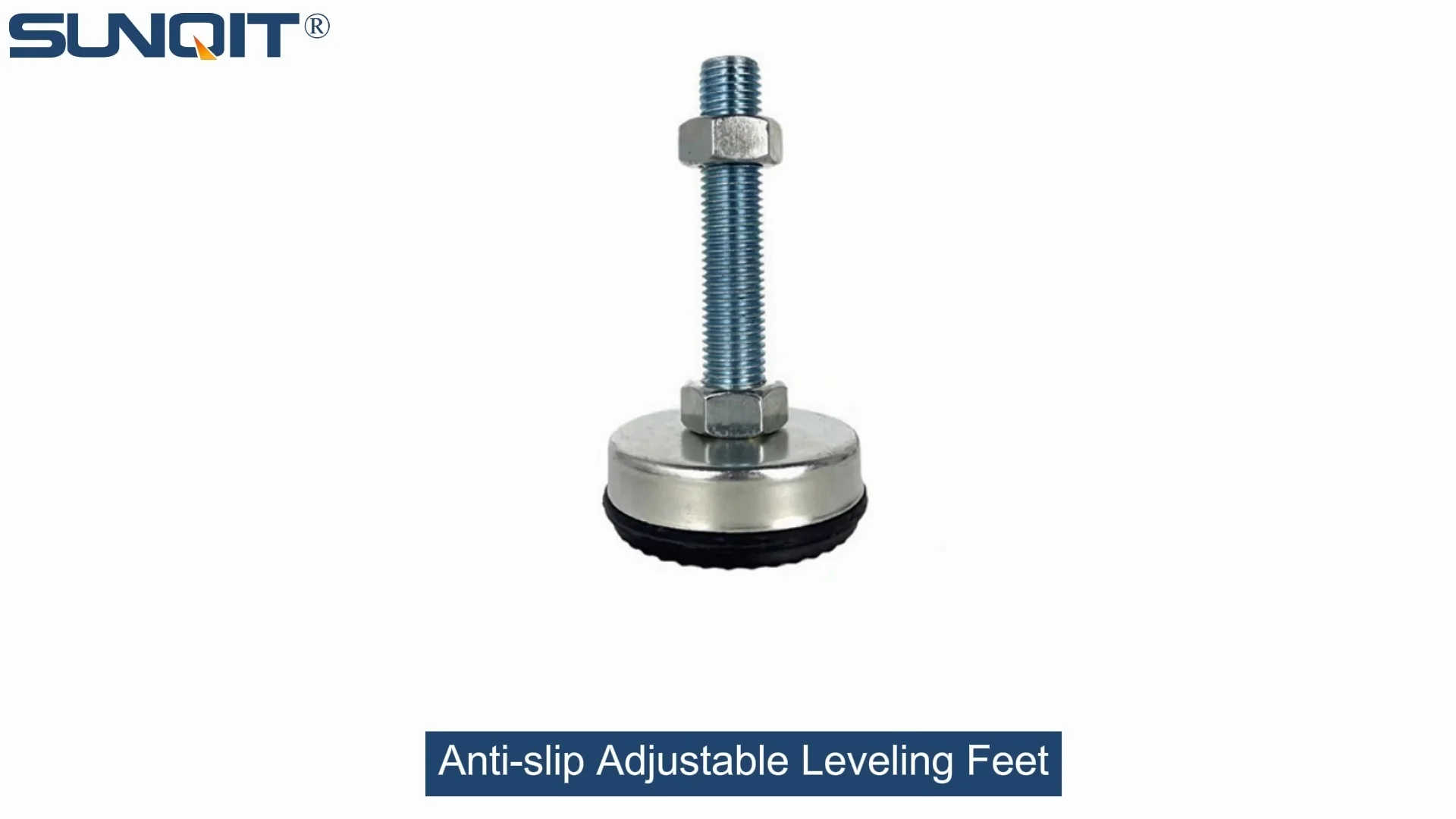
Anti-slip Adjustable Leveling Feet
Anti-slip Adjustable Leveling Feet are designed to keep machines level when placed on uneven or sloped ground, the rubber base will prevent product slip during work.
Introduction: The Invisible Hero of Precision Assembly
In the world of medical device assembly, where fractions of a millimeter can mean the difference between a life-saving tool and a costly mistake, every detail matters. Technicians and engineers spend countless hours perfecting designs, calibrating machines, and ensuring components meet the strictest standards. Yet, there's one element that often goes unnoticed—until it fails: the stability of the workbench itself. Imagine a surgical instrument manufacturer, where a technician is carefully aligning the tiny gears of a laparoscopic tool. If the workbench beneath them wobbles even slightly, that alignment shifts, compromising the tool's functionality and, ultimately, patient safety. This is where anti-slip adjustable leveling feet step in—not as flashy as cutting-edge robotics or as celebrated as precision sensors, but as quiet guardians of accuracy and reliability.
In this article, we'll explore how these unassuming components transform medical device assembly lines, turning unstable workspaces into havens of precision. We'll dive into their design, their role in lean systems, and how they integrate seamlessly with aluminum profile workbenches to create environments where quality isn't just a goal—it's a guarantee. Whether you're a production manager overseeing a bustling assembly floor or a small-scale manufacturer crafting custom medical tools, understanding the impact of anti-slip adjustable leveling feet could be the key to elevating your operations from good to (excellent).
The Critical Role of Stability in Medical Device Assembly
Medical devices are unlike any other products. A slight misalignment in a diagnostic machine could lead to incorrect test results. A wobbly workbench during the assembly of a pacemaker could result in a faulty connection, putting a patient's life at risk. Regulatory bodies like the FDA and ISO enforce rigorous standards not just for the devices themselves, but for the environments in which they're made. Stability isn't just a matter of convenience here—it's a compliance requirement.
Consider the assembly of a blood glucose monitor. The device's sensor must be positioned with pinpoint accuracy to ensure it reads blood samples correctly. If the workbench shifts while the sensor is being soldered, the connection might be weak, leading to inconsistent readings. For patients relying on these monitors to manage diabetes, that inconsistency isn't just frustrating—it's dangerous. This is why stability is the foundation upon which all other precision measures are built. Without a rock-solid workspace, even the most skilled technicians and advanced tools can't deliver the reliability medical devices demand.

Challenges in Traditional Workbench Setups
Traditional workbenches often rely on fixed feet or basic leveling pads. While these might work in less demanding industries, they fall short in medical device manufacturing. Floors in production facilities are rarely perfectly level—years of heavy equipment use, uneven concrete, or even minor shifts in the building's structure can create subtle slopes. Fixed feet can't adapt to these variations, leaving workbenches teetering or rocking.
Rubber pads, another common solution, wear down over time, losing their grip and allowing the workbench to slide. In environments where technicians are constantly moving, reaching, and applying pressure to components, even a small slide can disrupt the assembly process. Worse, traditional feet often lack anti-slip properties, increasing the risk of the workbench shifting during use. For manufacturers, this means higher error rates, increased waste, and the constant stress of wondering if the next product off the line meets quality standards.

Enter Anti-Slip Adjustable Leveling Feet: A Precision Solution
Anti-slip adjustable leveling feet were designed to address these exact challenges. Unlike their one-size-fits-all predecessors, these feet combine two critical features: adjustability to counteract uneven floors and anti-slip technology to prevent movement. They're the bridge between the imperfect reality of production floors and the perfect precision required for medical devices.
At their core, these feet consist of a threaded stem that screws into the workbench leg, allowing for height adjustments as small as 1mm. The base of the foot is typically made from a high-friction material like rubber or polyurethane, which grips the floor to prevent sliding. Some models even include a locking mechanism to ensure the foot stays in place once adjusted, so you don't have to worry about it loosening over time.
What makes them particularly valuable for medical assembly is their versatility. Whether you're using a heavy-duty aluminum profile workbench for assembling surgical robots or a lightweight mobile cart for transporting components, anti-slip adjustable leveling feet can be customized to fit. They're compatible with a wide range of workbench designs, including those built with aluminum profiles—a material prized for its strength, flexibility, and resistance to corrosion, making it ideal for cleanroom environments.

Key Features of Anti-Slip Adjustable Leveling Feet
Not all leveling feet are created equal. When it comes to medical device assembly, the right features can make all the difference. Here's what sets high-quality anti-slip adjustable leveling feet apart:
- Micro-Adjustability: The ability to fine-tune height by fractions of a millimeter ensures the workbench is perfectly level, even on the most uneven floors.
- High-Friction Base: Materials like nitrile rubber or polyurethane provide exceptional grip, preventing the workbench from sliding during use.
- Corrosion Resistance: Stainless steel or coated stems resist rust and chemicals, making them suitable for cleanrooms and environments where sanitization is critical.
- Load Capacity: Designed to support heavy workbenches and equipment, with some models handling up to 1,000 kg per foot.
- Locking Mechanisms: Ensures the foot stays in place once adjusted, eliminating the need for constant readjustment.
These features work together to create a stable foundation that adapts to your workspace, rather than forcing your workspace to adapt to it. For example, a workbench equipped with anti-slip adjustable leveling feet can be easily leveled even if the floor dips by 5mm in one corner—something traditional feet would struggle to accommodate.
Integration with Lean Systems and Aluminum Profile Workbenches
In today's fast-paced manufacturing world, lean systems have become the gold standard for efficiency. Lean principles focus on eliminating waste, streamlining processes, and maximizing value—all of which are critical in medical device production, where time and resources are often limited. Anti-slip adjustable leveling feet align perfectly with these principles by reducing downtime caused by unstable workbenches and minimizing errors that lead to wasted materials.
Aluminum profile workbenches, known for their modularity and durability, are a staple in lean environments. These workbenches can be easily reconfigured to accommodate different assembly tasks, from small-scale component work to large device testing. When paired with anti-slip adjustable leveling feet, they become even more versatile. Imagine a production line where workbenches need to be moved to reconfigure the workflow—with adjustable feet, leveling the workbench in its new position takes minutes, not hours. This flexibility allows teams to adapt quickly to changing production needs, a key tenet of lean manufacturing.
Moreover, aluminum profiles are lightweight yet strong, making them easy to maneuver without sacrificing stability. When combined with leveling feet that grip the floor securely, there's no risk of the workbench shifting during use, even when technicians are applying pressure to components. This integration of lean systems, aluminum profiles, and anti-slip adjustable leveling feet creates a workspace that's not just efficient, but inherently reliable.
A Closer Look: Traditional vs. Anti-Slip Adjustable Leveling Feet
| Feature | Traditional Leveling Feet | Anti-Slip Adjustable Leveling Feet |
|---|---|---|
| Adjustability | Limited; often coarse adjustments only | Micro-adjustable (0.1mm increments) |
| Anti-Slip Properties | Basic rubber pads that wear quickly | High-friction, durable materials (nitrile rubber, polyurethane) |
| Corrosion Resistance | Often made of plain steel; prone to rust | Stainless steel or coated stems; resistant to chemicals and moisture |
| Load Capacity | Lower (typically up to 200 kg per foot) | Higher (up to 1,000 kg per foot) |
| Locking Mechanism | Rarely included; feet may loosen over time | Built-in locking nuts or pins to prevent movement |
| Lean Compatibility | Poor; time-consuming to adjust during reconfigurations | Excellent; quick adjustments support fast workflow changes |
Real-World Applications in Medical Device Assembly
To truly understand the impact of anti-slip adjustable leveling feet, let's look at a real-world example. A mid-sized medical device manufacturer specializing in endoscopic tools was struggling with inconsistent quality in their latest product line. The issue? Their assembly workbenches, which were using traditional fixed feet, were wobbling on the facility's uneven concrete floor. Technicians reported that components would shift during soldering, leading to rework rates of nearly 15%—a costly problem in an industry where materials are expensive and production timelines are tight.
After consulting with a lean system supplier, the manufacturer replaced the fixed feet with anti-slip adjustable leveling feet on all their assembly workbenches. The results were dramatic: rework rates dropped to 2% within the first month. Technicians noted that the workbenches felt "rock solid," even when applying pressure to components. The manufacturer also saw a 10% increase in production speed, as less time was spent correcting errors. Perhaps most importantly, their next FDA inspection went smoothly, with inspectors praising the improved stability measures as a "model of compliance."
Another example comes from a small-scale manufacturer of custom orthopedic implants. Their workbenches, made from aluminum profiles, needed to be reconfigured daily to accommodate different implant designs. With traditional feet, leveling each workbench took 30 minutes per setup. By switching to anti-slip adjustable leveling feet with quick-lock mechanisms, setup time was reduced to 5 minutes. This not only saved hours of labor each week but also allowed the team to take on more custom orders, boosting revenue without increasing overhead.
Benefits Beyond Stability: Safety, Compliance, and Efficiency
While stability is the primary benefit of anti-slip adjustable leveling feet, their impact extends far beyond keeping workbenches steady. Safety is a major consideration in any manufacturing environment, and unstable workbenches are a common cause of accidents. A technician leaning on a wobbly workbench might lose balance, leading to falls or injuries from sharp tools. Anti-slip feet reduce this risk by keeping the workbench firmly in place, creating a safer workspace for everyone.
Compliance is another area where these feet shine. As mentioned earlier, regulatory bodies like the FDA require manufacturers to maintain controlled production environments. Documentation proving that workbenches are stable and components are assembled under consistent conditions is often part of the approval process. Anti-slip adjustable leveling feet provide a tangible way to demonstrate compliance—by showing that you've taken steps to ensure stability, you're not just meeting standards; you're exceeding them.
Efficiency, too, gets a boost. When technicians don't have to worry about workbench stability, they can focus on what they do best: assembling high-quality medical devices. Less time spent adjusting workbenches or correcting errors means more time spent producing. Over time, this efficiency translates to lower costs, higher output, and a more competitive edge in the market.
Choosing the Right Anti-Slip Adjustable Leveling Feet for Your Assembly Line
With so many options on the market, selecting the right anti-slip adjustable leveling feet can feel overwhelming. Here are a few key factors to consider:
- Load Requirements: Calculate the total weight of your workbench and equipment, then choose feet with a load capacity that exceeds this weight to ensure safety.
- Floor Type: If your facility has smooth concrete floors, a high-friction rubber base may be sufficient. For uneven or textured floors, consider feet with larger bases for better stability.
- Environment: Cleanrooms require corrosion-resistant materials like stainless steel. For wet or chemically treated areas, look for feet with chemical-resistant coatings.
- Adjustment Range: Measure the maximum unevenness of your floors to ensure the feet can compensate for it.
- Integration with Existing Workbenches: Check if the feet are compatible with your current workbench legs, especially if you're using aluminum profiles or custom designs.
Don't hesitate to consult with a reputable supplier who specializes in lean system and workbench components. They can help you assess your needs and recommend the best feet for your specific application. Remember, investing in quality leveling feet isn't just a purchase—it's an investment in the reliability and safety of your medical devices.
Conclusion: Stability as the Foundation of Excellence
In the high-stakes world of medical device assembly, precision is everything. From the smallest sensor to the most complex surgical robot, every component must be assembled with care, accuracy, and unwavering attention to detail. Anti-slip adjustable leveling feet may not be the most glamorous part of the process, but they are undoubtedly one of the most critical. By providing a stable, adaptable foundation for workbenches, they empower technicians to do their best work, reduce errors, and ensure compliance with the strictest industry standards.
Whether integrated with lean systems, paired with aluminum profile workbenches, or simply upgrading traditional setups, these feet are more than just hardware—they're a commitment to quality. They're a reminder that in manufacturing, excellence often lies in the details: the unseen components that make the extraordinary possible. So the next time you walk through your assembly line, take a moment to look down at the feet of your workbenches. Are they just holding things up, or are they helping you build a better, safer, more precise future for healthcare?
The answer, we hope, is clear. Anti-slip adjustable leveling feet aren't just tools—they're partners in precision. And in the world of medical device assembly, that partnership can make all the difference.