- Company Articles
- Products and Technology
- Product knowledge
- How Anti-Slip Adjustable Leveling Feet Improve Workbench E Ergonomics

How Anti-Slip Adjustable Leveling Feet Improve Workbench E Ergonomics
Related Product
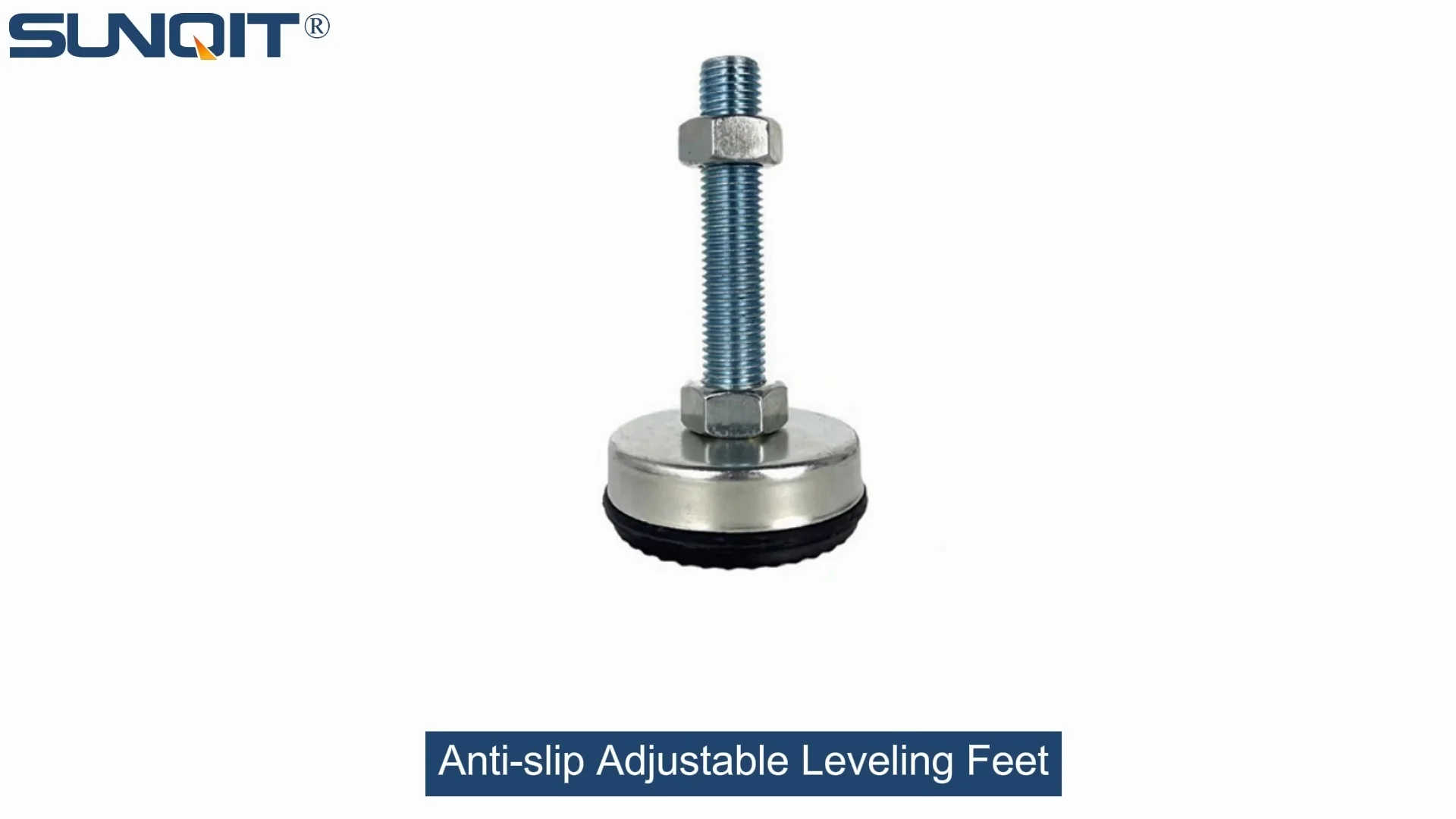
Anti-slip Adjustable Leveling Feet
Anti-slip Adjustable Leveling Feet are designed to keep machines level when placed on uneven or sloped ground, the rubber base will prevent product slip during work.
In the fast-paced world of manufacturing, laboratories, and workshops, the phrase "work smarter, not harder" isn't just a catchy slogan—it's a necessity. At the heart of this philosophy lies ergonomics, the science of designing workspaces to fit the people who use them. While flashy machinery and high-tech tools often steal the spotlight, it's the smaller, often overlooked components that can make the biggest difference in daily comfort and productivity. One such component? Anti-slip adjustable leveling feet. Specifically, when paired with Workbench E (Single Deck-Without Caster), these unassuming devices transform a basic work surface into an ergonomic powerhouse, supporting both worker well-being and operational efficiency. Let's dive into how these tiny but mighty feet elevate Workbench E from a simple table to a cornerstone of lean, people-centric work environments.
Understanding Workbench E (Single Deck-Without Caster)
Before we explore the role of anti-slip adjustable leveling feet, let's get to know the star of the show: Workbench E (Single Deck-Without Caster). This workbench model has become a staple in industries ranging from electronics assembly to automotive repair, and for good reason. As the name suggests, it features a single, sturdy work surface (or "deck") and—crucially—no built-in casters. Unlike mobile workbenches that prioritize flexibility, Workbench E is designed for stability and stationary use, making it ideal for tasks that demand precision, consistency, and a fixed workflow.
Typically constructed with a frame made from aluminum profile, Workbench E balances lightweight portability (during initial setup) with impressive durability. Aluminum profile, known for its strength-to-weight ratio and resistance to corrosion, ensures the workbench can withstand daily wear and tear without adding unnecessary bulk. The single deck, often made from materials like plywood, MDF, or metal, offers a flat, even surface for tools, parts, and equipment. Common dimensions range from 120cm to 180cm in length and 60cm to 80cm in depth, though custom sizes are available to fit specific workspace needs. Weight capacities vary, but most models can handle 200kg to 500kg, depending on the frame thickness and support structure.
So why choose a stationary workbench without casters? In environments where tasks are repetitive or require heavy equipment, mobility can be a liability. Casters, while convenient for repositioning, introduce slight instability—even with locks—and can wear down floors over time. Workbench E eliminates these issues, but this focus on stability creates a new demand: the need to adapt to imperfect floors and individual user preferences. Enter anti-slip adjustable leveling feet.
The Basics of Anti-Slip Adjustable Leveling Feet
At first glance, anti-slip adjustable leveling feet might seem like simple hardware, but their design is a testament to thoughtful engineering. These devices serve two primary functions: adjusting the height of the workbench to ensure it's level, and preventing the workbench from sliding or shifting during use. Let's break down their components and how they work.
Components and Design
Most anti-slip adjustable leveling feet share three key components: a threaded stem, a base plate, and an anti-slip pad. The threaded stem is a rod with spiral grooves, similar to a bolt, that screws into a mounting point on the workbench's frame. By rotating the stem clockwise or counterclockwise, the foot extends or retracts, raising or lowering that corner of the workbench. This adjustability is critical for compensating for uneven floors—a common issue in older facilities or spaces with concrete slabs that have settled over time.
The base plate is a flat, often circular or square piece attached to the bottom of the threaded stem. It distributes the workbench's weight evenly across the floor, reducing pressure points that could damage flooring or cause the foot to sink into soft surfaces (like vinyl or carpet). The anti-slip pad , usually made from rubber, polyurethane, or a synthetic elastomer, covers the bottom of the base plate. This pad creates friction between the foot and the floor, preventing the workbench from sliding when pushed or pulled—even when heavy items are moved across the deck.
Materials Matter: Durability Meets Functionality
The materials used in anti-slip adjustable leveling feet directly impact their performance and longevity. The threaded stem is often made from steel or aluminum. Steel stems offer superior strength for heavy-duty workbenches, while aluminum stems are lighter and resistant to rust, making them ideal for humid or corrosive environments (like laboratories or food processing facilities). The base plate may be steel, aluminum, or even reinforced plastic, depending on the weight capacity required.
The anti-slip pad is perhaps the most critical material choice. Rubber pads excel at gripping smooth floors (like tile or polished concrete) and are cost-effective, but they can degrade over time in oily or chemical-heavy environments. Polyurethane pads, on the other hand, offer better resistance to oils, solvents, and temperature extremes, making them a durable choice for industrial settings. Some pads even feature textured surfaces or patterns to enhance grip further, ensuring the workbench stays put during intense use.

Ergonomic Benefits: More Than Just Stability
At their core, anti-slip adjustable leveling feet are about more than keeping a workbench steady—they're about creating a workspace that adapts to the human body, not the other way around. Ergonomics, the study of how to optimize work environments for comfort and efficiency, has long shown that small adjustments can lead to significant improvements in worker health and productivity. Let's explore the key ergonomic benefits these feet bring to Workbench E.
Height Customization: One Workbench, Many Users
One size does not fit all when it comes to workbench height. The "ideal" height for a workbench depends on a user's height, the task at hand (sitting vs. standing), and even personal preference. For example, a 5'4" assembly line worker will need a lower workbench than a 6'2" technician. Without adjustable feet, Workbench E would be fixed at a single height, forcing users to either hunch over (straining the back and shoulders) or stand on tiptoes (straining the legs and lower back).
Anti-slip adjustable leveling feet solve this by allowing precise height adjustments, typically in a range of 1 to 3 inches per foot. This means the workbench can be tailored to each user's elbow height—a critical ergonomic benchmark. When standing, the optimal workbench height is generally at or slightly below elbow level, allowing the arms to rest comfortably while working. For seated tasks, the height should align with the user's thighs, ensuring feet flat on the floor and knees at a 90-degree angle. With adjustable feet, Workbench E transitions seamlessly between these scenarios, supporting both standing and seated work without requiring multiple workbenches.
Stability: Reducing Errors and Accidents
An uneven workbench isn't just uncomfortable—it's dangerous. A wobbling surface can cause tools to slip, parts to roll off, or liquids to spill, leading to errors, wasted materials, and even injuries. In precision tasks like electronics assembly or lab work, a single spilled component or unstable microscope can derail an entire project.
Anti-slip adjustable leveling feet eliminate this risk by ensuring the workbench is perfectly level, even on imperfect floors. By adjusting each foot individually, users can compensate for dips, bumps, or slopes in the floor, creating a stable platform for sensitive work. The anti-slip pad adds an extra layer of security: even if the workbench is jostled (e.g., when moving a heavy tool), the pad grips the floor, preventing sudden shifts. This stability not only reduces accidents but also boosts confidence—workers can focus on their tasks without worrying about the workbench itself.
Fatigue Reduction: Working Smarter, Not Harder
Musculoskeletal disorders (MSDs), such as carpal tunnel syndrome and lower back pain, are among the most common workplace injuries, often caused by prolonged awkward postures. The World Health Organization estimates that MSDs cost businesses billions annually in lost productivity and medical expenses. Anti-slip adjustable leveling feet help mitigate this risk by reducing the physical strain of working at a poorly fitting workbench.
When a workbench is at the correct height, users can maintain neutral postures: shoulders relaxed, elbows bent at 90 degrees, and wrists straight. This reduces the load on muscles and joints, preventing fatigue during long shifts. For example, a worker assembling circuit boards on a properly leveled Workbench E will experience less neck strain from bending and less wrist strain from awkward tool angles. Over time, this translates to fewer sick days, higher job satisfaction, and consistent productivity.
Floor Protection: A Side Benefit for Facilities
While not directly an ergonomic benefit for workers, anti-slip adjustable leveling feet also protect facility floors—a win for maintenance teams and budget managers. Fixed feet or casters (even locked ones) can scratch, scuff, or indent floors over time, especially in high-traffic areas. The soft, non-marking anti-slip pads on these feet act as a buffer, distributing weight evenly and preventing damage to concrete, tile, or vinyl flooring. This reduces the need for costly floor repairs and keeps workspaces looking professional, which in turn contributes to a positive work environment.

Integration with Aluminum Profile: A Match Made in Workbench Design
Workbench E's durability and versatility are largely thanks to its aluminum profile frame—and anti-slip adjustable leveling feet are designed to complement this material perfectly. Aluminum profile, with its modular design and T-slot grooves, offers a flexible foundation for attaching components like feet, shelves, and tool holders. Let's explore how these two elements work together to create a robust, adaptable workbench.
Why Aluminum Profile? The Backbone of Workbench E
Aluminum profile has become a go-to material for industrial workbenches for several reasons. First, it's lightweight yet strong, making Workbench E easy to move during initial setup (even without casters) while still supporting heavy loads. Second, its resistance to corrosion and rust ensures longevity, even in damp or chemical-exposed environments. Third, and most importantly, aluminum profile features T-slot grooves—longitudinal channels that run along the length of the profile. These slots allow for quick, tool-free attachment of accessories using T-slot nuts, bolts, and brackets. This modularity means Workbench E can be customized with shelves, bins, or lighting, and it also simplifies the installation of anti-slip adjustable leveling feet.
Attaching Leveling Feet to Aluminum Profile: Simple and Secure
Installing anti-slip adjustable leveling feet on an aluminum profile frame is a straightforward process, thanks to the profile's T-slot design. Most feet come with a mounting plate that fits into the T-slot, secured by a T-slot nut and bolt. This allows the feet to be positioned anywhere along the profile's length, giving users flexibility in how they distribute the workbench's weight. For example, if Workbench E is particularly long, adding extra feet in the middle can prevent sagging in the center.
Some manufacturers also offer specialized aluminum profile accessories designed to work with leveling feet, such as end caps or mounting brackets. These accessories ensure a tight, wobble-free connection between the foot and the profile, enhancing overall stability. For instance, a "leveling foot bracket" might clamp onto the aluminum profile, providing a reinforced mounting point for the foot's threaded stem. This is especially useful for heavy-duty Workbench E models that need to support hundreds of kilograms of equipment.
The combination of aluminum profile and adjustable feet also makes future modifications easy. If a workspace is rearranged or the workbench needs to be repurposed, the feet can be adjusted or even repositioned along the profile to suit the new layout. This adaptability aligns with lean manufacturing principles, which emphasize minimizing waste and maximizing resource efficiency—topics we'll explore in more detail next.

Supporting Lean Systems: Efficiency Beyond Ergonomics
Lean manufacturing, a philosophy centered on eliminating waste and optimizing workflow, has revolutionized how modern facilities operate. At its core, lean aims to create value for customers by reducing non-essential activities—whether that's wasted time, materials, or motion. Anti-slip adjustable leveling feet might seem like a small detail, but they play a surprisingly large role in supporting lean systems when paired with Workbench E.
Reducing Motion Waste: Workbench E Adapts to the Task
One of the seven types of waste identified in lean (known as "muda") is "motion waste"—unnecessary movement of workers or equipment. A workbench that's too high, too low, or unstable forces workers to take extra steps, bend awkwardly, or reposition tools repeatedly. Over a full shift, these small motions add up, wasting time and energy that could be spent on value-adding tasks.
Anti-slip adjustable leveling feet minimize motion waste by ensuring Workbench E is always set to the optimal height and stability for the task. For example, in a lean assembly line, each workstation (including Workbench E) is designed to minimize movement: tools are within arm's reach, parts flow smoothly, and the work surface is at the ideal height. With adjustable feet, the same Workbench E can be used for different stages of assembly (e.g., sorting parts in the morning, final inspection in the afternoon) without requiring workers to move to a new station. This continuity reduces motion waste and keeps the workflow streamlined.
Preventing Defects: Stability = Quality
Another key lean principle is "building quality in" to avoid defects. A wobbly workbench is a breeding ground for defects: a misaligned drill press, a spilled chemical sample, or a misprinted label, to name a few. These defects require rework, scrap materials, and delays—all forms of waste that lean systems strive to eliminate.
By keeping Workbench E stable and level, anti-slip adjustable leveling feet help prevent these defects at the source. For instance, a quality control inspector using a microscope on a level Workbench E can accurately measure parts without the image shaking, reducing the risk of misjudging tolerances. Similarly, a worker applying adhesives on a stable surface can apply consistent pressure, avoiding messy drips or uneven bonds. In lean terms, this is "error-proofing" (poka-yoke)—designing the workspace to make mistakes less likely.
Maximizing Space Efficiency: One Workbench, Multiple Uses
Space is a valuable resource in any facility, and lean systems prioritize using it efficiently. A workbench that can only perform one task takes up space that could be used for other activities. Anti-slip adjustable leveling feet, by enabling height customization, allow Workbench E to be used for multiple tasks, reducing the need for dedicated workbenches for each activity.
For example, a single Workbench E might be used in the morning as a packing station (set to standing height) and in the afternoon as a testing station (set to seated height with a stool). This multi-tasking capability reduces the number of workbenches needed, freeing up floor space for other equipment or workflow improvements (like adding a conveyor belt for material transport). In lean terms, this is "space optimization"—making the most of available resources.
Anti-Slip Adjustable Leveling Feet vs. Alternatives: A Comparative Look
To truly appreciate the value of anti-slip adjustable leveling feet, it helps to compare them to other common workbench support options: standard fixed feet and caster feet (even though Workbench E is designed without casters). The table below breaks down how each option performs across key metrics like adjustability, stability, and ergonomics.
| Feature | Anti-Slip Adjustable Leveling Feet | Standard Fixed Feet | Caster Feet (with Locks) |
|---|---|---|---|
| Height Adjustment | Yes (1–3 inches per foot) | No (fixed height) | Limited (some casters offer minor adjustment) |
| Stability on Uneven Floors | Excellent (individual foot adjustment) | Poor (wobbles on uneven surfaces) | Fair (locks reduce movement but don't eliminate wobble) |
| Anti-Slip Protection | Yes (rubber/polyurethane pads) | No (metal/plastic base may slide) | Fair (locks prevent rolling but not sliding) |
| Ergonomic Support | High (custom height for users/tasks) | Low (one-size-fits-all height) | Medium (mobility helps but stability hinders) |
| Floor Protection | Excellent (non-marking pads) | Poor (metal base may scratch floors) | Fair (casters can scuff; depends on wheel material) |
| Best For | Stationary workbenches (e.g., Workbench E) needing adaptability and stability | Light-duty, fixed-height tasks on perfectly level floors | Mobile workbenches requiring frequent repositioning |
As the table shows, anti-slip adjustable leveling feet outperform alternatives in key areas like adjustability, stability, and ergonomic support—making them the ideal choice for Workbench E, which prioritizes stationary, precise work. While caster feet offer mobility, they sacrifice stability; fixed feet are simple but inflexible. For facilities focused on ergonomics and lean efficiency, adjustable feet strike the perfect balance.
Installation and Maintenance: Keeping Workbench E in Top Shape
To get the most out of anti-slip adjustable leveling feet on Workbench E, proper installation and maintenance are key. Fortunately, both processes are straightforward, requiring minimal tools and time. Let's walk through the steps to install and care for these feet, ensuring your workbench remains stable, adjustable, and ergonomic for years to come.
Installing Leveling Feet on Workbench E: A Step-by-Step Guide
Step 1: Gather Tools and Materials You'll need a wrench or socket set (to tighten bolts), a spirit level (to check for evenness), and the anti-slip adjustable leveling feet themselves. Most feet come with mounting hardware (bolts, T-slot nuts), but confirm this before starting.
Step 2: Position the Workbench Place Workbench E upside down on a clean, flat surface (e.g., a table or sawhorses). This gives you easy access to the bottom of the frame, where the feet will be mounted.
Step 3: Attach the Feet to the Aluminum Profile Align the foot's mounting plate with the T-slot on the aluminum profile frame. insert a T-slot nut into the groove, then thread the bolt through the mounting plate and into the nut. Tighten with a wrench until snug—don't overtighten, as this could strip the threads or damage the profile.
Step 4: Repeat for All Feet Workbench E typically has four feet (one at each corner), but longer models may require additional feet for support. Attach each foot using the same method.
Step 5: Flip the Workbench and Level Carefully flip Workbench E right-side up and place it in its final location. Place the spirit level on the deck, checking both side-to-side and front-to-back. If the bubble isn't centered, adjust the threaded stem of the corresponding foot: rotate clockwise to lower, counterclockwise to raise. Repeat until the workbench is level.
Step 6: Test Stability Push gently on different corners of the workbench to ensure it doesn't wobble. If it does, readjust the feet as needed. Finally, test the anti-slip pads by pushing the workbench horizontally—there should be no sliding.
Maintenance Tips: Prolonging the Life of Your Leveling Feet
With minimal care, anti-slip adjustable leveling feet will last for years. Here are a few maintenance tips:
- Clean the Anti-Slip Pads Regularly Dust, oil, and debris can reduce the pad's grip. Wipe them with a damp cloth or mild detergent monthly to remove buildup.
- Check for Loose Threads Over time, the threaded stem may loosen from vibration. Every few months, tighten the stem with a wrench to ensure it stays in place.
- replace Worn Pads If the anti-slip pad becomes cracked, flattened, or loses its grip, replace it. Most manufacturers sell replacement pads separately, making this a simple fix.
- Lubricate Threads (If Needed) If adjusting the stem becomes difficult, apply a small amount of lubricant (e.g., silicone spray) to the threads. Avoid oil-based lubricants, which can attract dust.
Future Trends: Where Workbench Ergonomics Is Headed
As workplaces continue to evolve, so too will the tools that support them. Anti-slip adjustable leveling feet are no exception—manufacturers are already exploring innovations that could make them even more effective. Here are a few trends to watch:
Smart Leveling Feet with Sensors
Imagine a leveling foot that automatically detects uneven floors and adjusts itself—no spirit level required. Some companies are developing "smart" feet with built-in sensors that measure tilt and send data to a mobile app. Users can then adjust the feet remotely or set them to auto-level, saving time during setup and ensuring the workbench stays level even as floors shift over time.
Eco-Friendly Materials
Sustainability is a growing priority in manufacturing, and leveling feet are following suit. Look for feet made from recycled aluminum or steel, and anti-slip pads made from plant-based or recycled rubber. Some manufacturers are even experimenting with mushroom-based mycelium foam for pads, offering a biodegradable alternative to synthetic materials.
Integration with IoT and Workplace Analytics
Internet of Things (IoT) technology is making its way into workbenches, and leveling feet could soon play a role in workplace analytics. For example, feet with pressure sensors could track how much weight a workbench is supporting, alerting managers if it's overloaded. They could also monitor how often the feet are adjusted, providing insights into how workbenches are being used across shifts.
Conclusion: Small Feet, Big Impact on Ergonomics and Efficiency
Anti-slip adjustable leveling feet may not be the most glamorous part of a workspace, but their impact on ergonomics, safety, and efficiency is undeniable. When paired with Workbench E (Single Deck-Without Caster), these unassuming components transform a basic work surface into a tool that adapts to workers, not the other way around. By enabling height customization, ensuring stability, and supporting lean systems, they reduce pain, prevent errors, and maximize productivity—all while protecting floors and adapting to changing needs.
As Maria, Raj, and Mike's stories show, the benefits of these feet are felt daily by workers on the front lines. They're a testament to the power of ergonomics: that small, thoughtful design choices can create workspaces where people thrive. Whether you're assembling electronics, testing lab samples, or repairing cars, anti-slip adjustable leveling feet are an investment in your team's health and your facility's success.
So the next time you walk into a workshop or lab, take a moment to look down at the workbench feet. Chances are, the ones making the biggest difference are the ones you barely notice—until you experience life without them.