- Company Articles
- Products and Technology
- Product knowledge
- How Are Aluminum Honeycomb Panels Made? A Step-by-Step Manufacturing Overview

How Are Aluminum Honeycomb Panels Made? A Step-by-Step Manufacturing Overview
Related Product
Aluminum Honeycomb Panel
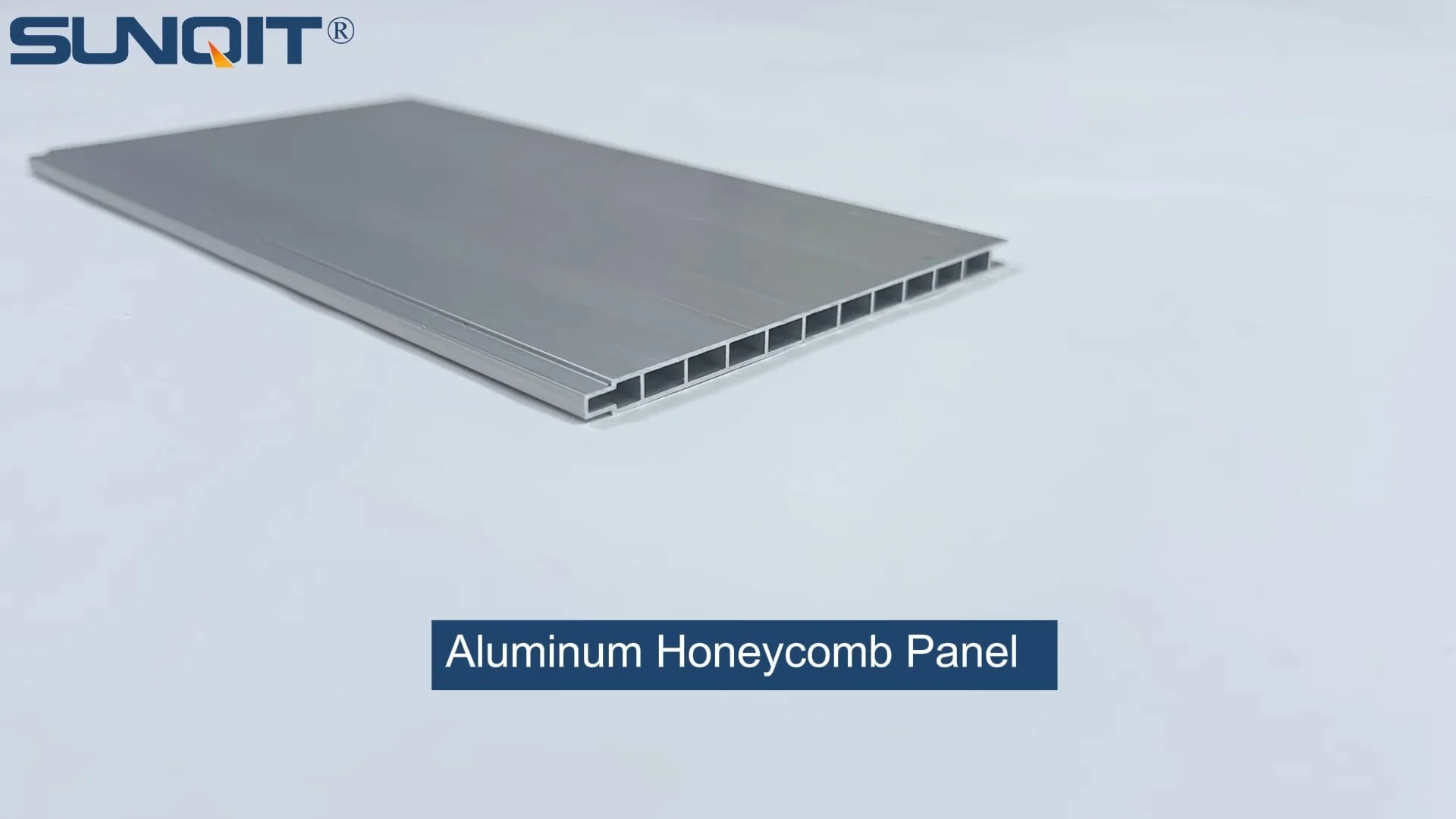
Aluminum honeycomb panel used as table top, side wall, it is connected one pcs by one pcs from the side slot to make a full pieces.This panel width 105mm, 55mm, 35mm are optional for slection.
In the world of modern manufacturing and construction, few materials blend strength, lightness, and versatility as seamlessly as aluminum honeycomb panels. These engineered panels, recognizable by their distinctive hexagonal core structure sandwiched between thin face sheets, have become indispensable in industries ranging from aerospace and automotive to architecture and furniture. But what goes into creating these high-performance panels? Behind their sleek, finished appearance lies a meticulous process that marries precision engineering with careful material selection. Let's dive into the step-by-step journey of how aluminum honeycomb panels are made, exploring the craftsmanship and technology that transform raw aluminum into a material trusted for its durability and efficiency.
Step 1: Sourcing the Building Blocks – Raw Materials
Every aluminum honeycomb panel starts with three key components: the core material, face sheets, and adhesive. Each plays a critical role in the panel's final performance, so selecting the right materials is the first (and perhaps most important) step in the manufacturing process.
Aluminum Foil for the Core
The heart of the honeycomb panel is its hexagonal core, typically made from thin aluminum foil. Manufacturers source aluminum foil rolls with thicknesses ranging from 0.03mm to 0.2mm, depending on the panel's intended use—thinner foils for lightweight applications like aircraft interiors, and thicker foils for heavy-duty uses like industrial flooring. The foil is often made from 3000-series aluminum alloys (such as 3003 or 3004), chosen for their excellent formability, corrosion resistance, and cost-effectiveness. Before use, the foil undergoes cleaning to remove oils, oxides, or contaminants that could interfere with adhesion later in the process.
Face Sheets: The Protective Outer Layer
The face sheets, which form the panel's outer surfaces, are usually made from aluminum sheets or aluminum extrusion profiles . Extruded aluminum profiles are particularly popular because they can be shaped into custom thicknesses and textures, offering flexibility for specific design needs. These sheets are typically 0.5mm to 3mm thick, with alloys like 5052 (known for strength and weldability) or 6061 (valued for its high tensile strength) being common choices. In some cases, face sheets may also include additional layers, such as decorative coatings or fire-resistant films, depending on the panel's end use.
Adhesives: Bonding Strength and Durability
Without a reliable adhesive, the core and face sheets would never form a unified, strong panel. Manufacturers use specialized structural adhesives, often epoxy or phenolic resins, chosen for their ability to withstand temperature fluctuations, moisture, and mechanical stress. These adhesives are applied in precise quantities—too little, and the bond weakens; too much, and excess resin can seep into the core, adding unnecessary weight. Some adhesives are heat-cured, while others rely on pressure or chemical activation, depending on the production timeline and performance requirements.
Step 2: Crafting the Honeycomb Core – From Foil to Hexagons
The honeycomb core is what gives the panel its remarkable strength-to-weight ratio. Creating this core is a delicate process that transforms flat aluminum foil into a three-dimensional structure of interconnected hexagonal cells. Here's how it's done:
Coating the Foil with Adhesive
First, the cleaned aluminum foil is fed through a coating machine, which applies adhesive in a precise pattern. The pattern varies based on the desired cell size (typically 3mm to 25mm in diameter) but often consists of parallel stripes or dots. This adhesive will later bond the layers of foil together to form the core. Modern coating machines use computerized systems to ensure even coverage, with tolerances as tight as ±0.01mm to prevent weak spots in the final core.
Layering and Pressing
Once coated, the foil is stacked into layers—sometimes dozens at a time—with the adhesive stripes aligned to create the hexagonal pattern when expanded. The stack is then pressed under heat and pressure in a hydraulic press, causing the adhesive to partially cure (a process called "b-staging"). This temporary bond holds the layers together but leaves the adhesive still reactive enough to fully cure later. The pressure applied here is critical: too little, and layers may separate during expansion; too much, and the adhesive may squeeze out, ruining the pattern.
Expanding the Stack into a Honeycomb
After pressing, the stacked foil (now called a "block") is moved to an expansion table. Here, operators carefully pull the block apart, stretching it horizontally. As the block expands, the pre-coated adhesive stripes bond adjacent layers, forming the iconic hexagonal cells. The expansion process is highly controlled—mechanical guides and sensors ensure the core expands evenly, with each cell maintaining consistent dimensions. For large panels, multiple blocks may be expanded and then joined together using specialized aluminum profile accessories like connectors or clamps to maintain alignment.
Curing the Core
Once expanded, the core is placed in an oven to fully cure the adhesive. The curing temperature and time depend on the adhesive type but typically range from 120°C to 180°C for 30 minutes to 2 hours. During curing, the adhesive hardens, locking the hexagonal structure in place. After curing, the core is trimmed to the desired thickness (usually 5mm to 100mm) using precision saws, ensuring flat, even surfaces that will later bond with the face sheets.
Common Aluminum Honeycomb Core Types by Cell Size
| Cell Size (mm) | Foil Thickness (mm) | Typical Applications | Key Benefit |
|---|---|---|---|
| 3-5 | 0.03-0.08 | Electronics enclosures, lightweight furniture | Ultra-lightweight, high precision |
| 6-10 | 0.08-0.15 | Wall panels, signage, automotive parts | Balanced strength and weight |
| 12-25 | 0.15-0.2 | Aerospace components, industrial flooring | High load-bearing capacity |

Step 3: Preparing the Face Sheets – Ensuring a Perfect Bond
While the core cures, the face sheets undergo their own preparation to ensure they bond securely to the core. This step is often overlooked but is vital for the panel's long-term performance.
Surface Treatment
Aluminum naturally forms a thin oxide layer, which can hinder adhesion. To combat this, face sheets are treated with processes like anodizing, chromating, or sandblasting to roughen the surface and remove oxides. Anodizing, for example, creates a porous oxide layer that helps the adhesive "grip" the sheet, while chromating adds a chemical conversion coating that enhances corrosion resistance. Some manufacturers also use primers to further improve adhesion, especially for panels exposed to harsh environments.
Cutting and Shaping
Using CNC routers or laser cutters, the face sheets are cut to the exact dimensions of the final panel, with tolerances as tight as ±0.5mm. For curved panels, the sheets may be shaped using press brakes or roll forming machines, which bend the aluminum without weakening it. In some cases, aluminum extrusion profile s are used directly as face sheets, as their pre-shaped design eliminates the need for additional cutting or bending.
Edge Sealing (Optional)
For panels used in wet or humid environments (like marine applications), the edges of the face sheets may be sealed with a silicone or polyurethane sealant. This prevents moisture from seeping into the core, which could cause corrosion or delamination over time. Edge sealing is also common in architectural panels, where it enhances weather resistance and gives the panel a cleaner, finished look.

Step 4: Bonding Core and Face Sheets – Creating the Sandwich Structure
Now comes the moment when the core and face sheets are joined to form the basic panel structure. This "sandwiching" process requires precision, as even small misalignments can lead to uneven stress distribution or weak spots.
Assembling the "Sandwich"
Operators place one face sheet on a flat, clean workbench (often made of aluminum profile for stability) and apply a layer of adhesive to its surface. The cured honeycomb core is then carefully positioned on top, ensuring it aligns perfectly with the sheet's edges. Another layer of adhesive is applied to the top of the core, and the second face sheet is placed on top, completing the sandwich. For large panels, vacuum lifts or robotic arms may be used to handle the core and sheets, reducing the risk of human error.
Pressing and Curing
The assembled sandwich is then transferred to a press, where heat and pressure are applied to cure the adhesive and bond the layers permanently. The type of press varies: some use flat platens for rigid panels, while others use curved molds for contoured designs. Pressure levels typically range from 0.5 to 2 MPa, and temperatures from 80°C to 180°C, depending on the adhesive. The curing time can take anywhere from 30 minutes to several hours, during which the adhesive flows slightly, filling any tiny gaps between the core and face sheets.
Dealing with Excess Adhesive
Even with precise adhesive application, some excess resin may squeeze out during pressing. This is carefully trimmed away using scrapers or sanders once the panel has cooled. Any remaining residue can weaken the bond or affect the panel's appearance, so thorough cleaning is essential here.
Step 5: Trimming, Finishing, and Quality Control
With the core and face sheets bonded, the panel is almost complete—but it still needs trimming, finishing, and rigorous testing to meet industry standards.
Trimming to Size
Using CNC routers, water jets, or circular saws with diamond-tipped blades, the panel is cut to its final dimensions. This step requires extreme accuracy, especially for panels that will be joined together (e.g., in architectural cladding). The edges are then sanded or deburred to remove sharp corners, and in some cases, sealed with edge bands (made of aluminum, plastic, or rubber) to enhance durability and aesthetics.
Surface Finishing
The panel's surface can be customized with a range of finishes, depending on its use. Common options include:
- Painting : Powder coating or liquid paint for color matching and corrosion resistance.
- Anodizing : Creating a protective oxide layer that adds color (e.g., black, silver) and improves scratch resistance.
- Laminating : Applying decorative films (e.g., wood grain, stone texture) or protective coatings (e.g., anti-graffiti, fire-retardant).
- Polishing : For a high-gloss finish, often used in furniture or decorative applications.
Quality Control: Testing for Performance
No aluminum honeycomb panel leaves the factory without passing strict quality checks. Tests may include:
- Tensile strength testing : Measuring how much force the panel can withstand before breaking.
- Flexural strength testing : Bending the panel to ensure it doesn't crack or delaminate under load.
- Adhesion testing : Using a pull-off tester to check the bond strength between the core and face sheets (a minimum of 1.5 MPa is typical for structural panels).
- Flatness inspection : Using laser scanners to ensure the panel deviates by no more than ±0.5mm per meter.
- Weight verification : Ensuring the panel meets weight specifications (critical for aerospace and automotive uses).
Step 6: From Factory to Field – Applications of Aluminum Honeycomb Panels
Once approved, the aluminum honeycomb panels are ready to be shipped to customers across industries. Their versatility makes them a favorite for countless applications:
Aerospace and Aviation
In aircraft, every kilogram saved reduces fuel consumption—making lightweight aluminum honeycomb panels ideal for cabin interiors, cargo floors, and wing components. Their fire resistance and sound-dampening properties also enhance passenger safety and comfort.
Architecture and Construction
Architects love these panels for cladding, ceilings, and partitions. They offer design flexibility (curved, colored, or textured) while reducing building weight, which lowers foundation costs. Some panels even integrate insulation or solar reflective coatings for energy efficiency.
Automotive and Transportation
From electric vehicle bodies to high-speed train interiors, aluminum honeycomb panels reduce vehicle weight without sacrificing crash safety. Their corrosion resistance also makes them suitable for marine applications, such as boat decks and hulls.
Industrial and Manufacturing
In factories, these panels are used for workbenches, machine guards, and material handling equipment. Their durability and resistance to chemicals make them a long-lasting choice for harsh industrial environments.
Conclusion: The Art and Science of Aluminum Honeycomb Panels
Creating aluminum honeycomb panels is a blend of artistry and engineering—where precision coating, controlled expansion, and careful bonding come together to produce a material that defies its light weight with remarkable strength. From the initial selection of aluminum foil and aluminum extrusion profile face sheets to the final quality checks, every step is a testament to the skill and innovation of manufacturers. As industries continue to demand lighter, stronger, and more sustainable materials, aluminum honeycomb panels will undoubtedly remain at the forefront, proving that sometimes, the most powerful solutions come from nature's simplest designs—like the humble honeycomb.